
About Ghostwire: Tokyo
When most of Tokyo’s population disappears, Akito survives with the help of KK, a spirit who shares his body. Together they confront the occultist Hannya and the Visitors haunting Shibuya, using elemental attacks, bows and supernatural techniques while searching the city for the truth and for Akito’s family.
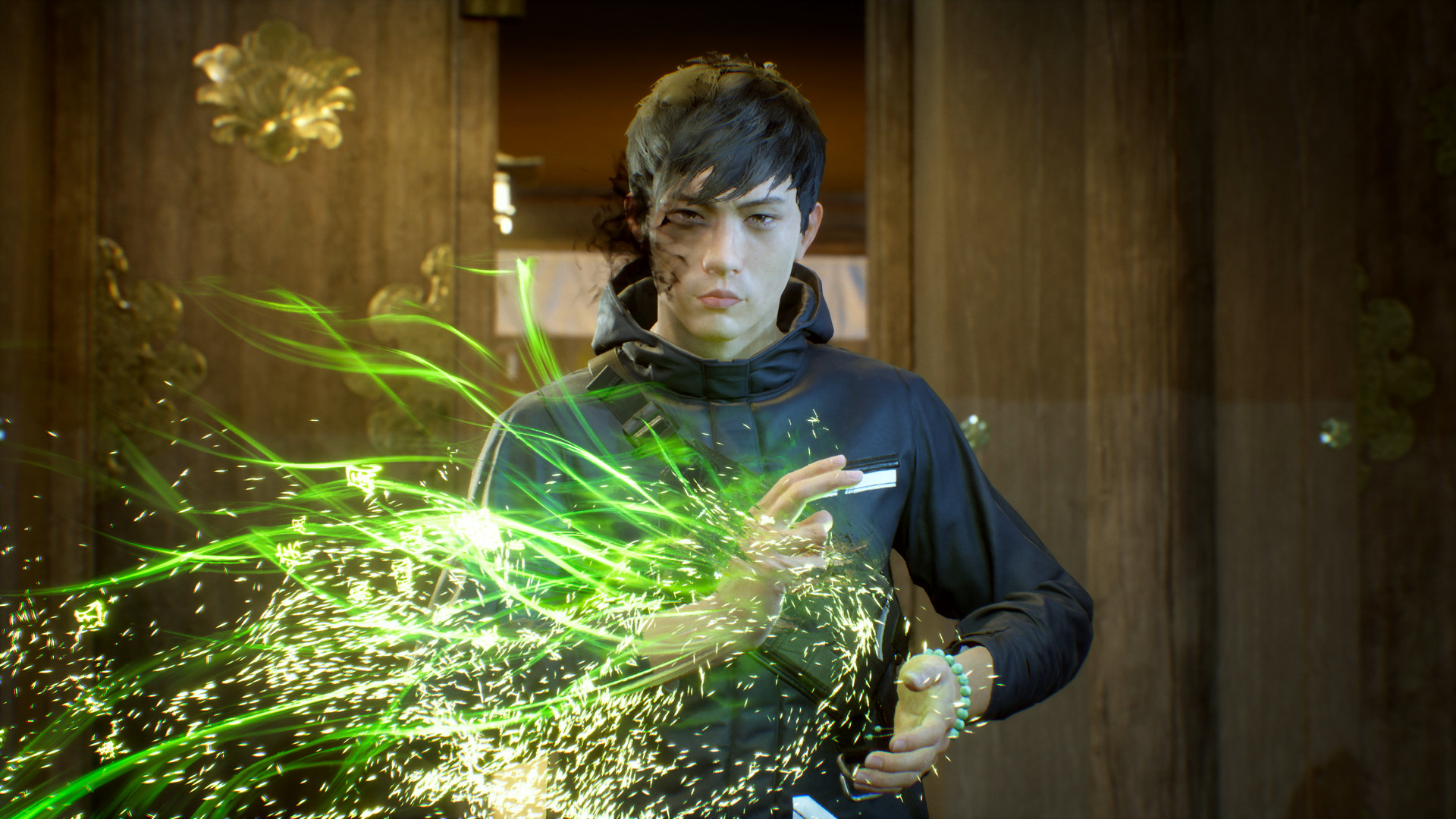
A sudden paranormal catastrophe leaves Shibuya nearly empty, its streets, crossings and train stations frozen in the moment of the disappearance. Akito, caught in the event, is joined by KK, a spectral presence whose power lets him fight the Visitors now roaming the city. The two have different aims and a tense relationship, but their shared predicament gives Akito a way to face the dangerous occultist Hannya and search for his family. The story unfolds as a first-person action adventure through a recognizable Tokyo transformed by folklore and supernatural threats. Rather than replacing the city with a separate fantasy landscape, the game places spirits and uncanny events among modern streets, traditional shrines, narrow alleys and familiar landmarks. Main missions move the search forward, while optional encounters and discoveries add further context to the people and places left behind.
Combat centers on Ethereal Weaving, which channels Ether into three forms of elemental attack. Wind sends quick bursts toward a target, Water sweeps through a wider area, and Fire launches explosive shots; charging an attack changes its effect. These powers consume their corresponding Ether ammunition, so combat connects to the environment: Spectral Vision can reveal Crystalized Ether, which appears in ordinary objects such as cars, signs and vases, and breaking it replenishes supplies. Akito can also use a bow for quieter, longer-range attacks, though arrows remain limited. This gives encounters more than one rhythm. A player can conserve elemental ammunition with the bow, use a charged blast against a cluster, or change position to keep several Visitors from closing in at once. The balance between distance, area coverage and remaining Ether shapes each fight.
Visitors can expose their cores after taking enough damage. Akito can then perform a Core Grab to pull a core free and defeat the enemy, with upgrades making the action faster or allowing a grab to affect multiple exposed foes. KK’s presence is central to this system: Ethereal Weaving and Core Grabs depend on the pair being in sync, so separation changes which tools are available. When their Wire meter fills, Akito can activate Wire In to strengthen their combined abilities for a limited period; the meter drains once activated, even if the state is ended early. Talismans add tactical choices, including effects that stun groups or create a patch of cover, while blocks can reduce incoming damage and a well-timed perfect block can stagger some enemies or send certain projectiles back. Together, these mechanics make positioning and resource use part of the same encounter.
Exploring Tokyo involves moving between its streets and rooftops. Spectral Vision highlights Visitors, objectives, Crystalized Ether, Tengu and points of interest that would otherwise be difficult to see, and it can reveal weak spots in corrupted areas or dispel some illusions. Tengu, the flying yokai perched above the city, provide grapple points that lift Akito to elevated routes; an ability upgrade later lets him summon one for a grapple. Ethereal gliding carries him across gaps between buildings. This vertical route opens access to rooftop missions, spirits and collectibles as well as new angles on enemies below. The city also contains surviving animals whose thoughts Akito can read, and some offer missions. Nekomata shopkeepers exchange Meika for useful items, linking exploration and optional activities to the supplies that support later combat.
Progress comes from several connected activities rather than combat alone. Spirits stranded around Tokyo can be absorbed into katashiro paper dolls; carrying them to a phone booth sends them away from Hannya’s plans and rewards Akito with Meika and experience used to raise his level and buy skills. Additional katashiro increase how many spirits he can carry before returning to a booth. Side missions offer short supernatural investigations and further opportunities to earn spirits and Magatama, a rarer resource used to open advanced parts of the skill tree. Skills improve areas such as weaving, stealth, traversal and Core Grabs, while beads found during the adventure provide equipment bonuses and can be combined as more slots become available. Food restores health during encounters, and special nether food can add a temporary benefit, so shops and exploration also feed into preparation.
The free Spider’s Thread update adds material to the main adventure, including the Middle School area, the side missions “Fear for the Children” and “Spirits in the Modern Age,” additional enemies, combat skills and extended story scenes. It also introduces The Spider’s Thread, a separate roguelite mode selected from the main menu rather than a continuation of the city’s central mission route. In that mode, players descend through successive challenges, fight with the game’s combat systems and earn upgrades as they progress. The update’s additions therefore sit alongside the original Tokyo exploration loop: the new mode offers a distinct challenge structure, while the expanded area and missions can be encountered within the main game. Both use Akito’s supernatural abilities, but they serve different play sessions and progression paths.

- Developer
- Tango Gameworks
- Genre
- Single-player first-person action-adventure