
About Ghostrunner 2
One year after the Keymaster’s fall, Jack returns to a Dharma Tower facing new power struggles and a cyber ninja cult beyond its walls. Ghostrunner 2 keeps its first-person katana combat and parkour, then adds reworked abilities, chip-based upgrades, interactive arenas, nonlinear routes and motorcycle sequences through the post-apocalyptic world outside.
Ghostrunner 2 takes place one year after the first game, when the Keymaster’s fall has left Dharma Tower without its former ruler. The tower remains humanity’s last refuge, but its inhabitants now face new factions and a violent cyber ninja cult that has formed outside. Jack returns to the conflict, and the story moves between the tower and the wider post-apocalyptic world around it. Radio conversations carry much of the plot while the player moves through missions, and an optional dialogue system lets players pursue more lore. The setup preserves the series’ tower-city foundation while giving the sequel a reason to leave its familiar vertical districts and show what lies beyond them.
The core movement still asks the player to turn a first-person route into continuous motion. Jack runs along walls, jumps, slides, dashes and grapples across gaps, combining these actions to cross ledges and reach enemies. Stages mix longer platforming stretches with short arenas, and the route can require more than spotting the next handhold: a shuriken can be lodged in a wall to create a grapple point, while an electric field may need to be disabled before the crossing is safe. These combinations make the environment part of the problem-solving. The player must judge where to move, which ability can open the route and when to execute the sequence without stopping in danger.
Combat retains the series’ one-hit stakes: Jack and most opponents can be killed by one successful hit. His katana remains the main close-range weapon, and it can deflect incoming projectiles; blocking is also a more explicit defensive option in the sequel. Enemies include rushing melee fighters, rifle users and larger mechanical threats, so a room may require switching between evasion, deflection and a quick approach. Because the player can also defeat many enemies with one strike, each arena becomes a short ordering problem: identify the threats that can reach Jack, move between them, and choose an attack path before their fire or positioning closes it. Death returns the player to checkpoints as they work through the encounter.
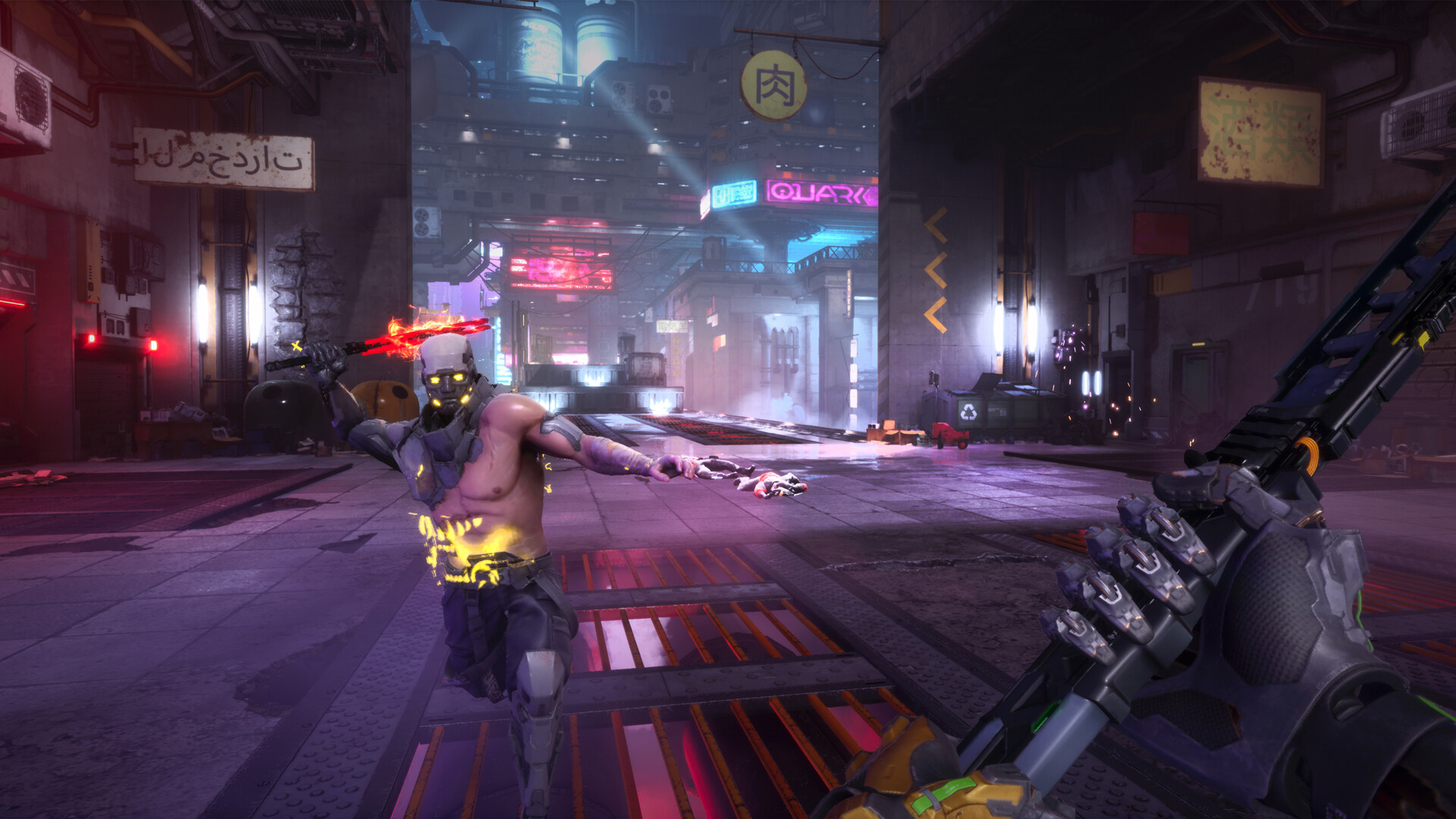
New and returning skills widen the ways to manage those fights and the spaces between them. The shuriken can stun a distant enemy or become a temporary grapple point, linking a ranged action to movement. One skill cloaks Jack while creating a copy of him, and a short-range kinetic push can displace enemies near a ledge. Other abilities support time-slowed movement or deflecting projectiles, and enemies respond differently to the skills used against them. These powers also appear in platforming and puzzle sequences, where a tool that controls an opponent can instead activate an object or make a route reachable. Choosing which ability to bring into an encounter therefore affects both combat options and navigation.
Progression is built around a board that accepts passive chips collected through levels. Chips can improve abilities, attacks and movement, and the available board expands as more are found. The player assigns upgrades to the board rather than receiving a fixed sequence of automatic improvements, creating room to tailor Jack’s tools to a preferred approach. Some chips sit away from the direct route and reward checking side areas, so exploration can feed into customization. A detour to collect one can change which tools Jack brings into later rooms. This system ties mission navigation to character development: the same spaces that test the player’s parkour also contain the materials used to adjust later combat and traversal options.
The motorcycle sections change the scale and direction of travel. Instead of climbing through a tower interior, Jack rides along nonlinear routes through the world beyond Dharma Tower, with obstacles and combat challenges built into the course. In some sequences the bike’s path intersects with platforming: Jack can leave the vehicle to avoid a barrier or reach an object, then grapple back as it continues forward. Other outdoor passages connect separate objectives and combat stops across broader spaces. These segments therefore combine driving with the series’ existing movement vocabulary, while shifting attention from tightly enclosed rooms to longer routes across the wasteland. The game also uses this setting to show that the tower is only one part of the post-catastrophe world.
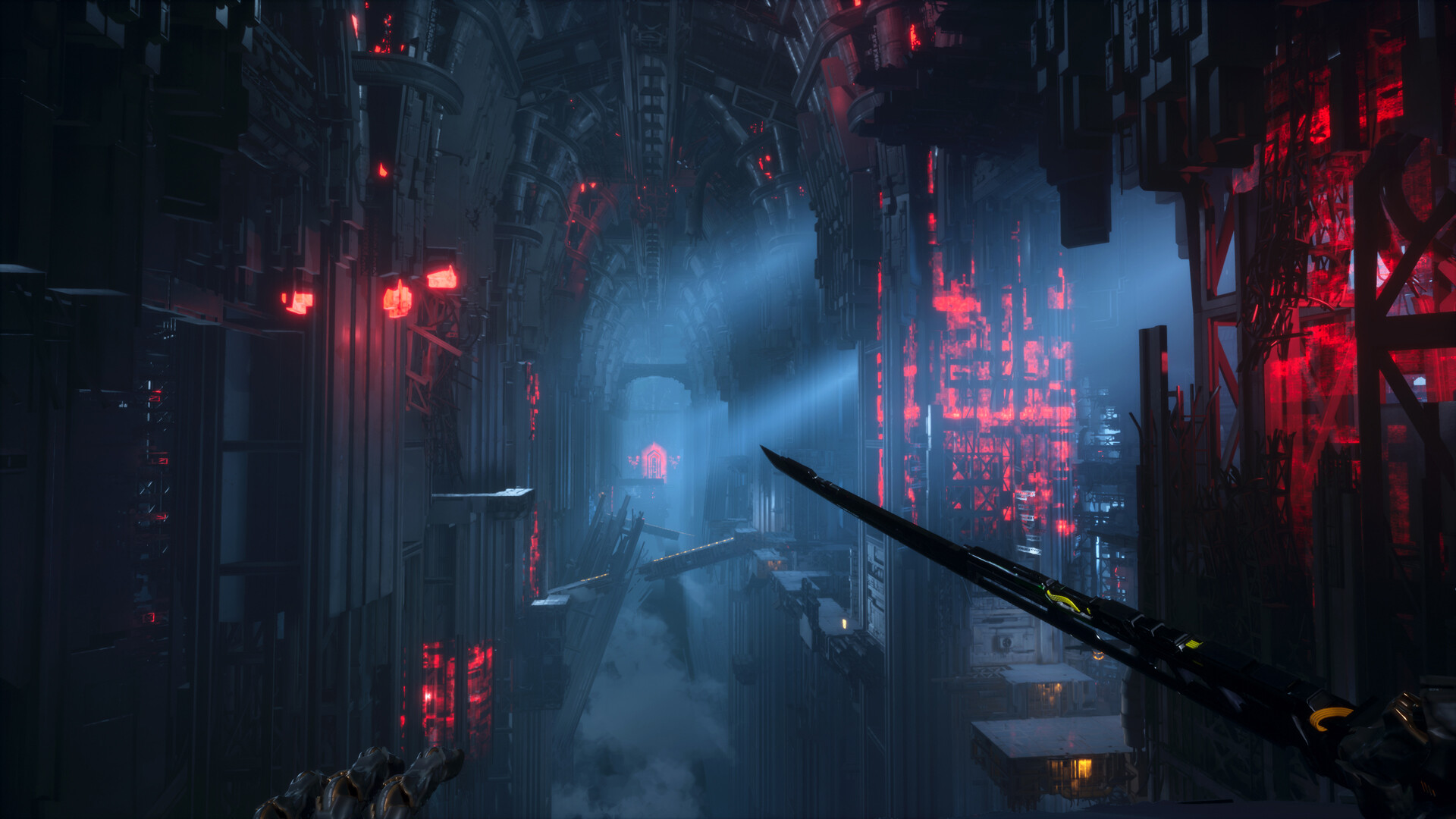
Encounters add more environmental objects and distinct boss structures to the familiar arena format. Exploding barrels can damage nearby enemies, destructible walls can conceal routes or objects, and neutral entities may assist Jack during a fight. Recognizing these features gives the player additional ways to change an arena before committing to a direct attack. Boss battles likewise expand beyond ordinary groups of enemies: their larger arenas and staged attacks ask Jack to use movement and skills in changing combinations, with checkpoints supporting retries during the longer fights. Across both standard encounters and boss sequences, the game’s new elements are designed to interact with the katana, parkour and ability set rather than replacing those central actions.
- Developer
- One More Level
- Genre
- First-person action platformer / slasher