
About Ghost Trick: Phantom Detective
After his death, amnesiac spirit Sissel awakens with only a few hours before sunrise to discover who he was and why he was killed. By possessing objects, changing their states and rewinding to moments before other people die, he follows a trail through a city of eccentric witnesses and connected mysteries.
Ghost Trick: Phantom Detective begins at the end of its protagonist’s life. Sissel wakes as a spirit with no memory of his identity or the events that led to his death, while a woman is in immediate danger nearby. A voice explains that his remaining time is limited by the approach of sunrise, giving the mystery a clear clock without making the game a conventional chase or combat adventure. Sissel’s first task is practical: work out how to reach the woman and interfere with what is happening around her. From there, the questions widen from the circumstances of one death to the people and events connected to it. The setup keeps Sissel’s limited knowledge aligned with the player’s, so conversations, scenes and changes in the environment become evidence as well as story. The tone can shift between danger and comic timing, and the central mystery advances through a succession of short, tightly linked situations rather than through free-roaming investigation.
The people Sissel encounters give each situation a different human problem to solve. Lynne, a detective who may have witnessed his death, becomes one of the first people whose actions draw him into the city’s broader events. Kamila, a young girl, and Missile, the small dog who protects her, introduce a household and its immediate dangers; their scenes make ordinary objects in a room part of the puzzle’s logic. Other characters appear as officers, prisoners, bystanders, family members or people caught in the aftermath of a crisis. Sissel cannot simply ask everyone what they know while standing beside them. Instead, he watches their movements, listens to conversations when he can reach a telephone, and manipulates nearby objects to redirect attention or change what they do. These encounters let comic mannerisms and dramatic stakes sit together: a person’s routine can be funny in one moment and the key to preventing a fatal event in the next. Character details are therefore linked to observation and action, not separated into a catalogue of optional biographies.
Movement is built around the ghost world, a paused view in which Sissel can travel between the cores of nearby objects. He does not float freely across a room; the object he inhabits determines which other cores lie within reach. The player traces a route through a scene, moving from a lamp to a door, a sign, a piece of furniture or another object whose position makes the next connection possible. This limited reach turns a static room into a small network to read and rearrange. Some paths are already available, while others require an object to move, open, extend or rise before Sissel can cross the gap. When a scene expands beyond one room, telephones provide a separate way to travel: reaching and using a phone can connect Sissel to places whose numbers he has learned. Locations become linked through information gathered in conversations, so finding a phone number can change the map of places available to visit. The result is deliberate, scene-by-scene navigation, with route planning and information gathering working together.
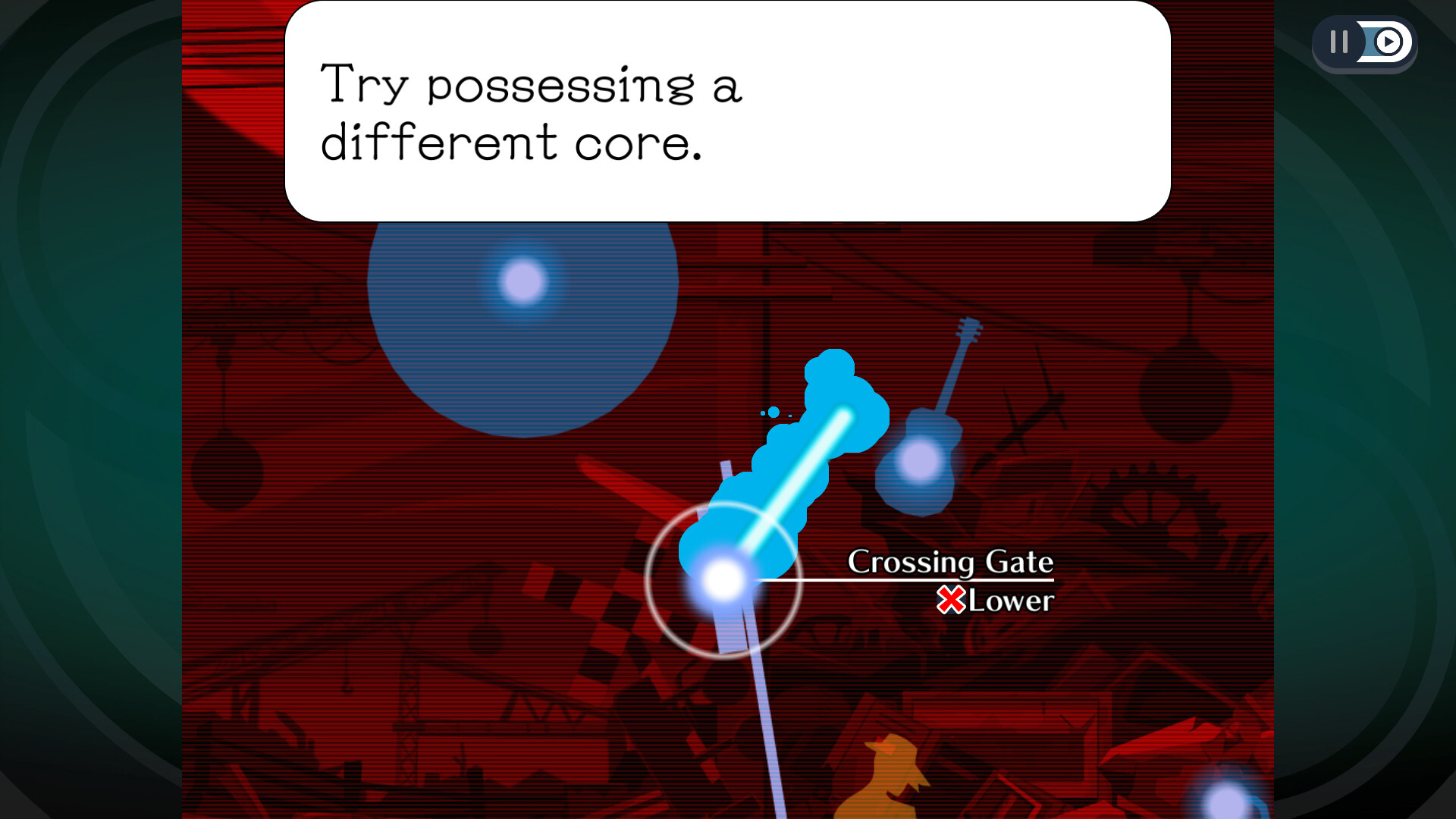
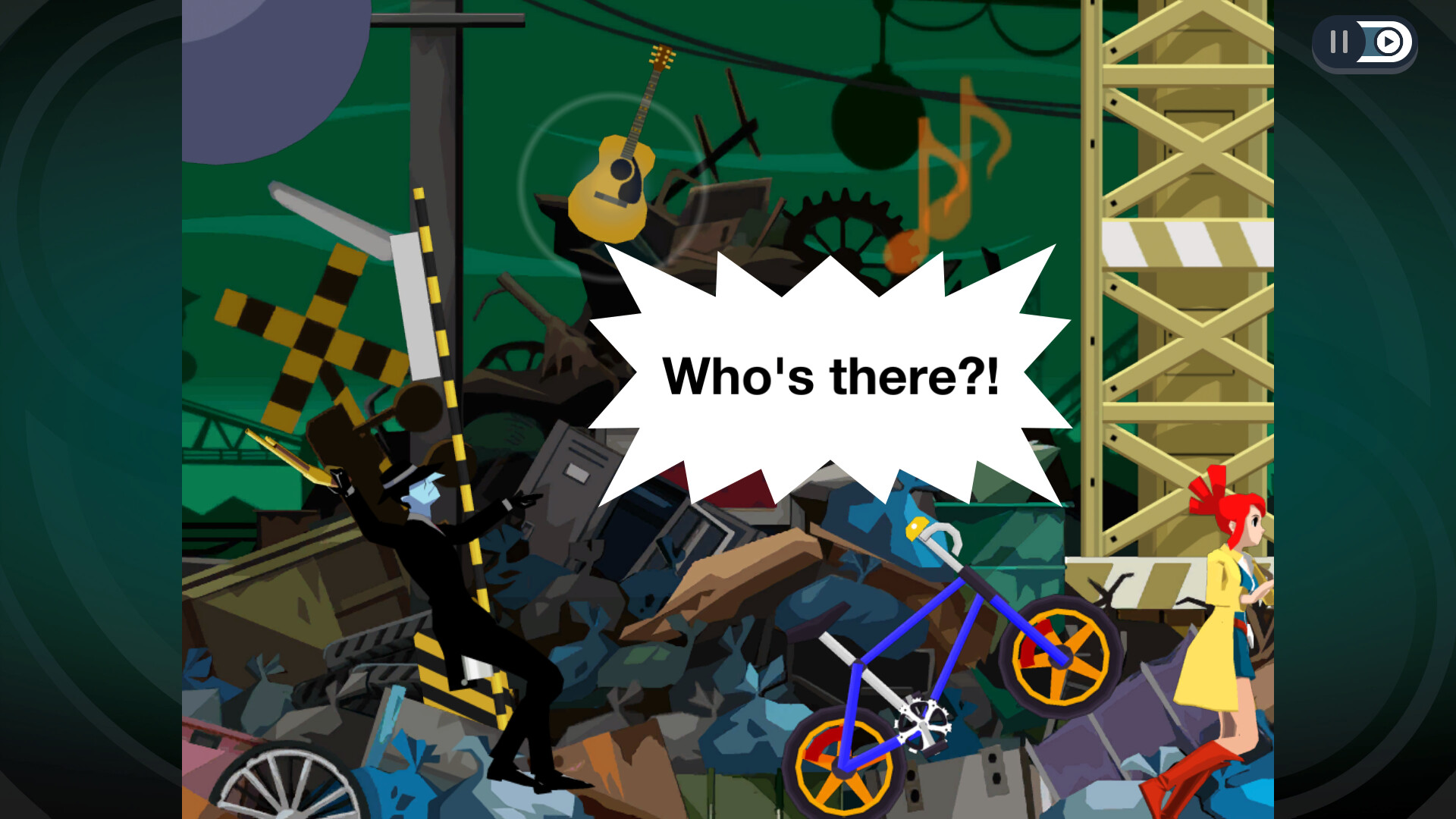
Possession gives that route planning a physical effect. In the living world, Sissel can perform a ghost trick on certain objects, triggering their particular action: a door can swing, a lamp can illuminate, a bell can ring, or a mechanism can shift its position. The action is constrained by the object, so the puzzle is less about applying one universal power than recognizing what each item can do and when its effect matters. A change can create a new connection, bring an object into reach, attract someone’s attention or alter the timing of a nearby event. Several simple actions can form a chain. In an early junkyard sequence, for example, the fan’s movement affects a flag while a blender winds its cord, turning separate objects into a way to climb through the scene. The player can pause to plan while moving among cores, then return to real time and see how the pieces interact. Objects behave as parts of a shared arrangement, making spatial reasoning and timing inseparable from the act of manipulation.
A second kind of puzzle begins when Sissel reaches a person who has just died. He can travel back to four minutes before that person’s death and attempt to avert the event. The sequence then plays forward in real time, while Sissel uses nearby objects to change the chain of circumstances that led to the fatal outcome. A small disturbance may draw someone’s gaze; moving or activating another object can open a route, interrupt an action or give the endangered person a chance to move. The ghost world stops the surrounding scene while Sissel changes positions, which lets the player inspect available cores and plan a path before the countdown resumes. The four-minute window gives each rescue a clear limit, but experimentation is part of the structure: a failed attempt can be rewound so the same event can be approached with a different order of actions. The focus is on reconstructing cause and effect, then changing the right link in that sequence. Saving someone also changes what Sissel can learn or do afterward, because surviving characters and altered scenes can carry the investigation forward.
The story moves through distinct interiors and public spaces, each with its own objects, routes and routines. The junkyard introduces stacked levels and machinery; apartments use furniture, doors and household items; offices and police spaces bring telephones, records and working routines into view. A restaurant, a park and later more restricted locations provide different layouts and sets of moving parts. These settings are not broad areas to search at will. They are authored scenes in which a conversation, an arrival or a change in circumstances establishes what Sissel needs to understand. Looking at a location in ghost mode makes the cores and possible connections legible, while returning to the living world reveals how people react to an intervention. In some scenes a player can test several nearby objects and see different intermediate reactions before finding the useful chain; that is local puzzle branching, not a claim that the story splits into separate campaigns. Chapter progression follows a defined mystery, and the new place or character introduced in one scene often supplies a clue, phone destination or problem that carries into the next.
Progress comes from learning the rules of a scene and the limits of Sissel’s abilities, rather than building statistics or collecting equipment. The player acquires useful information from dialogue, observation and telephone conversations; new numbers expand travel options, while new object interactions make routes through a familiar space possible. Rescue sequences also teach how timing and object effects fit together, with later challenges adding variations to the basic pattern. The game’s chapters alternate between following the investigation in the present and revisiting moments before deaths, giving the player repeated chances to connect what people say with what the environment allows. Optional challenge content gives completed levels additional tasks to pursue, and the Ghost Puzzles offer sliding-tile arrangements built from the game’s imagery. These additions sit alongside the main mystery as replay and collection features. There is no combat system or conventional character leveling: the central form of progress is broader understanding of the cast, the chronology and the small physical rules that govern each puzzle space.
The 2023 release is an HD remaster of Capcom’s earlier Ghost Trick: Phantom Detective, written and directed by Shu Takumi. It updates the image and sound presentation for modern platforms and adds support for controller play as well as touch screens on compatible devices. The remaster’s arranged soundtrack was produced by Yasumasa Kitagawa and can be switched with the original music during play; a collection also provides artwork and music. Ghost Puzzles and platform challenge or achievement features supplement the chapter-based story. The game is a single-player puzzle adventure on PC through Steam, Nintendo Switch, PlayStation 4 and Xbox One. Its core progression remains the same kind of authored mystery across those versions: observe a scene, move between objects, test the consequences of a trick and use what the characters reveal to reach the next event. The remaster’s additions concern presentation, controls and extra collection or challenge material, rather than a new storyline or a separate multiplayer mode.
- Developer
- Capcom
- Genre
- Single-player puzzle adventure / mystery