
About Tom Clancy's Ghost Recon Wildlands
In Ghost Recon Wildlands, a four-person Ghost team is sent into a near-future Bolivia controlled by the Santa Blanca cartel. Scout compounds, gather intelligence, disrupt the cartel’s operations and coordinate attacks with a squad, alone or in co-op. The open campaign lets you choose which regional power structures to dismantle first.
Bolivia is presented as a country reshaped by Santa Blanca, a cartel that has grown from a criminal enterprise into a force with influence over local communities and institutions. The Ghosts arrive on Operation Kingslayer, working with a CIA liaison and local resistance forces. Their campaign targets the cartel’s organization rather than following a single corridor of missions: its production, smuggling, security and political influence are represented by separate regional operations. Each region has its own boss and story thread, while evidence and conversations connect those local networks to the cartel’s leadership under El Sueño. This structure gives the operation a strategic scale: the squad is not simply clearing one continuous enemy base, but locating the people and infrastructure that keep the cartel functioning across the country.
The campaign is organized around investigating and weakening the cartel’s branches. Players locate mission leads by questioning informants, searching sites and collecting intelligence in the world; this can reveal story missions, side operations, supplies or skill resources. Completing missions advances the operation against a regional boss, and reducing the cartel’s grip opens the way toward confronting that branch. Since regions can be approached in a flexible order, the player chooses which leads to pursue and when to shift attention elsewhere. Story progress is tracked through the cartel structure, so targets and their roles become clearer as intelligence accumulates, without requiring every optional activity before continuing the main operation. Intel is therefore both narrative context and a practical way to turn a broad map into a set of actionable objectives, including investigations that build toward a branch’s decisive missions.
A typical mission begins with reconnaissance. The drone can survey a compound, mark visible guards and identify useful details, while binoculars let the team inspect positions from a distance. From there, players can enter on foot, drive in, or approach by air or water. Marking enemies first makes it possible to plan a route, identify alarm systems and coordinate a synchronized attack. The objective may be to extract a person, steal information or equipment, sabotage an installation, or eliminate a target. A first pass around the perimeter can reveal entrances, guard patrols and positions that overlook the objective; scouting from higher ground can help choose an insertion route before the squad commits. Stealth can keep a site controlled, but detection shifts the encounter into a firefight and may bring reinforcements, so the same location can demand a new plan once an alarm is raised.
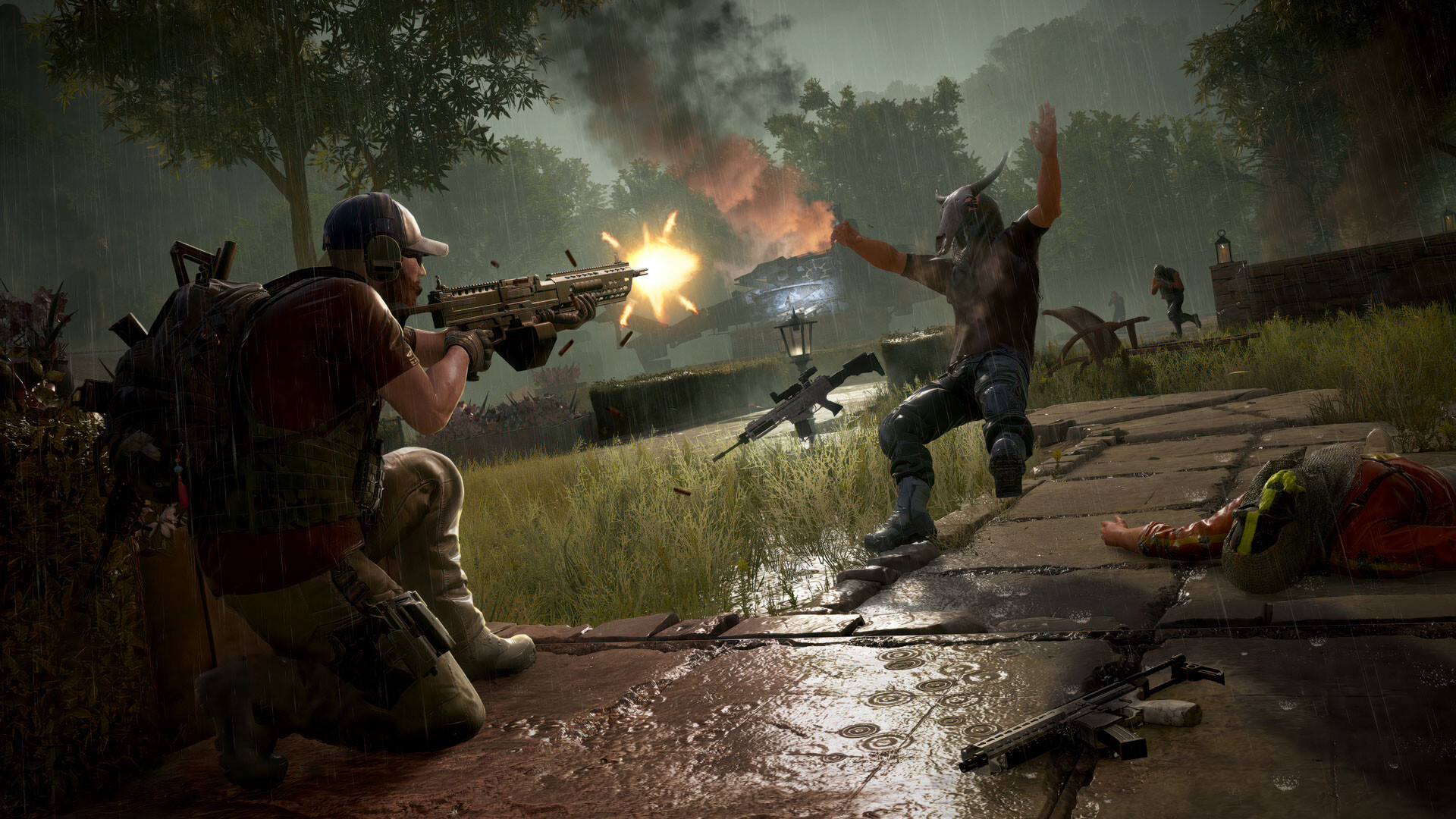
Wildlands supports solo play with three computer-controlled squadmates and cooperative play for up to four players. The squad order system lets the player direct the team to move, hold position or attack, and Sync Shot coordinates shots against marked enemies so several guards can be removed together. In co-op, teammates can divide tasks, cover approaches or move as one group. A coordinated opening can remove isolated guards before they warn the compound, while holding a squadmate in place can preserve a firing angle for a later move. Combat uses a third-person perspective with cover, weapon handling and a mix of rifles, sidearms, explosives and gadgets. Suppressors and careful timing help maintain concealment; louder weapons trade that discretion for immediate force. The game’s tactical choices are practical ones—where to observe from, which targets can call for help, and where to regroup if the first approach fails.
Character growth links field activity to a set of skills and equipment choices. Experience and collected skill points unlock upgrades across areas such as weapons, the drone, items, physical abilities and squad support. Supplies found in the world or gained through supply missions are spent on upgrades, while skill point markers and medals provide additional progression opportunities. Upgrades can improve the drone's range and battery life or strengthen the squad's effectiveness. Because different upgrades call on different resource types, the player has to gather supplies as well as earn points before a selected improvement can be purchased. This creates a loop in which reconnaissance points toward resources and mission leads, while improvements expand the tools available for later infiltrations. Weapons and gear can also be customized, letting a player prepare a quieter or heavier loadout for the next objective.
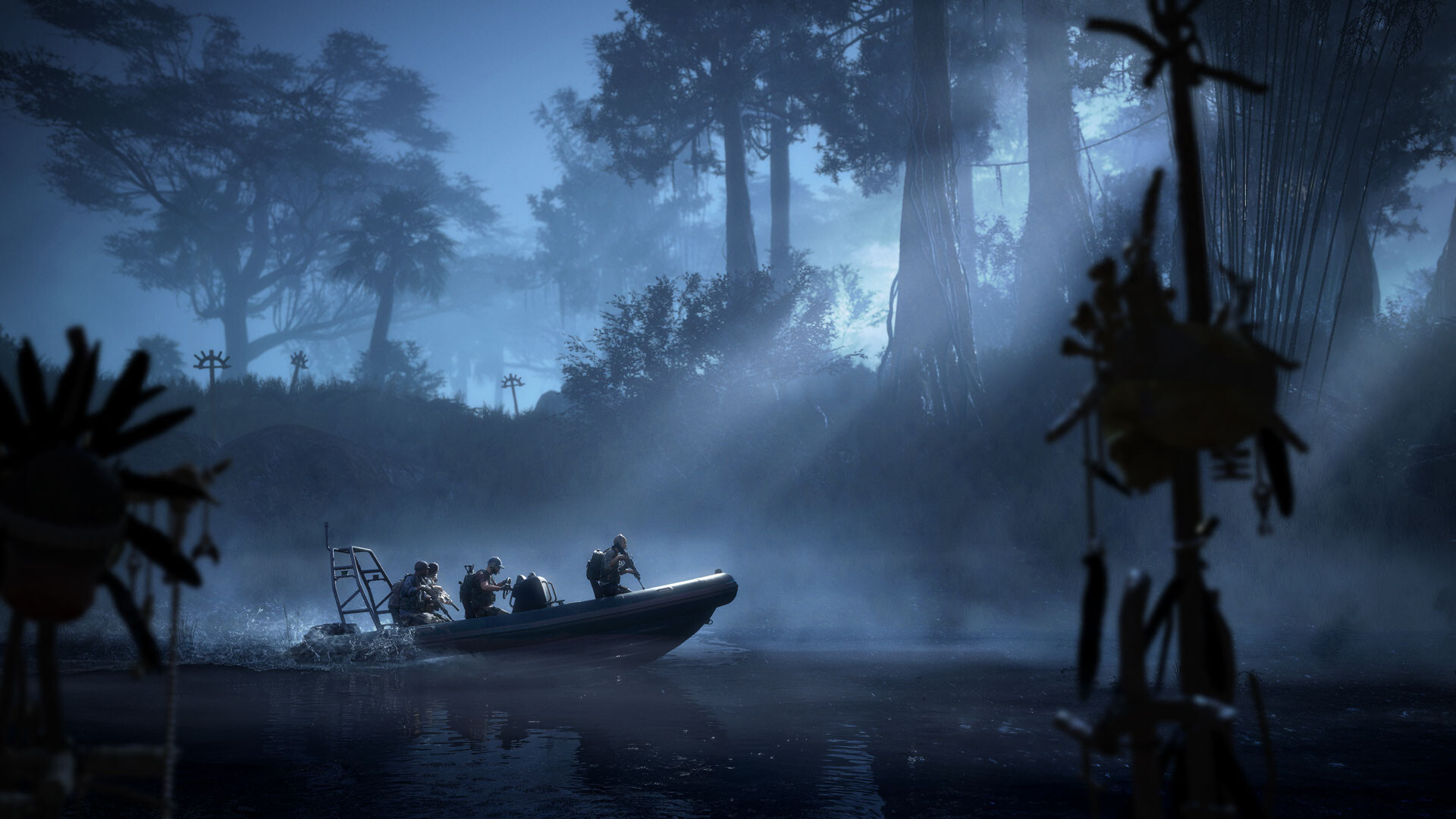
The local resistance is a separate progression path. Completing specific Rebel Ops side missions unlocks or improves five support abilities: recon can mark enemies across a designated area, diversion sends rebels to draw attention, Guns for Hire calls fighters to assist, mortar support strikes a selected zone, and Vehicle Drop-Off brings transport. These services have cooldowns and grow in reach or scale through related operations, so they reward investment in the resistance with concrete options during missions. Choosing recon before entering a compound can expose a guard pattern; a diversion or hired fighters can instead pull attention away from the Ghosts, while a mortar strike is direct support against a selected position. Bolivia’s terrain also shapes movement between objectives: roads connect settlements and outposts, while mountains, forests, deserts and waterways make vehicles and approach routes matter. Players can travel by land, air or water and join friends for the campaign, with each mission linking the broader regional investigation to a specific place and tactical problem.
- Developer
- Ubisoft Paris, Ubisoft Annecy, Ubisoft Bucharest, Ubisoft Montpellier, Ubisoft Milan, Reflections and Ubisoft Belgrade
- Genre
- Open-world tactical third-person shooter; action/adventure