
About Ghost of Yōtei
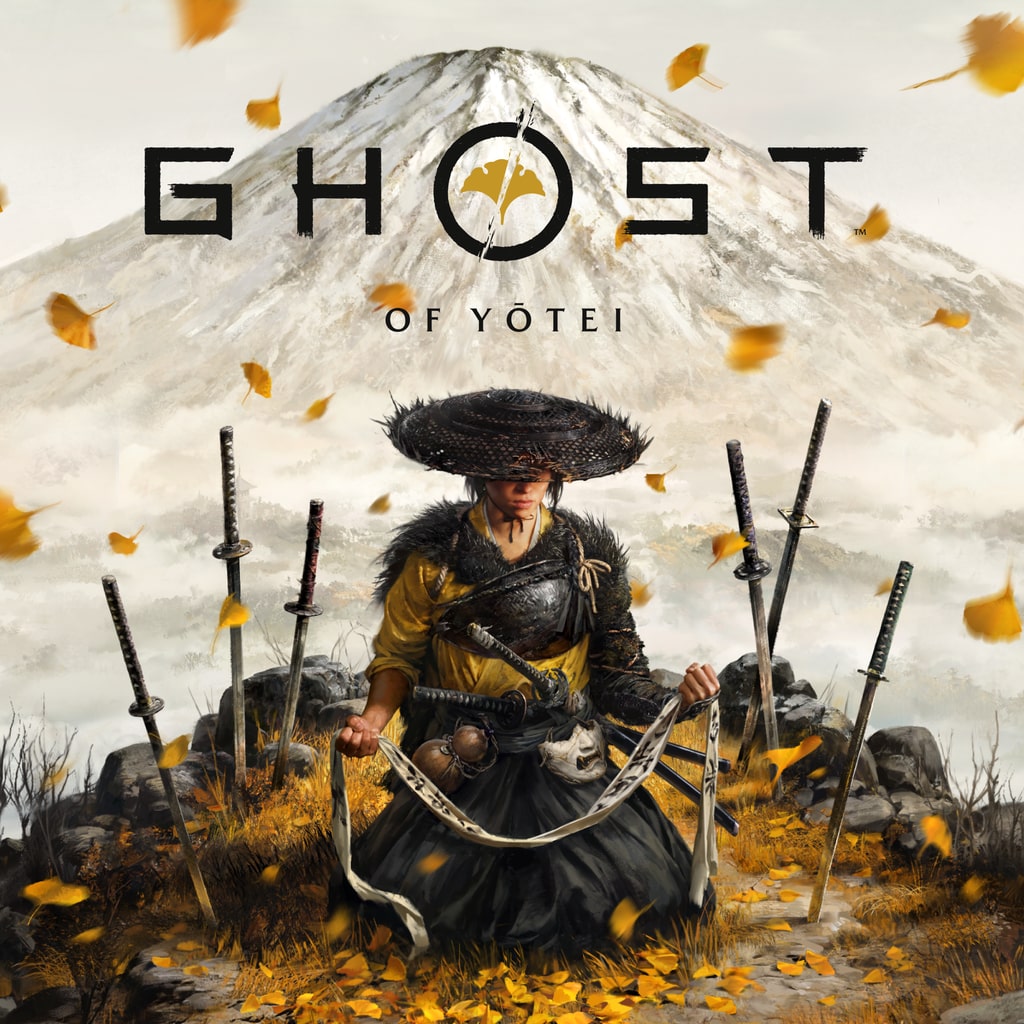
Set in seventeenth-century Ezo, Ghost of Yōtei follows mercenary Atsu on a journey to confront six outlaws connected to her family's death. Across a rugged open world, she takes contracts, meets allies, learns new weapons, and pursues her own path through melee combat, ranged attacks, stealth, and optional exploration.
Ghost of Yōtei is a standalone action adventure set in rural Japan during the 1600s, around three centuries after Ghost of Tsushima. Its protagonist, Atsu, is a mercenary who returns to Ezo, the northern island now known as Hokkaido, sixteen years after her family was killed. Her search for the six outlaws responsible gives the journey its central direction, but the story also follows the people and relationships she encounters along the way. Sucker Punch frames Atsu as a haunted traveler whose pursuit of vengeance can lead toward bonds and a future beyond the original grievance. The setting includes the lands around Mount Yōtei, where journeys cross forests, settlements, open fields and mountain terrain. The premise supplies a clear personal motive while leaving room for detours and discoveries beyond the main hunt.
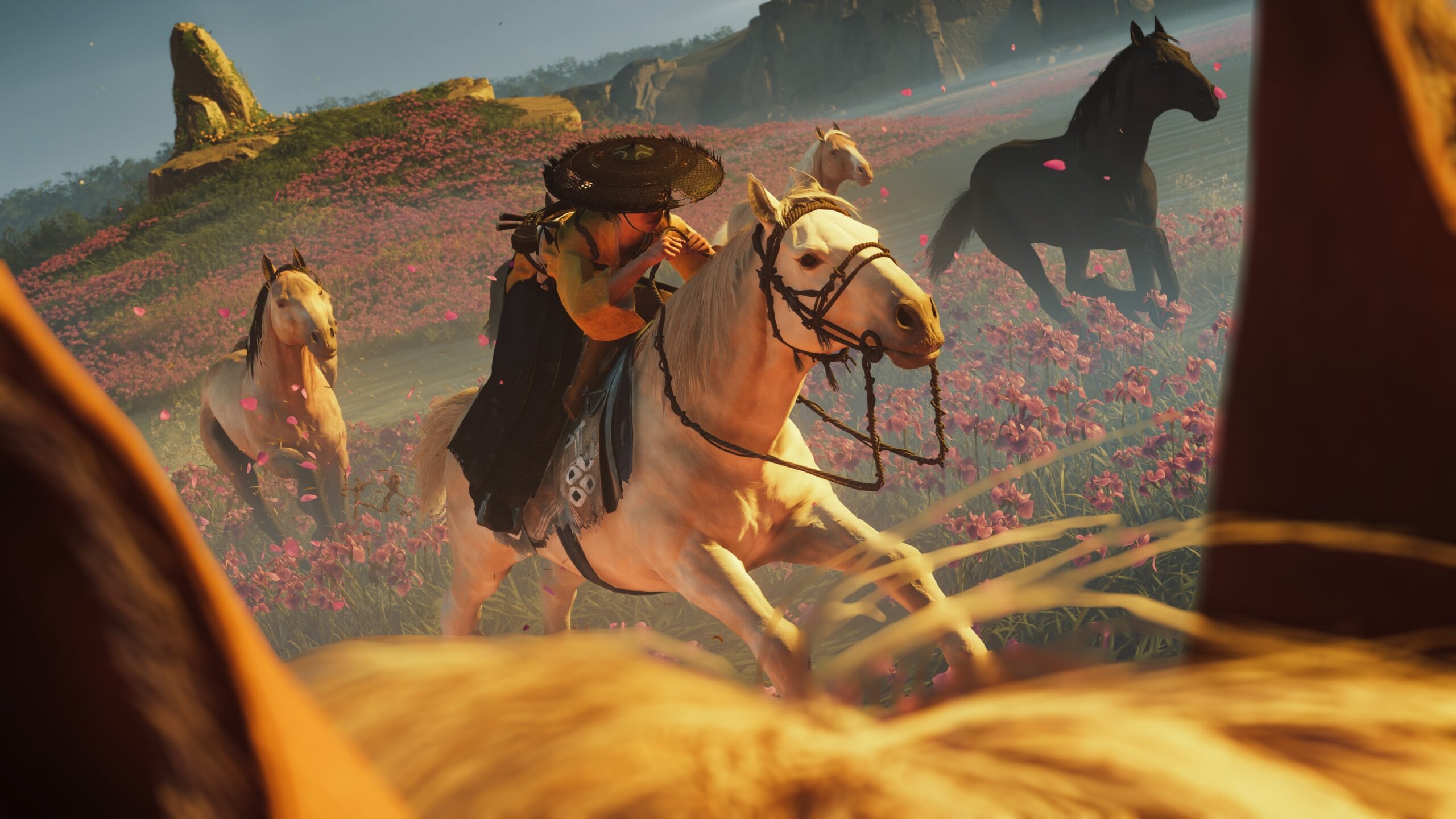
Ezo is traversed on foot or horseback, with the player moving between story missions, optional activities and incidental encounters. The region combines wildflower fields, snow-covered ridges and rocky routes, giving travel a changing physical character as Atsu moves through the north. Exploration is tied to advancement: optional activities can improve her abilities, and points of interest can lead to new equipment or opportunities. Some discoveries come through characters met on the road, whose information can redirect attention toward a nearby place or task. That structure means a trip toward a story objective may develop into a longer excursion, while the central trail remains available to return to. The landscape is not only a backdrop for combat; it is the space where Atsu finds allies, hears about local trouble and decides which leads to pursue.
The core fighting system combines melee and ranged attacks, and Atsu develops a broader arsenal as she trains with masters. Learning new gear adds combat options, while honing skills lets the player shape a preferred approach. Her weapons include several distinct melee forms, and the order in which they are learned supports a progression from a narrower set of responses toward a more flexible toolkit. The katana provides a foundational blade, while paired swords, a long odachi, a yari spear and a kusarigama chain weapon each create a different way to engage. Rather than treating equipment as only a cosmetic choice, the game asks players to recognize enemy threats and select tools that can answer them. Bows and other ranged options supplement close combat, creating choices about distance as well as weapon type.
Encounters can be approached through direct fighting, stealth and ranged pressure. A larger weapon may suit a heavy opponent, while a quick blade can support rapid attacks against another threat; switching the response as a fight changes is part of the intended rhythm. Atsu can use firearms and archery alongside her melee weapons, so a battle may involve changing range or dealing with a distant attacker before closing in. Stealth offers another route into hostile spaces, letting the player reduce immediate pressure before combat begins. These tools make the player weigh the situation instead of relying on a single action. Training, new gear and skill development gradually expand the available answers, while the enemy mix and the space of an encounter determine which answer is useful at that moment.
Story and exploration also move through a cast of allies and opponents with their own talents and motivations. The six outlaws provide a connecting thread across Atsu's search, while the people she meets offer local knowledge, assistance or personal complications. The game presents the hunt as more than a checklist of targets: the path through Ezo exposes Atsu to relationships that can alter how the journey is understood. Optional discoveries and activities sit alongside narrative missions, so progress can come from following the main pursuit or spending time with the wider region. This open-ended arrangement gives players room to vary the pace between travel, combat and character encounters. The central revenge premise remains legible, but the surrounding world gives the journey additional human context.
Ghost of Yōtei also supports distinct ways to continue after the main journey. Completing the story unlocks New Game+, which carries over gear, upgrades, cosmetics, resources and collectibles for another run. Repeating objectives can award Ghost Flowers, a currency exchangeable with a new vendor for additional cosmetics, charms and armor sets; further weapon and armor upgrades are available to craft in this mode. Separate from the main campaign, Most Wanted is a combat survival mode included with Complete Edition or its separate upgrade, built around waves of enemies and boss encounters, with rewards that include equipment, cosmetics and playable characters. Legends is a free update that adds online cooperative play for two to four players against supernatural versions of the Yōtei Six. These modes extend the combat systems in different directions: replaying the story with retained progress, surviving repeated fights, or coordinating with others in a supernatural challenge.
The PlayStation 5 version uses the DualSense controller's adaptive triggers and haptic feedback as part of its interaction design. Trigger resistance supports actions such as using the bow and grappling hook, while vibration responds to combat and katana strikes. These features complement the larger pattern of alternating between movement, observation and action across Ezo. A player can ride toward a lead, leave the road to explore a landmark, train to expand Atsu's arsenal, and then apply those skills in a mission or encounter. Because the game allows the journey to branch into optional activities, the route through its systems is not limited to completing story objectives in sequence. Atsu's pursuit establishes the direction, while the player's chosen mix of exploration, combat preparation and side activities determines how the journey unfolds.
- Developer
- Sucker Punch Productions
- Genre
- Open-world action adventure