

About Gemini Rue
Azriel Odin, a former assassin, arrives on the rain-drenched planet Barracus and finds himself relying on the criminals he once served. Across the galaxy, amnesiac Delta-Six wakes in the controlled facility Center 7 and tries to escape. Their separate investigations draw together in a science-fiction noir mystery about memory, identity and redemption.
The Gemini System is a place where identity can be treated as something to buy, sell, erase or rebuild. On the rain-soaked colony world of Barracus, Azriel Odin arrives with a past as an assassin and finds himself drawn back toward the criminal network he once served. Elsewhere, a man called Delta-Six wakes in a hospital-like facility with no memory and an urgent need to get out before his sense of self disappears. The game alternates between these two lives, letting the contrast between an exposed city and a controlled institution build its central mystery. Azriel looks outward for answers among people and places; Delta-Six must read a closed system from within. Their stories are presented as separate threads that gradually move closer, with each perspective giving new context to the other. Barracus’s rain and Center 7’s sterile rooms make different kinds of confinement visible. The premise keeps the focus on memory, identity and the possibility of redemption in a future where a person’s past can be manipulated.
Azriel’s part of the story begins on Barracus, a planet defined by persistent rain and by the power of the Boryokudan, the criminals with whom he once worked. When his arrival goes wrong, the people he knows from that former life become his available route forward. He has to find people, question them and make sense of partial leads rather than rely on a clean official chain of information. This places his investigation in uneasy territory: contacts may offer help because of old ties, yet those same ties make the danger around him personal. Barracus is not a neutral detective’s city but a place where the criminal group has shaped everyday life. Azriel’s movements through its streets and buildings turn each encounter into a negotiation over what someone knows and what they are willing to reveal. His former associates know his habits, and he cannot pursue his questions at a safe distance from their interests. The story establishes the scale of his problem through this widening web of contacts, while holding back the larger explanation for why his search matters.
Delta-Six’s opening is sharply different. He awakens in a hospital setting after a memory wipe, with the facility known as Center 7 organizing his life around tests and rehabilitation. Because he cannot call on a remembered family or past, the people around him become his only source of explanation—and their accounts do not automatically settle who he should trust. A promised escape is a practical objective, but each new piece of information also raises the more personal question of whether the identity he has been given is the whole of him. Center 7 is enclosed, managed and procedural, in contrast to Barracus’s rain-slick streets, yet both settings limit the freedom of the people inside them. Delta-Six is also put through firearms training, an unsettling requirement for someone told he is in rehabilitation. The player learns the institution through rooms, devices and conversations as he tries to understand its routines. That slow accumulation of details makes the facility itself part of the mystery, without requiring the story to explain every uncertainty at once.
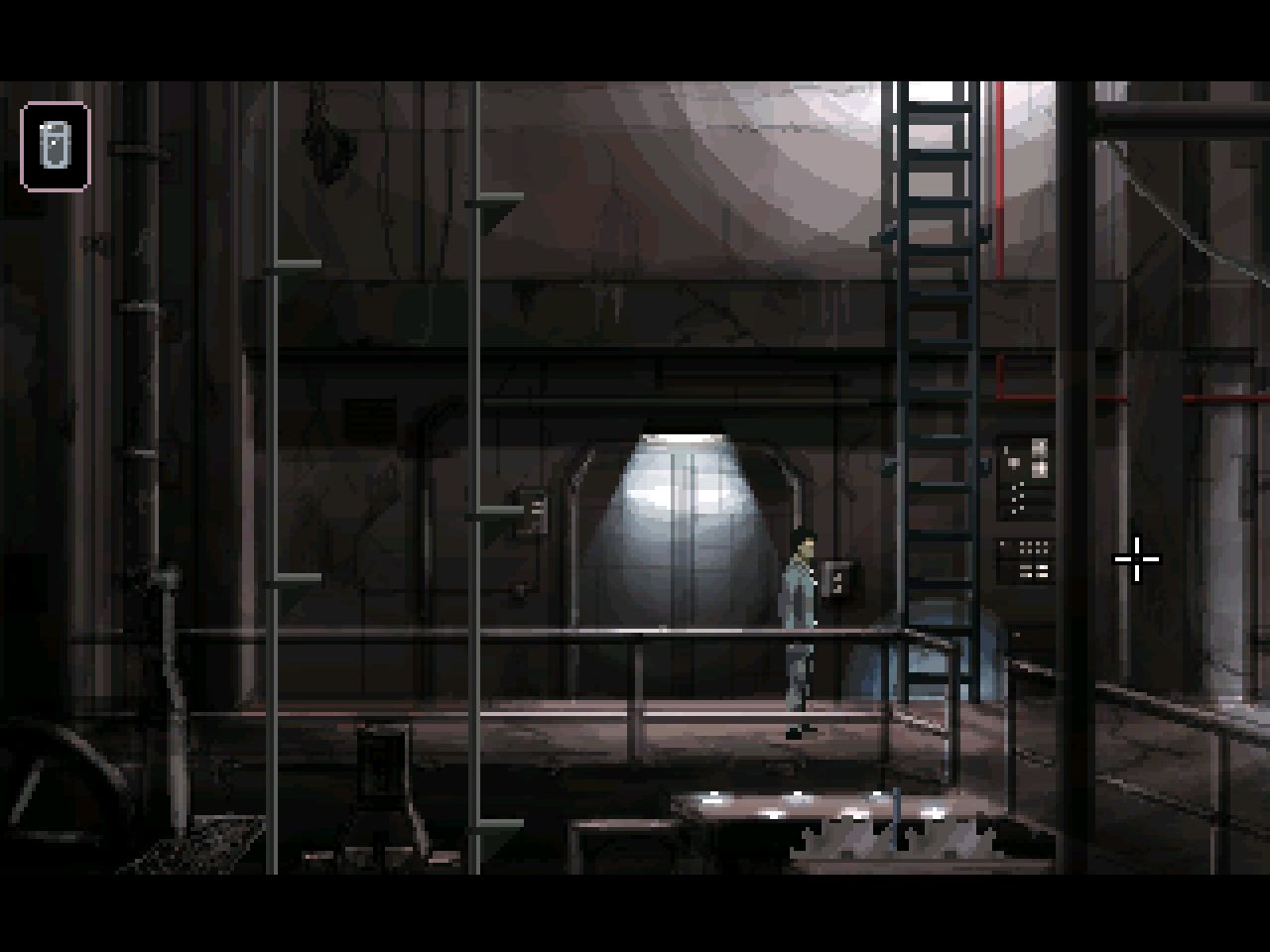
The main adventure loop is point-and-click investigation. In each scene, the player moves a character through a hand-drawn environment, examines interactive details, speaks with people and uses gathered information to open the next line of inquiry. The game’s advertised investigation system is more than a label for searching: names and clues help connect people with places and conversations, so progress often comes from noticing which lead should be pursued rather than collecting a large toolkit. Dialogue can narrow the available options or surface a useful fact, and items sometimes provide the concrete step that a conversation alone cannot. A brief early example in Azriel’s path is learning how to get information from a terminal: reaching it requires an item and the right action, not simply clicking the screen. It introduces the game’s habit of combining the right person, object and place. The puzzles are tied closely to the current scene and story objective, while the interface keeps the emphasis on observation and deduction. The game avoids a sprawling inventory-crafting structure, concentrating instead on specific investigative obstacles.
Firefights create a brief change of pace from searching and conversation. When a shootout starts, the character uses cover while opponents fire from the opposite side. The player must judge when to remain protected and when to lean out to shoot, responding to the enemy’s firing rhythm rather than holding the attack button. Several enemies may require choosing a target as the action unfolds, so awareness of who is exposed becomes part of the encounter. The timing is legible: stay behind cover during incoming fire, then make a short attack window before the opponent ducks back. These sequences make danger immediate in a way the quieter investigative rooms do not, and fit Azriel’s background and Delta-Six’s enforced weapons training. They are a defined action element within a story adventure, not a separate progression mode built around accumulating equipment or combat statistics. A clue, a conversation or an environmental puzzle remains the usual way the player advances, while occasional timed exchanges interrupt that rhythm and underscore how little control the characters have over the violent systems surrounding them.
The structure of alternating viewpoints is central to how information is delivered. Azriel follows leads across Barracus and toward the criminals he once knew; Delta-Six works through Center 7’s routines and the people who control them. The game sometimes allows the player to choose between the two active scenes, which makes the change of perspective a way to move the investigation forward rather than an opportunity to exchange objects between characters. Each thread has its own immediate obstacles, but the shared questions about memory, loyalty and identity give the separate locations a common shape. Conversations and discoveries can revise how earlier details appear, so the narrative rewards attention to names, motives and repeated ideas. The player is not asked to build a character through statistics or choose a large branching skill tree. Progress comes from understanding more of the situation and using that knowledge to reach a new scene. The alternating structure also changes the pace of discovery, placing a question from one thread beside new evidence in the other. Keeping the two leads apart for much of the opening lets the mystery develop without revealing its later explanation.
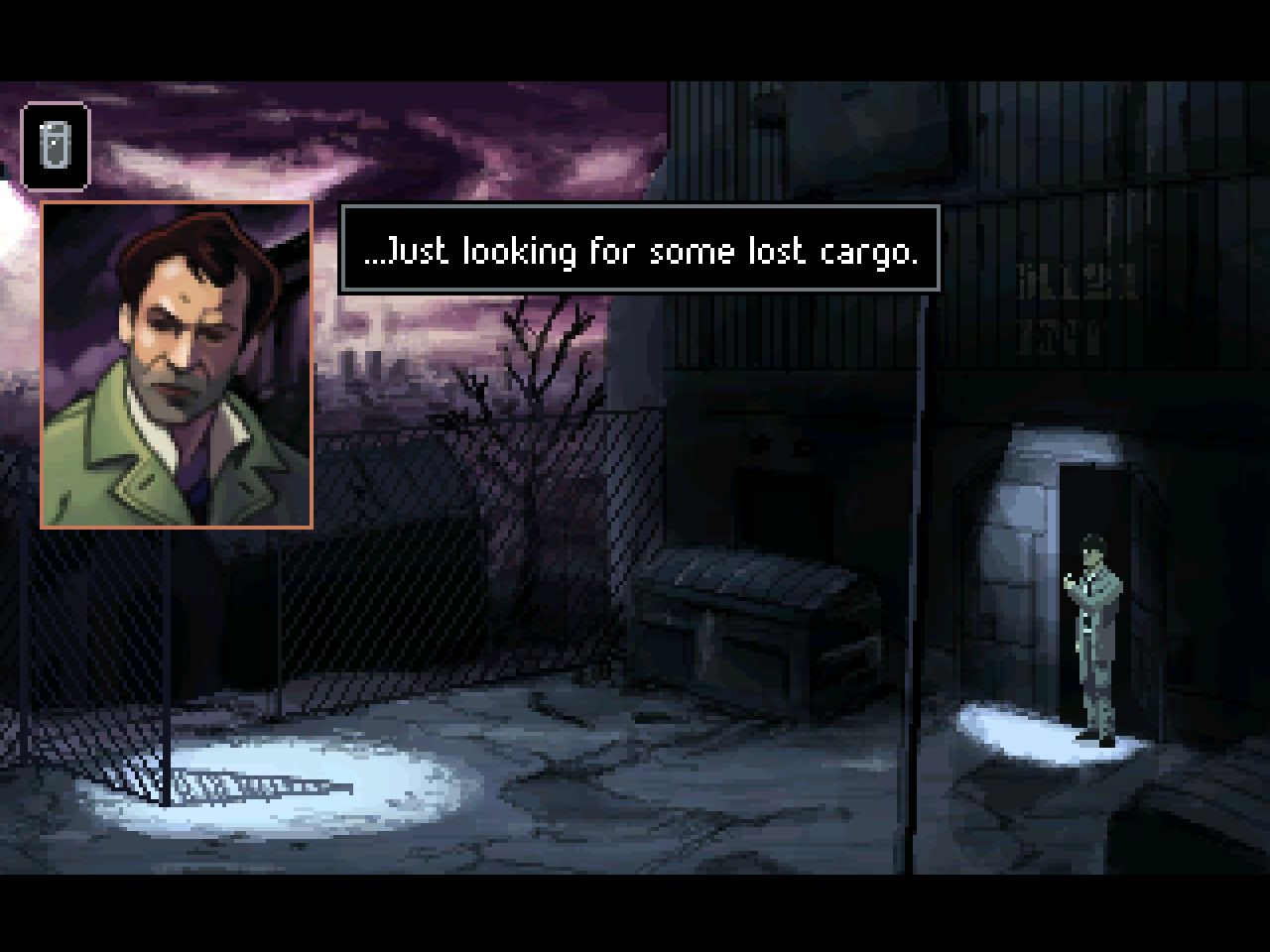
The game’s presentation supports the split between noir city and institutional confinement. More than sixty hand-drawn backgrounds give rain, dark streets and enclosed interiors distinct visual identities. Barracus is open to weather but closed by the people who control its streets; Center 7 is sterile and contained, with its authority expressed through rooms, procedures and the people who direct Delta-Six. Dialogue portraits and voice acting put emphasis on the people both protagonists encounter, while the soundtrack and subdued environmental sound sustain the tense science-fiction mood. On PC, the point-and-click interface organizes examination, dialogue and item use around each scene, with cover-based gunfights appearing as brief interruptions. A separate iOS release adapts the interaction for touch with larger icons and text, point-and-tap controls, a hotspot finder and redesigned combat controls. A DVD-style commentary track adds discussion of how the game was made after the story itself has been experienced. These presentation choices keep the contrast between the two settings visible while the story develops its shared questions about memory and identity.
- Developer
- Joshua Nuernberger
- Genre
- Science-fiction point-and-click adventure with noir mystery and cover-based gunfights