
About Garden Story
Concord, the youngest grape in the Grove, becomes its Guardian as a spreading Rot threatens four settlements. Garden Story combines real-time combat, village requests, foraging and repair: daily work earns community trust, while new tools, Memories and journeys through infested places carry Concord toward the island's deeper history.
Concord begins in the Kindergarden, caring for a vine before being drawn into a much larger responsibility. The Grove's Guardian is expected to protect its communities, but its newest holder is a young grape whom not every resident immediately trusts. The threat is the Rot, a spreading blight that has reached paths, buildings and the creatures encountered beyond the villages. Elderberry, Rana and Fuji are among the inhabitants who help Concord understand what the job involves. Their support matters because the Grove is not a single isolated town: its four principal regions follow the seasons, and each has people, work and damaged places of its own. Spring Hamlet introduces the daily rhythm before the journey continues to Summer Bar, Autumn Town and Winter Glade. Concord is restoring a network of communities as well as following a story about the Grove's past. A repaired passage can reopen travel; an answered favor can make a resident more willing to help. The premise gives the small character a reason to carry tools and supplies across a world whose friendly produce inhabitants must live with a genuine threat.
A day in a settlement begins with requests rather than a fixed order of story missions. Its board can ask Concord to clear hostile Rot, gather specified materials or repair damaged infrastructure. These jobs feed separate Conflict, Forage and Maintenance measures for the village, so fighting alone does not take care of every need. Resting ends the day and brings another set of work, while raising the relevant measures helps the community develop and can open the way to further quests. The structure makes a journey outside town serve several purposes: an expedition might deal with enemies, collect material for a repair and reveal a person with a favor, before Concord returns to the board or home. A request for materials calls for knowing where a resource appears; a repair may then require carrying those supplies to the damaged structure rather than merely collecting them. This gives the board a practical relationship with the surrounding paths. Villagers have routines, and the day-night cycle changes when certain shops or people can be found. The player can also spend time exploring rather than rushing straight to sleep; the main journey is not framed as a sequence of short compulsory timers. That combination of repeated civic work and more directed story tasks distinguishes the game from a free-form farming simulation. Concord cultivates gardens, but the Guardian's obligations also include defense, restoration and reconnecting the settlements.
The Grove is explored from above in compact, connected areas, with paths that do not all yield to the same tool. Its seasonal settlements have different appearances and resources, so reaching a new one changes both the scenery and the practical tasks available. Concord can forage from the ground, collect materials from waterways with a Dowsing Rod and use gathered supplies at repair points or in upgrades. The rod's line reaches objects across water that ordinary movement cannot; its timed interaction is separate from simply picking something up. Bridges and other structures can be rebuilt to connect routes, and later shortcuts reduce some of the travel involved in returning to familiar places. Certain environmental objects resist an early strike but can be broken with a more suitable or improved tool. This gives earlier paths a second life when Concord has stronger equipment. The map and village layouts help orient the player, but the world still asks them to look at a blocked crossing, a forage spot or a distant shoreline and decide which kind of work would make it useful. Exploration is therefore tied to the Guardian's changing capabilities and to the condition of the places being visited.
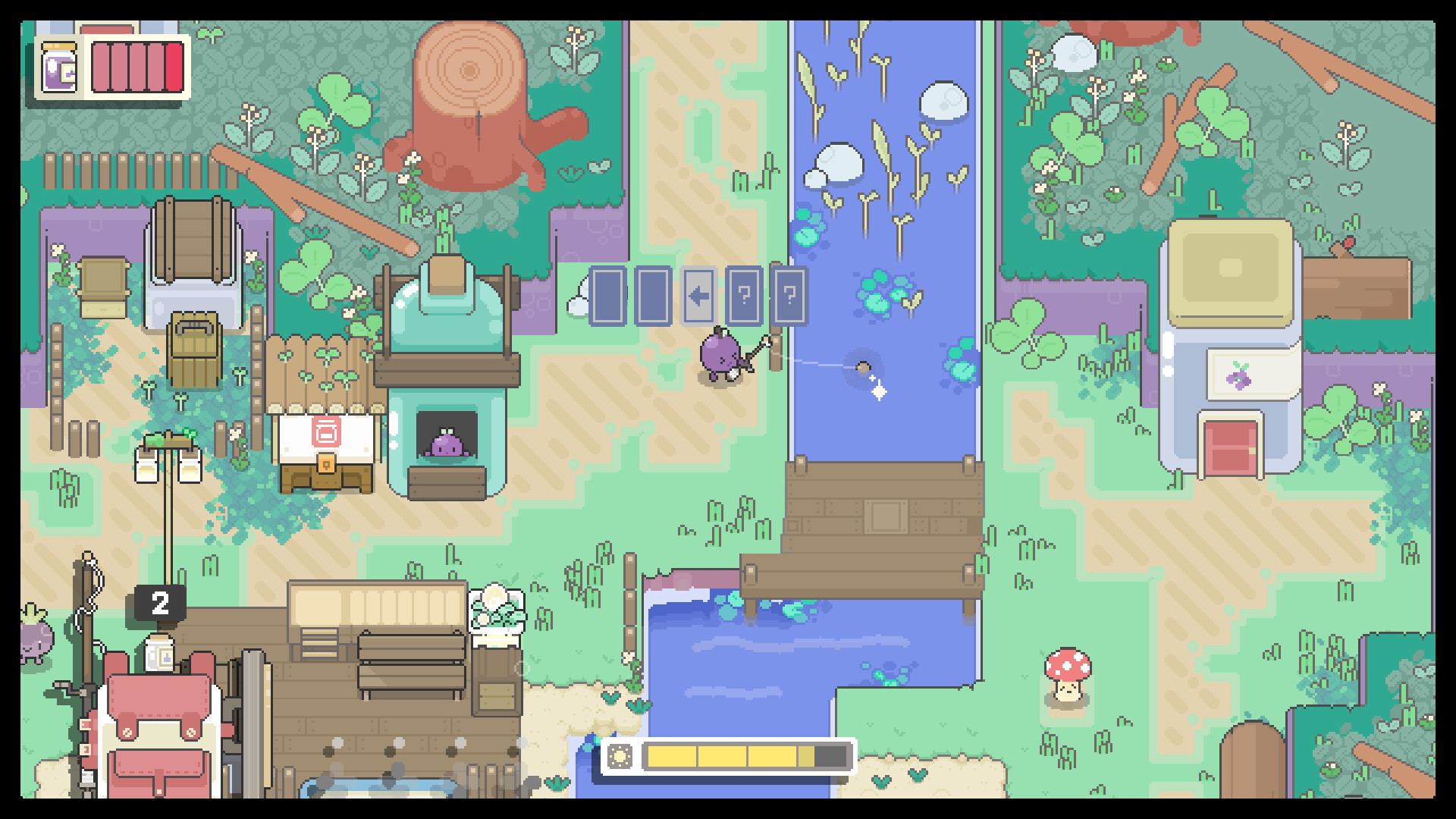
Combat happens in real time, with Concord's health and stamina both worth watching. Attacking and rapid movement draw on stamina, so repeated swings are not always the best answer when Rot are close. A basic Pick serves as an early weapon and work tool; other equipment, including the Dowsing Rod and Parasol, widens the range of actions available as the journey advances. Main and secondary tool slots allow a weapon to be paired with defensive or utility equipment, while a roll provides a way to move away from an attack. Different Rot require attention to their movement and openings, especially when an infested location places several threats together. The Grove also contains puzzle spaces and bosses rather than only roaming enemies. Entering one of those areas shifts attention from everyday village requests to surviving a more contained sequence of obstacles and encounters. Dew stored in jars provides another decision during fights: a charge may restore health, while other varieties can produce different effects. Wells and sellers help replenish or change that supply. For someone chiefly interested in the story and rebuilding, a Perish Prevention option prevents health from falling below one; it changes the cost of a mistake without removing the combat itself.
Concord's growth is spread across equipment, personal abilities and village conditions. Shops can improve tools and jars using currency and gathered materials, making a better weapon useful both against enemies and against obstacles that an earlier version could not break. Health and stamina increases also come from special objects encountered around the Grove, sometimes after the right tool or attack becomes available. Memories are a different kind of progression. They reflect things Concord has done or learned, and can be equipped when resting on the Pillow Leaf to change their abilities. Finding a new memory does not automatically mean every one can be active at once; available slots make the selection meaningful. These systems operate beside the settlements' Conflict, Forage and Maintenance growth rather than replacing it. A stronger Concord still needs to respond to local requests, and a village with improved facilities does not eliminate the need to prepare for a dangerous route. This layered progression explains why collecting resources, finishing an errand and investigating an old path can all be worthwhile during the same stretch of the story. Each can change a different part of what is possible next.
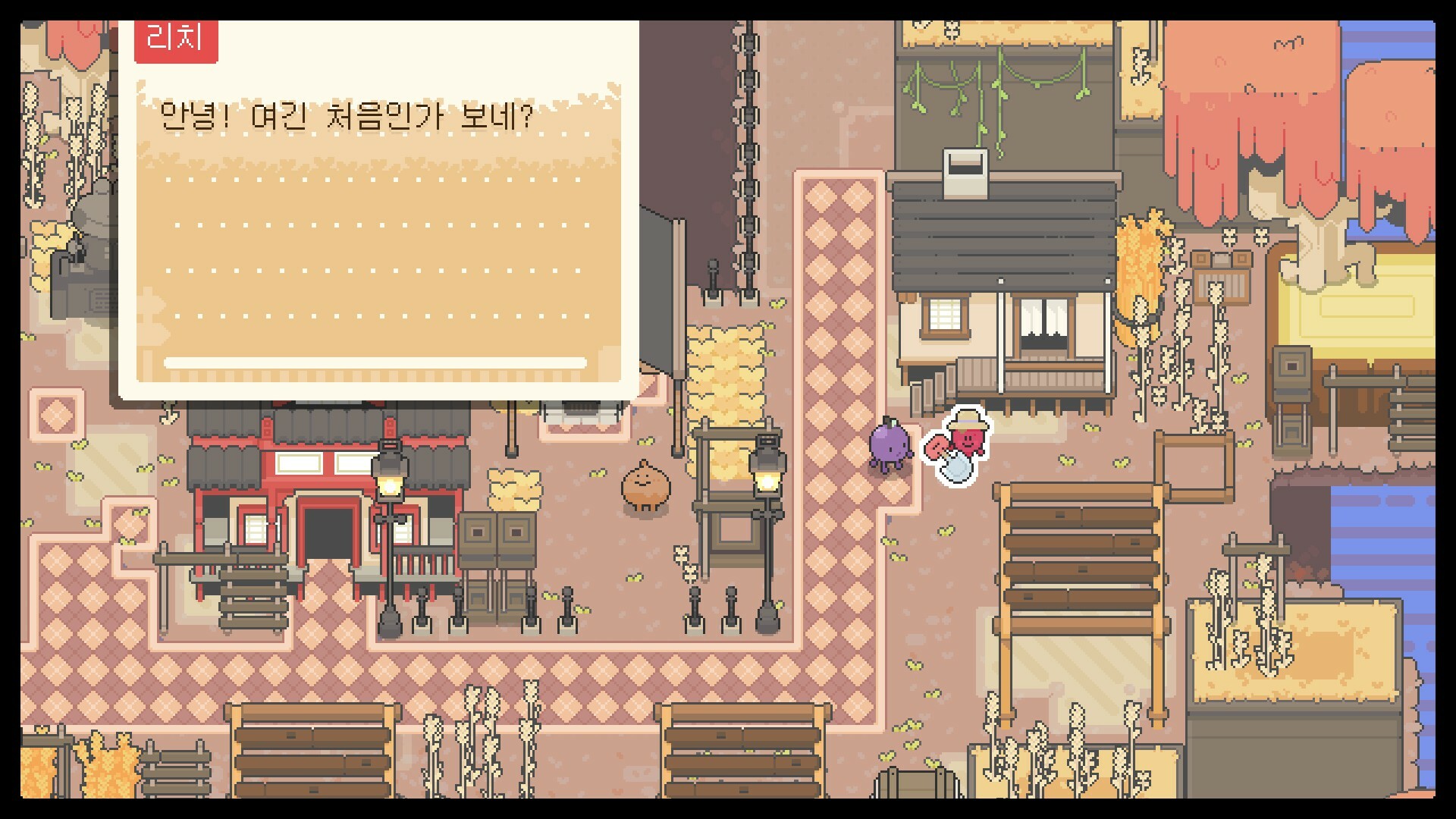
Garden Story gives its restoration work a deliberately handmade appearance. The Grove's fruit, fungi and animal residents are drawn in detailed pixel art, and its seasonal areas have distinct palettes rather than a single repeating backdrop. Quiet music and playful character designs sit alongside ruined structures and places occupied by Rot. Concord can also buy hats and backpacks, cosmetic touches that make the little Guardian's appearance personal without standing in for mechanical progress. Away from combat and repair, there are garden plots to tend, libraries to fill and favors that lead back to particular residents. These are ways of spending time in a community rather than a replacement for the main route through the four regions. The free Autumn Update later added shops in Perennial Plaza, further tool upgrades, library rewards, building plots and travel shortcuts; those features belong to the updated game rather than a separate paid story chapter. Garden Story was released by Picogram and Rose City Games for PC and Nintendo Switch, with Xbox availability also listed by the publisher. It is a single-player adventure built around the relationship between one Guardian's abilities and the health of the settlements they travel between.
- Developer
- Picogram
- Genre
- single-player action RPG