
About FTL: Faster Than Light
FTL: Faster Than Light puts you in command of a small starship carrying vital information toward a Federation base while a rebel fleet closes in. Chart routes across a randomized galaxy, manage crew and ship systems in real time, and make each jump a choice between resources, danger, and time.
FTL: Faster Than Light begins with a simple mission: carry crucial information to a Federation base while the Rebel fleet pursues your ship across the galaxy. The journey is divided into sectors linked by beacons, each representing a possible destination, encounter, store, or exit. The map is generated anew for each run, so the available paths and events change. The red pursuit fleet advances as time passes, putting a cost on lingering. You choose how many beacons to visit before moving on, balancing opportunities to gather supplies against the risk that the rebels will overtake routes you hoped to explore. Reaching the final sector brings the mission to its climactic confrontation; defeat ends that run rather than loading a conventional checkpoint.
The ship is both your vehicle and the central tactical puzzle. Its rooms contain systems such as the helm, engines, shields, weapons, oxygen, and medical facilities. During encounters, you allocate reactor power among those systems, then shift it as circumstances change: more power to engines can improve evasion and help the faster-than-light drive charge, while weapons need power to prepare attacks. Enemy fire can damage or disable rooms, removing system capacity until crew repair it. Your ship also has a limited hull, and damage to that hull makes every later encounter more dangerous. Scrap salvaged from events and battles can be spent at stores on repairs, system upgrades, reactor capacity, and equipment, so the same reward may represent immediate survival or preparation for later threats.
Combat unfolds in real time, but pausing is available while you assess the situation and issue orders. Weapons charge before firing, and you select targets on the opposing ship: striking shields may open a path for follow-up attacks, while targeting weapons can reduce incoming damage. Lasers, missiles, beams, bombs, and other equipment impose different demands and effects, so a useful loadout depends on both power and weapon-system capacity. The enemy vessel follows similar rules. A hit can damage its systems, start a fire, or create a breach that lets atmosphere escape. Success therefore comes from more than reducing the enemy hull: the player decides which part of the fight to disrupt, when to launch a volley, and whether to keep weapons on automatic fire or direct each shot.
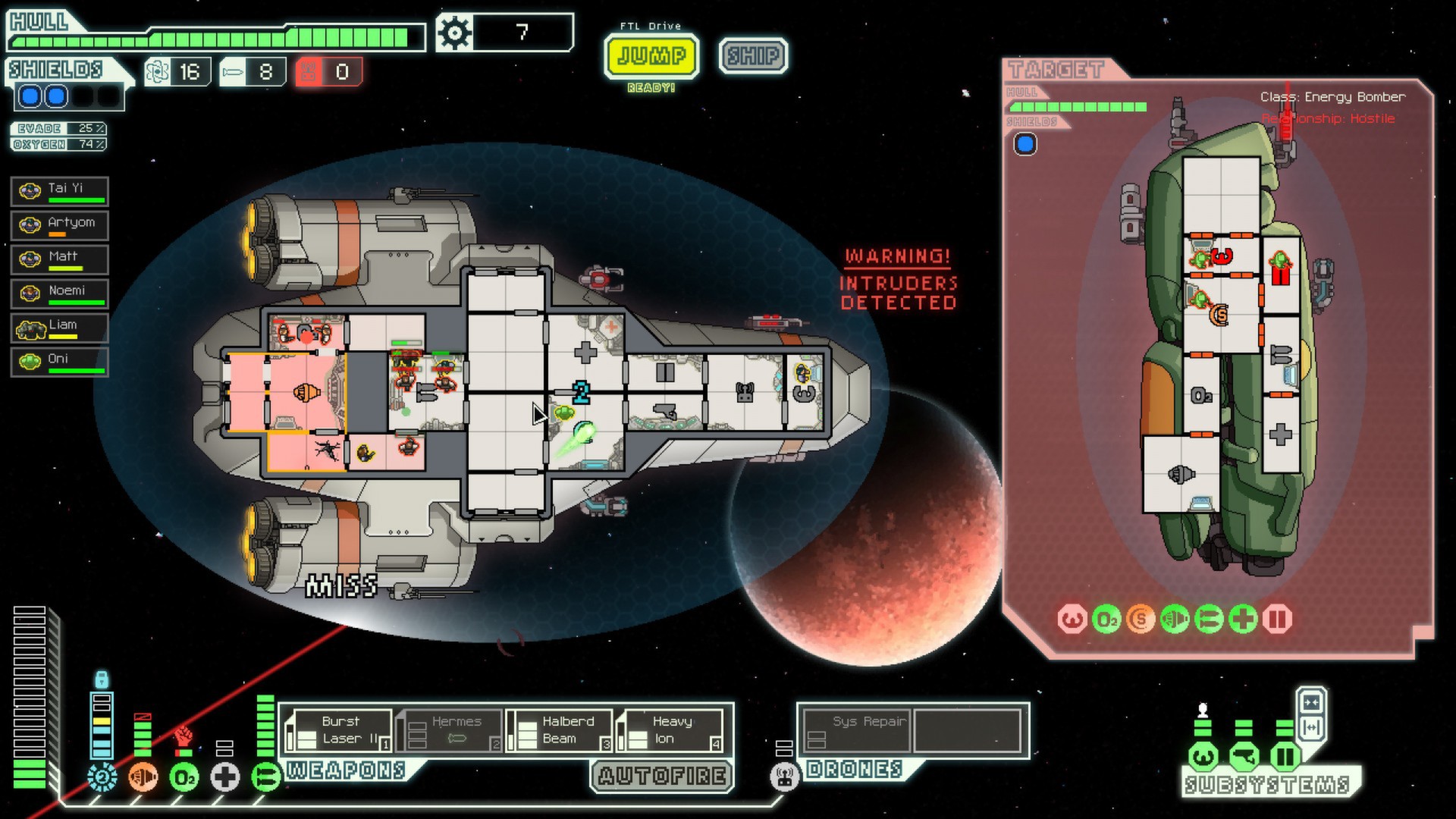
Crew members make the layout function. You can assign them to stations such as piloting, engines, shields, and weapons, where their presence improves ship performance, or move them into damaged rooms to repair systems and seal hull breaches. If hostile boarders arrive, crew can fight them directly; a teleporter-equipped ship can instead send a team across to attack the enemy from inside. The same people cannot perform every job at once, making emergencies a matter of prioritization. Fires can spread through rooms and damage equipment, while doors and oxygen control let you isolate areas or vent atmosphere. That may starve a fire or an intruder, but it also creates danger for anyone who needs air. Crew species have different traits, and those differences shape how they handle combat, repairs, hazards, and life support.
Between battles, text encounters present choices that can exchange resources, cause damage, add crew, or begin a fight. Some options depend on the ship’s installed systems, equipment, or crew, and others carry uncertainty. A distress signal might lead to assistance or trouble; a negotiation may require a payment, while an intervention can cost hull or crew. These events are part of the route rather than separate quests, and their outcomes influence what the ship can do next. Fuel enables jumps, missiles and drone parts feed particular weapons and systems, and scrap remains the main currency for repairs and upgrades. Stores provide a chance to buy supplies or equipment when the route offers one, but they compete with upgrading the ship. The captain’s job is to weigh immediate scarcity against threats still ahead.
As a run progresses, the map opens new sector types and the encounters become more demanding. You may visit friendly, hostile, or otherwise unusual regions, each with its own event mix and risks. Ship layouts differ in their starting systems, weapons, crew and internal room arrangement, and additional vessels can be unlocked through achievements or specific discoveries. This changes the opening conditions and invites different approaches without turning the campaign into a permanent character-level progression system: when a ship is destroyed, that run is over. Knowledge of the systems and the ability to adapt a particular ship carry forward, while the next map and its opportunities are randomized again. The central rhythm is jump, respond to an event, recover or upgrade, then choose the next beacon.
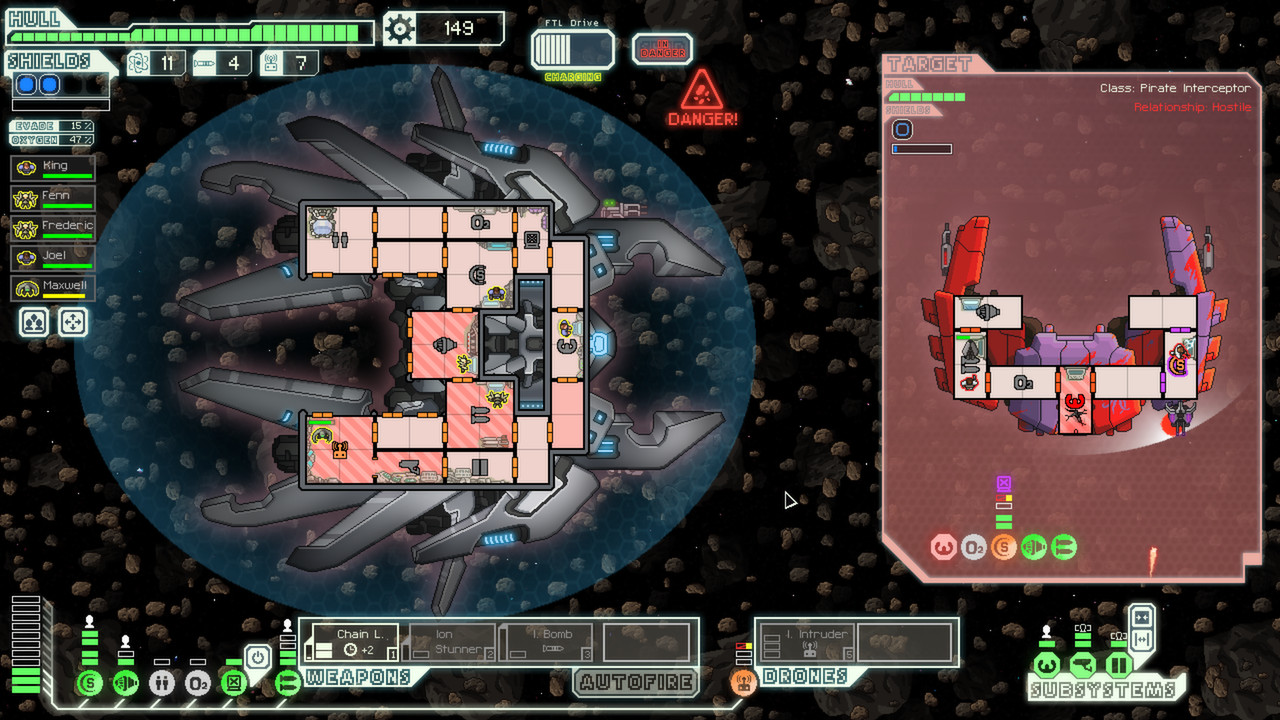
FTL: Advanced Edition is included free with the current Steam release, and it expands the original run with additional ships, weapons, drones, events, and a new alien species. Its added ship systems make room for distinct tactical choices. Hacking sends a drone to interfere with a targeted enemy system; mind control temporarily turns an opposing crew member against their ship; and a Backup Battery provides a short reserve of reactor power. A Clone Bay replaces the Medbay and can restore dead crew through cloning, with experience loss; it also heals living crew between jumps. The Lanius are a crew species that consumes oxygen in the room they occupy, creating a different relationship with air and room assignments.
- Developer
- Subset Games
- Genre
- Strategy / simulation roguelike