
About Frostpunk
In Frostpunk, you lead a settlement in a frozen world where a coal-fired Generator supplies the heat on which city life depends. Build housing and workplaces, manage scarce supplies, establish laws and send expeditions beyond the crater as you try to keep the community alive through worsening cold and social strain.
Frostpunk is a society-survival strategy game set during a climate catastrophe that has left the world frozen. In its central scenario, A New Home, a group of survivors gathers around a vast steam-powered Generator in a crater and begins building what becomes New London. The player acts as the city's Captain, directing construction, assigning people to work and responding to events that test the settlement. The Generator is more than a landmark: it burns coal to heat nearby buildings, and losing its power exposes the population to the cold. Each scenario changes the community's starting position and immediate problem, while Endless mode offers open-ended city management across several maps and modes. Across these formats, the task is to keep infrastructure functioning while guiding a population whose needs grow alongside the city.
The city is laid out in rings around the Generator, with roads connecting buildings and a limited amount of warm ground available at first. Heat is managed by raising the Generator's output, extending its heated radius, activating individual building heaters or researching Steam Hubs that create additional heat zones farther away. These choices consume more coal, so extending warmth for a distant workplace can compete with keeping the central district hot through a temperature drop. Building insulation and local heat settings also affect how well a home or workplace withstands the weather. As the forecast worsens, the Captain must balance coverage, heat level and fuel reserves rather than treating every building as equally urgent.
Daily production depends on matching available people to the right workplaces and maintaining a flow of materials. Workers and engineers can gather wood, coal and steel from surface piles or operate specialist buildings; steam cores support advanced installations such as hothouses, mines, wall drills and factories. Raw food is collected or grown, then converted into food rations in a Cookhouse for residents to eat. Most staffed buildings have scheduled shifts, and laws can extend or disrupt those schedules at a social cost. The player moves citizens between jobs as new tasks appear, leaves enough staff to keep essential services operating and watches stocks against ongoing consumption. A building plan therefore matters only when the city can supply its materials, workforce and heat.

The Book of Laws lets the Captain set rules for working hours, food, healthcare, children and the treatment of the dead. Signing a law can unlock a building or ability, but many decisions affect Hope, Discontent or both, and some alternatives cannot be combined. For example, the city can adopt child shelters or permit child labour; food laws can stretch raw ingredients into more rations while bringing drawbacks; medical rules determine how gravely ill people are handled. Later, in scenarios that include Purpose laws, the Captain can pursue either Faith or Order. These routes add institutions and ways to influence the population, from houses of prayer to guard stations, and their effects depend on how far the law tree is followed. Each new law has a waiting period before another can be signed, so decisions are paced against urgent events rather than made as a single policy menu.
The community is represented through Hope and Discontent, which respond to living conditions, deaths, policies and the Captain's promises. A citizen's request or a city event may offer a short-term opportunity to improve morale, but accepting it can commit scarce labour or materials; failing to fulfil a promise can deepen distrust. Hunger, untreated illness, cold homes and demanding shifts can increase discontent, while successful relief and some public institutions can raise hope. In A New Home, pressure grows around the Londoners, people who want to leave the city and return to London; their presence turns social management into a concrete threat to the settlement's unity. The player can use laws, buildings and timed abilities to address unrest, but some remedies carry new costs. The social measures do not replace supply planning: a hopeful city still needs heat and food, while efficient production cannot by itself settle every dispute.
Research gives the settlement ways to adapt as the cold and its needs intensify. The Captain builds a Workshop and assigns engineers to unlock technologies, with new tiers and branches gated by prior research and materials. The tree includes improvements to Generator power and range, Steam Hubs, heaters, housing, gathering and food production, as well as buildings that turn finite resources into continuing supplies. In several scenarios, the Beacon opens access to Frostland expeditions, while a Factory can produce Automatons from industrial resources and steam cores. These mechanical workers can be assigned to jobs that would otherwise need a human crew, including during hours when ordinary workplaces are closed. Researching those capabilities takes time and competes with immediate fixes, so the player decides whether to improve output, heat, shelter, medicine or exploration first. New technology broadens what the city can do but still depends on fuel, workers and appropriate sites.
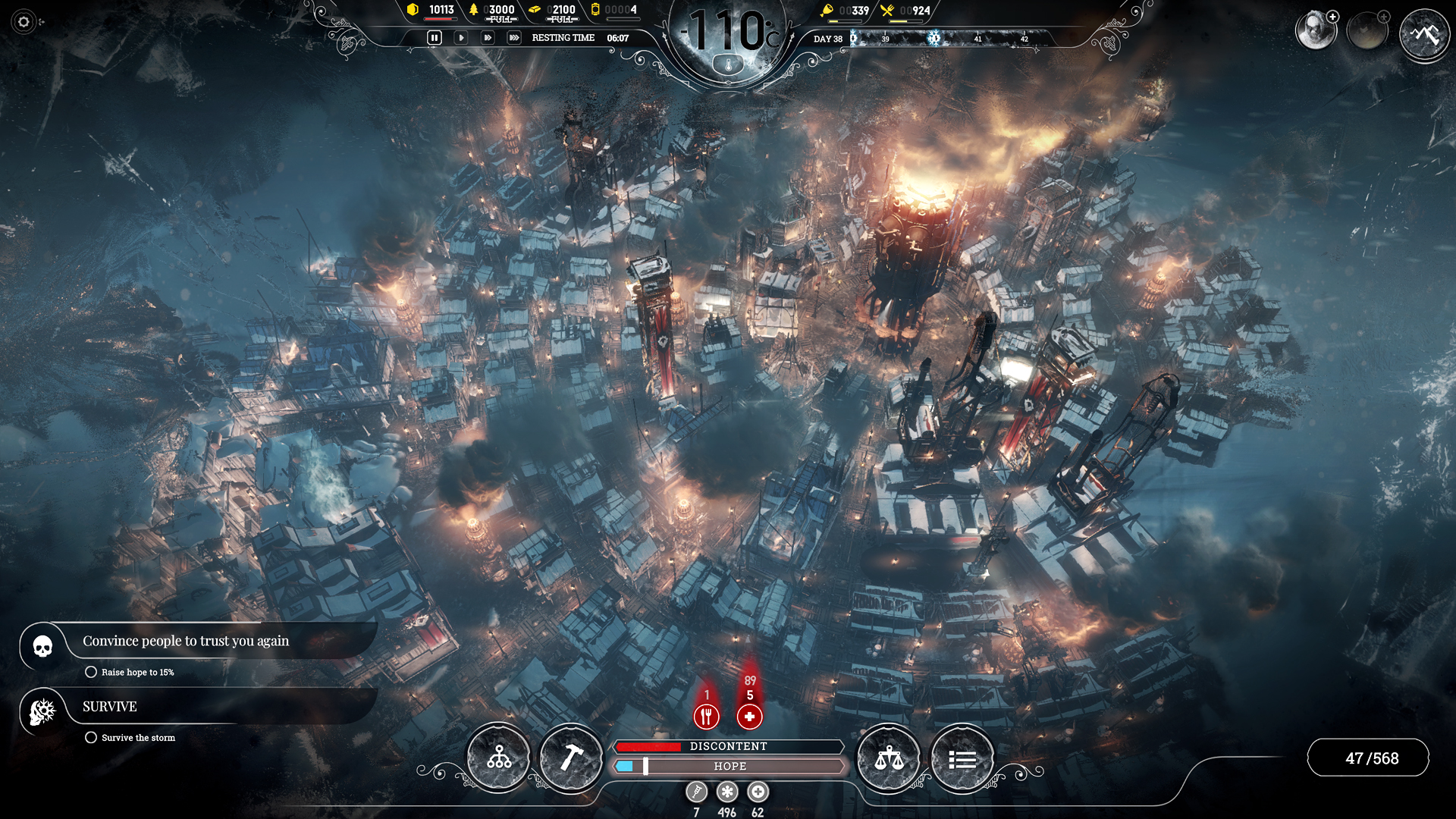
Beyond the settlement, scouts travel from a Beacon to marked locations across the Frostland. Their reports can uncover supplies, survivors and information that changes the city's available choices; bringing people home also means providing for more mouths and beds. In A New Home, exploration contributes to the effort to understand the disaster and find people beyond the crater, while other scenarios give scouting a different purpose. The main story's weather puts a deadline on preparation: a major storm drives temperatures lower and threatens the city's ability to operate, so stockpiles, insulation, heating capacity and medical care all matter before it arrives. Once severe conditions set in, exposed work and unreliable supply lines can no longer be treated as routine problems. The base game's Endless mode offers Endurance and Serenity options with different levels of pressure on the city's survival.
- Developer
- 11 bit studios
- Genre
- Society survival strategy / city-building simulation