
About Frogmonster
Frogmonster casts the player as a frog protecting Melora from Runi and his creations. It combines first-person shooting, interconnected exploration, challenging boss encounters, catchable bugs that grant bonuses, weapon upgrades, and spells in a colorful world full of unusual creatures.
Frogmonster sets a small frog on a large adventure: protect Melora from Runi and the many creations he has unleashed. The game tells that premise through a colorful, unusual world populated by creatures and a cast of characters who mostly have good intentions. The store description keeps the central conflict broad, leaving the focus on exploration and the threat posed by Runi’s creations rather than outlining every plot turn. That gives the journey a clear destination while preserving the sense of discovery suggested by its winding environments. The player moves through this world as both explorer and fighter, encountering strange beings that may be obstacles, characters, or part of the wider setting.
The game combines first-person shooting with Metroidvania-style exploration and Soulslike boss encounters. Its world is described as weird and winding, with upgrades and abilities that let the player push farther as the balance disrupted by Runi is gradually reset. This means progress is tied to both winning fights and finding ways through the environment. New abilities can open additional routes or support further exploration, while revisiting familiar spaces can reveal possibilities that were previously out of reach. The structure gives the adventure a sense of connected geography instead of a sequence of unrelated arenas, even though combat—especially boss combat—is a major part of its identity.
More than thirty unique bosses are a defining feature of the game. Each is presented as having its own mechanics and personality, making a boss encounter a distinct test rather than simply a larger version of a standard enemy fight. The player needs to observe what an opponent does, respond to its patterns, and choose useful weapons or spells for the situation. Boss victories provide rewards that support continued progression. Their number also shapes the adventure’s pacing: major fights mark encounters with the world’s dangers, while exploration and upgrades fill the spaces between them. The game’s description emphasizes that these opponents are varied, placing their individual behaviors at the center of the challenge.
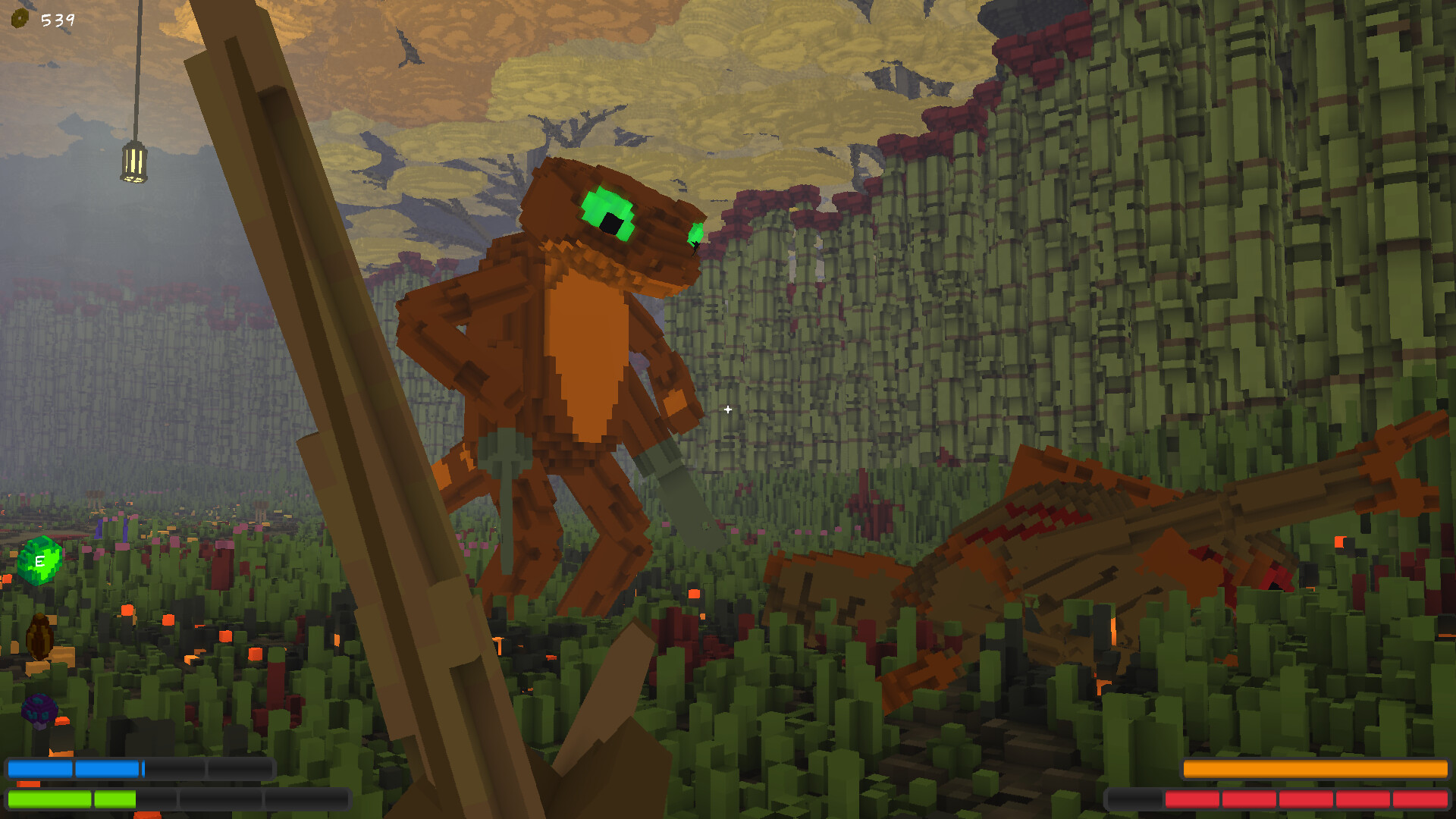
Weapons can be found throughout the adventure and upgraded along different paths. Those choices allow players to shape a weapon toward different uses and playstyles, rather than treating every piece of equipment as a fixed option. The shooting system sits alongside spells that can heal or attack in several ways, including zapping, burning, and explosive effects. This gives the player a selection of tools to bring into fights, especially the more involved boss battles. Progression therefore comes from combining new equipment, improvements, and abilities with a growing understanding of the enemies and spaces ahead.
The frog’s tongue is more than a visual detail: it lets the player catch bugs found in the world. Those bugs can then be equipped to provide a variety of bonuses. The mechanic ties the protagonist’s animal identity to character customization, turning small creatures into part of the build rather than scenery alone. Searching for bugs can become another reason to pay attention while exploring, and equipping different ones lets the player adjust bonuses around the challenges ahead. This system complements weapon upgrades and spells, adding another layer of preparation without replacing the moment-to-moment work of aiming, moving, and reacting.
Exploration and combat continually inform each other. The world contains upgrades and abilities that help the frog reach new areas, while the next region may bring different creatures and boss encounters. The store description emphasizes an atmospheric, colorful environment where the next corner can hold something unexpected. Finding a route forward is part of the adventure, but so is deciding whether to follow the main path or investigate another stretch of the map. That rhythm makes the environment more than a corridor between battles: it is where the player gathers tools, encounters characters, and gradually develops the abilities needed to continue confronting Runi’s influence.
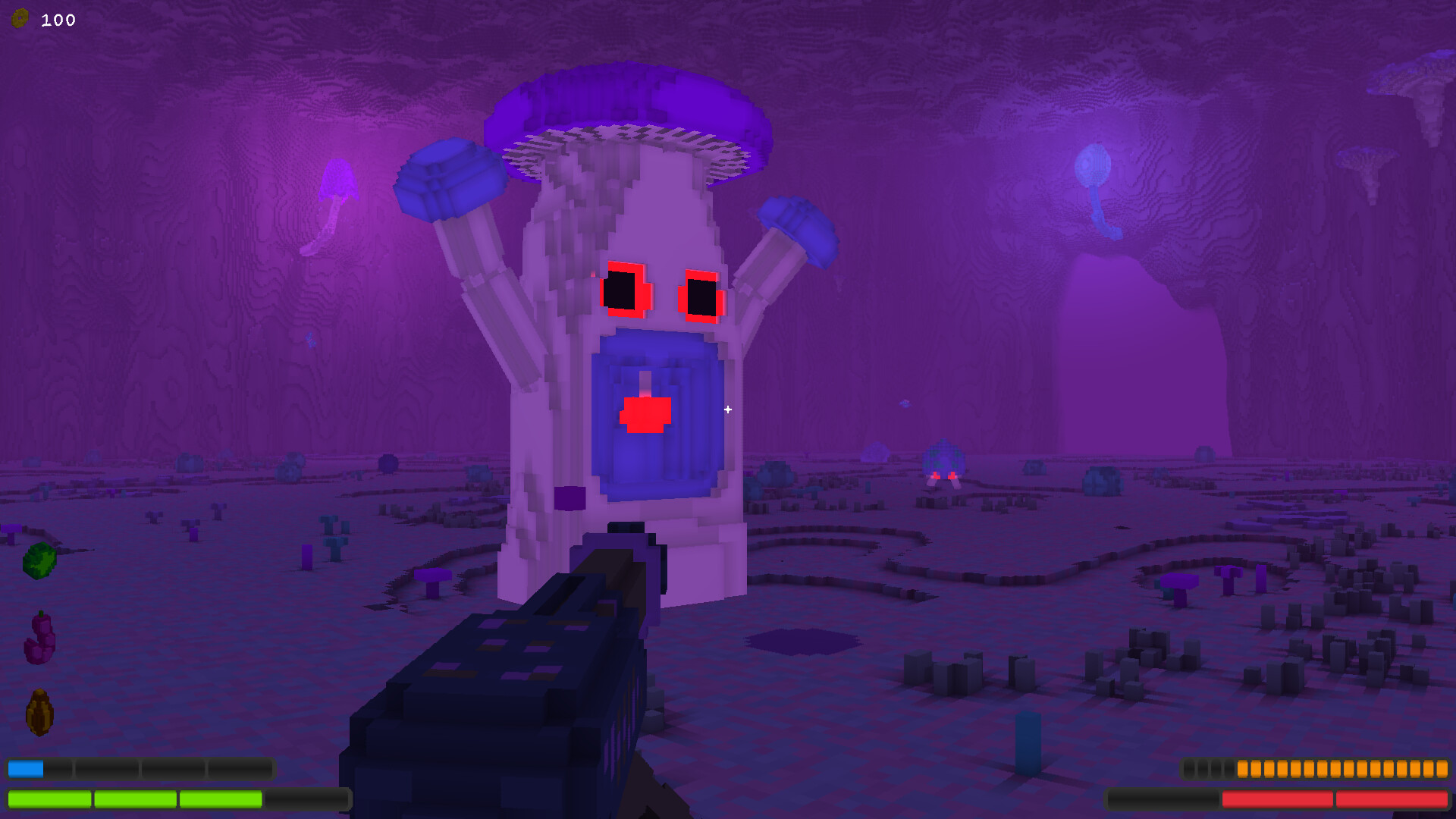
Frogmonster also includes post-launch additions described on its Steam page, including three extra bosses, a boss-rush mode called Boss Soup, an item-randomizer option, and an expanded soundtrack with more than fifty tracks. These additions sit alongside the main adventure and give players extra ways to return to its encounters or change a run’s structure. The main campaign remains centered on protecting Melora, exploring a connected world, and confronting Runi’s creations. Across that journey, the game’s systems keep feeding into one another: exploration finds upgrades and bugs, equipment and spells shape combat, and victories help the frog push farther into a world whose balance has been disturbed.
The optional Boss Soup mode turns the boss focus into a separate challenge: Steam describes four rounds of boss rush, with a new boss at the end of each soup. This gives the player a way to revisit combat as a concentrated sequence after encountering bosses through the main adventure. The bonus update also names Balsam, Borp, and Mud as additional opponents, extending the roster. These extras sit beside the campaign’s exploration and progression, giving returning players more fights to approach with the weapons, spells, and bug bonuses they have collected.
- Developer
- Ben Jungwirth
- Genre
- Single-player Metroidvania first-person shooter with Soulslike boss encounters