
About Fortune's Run
On New Zabra, Mozah navigates a decaying industrial society where desperate people seek passage to frontier worlds. Fortune's Run is an unfinished Early Access first-person shooter with immersive-sim elements, combining open-ended levels, stealth and lethal gunfights with fighting-game-inspired melee combat and fast movement.
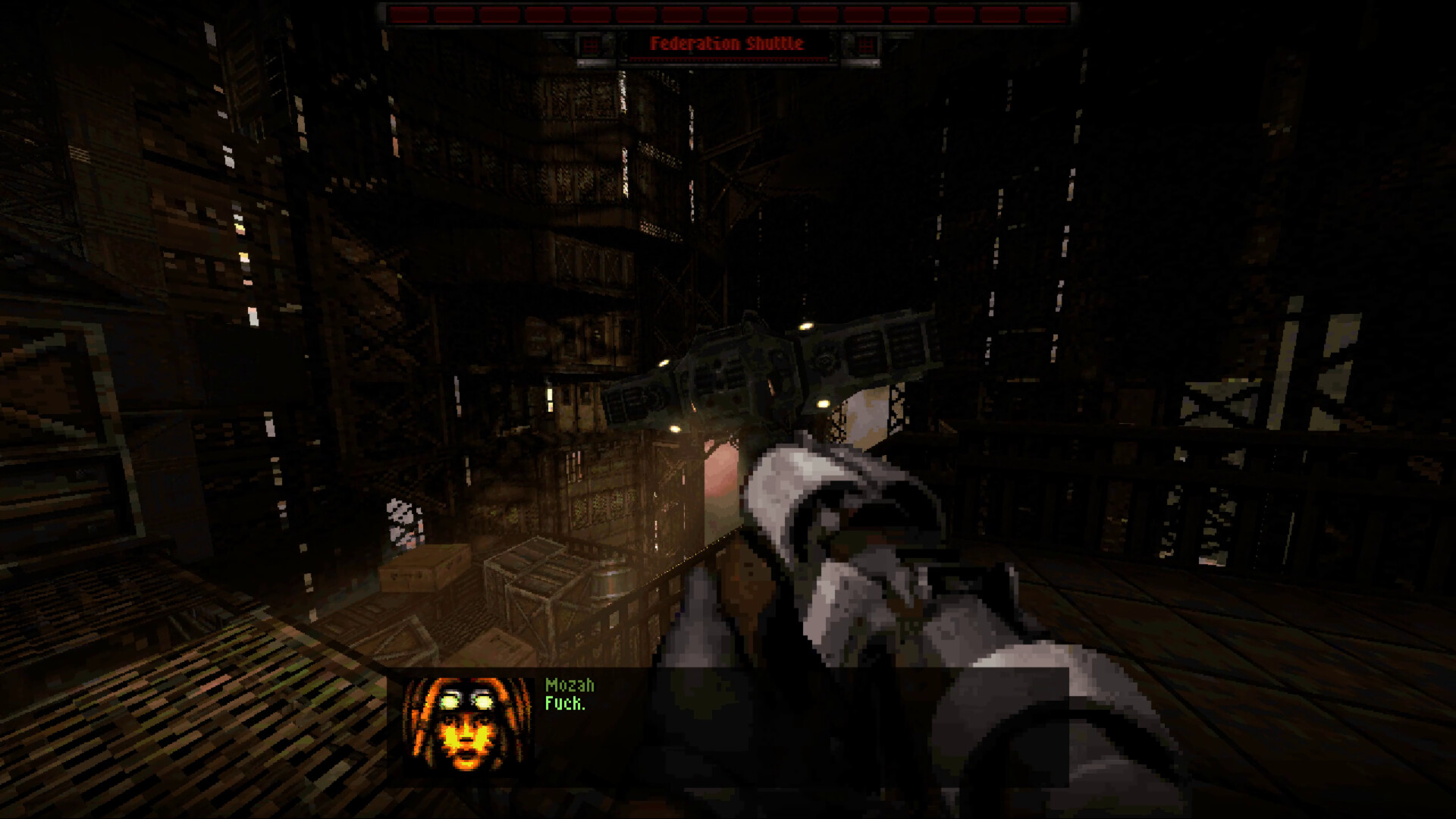
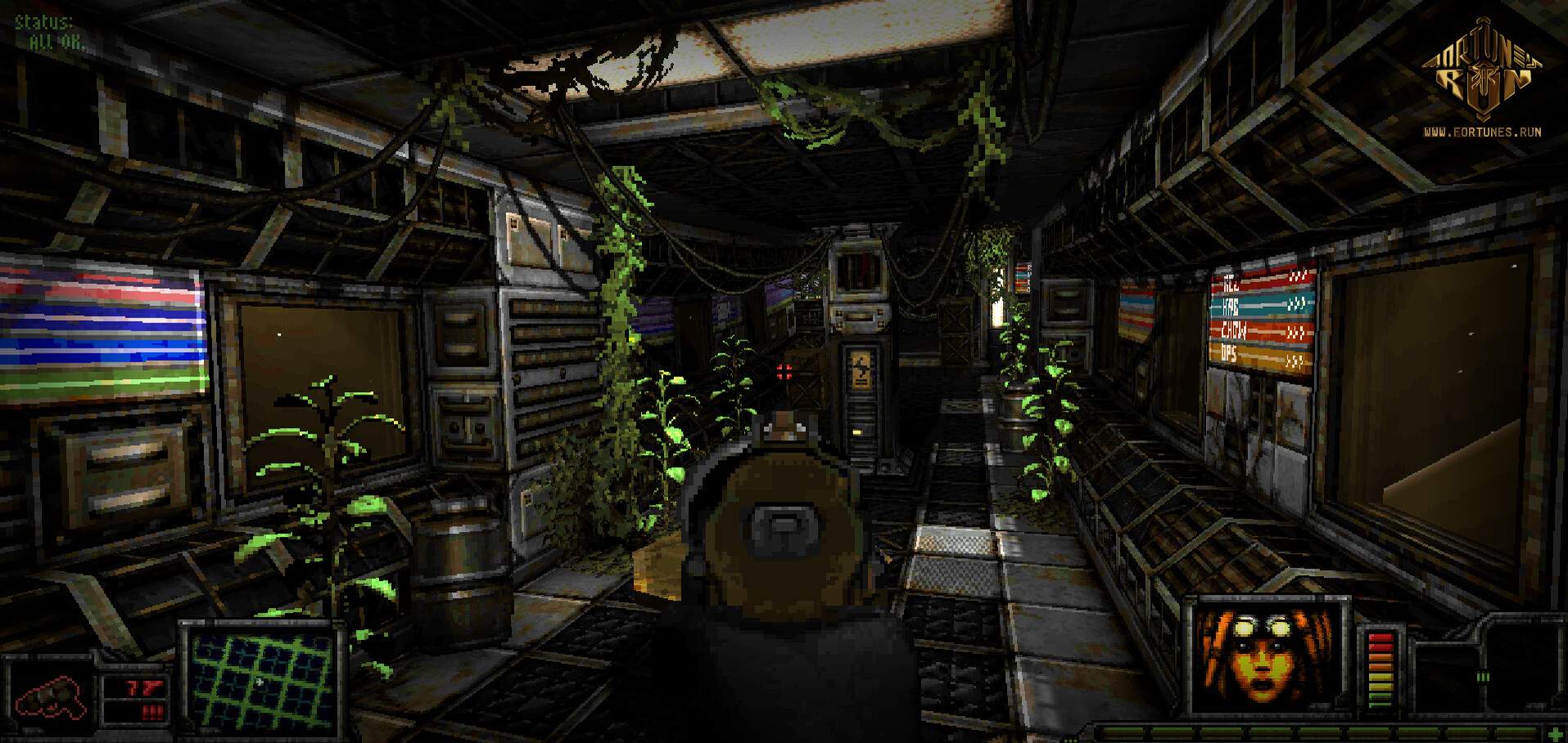
Fortune’s Run takes place on New Zabra, an industrial world left behind as humanity pushes toward the stars. Its society is described as a quiet dystopia: food is free, yet people still starve, and residents are bought and paid for by interests from off-world. Under iron skies, desperate people kill and steal in pursuit of passage to frontier worlds that still offer opportunity. The player follows Mozah through this setting, encountering low-lives and a broader story presented through voiced dialogue. The game gives the world a worn, post-industrial character, with barren factories and boarded-up storefronts. Space-opera touches sit beside these decaying streets, grounding the science-fiction premise in places marked by scarcity, danger and unequal power.
The playable build is an Early Access work in progress. Its store listing describes it as such and says that the currently available game may change; its developer disclosure distinguishes existing content from an intended full version. At Early Access launch, the developer described three areas, scenes and dialogue, plus material from the earlier demo, for roughly six hours of content. The same disclosure described an intended full game with eight levels connected by a hub, alongside additional weapons, enemies, mechanics, animated scenes and dialogue. Those larger elements were plans, not a guarantee that the Early Access version contains them. Fortune’s Run should therefore be understood through the available Early Access content, with the planned full release kept separate from what players can access now.
Within its available spaces, the game mixes first-person shooting with immersive-sim approaches to navigation and encounters. Levels are open-ended enough to allow different routes and tactics, rather than forcing every confrontation into one prescribed exchange. Players can move carefully, look for an advantage or start a direct fight. The industrial setting supports exploration as well as combat, and the spaces connect to the fiction of a settlement built from factories, shops and infrastructure. The mission structure follows Mozah’s story through discrete areas, while the available campaign is only a portion of the broader scope outlined for the full game. The result is a shooter in which how a player approaches a room can matter as much as which weapon they bring into it.
Combat combines firearms with a close-quarters system shaped by fighting games and character-action titles. Melee attacks can be arranged into combos and specials, with grabs and mix-ups used to break an opponent’s stance or disrupt their guard. Parries, counters and invincibility frames create defensive opportunities, but the game makes damage lethal enough that mistiming an exchange is dangerous. The store description stresses that players must learn the system through practice. Shooting remains central, yet the melee tools mean that a close encounter can involve more than firing until one side falls. The available mechanics reward recognising an opening, choosing a response and controlling distance before an enemy can strike back.
Stealth is another way to manage danger. An unaware target can be killed with a headshot, and quiet tools such as hands, knives and thrown bottles can help avoid drawing attention. The developer has described enemy awareness as responsive to both sight and sound: a nearby opponent may investigate a death, so a silent takedown can still expose the player if it happens beside another guard. Grabs offer a close-range option, while thrown weapons allow an attack from a little farther away. Once an alarm is raised, the player can move into a faster fight or use the level to break contact. Stealth and aggression thus share the same spaces, with decisions about timing and enemy placement changing the risk of either approach.
Movement gives these encounters a quick, physical rhythm. Fortune’s Run uses fast strafe-jumping movement in the tradition of older first-person shooters, and its environments include opportunities to move vertically as well as across a floor. Players can combine this speed with melee attacks, gunfire and the room’s layout. Because combat is lethal, movement can help avoid a clear line of fire or close the distance for a grab, but it does not remove the need to read what an opponent is doing. The game’s systems place rapid traversal beside deliberate defence: a player can reposition quickly, then rely on a parry or counter when an enemy attack arrives. The contrast shapes how each encounter unfolds.
The setting also reaches beyond its worn streets. The developer’s description points to distant stars and science-fiction set pieces, including a simulated centrifugal space station and a train climbing by cable toward the heavens. These are part of the intended larger vision, and should be distinguished from the specific areas present in the current Early Access build. The planned full version was described as adding connected levels through a hub, new content and further story material; those goals remain plans rather than features to assume as available. For the build on offer, Fortune’s Run is a developing story about Mozah in a harsh frontier society, played through a mixture of stealth, lethal gunfights, open-ended exploration and demanding melee combat.
- Developer
- Team Fortune
- Genre
- Early Access first-person shooter with immersive-sim, stealth and fighting-game-inspired melee elements