
About Forgive Me Father 2
The Priest continues his story in a Lovecraftian nightmare where a path toward salvation runs through hostile, shifting spaces and evolving enemies. This standalone sequel combines fast first-person combat and comic-book horror with weapon variants, Madness-fueled Dark Tome powers, secret areas and hidden tokens that shape how each level is approached.
Forgive Me Father 2 follows the Priest from the first game into another journey through a malevolent world inspired by H. P. Lovecraft’s mythology. He seeks salvation while struggling to remain on the edge of sanity, and the game frames that struggle through nightmares, hostile environments and an onslaught of possessed enemies. This is a distinct sequel with its own levels and progression; its playable protagonist is the Priest, whose continued story gives returning players a familiar point of connection. The narrative uses an ominous, surreal tone, while much of the moment-to-moment experience is about finding a route through a dangerous place and surviving the creatures that guard it. Story details are spread among the world and its encounters, leaving the central journey deliberately strange rather than fully explained at every turn.
Each level combines movement, searching and bursts of first-person combat. The Priest moves through interconnected spaces, opens routes by finding keys for color-coded locks, and encounters enemy groups that demand quick movement and weapon choice. Health and ammunition supplies make exploration useful, since a side route can replenish resources before a later fight. Levels also contain secret areas and destructible tentacle clocks, while additional enemies and hidden items contribute to level completion goals. These elements create a rhythm of clearing an area, looking for a way forward, and deciding whether to explore beyond the direct route. Because the game is built around active firefights, standing still can leave the Priest exposed; movement, strafing and switching weapons are practical parts of survival, not merely ways to cross empty corridors. The combination of combat and backtracking gives each level more purpose than a straight chain of arenas.
The arsenal starts with familiar categories and expands into stranger variants. The arsenal includes shotguns, rifles and explosive launchers, alongside a knife and revolver among its ordinary weapons. Weapon tokens found through levels can unlock more otherworldly versions, changing the character of the equipment available to the Priest. Some variants retain the recognizable role of a weapon while adding a grotesque visual identity; others shift its function enough to invite a different approach to a fight. The player can swap between weapons as ammunition or enemy formations change, and the breadth of the arsenal helps distinguish encounters. Improving or unlocking a weapon is a concrete reward for searching, so exploration can alter the combat options brought into subsequent rooms. The comic-book presentation makes the increasingly uncanny arsenal feel part of the same world as its monsters.
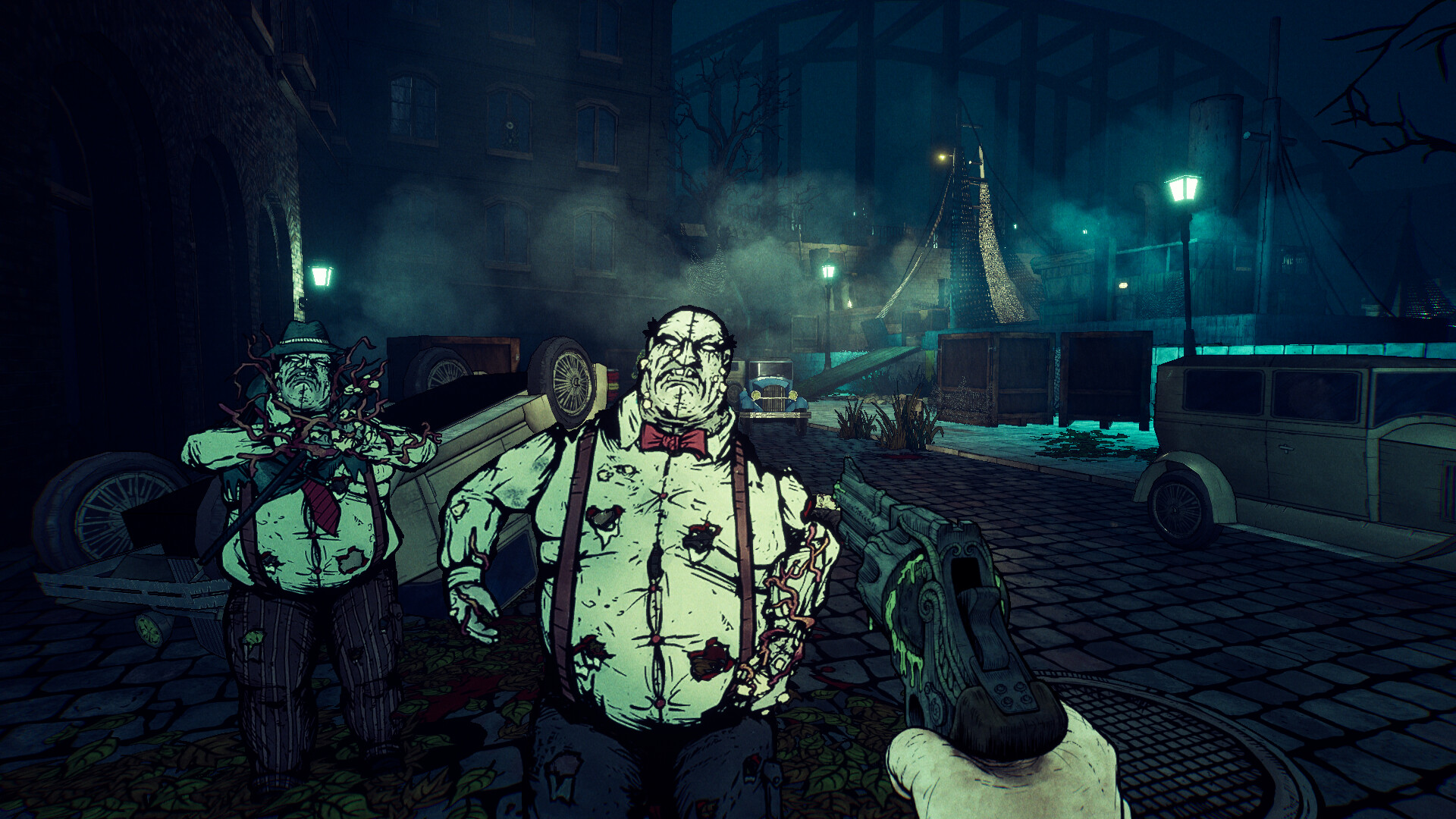
Madness is expressed through the Dark Tome, a supernatural system that turns collected resources into temporary powers and buffs. As the Priest gathers Madness Tokens, he can unlock pages in the tome and use those pages to trigger an effect for a limited time. Some effects support survival or combat, giving the player a brief advantage amid a difficult encounter. The system makes Madness both a theme and a resource: exposure to the nightmare produces power, but that power is selected and spent with some care. A player can activate a useful page when a crowd presses in, or preserve the opportunity until a later danger. The tome’s pages and the weapons form complementary layers of progression, one offering short-lived abilities and the other expanding the lasting arsenal. This creates a deliberate choice about when to draw on the Priest’s unstable state rather than treating every ability as permanently available.
Enemies are more than repeated targets. Enemies can evolve into different, more hostile forms, so a familiar opponent may become a more dangerous version as the journey continues. Cultists and other possessed figures stand alongside overtly Lovecraftian creatures, producing a bestiary that changes the texture of combat. Enemies have distinct attacks and strengths, and their behavior can include taking cover at range, according to coverage of the released game. That mix asks the player to judge distance, threat and positioning rather than simply fire the same weapon at everything. When the music swells into heavier combat passages, the environment and enemy pressure combine to create set-piece fights, with movement and the right weapon helping the Priest regain control. Health and ammunition placement also matters, because a supply picked up while exploring can decide whether the next encounter is manageable.
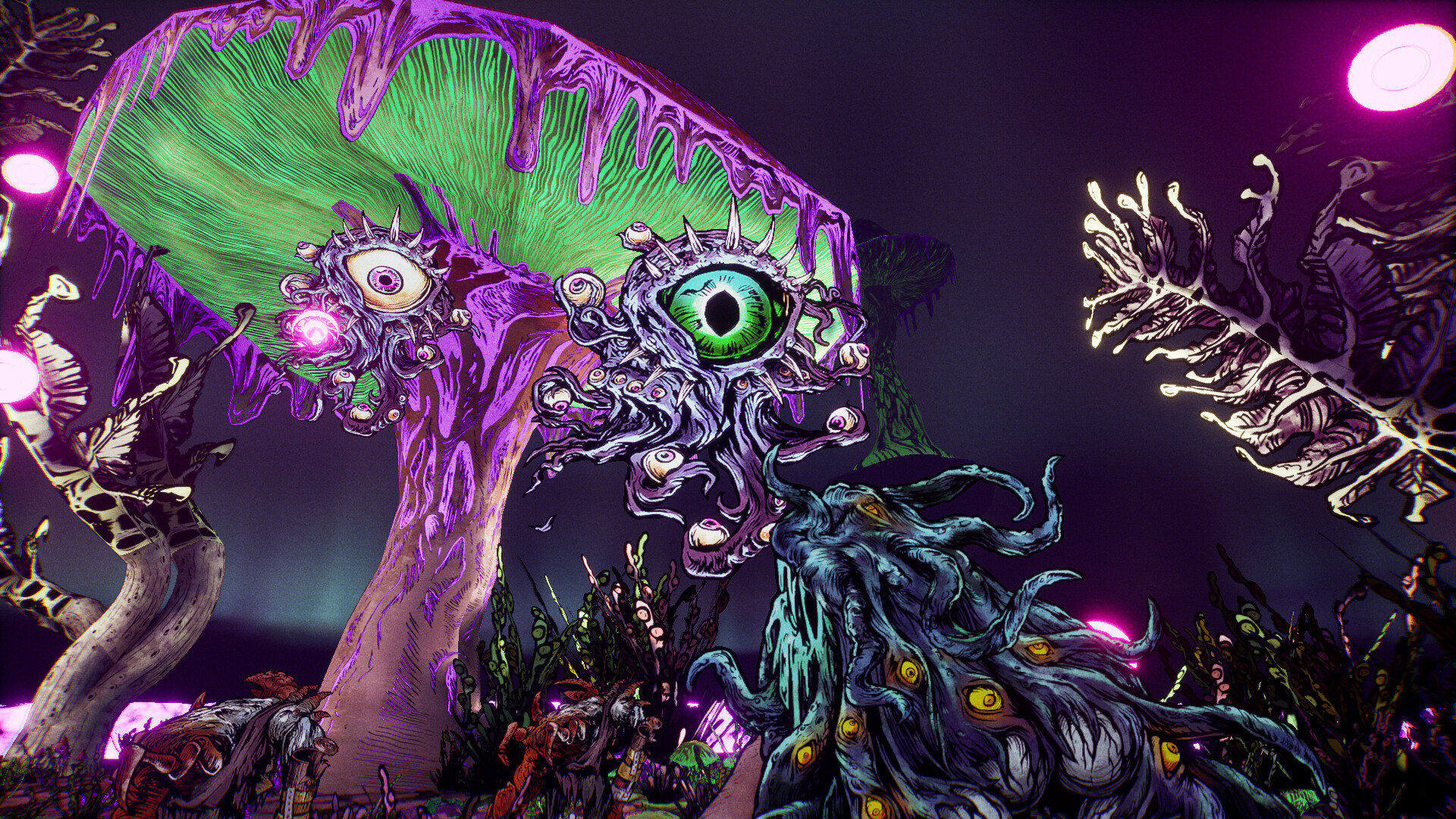
The world is rendered as dark comic-book horror, with hand-drawn graphic design placed within three-dimensional environments. Improved sprites and models, lighting effects and conspicuous blood effects carry forward the series identity while giving the sequel a fresh visual treatment. Locations move from enclosed interiors to larger, stranger spaces; coverage of the game describes settings such as an asylum, trenches, a villa and a botanic garden. Their differences help separate the mood and shape of encounters without changing the basic first-person controls. The visual language is intentionally heightened: people and monsters can appear like illustrations brought into a moving stage, while shadows and colored light make the environments feel unstable. The contrast between recognizable architecture and impossible forms gives the journey its recurring sense of reality bending. Electric guitar and energetic drums underscore the dark atmosphere, rising with the action as the Priest confronts enemies.
- Developer
- Byte Barrel
- Genre
- First-person action shooter; Lovecraftian horror