

About Florence
Florence Yeoh is 25 and caught in a routine of work, sleep and scrolling when she meets Krish, a cellist. Their relationship unfolds through brief illustrated scenes that ask the player to arrange, move and touch parts of everyday life. The interactions change as Florence's feelings, family ties and ambitions come into focus.
At 25, Florence Yeoh has settled into a narrow pattern: work, sleep and long stretches on social media. The routine matters because Florence is not introduced as a heroine waiting for an extraordinary quest. She is someone whose days have become so familiar that their small motions almost run themselves. Meeting Krish, a cellist, brings another rhythm into them. The relationship opens a space for Florence to notice what she wants from her own life, not only what she wants from him. Mountains builds that story from brief domestic and social moments rather than long conversations explaining every feeling. A glance across a room, a shared meal or a collection of belongings can carry the change between being alone and making room for somebody else. Krish has his own artistic life; Florence has a family history and ambitions that exist outside the romance. Their closeness sits inside those wider pressures, which neither person can simply put aside. The game follows the pair through flirting, disagreement and change, while keeping Florence's perspective central. Its subject is the way a relationship can make ordinary routines feel new and then ask each person what parts of themselves they are willing to protect.
Florence is structured as a chain of short illustrated vignettes, each built around an action that belongs to its moment. One scene might ask the player to fit pieces of a conversation together; another asks for a small gesture with a photograph or an object on a shelf. These are not a set of reusable abilities that Florence upgrades. The form changes because the emotional situation changes. Mountains' creative director Ken Wong has described how early jigsaw-puzzle ideas evolved into chapters that could hold several interactions, with clearer two-dimensional art replacing a less effective three-dimensional design. That decision can be felt in the player's relationship to the screen. A panel usually gives enough visual information to understand what can be touched, moved or assembled without a separate map or a long instruction sequence. The result is neither open-world exploration nor a traditional point-and-click hunt for inventory combinations. The player moves through selected scenes from a life and participates in their small physical details. Turning a routine act into something the hands must do makes the transition between moments less like watching a montage and more like taking part in Florence's attention.
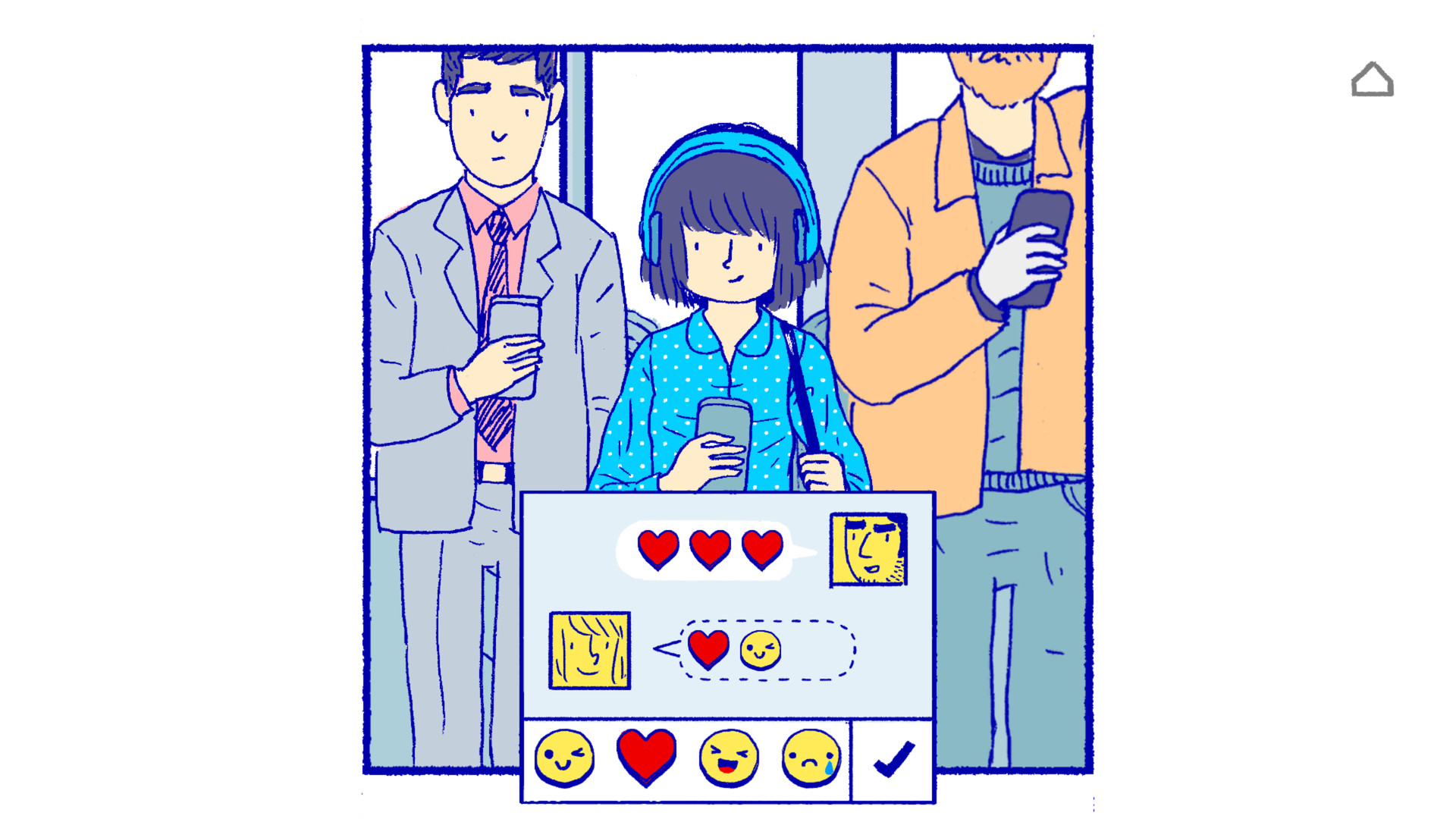
Conversation is one of the places where that idea becomes especially clear. Speech does not depend on paragraphs of written dialogue. The player can assemble pieces of a speech bubble to carry an exchange forward, and the form of those pieces changes with the characters' ease or tension. Wong has described revisiting the shape of bubbles when the pair argue so that talking feels different from an earlier, more open encounter. The task on the screen therefore does more than delay the next drawing. It can make a line feel hesitant, awkward or sharp through the effort of putting it together. There is no combat encounter hidden inside an argument and no dialogue-stat build for winning one. A dispute belongs to the relationship, and the input is a way to register how the exchange has changed. The same principle extends to objects the pair keep around them. Choosing how things occupy shared space or moving an item from a shelf can stand for a decision that would take many sentences to explain aloud. Florence makes room for the player to notice what has changed between otherwise similar domestic pictures.

The game also pays attention to moments between dramatic turning points. Wong has explained that the team had to show why Florence and Krish were good together, not merely establish that they met and then advance to the next conflict. Mundane activities such as breakfast and putting belongings together become evidence of a growing habit of being with someone. An interaction can take only a few seconds but still establish a new relationship to a room. Where one person's possessions once defined it, two sets of things may now have to share a surface. A photograph can begin as a keepsake and later carry a different feeling when it is handled again. The graphic-novel framing makes these objects easy to see: simple panels and restrained animation draw attention to the gesture rather than to a busy environment behind it. This is an authored sequence, not a simulation in which the player can take Florence to any location or choose an alternative partner. Progression comes from the arrangement of moments and from changes in what those moments mean, with each brief interaction making the next one more intelligible.
Music gives Florence and Krish a further means of expression where words are sparse. Wong has said the cello became Krish's musical voice and the piano Florence's. Those instruments can suggest each person's presence even when the scene itself is visually quiet, and their relation can change the atmosphere of a shared moment. The art is deliberately spare, drawing on slice-of-life comics and webcomics rather than realistic character animation. Wong described the style as a way to leave room for a player's imagination instead of drawing every expression in exhaustive detail. That choice supports a story told through implication: a colour shift, a changed arrangement of speech shapes or the placement of two people in a panel may do work that a conventional cutscene would give to dialogue. The developer's own account of the design emphasises how many early interactions were discarded because a technically functional minigame did not necessarily convey the intended feeling. The studio tested rough versions with friends, co-workers and a larger public group before launch, watching for an emotional response as well as basic usability. That matters to a vignette whose mechanics are intentionally slight: if arranging pieces merely unlocks the next panel, it misses the feeling the scene is meant to carry. In the finished form, handling an object should connect to the scene's meaning. The artwork, music and touch mechanics all point toward the same ordinary event, so that the act of advancing the picture does not feel separate from the story being told.
Florence was first released in 2018, while the Steam version followed later; those dates describe different platform launches rather than separate stories. Mountains developed it and Annapurna Interactive published it. The publisher lists mobile, PC, Mac and Nintendo Switch outlets, consistent with a work originally conceived around direct touch but later available beyond a phone screen. Steam describes a brief, single-player experience and includes the original soundtrack with the game; its separate soundtrack listing is an audio purchase, not another playable chapter. Florence has no equipment tiers, boss fights or multiplayer campaign to account for. Its movement is the movement of hands across small panels, photographs, shapes and household objects. The scope of the story is correspondingly close: a young woman, the person she meets, the family and aspirations that surround her, and the changing texture of their time together. Each vignette takes one part of that life seriously enough to make the player perform a small act within it. The overall arc is built by letting those acts accumulate, so a familiar room or object can feel different when Florence returns to it later.
- Developer
- Mountains
- Genre
- Interactive illustrated relationship story