
About FINAL FANTASY XIII-2
After Lightning vanishes from the history remembered by Serah, the young teacher sets out with Noel, a visitor from the future, to find her sister. Their journey crosses different eras through the Historia Crux, as they investigate changes to the timeline and confront threats tied to the world's past and future.
FINAL FANTASY XIII-2 follows Serah Farron after the events of FINAL FANTASY XIII. In Serah's present, Lightning is remembered as having died, but Serah believes her sister is alive. Noel Kreiss arrives from a distant future and says he has met Lightning. Together, they leave New Bodhum to search for her and to understand why history no longer matches what Serah remembers. Their route takes them through places at different points in time, where familiar landmarks have changed and the people living there know only the history available to them. The story keeps its focus on Serah and Noel's partnership while revisiting characters and locations from the earlier game. Mog, a young Moogle who joins them, provides a companion presence and helps with certain objects and exploration interactions. The journey is framed around repairing disruptions in history, so each location offers both a local problem and clues about larger temporal changes.
The Historia Crux is the game's time-travel hub: a menu of gates that connects locations and historical periods rather than a single continuous route. Selecting a gate sends Serah and Noel to a particular area and era, identified by its year, and the available paths expand as they acquire access to more gates. The same place can appear in multiple periods, letting the pair compare how a settlement, ruin, or landscape has changed. Progress through one episode may reveal a new route elsewhere, while side episodes and optional locations can be revisited independently. The Historia Crux also lets players return to an area's earlier state and replay its events; choices and collected evidence can therefore be approached again as part of the time-travel structure. The system links the game's narrative branches to its practical navigation: players choose where in history to go next, explore that space, and bring what they learn back into the wider sequence of events.
Exploration takes place in connected fields with towns, paths, ruins, and open stretches where enemies may appear. Serah and Noel can speak with residents, accept local requests, search for objects, and investigate temporal anomalies. Mog can be thrown toward distant items and can react near hidden objects, adding a small exploration tool to the party's regular movement. The pair also encounter temporal rifts: short puzzle spaces that ask players to manipulate devices, arrange objects, or solve a visual sequence before proceeding. These detours provide fragments and rewards that contribute to completing an area's story. Town conversations use Live Trigger prompts at selected moments, allowing the player to pick a reply or question from a limited set. Some answers affect immediate dialogue, while the larger route remains organized through Historia Crux gates. Optional fragments reward paying attention to local details and let players decide whether to follow the central story first or spend more time examining a period's side stories.
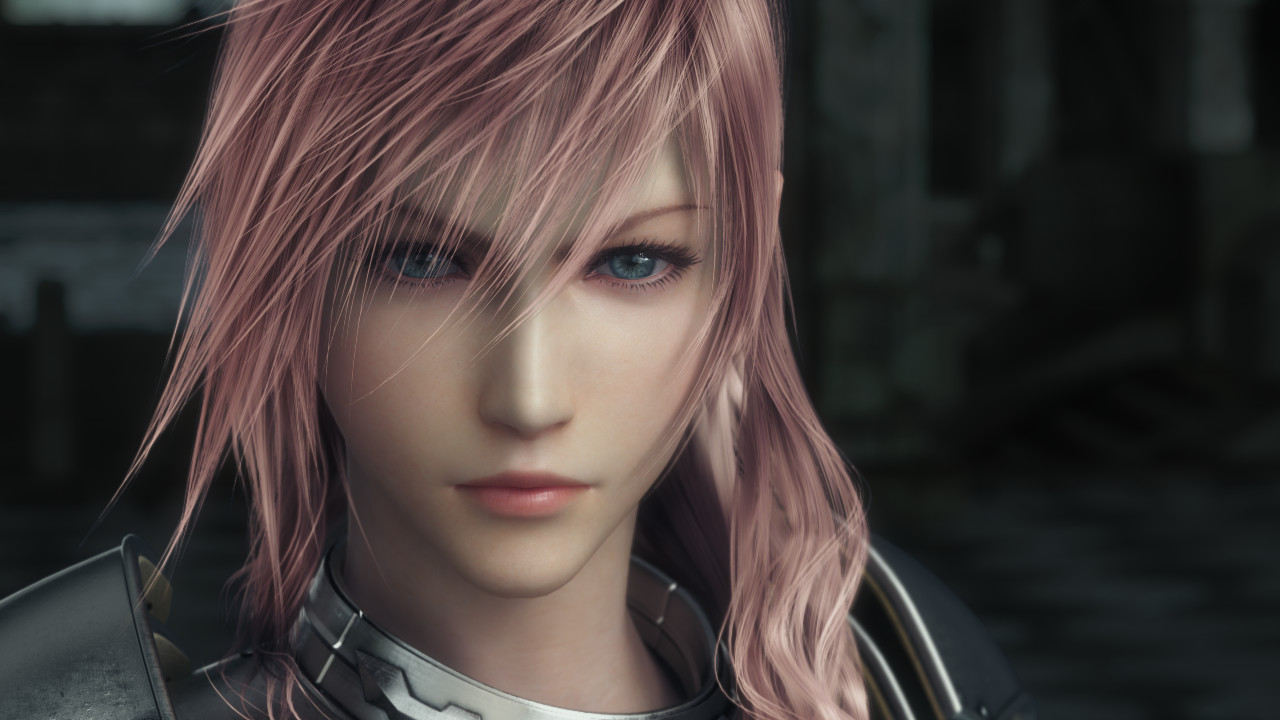
Combat retains the series' real-time Active Time Battle foundation and Paradigm Shift structure. The player sets a small group of Paradigms before a fight, assigning Serah and Noel roles such as Commando, Ravager, Sentinel, Saboteur, Synergist, or Medic. Switching a Paradigm changes the team's current role combination, so players move between damaging an enemy, building its chain gauge, defending, weakening it, and recovering health. Serah and Noel are the two directly selected human party members, while the third slot is filled by a captured monster. That monster has one fixed role, and choosing which creature to bring changes the available team combinations. The chain gauge rewards sustained pressure and rises toward a stagger state that leaves many enemies more vulnerable. Enemies appear in the field and contact can transition into battle; approaching them advantageously can affect the opening. The system asks players to prepare several role combinations and switch as the enemy's condition changes, rather than issue every action to each character individually.
Many defeated creatures have a chance to leave a crystal, adding that monster to the Paradigm Pack. Captured monsters can be assigned to the third battle slot and organized alongside saved Paradigm setups. Each creature has its own role and signature Feral Link ability; filling its gauge permits a special move, with a timed input influencing the effect. Monster growth uses its own Crystarium, and the player can develop a creature by spending monster materials at designated stages. The Infusion option transfers abilities from one monster to another, so raising a roster involves deciding which creatures to keep, which passive traits to pass along, and which battle role a team still needs. Monsters can be decorated or renamed as well, though those options do not change their battle functions. The system is distinct from simply recruiting interchangeable human party members: Serah and Noel form the stable core, while the captured creature supplies a customizable third role and ability.
Character development uses Crystarium progression, with Crystogen Points from battles and story activities spent to open new nodes for Serah and Noel. The route through the Crystarium advances their statistics and access to role abilities, and the order in which nodes are opened can influence how a character develops. The game also tracks fragments found across episodes, including rewards from quests, rifts, and exploration; completing collections advances fragment-related records and can unlock abilities that affect the broader adventure. Chocobo riding, shops, and equipment provide other ways to move through and prepare for areas, while optional arenas and downloadable episodes extend the activities beyond the central search. Rather than a fixed march through a single sequence of environments, XIII-2 combines battles and character growth with a hub that lets players cross time, revisit a location, and follow separate strands before returning to Serah and Noel's effort to find Lightning.
- Developer
- Square Enix
- Genre
- Role-playing game