
About FINAL FANTASY XII THE ZODIAC AGE
In Ivalice, the Archadian Empire’s conquest of Dalmasca leaves Princess Ashe and her people under occupation. Vaan, a young resident of Rabanastre, joins a journey with sky pirates and resistance fighters as the player crosses a broad world, tackles battles and shapes party roles through The Zodiac Age’s job boards.
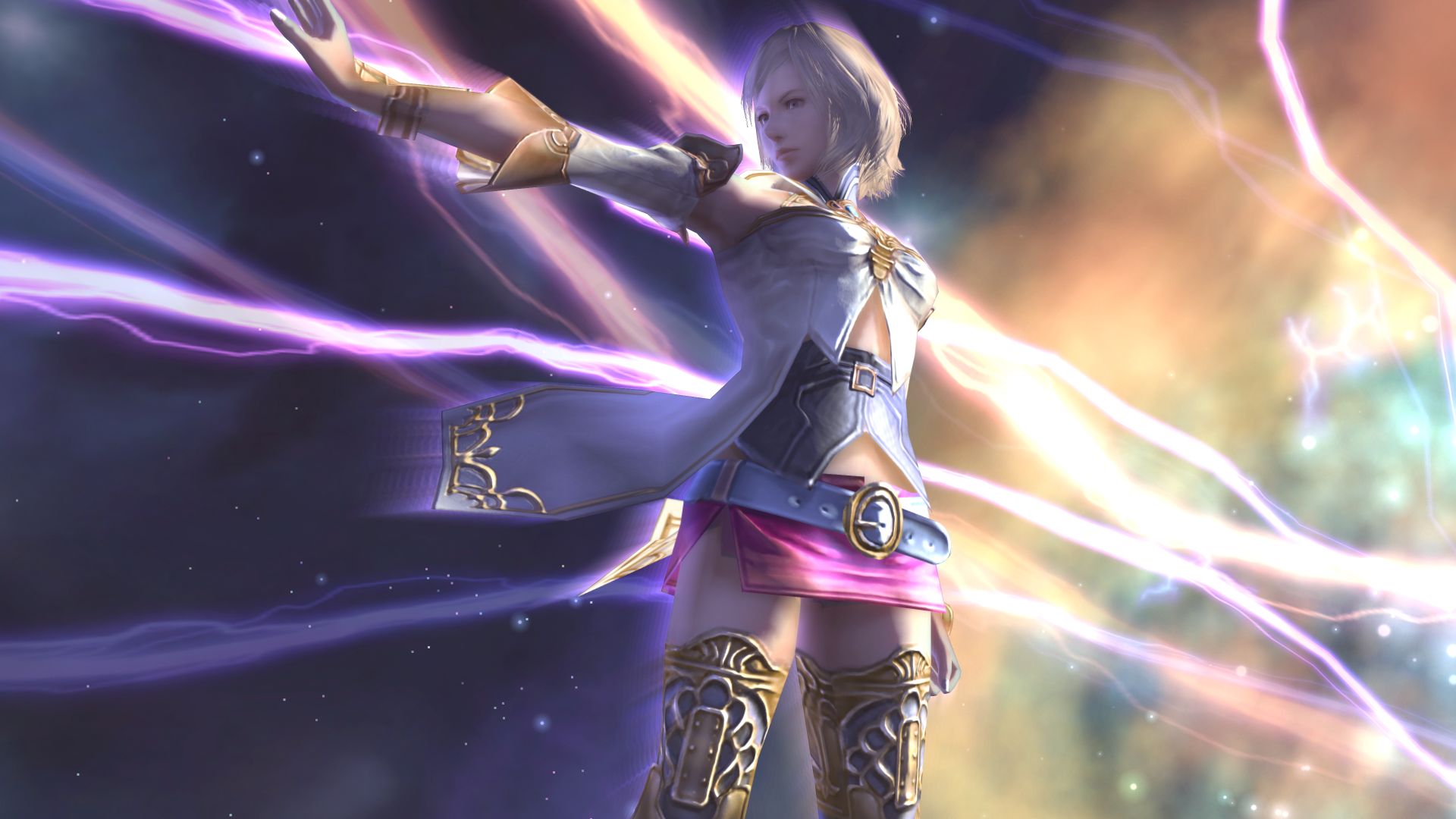
FINAL FANTASY XII: THE ZODIAC AGE begins in Ivalice, where the Archadian Empire has conquered the small kingdom of Dalmasca. Its capital, Rabanastre, remains under occupation when Vaan, a young resident who lost his family in the war, becomes caught up in the appointment of a new Imperial consul. He dreams of flying freely through the skies, far from the streets where he grew up. Events bring him together with his friend Penelo, the sky pirate Balthier and Balthier’s partner Fran, while Princess Ashe, the surviving heir to Dalmasca’s throne, works to restore her country’s freedom. Their journeys connect Vaan’s personal ambitions with a wider conflict over occupation and sovereignty. The Zodiac Age retells this story in a high-definition edition whose revised battle and growth design is based on the Japan-only International Zodiac Job System version of the original game.
The party moves through a world of cities, wilderness routes and dungeons. Rabanastre is a recurring point of departure, while later destinations connect the main story to other regions of Ivalice. The original setting describes an age when magic is common and airships fill the skies; these elements shape the routes between locations and the political importance of travel. The narrative regularly sends the group to meet someone or reach a particular place, but exploration can branch into optional areas and side activities. Detours bring different enemies and equipment, and in The Zodiac Age some magic is found in the world rather than made immediately available from shops. Exploring a new route can therefore change both where the story goes next and which resources the party can use in battle.
Battles are designed as a seamless part of the world’s exploration, and the party’s combat can be configured through the Gambit system. A Gambit sets a condition and the action a character should take when it is met: for example, heal an ally whose health becomes critical or give priority to the strongest enemy. These instructions let the player shape how party members respond while preserving room to change tactics when a fight calls for it. Different encounters can reward different priorities, such as keeping allies alive, focusing attacks or responding to a dangerous target. The Zodiac Age’s updates allow Gambit instruction sets to be saved and changed between situations on supported PC and PlayStation versions. The result is a battle loop in which the player sets the party’s behavior, observes what the enemy does and revises the rules or commands as needed.
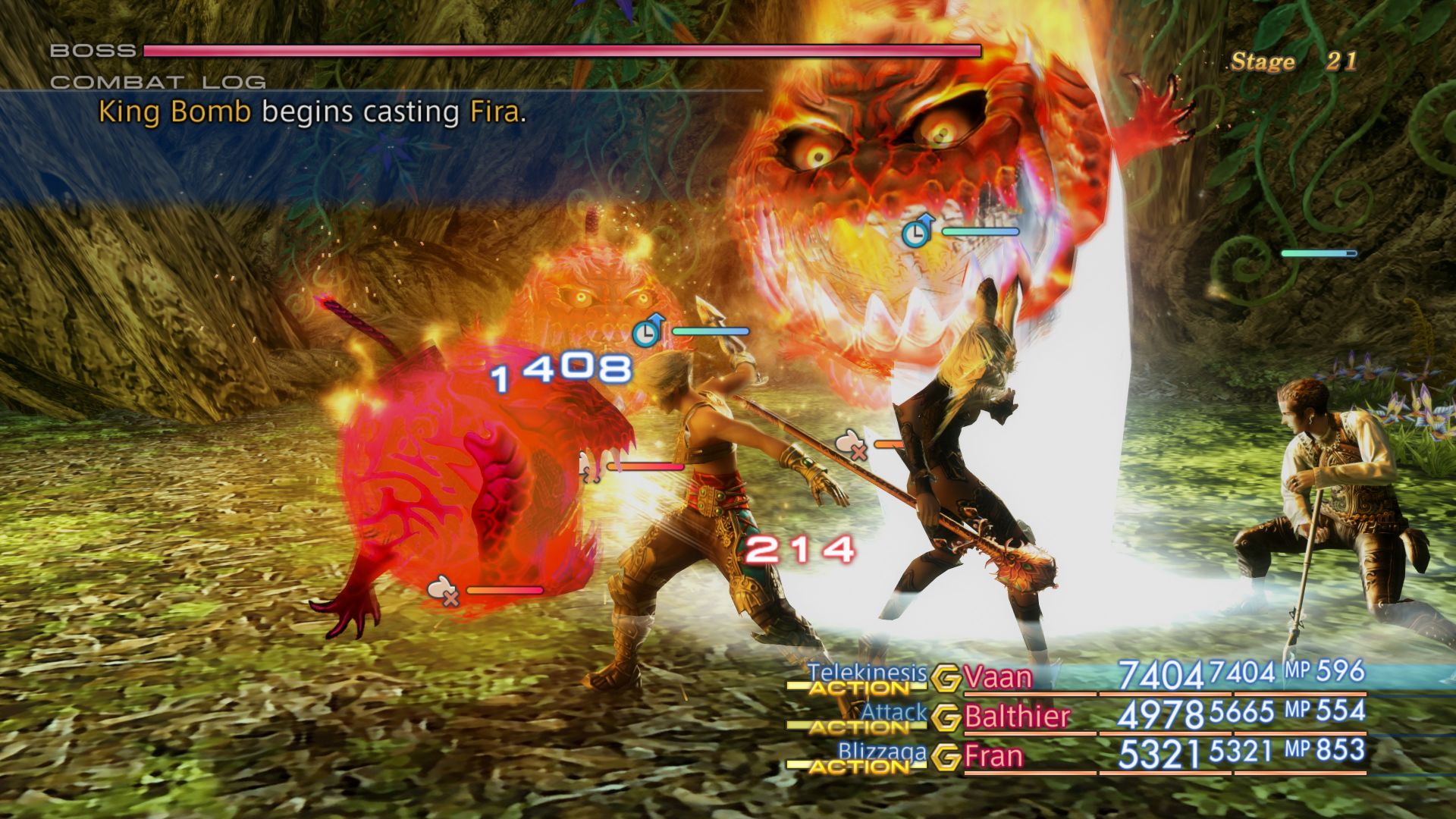
Character growth in The Zodiac Age centers on the Zodiac Job system. The original release gave everyone access to a shared License Board, while the later International Zodiac Job System introduced twelve job-specific boards; The Zodiac Age builds on that design and lets each character take up to two jobs. Roles include familiar classes such as Knight, Monk, Archer, White Mage and Black Mage, alongside jobs such as Foebreaker and Time Battlemage. A board contains licenses that permit a character to equip particular weapons or armor, use specific magicks or Technicks, and gain passive bonuses. When battles award License Points, those LP can be spent to open licenses on a character’s selected board. The choice of job therefore determines how a character can develop and which tools they can bring to the party.
A job choice affects the whole team because it limits access to equipment, spells and support abilities. Choosing a second job broadens that character’s available licenses and can combine roles, such as pairing offensive magic with time-based support or physical damage with a defensive role. Gear, spell purchases and unlocked licenses all matter: obtaining a spell or weapon does not by itself mean every character can use it. The party’s development is built from battle-earned LP, the licenses selected on the boards, the gear found or purchased, and the way the characters’ roles complement each other. A Square Enix update for the PC and PlayStation 4 versions added a way to reset licenses by visiting Montblanc at Clan Centurio in Rabanastre, along with three saved Gambit sets. Those changes make it possible to revise job pairings and stored battle instructions as the party’s needs change.
The main scenario sits alongside hunts, battles and minigames, all listed among the PC edition’s features. Optional excursions can take the party away from the direct route and into areas with stronger monsters, new loot and equipment. Loot gathered from enemies can be sold to merchants, unlocking Bazaar goods that may include weapons, armor and other supplies. Exploration has value beyond discovering scenery: it can supply gear, magic and money that change what the party is able to do. Clan Centurio and its leader, the moogle Montblanc, are based in Rabanastre; the later PC update also uses Montblanc as the place where licenses can be reset. The Steam listing separately includes hunts among the game’s activities. The party’s route can combine story destinations with optional assignments and systems that develop its equipment and tactical setup.
The PC version includes Trial Mode, a separate sequence of battles against monsters that also appear in the main game. The mode starts from a selected FINAL FANTASY XII: THE ZODIAC AGE save, so characters enter with the levels and items from that file. Progress can be saved after groups of stages, and the manual explains that a Trial Mode save can be loaded back into the main game to carry character information across. This gives the same party and equipment choices a different structure: instead of travelling between story areas, the player tests the saved team through consecutive encounters. The Steam release also lists New Game Plus and New Game Minus, alongside the remastered presentation and Zodiac Job system. Together these are edition-specific additions around the core Ivalice story and party development.
- Developer
- Square Enix
- Genre
- RPG