
About FINAL FANTASY VIII - REMASTERED
Squall Leonhart and fellow SeeD members are drawn into a war between Galbadia and the other nations, joining resistance fighter Rinoa against the sorceress Edea. This remaster of FINAL FANTASY VIII pairs turn-based battles with Guardian Forces, spell drawing, and the Junction system, which lets stocked magic reshape character statistics and abilities.
FINAL FANTASY VIII - REMASTERED presents the story of a world entering a period of war. The Republic of Galbadia mobilizes its forces against other nations under the influence of sorceress Edea. Squall Leonhart and other members of SeeD, an elite mercenary organization, become involved in the conflict and join Rinoa, a resistance fighter opposing Galbadia. The story follows these characters as the struggle grows beyond a single military mission. Its central cast includes Squall, whose reserved manner is set alongside Rinoa’s resistance work, and Edea, whose influence stands at the center of the danger described in the opening premise. The narrative moves through military operations, character relationships, and battles across the world, keeping the focus on the original FINAL FANTASY VIII story in its remastered presentation.
The player guides Squall and his companions through field areas, towns, and story locations, speaks with characters, and enters battles when enemies or events trigger them. Combat uses an Active Time Battle structure: characters and opponents act as their gauges fill, so menu choices take place while the fight continues according to the battle settings. The party’s commands and abilities depend in part on the Guardian Forces assigned to each character. These GFs are summoned creatures, but they also function as a character-development system. They gain ability points after battles, and the player selects which skill a GF should learn. Their lists include commands for magic, drawing spells, using items, and other actions, as well as junction abilities that open further customization. Choosing what a GF learns therefore affects both the character’s options in combat and how that character can be developed.
Junctioning links a Guardian Force to a character and determines which commands and stat junctions are available. When a learned GF ability permits it, the player can assign stocked magic to attributes such as HP, Strength, or defense. The spell and the number of copies held influence the resulting stat increase, so the same character’s profile can change as their magic inventory changes. Other junction categories let magic affect elemental attack or defense, or status effects, when the relevant junction abilities have been learned. The system makes spell stock a resource for both casting and preparation: using a spell reduces that stock, while keeping it available can preserve its junction benefit. Junction menus let the player rearrange this setup as the party’s GFs learn new skills and new spells become available. Rather than relying on a sequence of armor purchases, character configuration grows through the interaction of GFs, abilities, and magic.
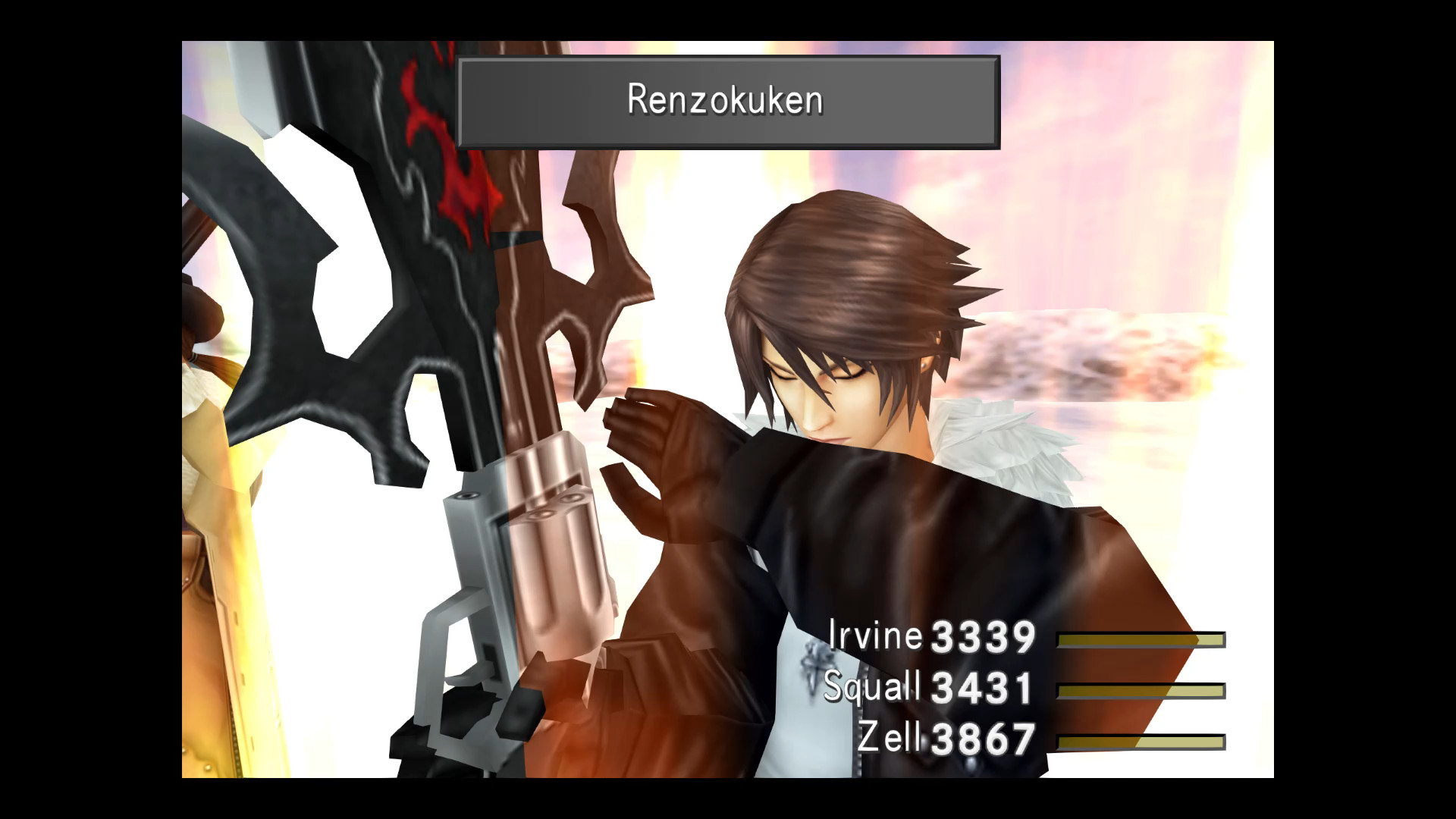
Magic is gathered through the Draw command in battle or at Draw Points found in the environment. Selecting Draw from an enemy lets a character obtain several uses of a spell and either cast it or add it to that character’s stock. Some opponents can also provide a Guardian Force to obtain through Draw. Since stocks are finite, a spell can serve as a combat action and as material for junctioning; spending it on one purpose can reduce the amount available for the other. GFs can learn abilities that support this resource loop, including ways to turn collected items into magic. The player can decide whether to keep drawing during a fight, use an existing stock, or spend time developing a GF skill that expands the options available later. This gives preparation a direct connection to battle: spells, commands, and stat bonuses all depend on the systems the player has unlocked and stocked.
Guardian Forces have active roles in battles as summoned attacks and longer-term roles through their learnable abilities. Selecting a GF command calls that creature to attack, while its own AP progression continues between battles. The player directs AP toward an ability, which may grant a new command, a party-wide benefit, or a junction option that lets a character connect magic to another statistic or defense category. Because an ability can change what a character can equip or do, developing a GF is more than increasing the damage of its summon. Weapon upgrades provide another, narrower form of equipment progression: characters upgrade their own weapons by bringing required items to junk shops. The main character-building decisions remain tied to which GFs are assigned, which abilities they have learned, and which magic each character has stocked. The available arrangements can be changed as the party’s toolkit expands.
Outside combat, the card game Triple Triad is a recurring activity played against people encountered in the world. Players place numbered cards on a small grid, and the card sides determine which neighboring cards can be turned; local rules can alter how a match works. Cards may be won from opponents or obtained by using the Card command on weakened enemies. Some cards can be converted into items, and those items can feed into other systems such as weapon upgrades or magic refinement when a GF has learned the relevant ability. Triple Triad therefore links an optional contest to the wider progression systems without replacing the story’s battles. Exploring locations also reveals Draw Points, conversations, and optional encounters. The player can spend time building card collections and resources or continue to the next story event, with these activities offering separate routes to expand the party’s options.
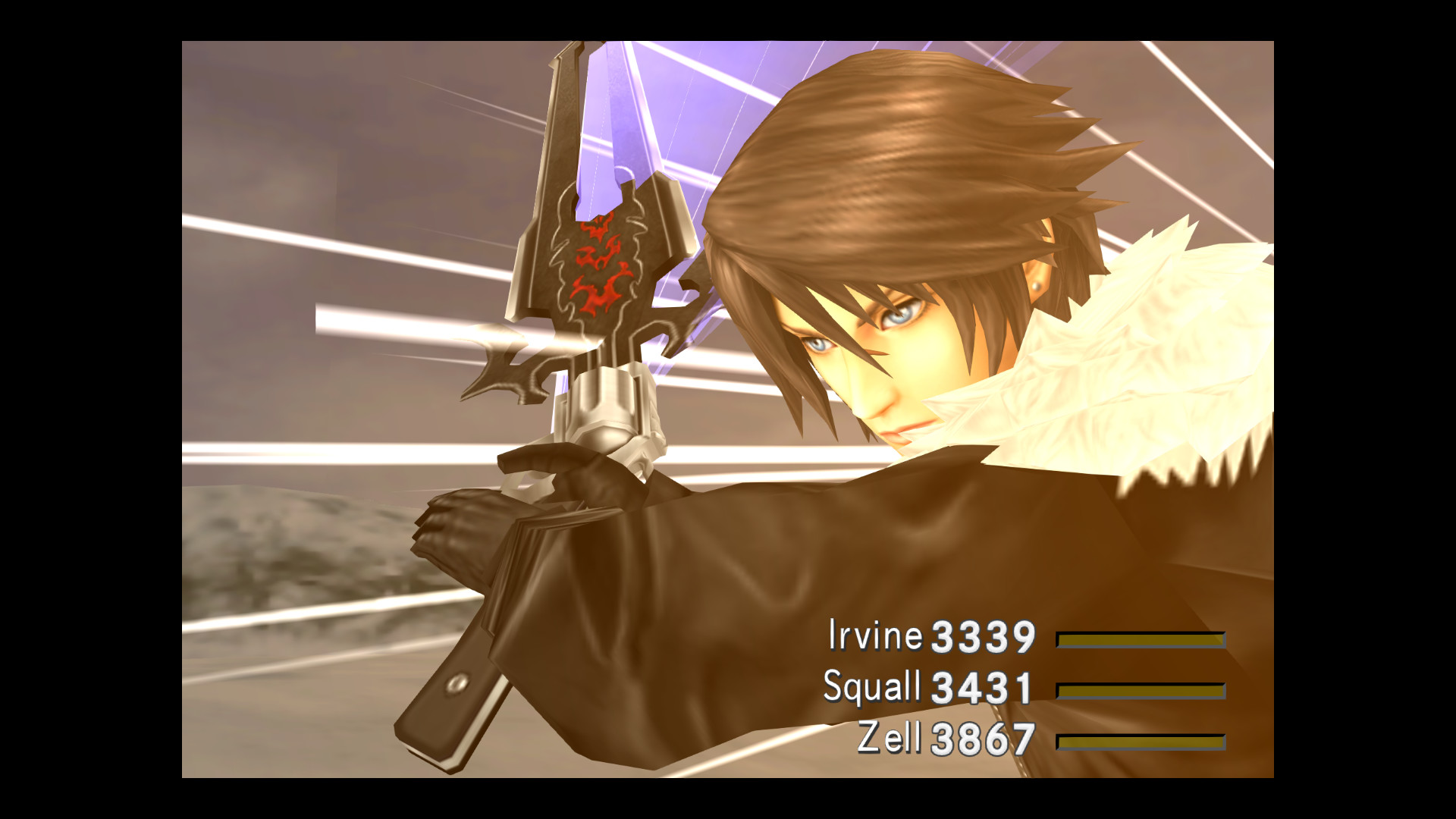
This edition is the 2019 remaster of FINAL FANTASY VIII. Steam describes enhanced character graphics and provides settings that can alter the pace and difficulty of a playthrough. Battle assist can keep HP and the ATB gauge full and make Limit Breaks available; a three-times speed option accelerates most play, and random encounters can be turned off. The Steam version also includes direct options to obtain items and abilities, maximize GF levels, gil, and spell stocks, and obtain Limit Breaks and cards. These are optional convenience settings around the same story and core systems: the player can leave them unused and build the party through battles, drawing, Junction choices, GF learning, and card play. The remaster’s edition-specific enhancements are thus distinct from the underlying junction-based character progression and the original game’s plot.
- Developer
- Square Enix
- Genre
- Adventure, role-playing game