
About FINAL FANTASY VII REBIRTH
After escaping Midgar, Cloud Strife and his companions travel across the Planet in pursuit of Sephiroth. This action RPG continues the FINAL FANTASY VII remake project as a standalone second entry, combining real-time combat, tactical commands, party coordination and exploration across distinct regions.
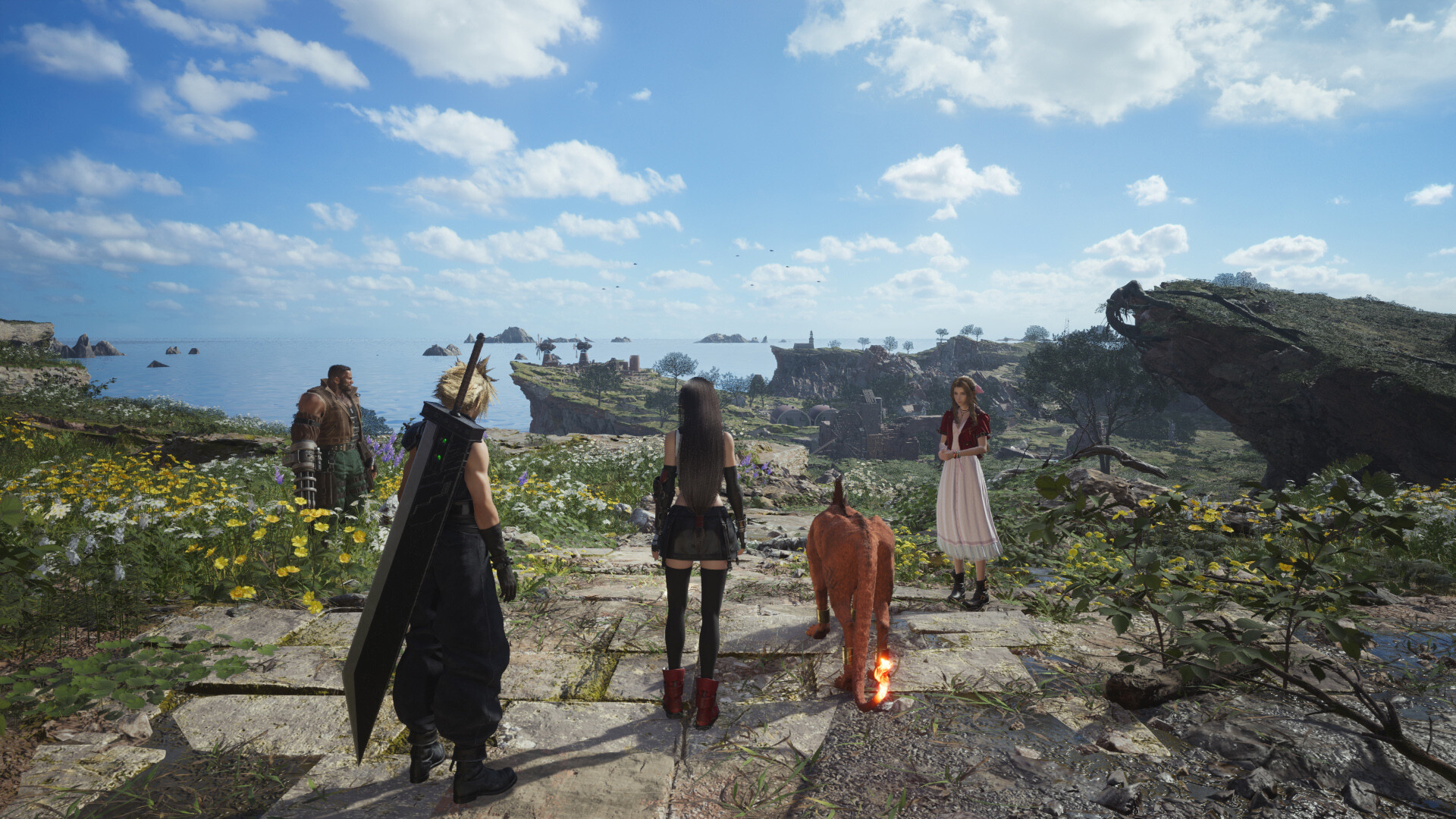
FINAL FANTASY VII REBIRTH follows Cloud Strife, Tifa Lockhart, Barret Wallace, Aerith Gainsborough and Red XIII after their escape from Midgar. Their pursuit of Sephiroth takes them beyond the mako-powered city and into a world where Shinra Electric Power Company continues to exploit the Planet’s life energy. The journey passes through regions with different landscapes and communities, including the Grasslands, Junon, Costa del Sol and the Gold Saucer. The wider setting mixes settlements, natural spaces and industrial landmarks, while the party’s route brings them into contact with Shinra forces and people affected by the company’s reach. The story also includes Zack Fair, whose thread intersects with the group’s journey. Rebirth is the second game in the remake project’s three standalone titles and carries the party’s story from Midgar toward the Forgotten Capital; it is distinct from FINAL FANTASY VII REMAKE and from bundle editions that package multiple entries together.
Travel through each region on foot or with a Chocobo, cross open terrain, enter settlements and follow routes into story locations. Exploration has both a main path and optional discoveries: party members can investigate points of interest, find materials and items, and take on local requests. Chocobos help cover ground and can interact with environmental clues, while particular regional activities provide rewards used to obtain items or customize a mount. The terrain is not only a backdrop for combat; paths, climbable areas and traversal features can shape how the party reaches a location. Square Enix presents the world as a set of distinct regions rather than one uninterrupted landscape. As players move between them, they meet townspeople, uncover local context and return to wider questions about Shinra, the Planet and Sephiroth. The exploration loop alternates travel, discovery and encounters, then uses towns and rest points to prepare for the next stretch.
Combat combines direct action with a command system. Characters can attack in real time, and landing normal attacks fills the Active Time Battle gauge, or ATB, which is spent on abilities and spells. Opening the command menu enters Tactical Mode, slowing the action while the player chooses a command, switches focus or sets up a response to an enemy. Weapons and Materia determine available abilities; magic Materia slotted into weapons or armour provides spells such as Fire and Cure, which consume both ATB charges and MP. This makes combat a repeated cycle of building ATB through movement and attacks, then spending it on commands suited to the moment. Players can control a character directly while issuing orders to the others, or select Classic combat style, which automates basic actions so attention can stay on commands. Difficulty options include Easy, Normal and Dynamic, where enemy strength rises as the characters grow.
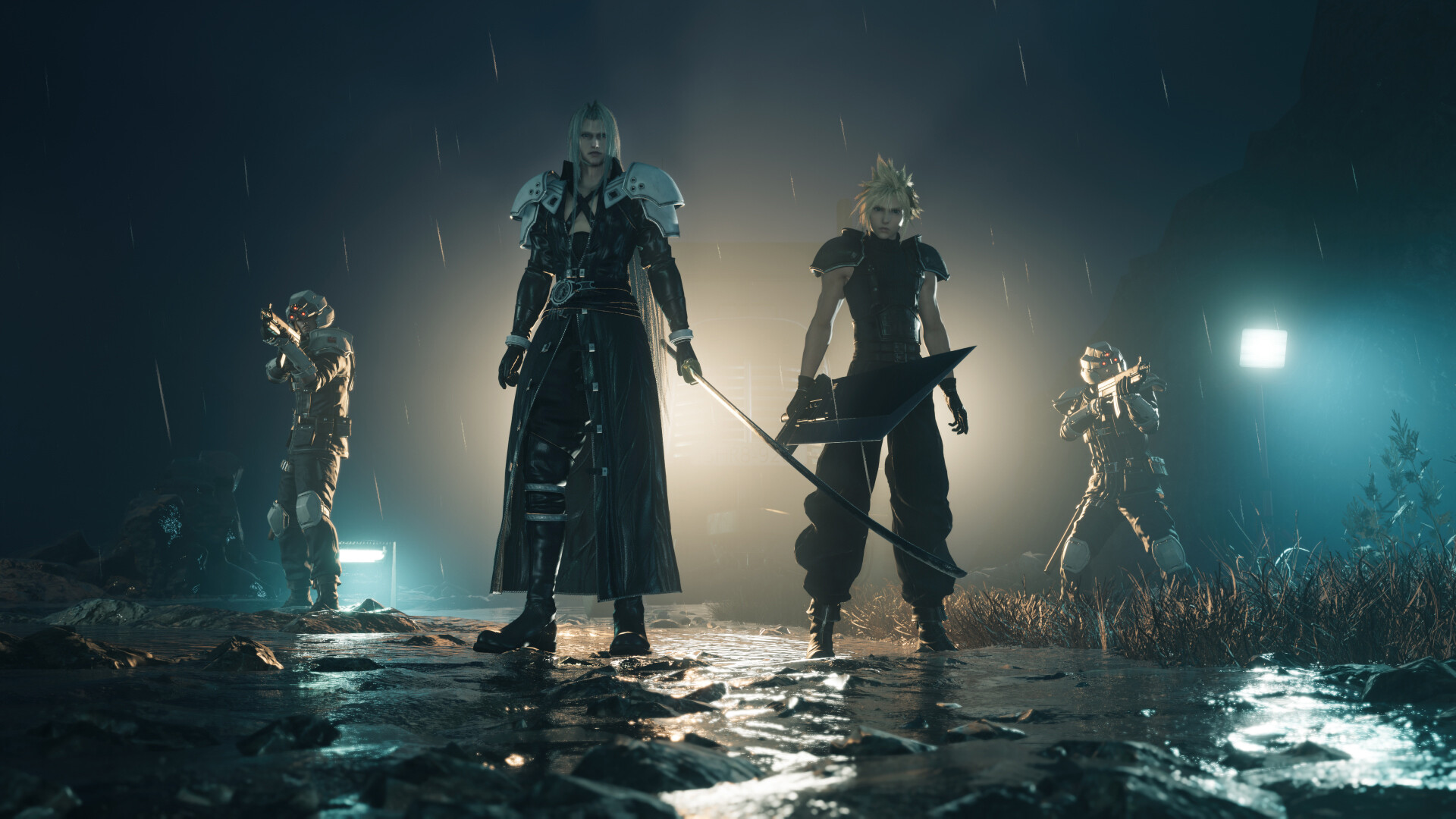
Party composition matters because every character has a distinct weapon, attack rhythm and role in a fight. Cloud’s sword attacks, Tifa’s close-range combinations, Barret’s ranged fire, Aerith’s magic and Red XIII’s swift strikes give the player different ways to build ATB and pressure enemies. Enemies can be pressured and staggered through effective attacks, creating openings for heavier damage. Tactical Mode allows the player to select abilities, items, spells and summons without the same real-time pressure. Limit Breaks use a separate limit gauge that fills as characters take damage or stagger foes. Materia and equipment broaden a character’s options, so preparation involves matching useful spells and abilities to the party rather than relying on a single universal attack. Summon Materia calls a powerful ally that fights automatically but can also be directed to use special abilities before it leaves with a final attack.
Synergy adds coordinated moves between active party members. Synergy Skills let pairs combine actions during combat, while Synergy Abilities are powerful attacks unlocked as the party’s level and character affinities develop. Using abilities fills the synergy gauge, which can then be spent on a synchronized assault. Some paired actions reward positioning or timing, and their effects differ according to the characters involved. These tools connect combat to the relationships that develop during the journey: party level expresses how closely knit the team has become, and deeper affinity unlocks more options. The player therefore has reason to rotate party members and learn how combinations complement each other, rather than treating companions as interchangeable support. Synergy is layered over the ATB, limit and Materia systems, giving the player several resources to build and spend during longer encounters.
Progression is tied to both the journey and the party’s growing toolkit. Characters gain strength through battles, while weapons, Materia and equipment let players adjust their available moves, elemental magic and support abilities. New Synergy options open with party level and affinity, and regional activities can supply useful rewards or information that encourage detours from the central story. The game also includes a broad range of optional activities in its settlements and recreation areas; these sit alongside exploration and combat as parts of the world rather than replacing the main journey. Players decide how much time to spend on requests, discoveries and diversions before continuing toward the next story destination. This structure gives the trip a rhythm of travelling, investigating, fighting, improving the party and moving on. The central thread remains Cloud and his companions’ pursuit of Sephiroth and the consequences of Shinra’s extraction of the Planet’s mako.
- Developer
- Square Enix
- Genre
- Action RPG