
About FINAL FANTASY IX
When the Tantalus Theater Troupe attempts to kidnap Princess Garnet of Alexandria, the escape she has been planning turns the caper into a journey across Gaia. Zidane, Garnet, Steiner, Vivi and their companions are drawn into a conflict involving rival kingdoms, hidden histories and the fate of the world’s Crystal.
FINAL FANTASY IX begins with a theatrical theft. Zidane Tribal, a thief in the Tantalus Theater Troupe, is part of a plan to abduct Garnet, heir to Alexandria’s throne, during a performance. Garnet wants to leave the castle herself, so the attempted kidnapping becomes an escape from the court. Captain Adelbert Steiner, assigned to protect her, follows; black mage Vivi becomes caught in the same chain of events. Their paths converge as Queen Brahne’s Alexandria begins invading neighbouring nations as the party begins to uncover the causes of the conflict. The party’s travels take them through the Mist Continent and other parts of Gaia, where political conflict gradually connects to questions about the characters’ origins, the Crystal, and where they belong. The caper expands into a wider story about war, displacement and personal discovery as the cast grows.
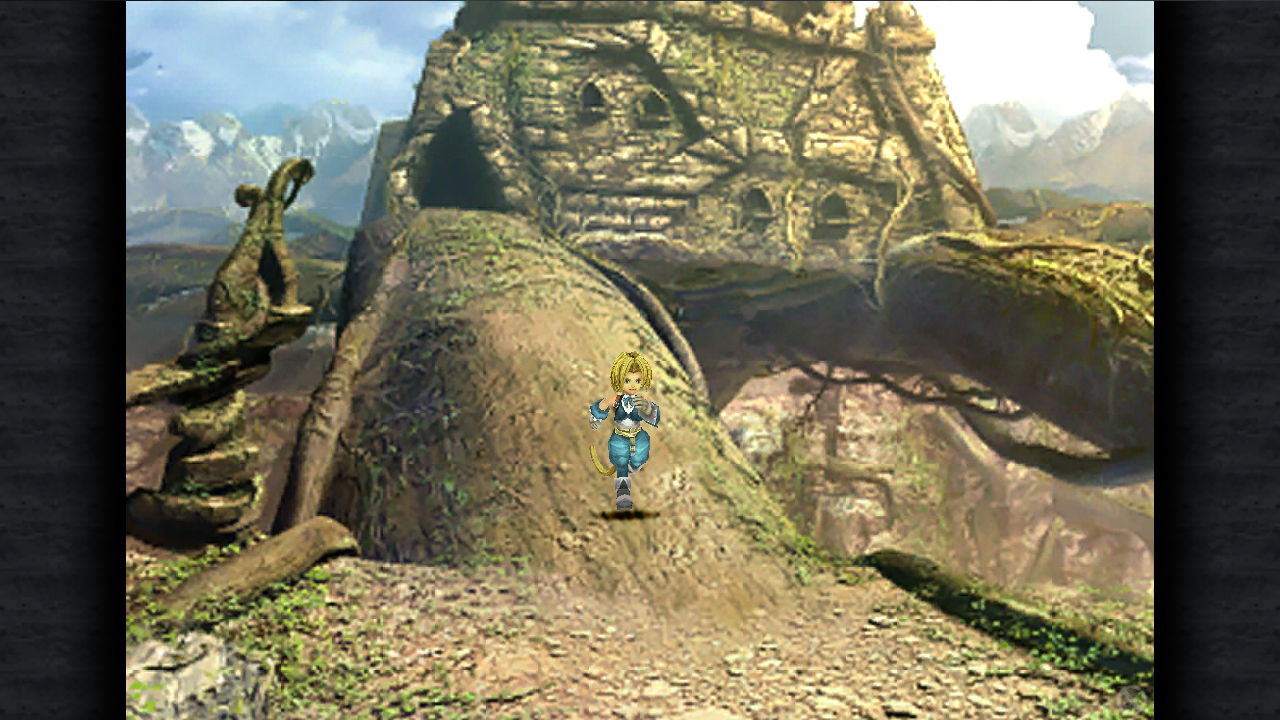
Movement between story scenes and battles is built around visiting towns, roads, dungeons and other field locations. Zidane can speak with residents and inspect objects; signposts, ladders, chests and people may reveal routes, information or items. These interactions make towns functional stops in the journey, where the group can learn about local circumstances and prepare before travelling onward. On the world map, the party crosses the spaces between major locations, and moogles provide save access in field areas. Chocobos offer another way to travel across the map: their developing abilities open access to additional places, while riding one avoids random encounters. The group’s itinerary is shaped by the unfolding story, so a location can introduce a new nation, a character’s past or an obstacle that redirects the journey. Exploration therefore feeds into both narrative context and the equipment and supplies used in the next stretch.
Combat uses Active Time Battle gauges. A character can receive a command when that character’s gauge fills, and the available commands differ between members of the party. Up to four characters fight at once; when the roster is larger, the player selects the active group and can arrange its front and back rows. A back-row position reduces the damage a character deals as well as the damage they receive, giving party placement a practical role alongside command choice. Zidane’s Skill command, Vivi’s Black Magic, Garnet’s Summon command, Freya’s Jump, Quina’s Eat, Eiko’s White Magic and Amarant’s Flair each give their user a different way to contribute. This makes a battle a matter of matching actions to the situation and deciding how to combine physical attacks, magic, summons, healing and character-specific techniques as the gauges fill.
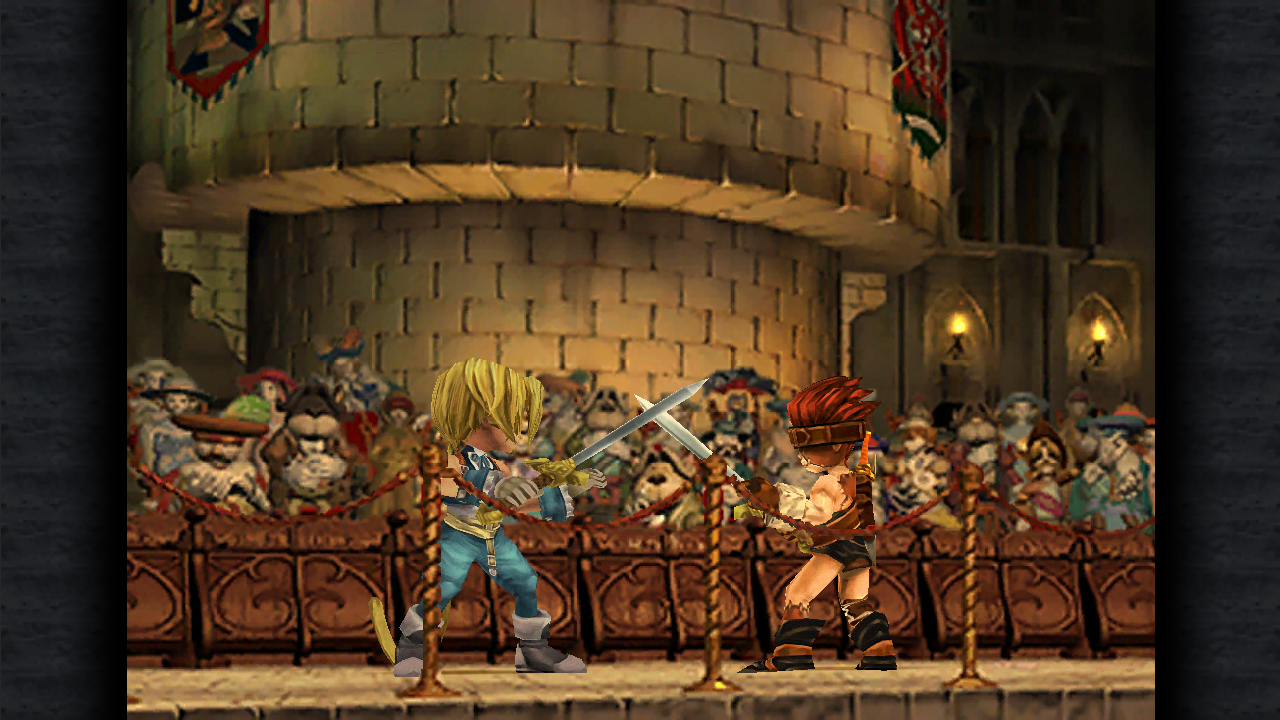
Equipment is also a character-development system. Weapons, armor and accessories can carry abilities that a character may use while the item is equipped. Winning battles with that item grants Ability Points toward learning its abilities; once an ability is mastered, it no longer needs to remain attached to the item. This gives newly acquired equipment two kinds of value: it can improve a character’s current loadout, and it can teach something that remains useful after another item is chosen. Learned action abilities are issued as commands and generally spend MP, while support abilities provide battle effects and are equipped by assigning the character’s earned Magic Stones. Stronger support abilities consume more of that capacity, so selecting them means weighing which effects matter for the upcoming battles. The party’s growth comes from the equipment it finds, the battles it wins, and the abilities each character chooses to keep active.
A separate gauge links damage taken in battle to Trance. When the gauge fills, a character enters the state automatically, gains increased attack power and receives a changed command or an enhanced version of a familiar ability. The effect is character-specific rather than a single shared power: Zidane gains the Dyne command, Vivi can use two Black Magic spells in succession, and Garnet’s Eidolon summons may reappear at intervals. Steiner’s physical attack power increases, while Freya remains airborne and attacks with spears on her turns. Quina’s Eat command becomes Cook, which can target weakened enemies at a higher health threshold, and Eiko can cast white magic twice in succession. Amarant’s Elan affects all targets. Because Trance is temporary and tied to incoming attacks, it changes the choices available during a fight rather than functioning as equipment or a permanent upgrade.
Several activities sit alongside the main journey. Active Time Events can appear during the story and show what other party members are doing elsewhere; viewing them is optional, but they add perspectives on the cast and their circumstances. Mognet gives Zidane letters to deliver between moogles, some of whom move as the story advances. Chocobo Hot and Cold, Jump Rope and Tetra Master provide optional diversions that can award items. Tetra Master is a card game played on a four-by-four field: each player places five cards, and arrow directions can turn over opposing cards when they interact. The winner is the player with more cards showing at the end, while special placements and counters can change control of the board. These side activities add distinct tasks to travel stops, while the letters and optional character scenes offer smaller threads alongside the main story.
Synthesis gives equipment and items another role in the party’s growth. Steam describes combining two items or pieces of equipment to create a better item, so supplies can become tools for building stronger loadouts. That choice links inventory decisions to the equipment-based ability system: a new piece can provide its own combat properties and teach abilities while equipped. In battle, the resulting loadout shapes which commands and support effects characters can use. Collecting, combining, equipping and earning AP therefore connect into one progression loop, alongside character levels and the choices each player makes about the active party’s abilities.
- Developer
- Square Enix
- Genre
- RPG