
About Figment 2: Creed Valley
Figment 2: Creed Valley is a musical action-adventure set inside a human mind thrown into disorder by Nightmares. Dusty, its courage, and Piper, an optimistic bird, travel toward Creed Valley to restore a shattered Moral Compass. Puzzles, shifting mental states, exploration and fights set to original songs connect the imagined landscape to the person whose thoughts shape it.
The world of Figment 2 is the mind of a person whose worries have taken shape as places, creatures and systems. Nightmares have spread through lands that were once peaceful and broken the Moral Compass, leaving the Mind unable to function as it should. Dusty, the personification of courage, and Piper, his optimistic bird companion, set out for Creed Valley, the place where the Mind’s ideals are formed. Their task is to repair the Compass and confront the Nightmares that are disrupting this inner world. The premise turns an abstract emotional crisis into a navigable landscape: a damaged moral guide becomes a physical objective, while fear and doubt take the form of opponents with their own identities and musical themes. The story moves between the imagined world and the concerns of the person whose mind it represents, giving the adventure an outer consequence as well as a surreal setting. The game is a standalone sequel, so this journey has its own central objective and can be approached without first completing Figment.
Dusty and Piper give the journey two complementary points of view. Dusty represents courage and approaches problems as the one responsible for getting the work done; Piper represents optimism and brings a more open response to what they encounter. Their exchanges accompany exploration and puzzle-solving, making the pair’s relationship part of the moment-to-moment rhythm rather than a story confined to cutscenes. Behind their journey is a family man whose thoughts are shaped by pressure to provide for his wife and child. Nightmares express the fears and doubts surrounding that pressure, while the Mind’s opinions appear as characters who comment on the beliefs that organize its world. The Moral Compass gives Dusty and Piper a clear practical goal, but Creed Valley’s ideas also connect the repair work to how a person thinks and acts. The narrative keeps the two companions at its centre as they cross an environment full of unusual voices and symbols. Memories collected along the way provide additional glimpses into the person’s past and help explain the concerns represented by the inner landscape, without changing the main route toward Creed Valley.
Movement through the Mind is organized around a sequence of connected environments, puzzle spaces and encounters. Dusty follows a mostly linear route, crossing platforms and exploring areas whose unusual shapes make the setting feel like a place assembled from ideas rather than ordinary geography. Objects respond to the landscape’s musical logic: bridges can be made from piano keys, plants move in time with the world, and characters embody opinions that might otherwise remain abstract. The route also changes as the player switches between the Mind’s Open-minded and Closed-minded states. Perspective switches alter the environment, revealing paths or changing which platforms can be used. That mechanic gives exploration a clear problem-solving question: observe which state makes the route possible, change the Mind’s outlook, then continue through the newly arranged space. The two states are more than colour filters; the game uses their differences to make traversal depend on how the same place is viewed. As Dusty progresses, these shifts are combined with moving platforms, switches and other environmental interactions.
Puzzles range from operating switches in the right order to rearranging the route through state changes. A switch may raise or lower platforms, while changing from open to closed can reshape the available path and alter how the inhabitants speak about their subjects. The environment supplies clues through visible relationships between buttons, platforms and routes, and experimentation can reveal the order needed to advance. Other areas introduce distinct puzzle formats, such as mazes structured around riddles or investigations that ask the player to identify what happened. In one layered sequence, the challenge changes from small environmental puzzles to matching patterns and interpreting clues, with encounters folded into the same space. These sections keep the central act of moving forward connected to observation and interaction: Dusty is not simply passing through decorative scenery but testing how the Mind’s systems fit together. Memory shards can also be collected to unlock scenes from the family man’s past. They add optional narrative context to the main progression, while the core route continues to be guided by the broken Compass and the shifting world around it.
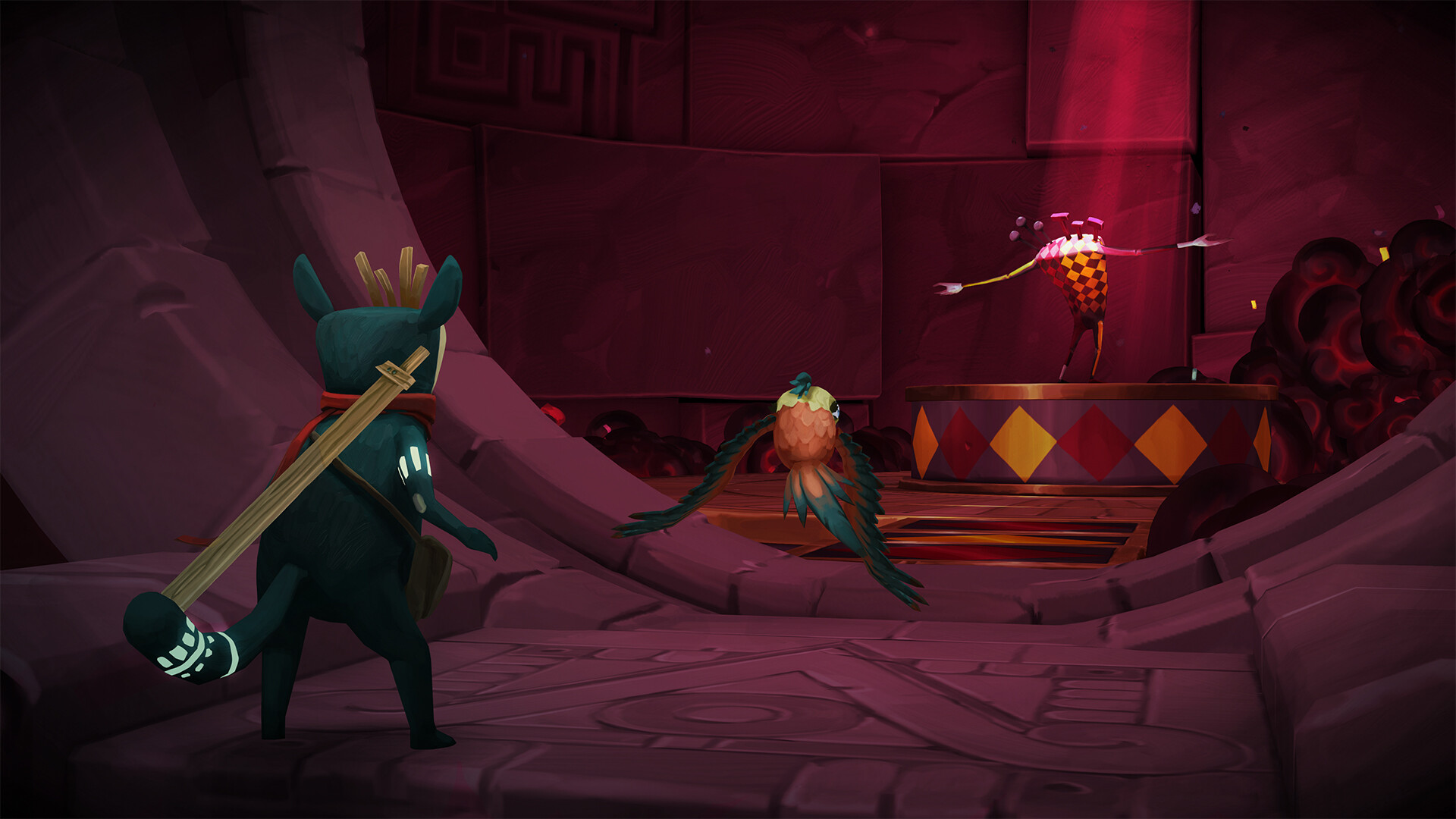
Combat gives Dusty a direct way to face the Nightmares. He carries a sword for close attacks and can dodge away from incoming strikes; some moves depend on the sequence of attacks and dodges rather than a menu of equipment or character builds. Enemies telegraph their attacks, so fights ask the player to watch their movement, avoid the incoming hit and find an opening to respond. The encounters also connect to the game’s musical design. Bosses have theme songs, and their attacks unfold in time with the track, turning each confrontation into both a timing challenge and a character moment. The songs point toward the fears represented by the Nightmares, so the opponent’s music is part of the setting’s storytelling as well as its battle rhythm. Piper can be controlled by a second player in local cooperative play, where she provides support alongside Dusty. This option changes who participates in the journey while retaining Dusty’s role as the main character moving through puzzles and taking on the central encounters.
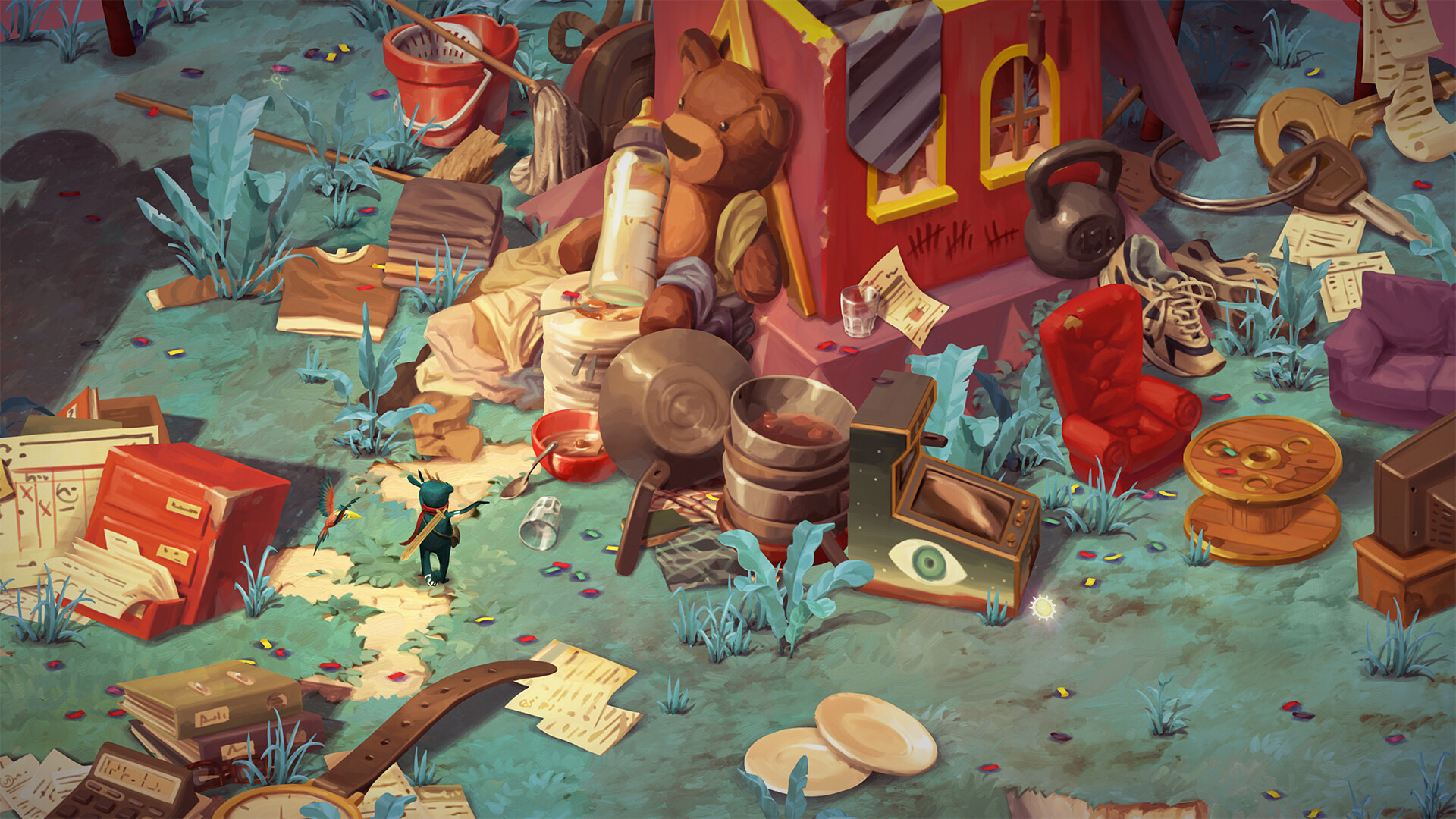
The Mind’s visual design turns abstract ideas into visible residents and changing places. Its landscapes combine painterly colour with floating islands, dancing plants and odd figures that embody opinions, giving the player a way to encounter beliefs as part of the scenery. The two mental states also produce visible changes: switching between Open-minded and Closed-minded alters the environment and can change which routes or platforms are available. The difference is therefore built into navigation as well as the story’s vocabulary. The player watches the space change, then uses the resulting layout to decide where Dusty can go next. Opinion characters also respond differently across states, so the same area can carry a different tone after a switch. These details keep the Mind from feeling like a neutral set of puzzle rooms. Its residents and surfaces express the person’s thoughts, while the shifting colour and geometry make those thoughts affect the route in front of Dusty and Piper.
Music is woven into the Mind’s everyday sounds as well as its boss encounters. Crossing a bridge made of piano keys produces notes, while even a rough wooden bridge can sound in rhythm with Dusty’s movement. Some fauna gives off a melodic hum when struck, and environmental sounds such as rain, electrical sparks and rocket fire fit the surrounding musical atmosphere. The score changes character with the scene: exploration has a more relaxed cadence, while combat moves toward energetic jazz. Boss music gives this design a narrative role. Jester’s loud rock-inspired singing expresses his presence, and the Nightmares’ theme songs offer clues about why they have appeared. The family man at the centre of the story has also left behind a passion for musical instruments, linking the game’s musical world to his personal history. The Ethics Maze gives music another narrative role: a choir of discarded opinions sings short statements that reveal the kinds of beliefs represented in the Mind. The sequence brings together a puzzle location, its unusual inhabitants and ideas the person has rejected, letting the song explain the world through the voices inside it.
- Developer
- Bedtime Digital Games
- Genre
- Musical action-adventure puzzle game