
About F.E.A.R.
F.E.A.R. follows the Point Man, a member of a special forces unit investigating a paramilitary attack at an aerospace compound. The operation leads to Paxton Fettel, genetically engineered Replica troops, and the disturbing presence of Alma. First-person firefights, limited Slow-Mo reflexes, and a paranormal mystery shape its single-player campaign.
F.E.A.R. places the player in the role of the Point Man, a new member of the government’s First Encounter Assault Recon unit. The mission begins after a mysterious paramilitary force seizes part of a major aerospace compound and a previous special forces response is destroyed in an inexplicable attack. F.E.A.R. is asked to investigate the incident and locate Paxton Fettel, a commander directing genetically engineered Replica soldiers. The investigation moves through Armacham facilities and the surrounding industrial district, where ordinary military operations become entangled with disturbing visions and a growing paranormal threat. Rather than presenting the conflict as a conventional hostage rescue, the campaign gradually connects the Replica uprising, Armacham’s research, and the figure of Alma. The Point Man remains the player’s viewpoint throughout, with team communications and recovered information supplying context as the operation changes direction.
The campaign is structured as a sequence of first-person missions through connected interiors and industrial spaces. Objectives send the Point Man after Fettel, through locations tied to Armacham, and toward information that explains why the company and the Replica force are connected. Briefings, radio conversations, environmental details, and unsettling interruptions carry the narrative between firefights. The setting shifts between offices, laboratories, service areas, and other parts of the compound and city, with combat encounters interspersed by quieter stretches in which the player follows the route and listens for new information. Alma’s appearances work differently from the armed engagements: the game can interrupt ordinary navigation with short, disorienting events that complicate the mission’s apparent reality. The plot’s central mystery is uncovered over the campaign, so the broad premise can be understood without laying out its later revelations.
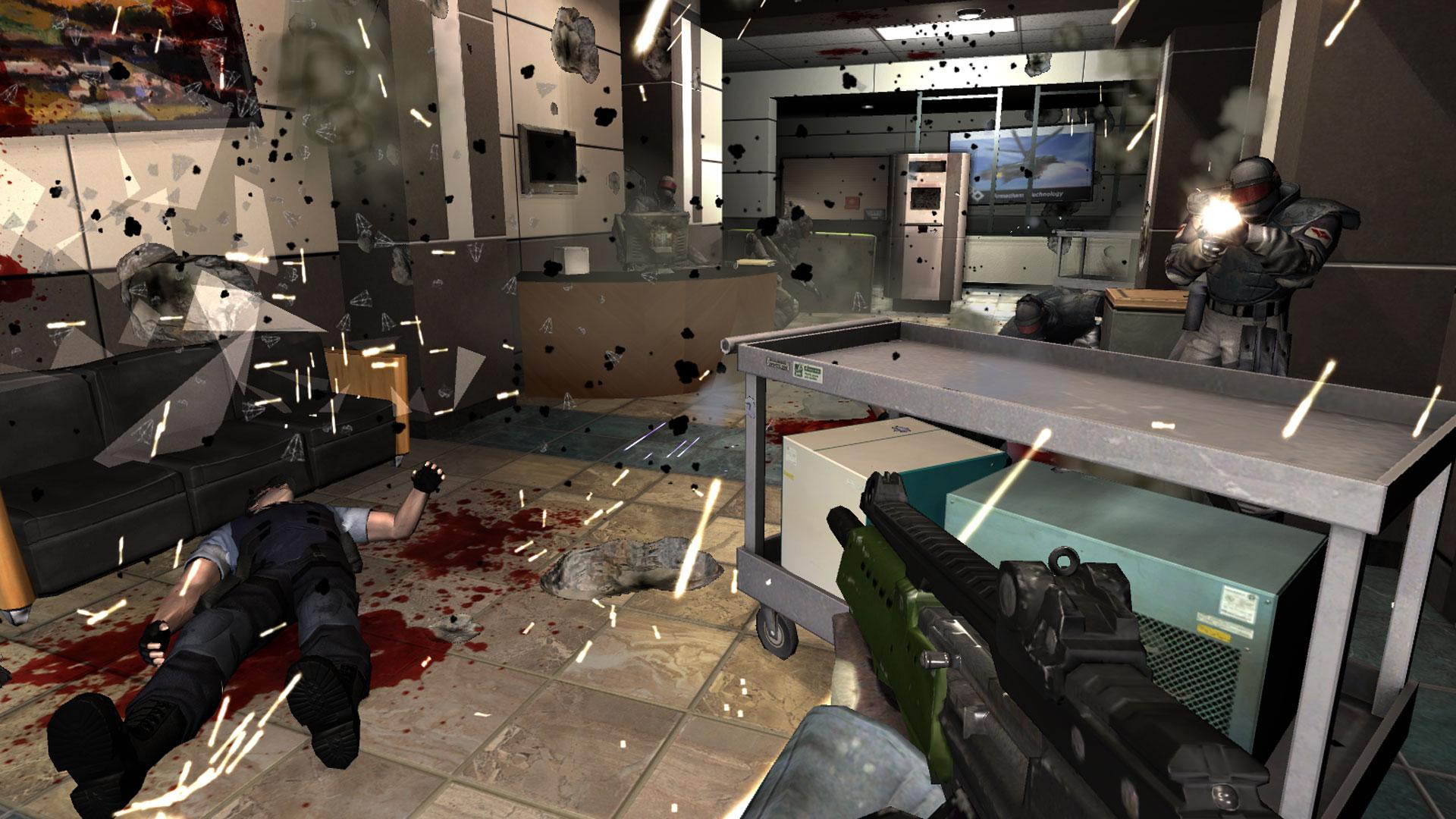
Most of the time, play combines movement, aiming, weapon selection, and close-range fighting. Replica troops are organized opponents rather than stationary targets: they use voice calls and movement to respond during encounters, while the Point Man can cross rooms, change position, and attack from different angles. The available arsenal includes weapons suited to different distances and situations, among them the rapid-fire RPL submachine gun, pistols that can be dual-wielded, grenades, and heavier firearms found during missions. The player has a limited weapon inventory and must exchange a carried weapon to take a new one once the limit is reached. Weapon weight and ammunition supply also matter: some heavy weapons slow movement and carry comparatively little ammunition. This keeps the firefight loop tied to the equipment recovered along the route.
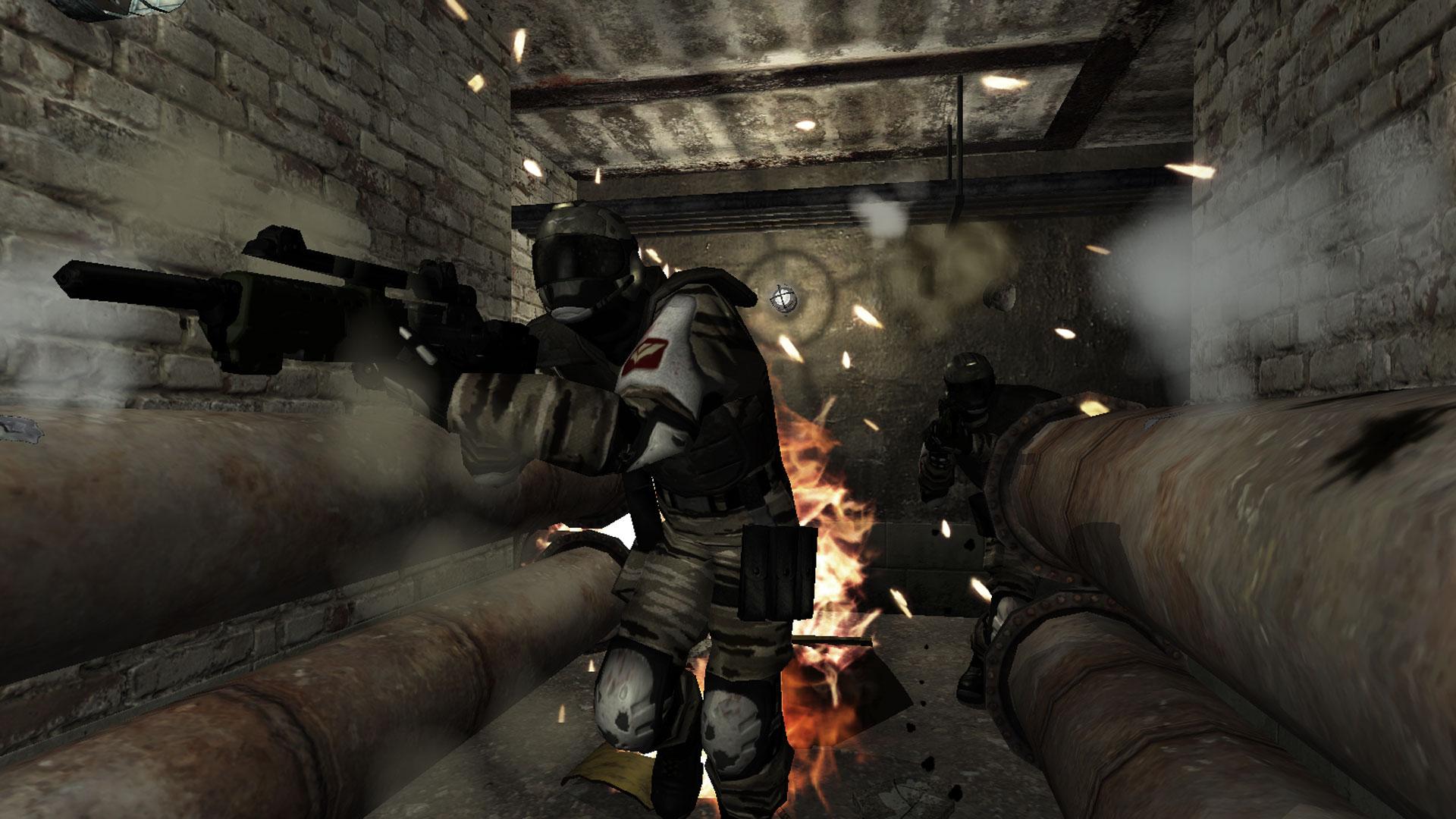
The defining combat ability is Slow-Mo, a limited-duration reflex power that slows the surrounding action while the Point Man continues to aim and fire. It can create time to track several moving enemies, line up accurate shots, or cross an exposed gap during an attack. The ability drains while active and becomes available again as its reserve recovers; reflex boosters found during the campaign permanently increase its maximum duration. This makes Slow-Mo a resource to spend around difficult encounters instead of a constant state. The game also supports direct melee attacks, including punches, weapon strikes, and movement-based kicks, so enemies who close the distance can be met without changing to another firearm. Choosing when to slow time, reload, move, throw a grenade, or use a melee move is part of the moment-to-moment rhythm.
Survival depends on managing separate health and armor resources. Medkits are collected and activated when needed, with a carry limit of ten, while replacement body armor absorbs ordinary gunfire but does not protect against explosive or environmental damage. Health boosters permanently raise the maximum health available, and reflex boosters permanently expand the Slow-Mo reserve, giving exploration a direct connection to long-term character capability. Ammunition comes from pickups and weapons encountered in the field; ammunition stations belong to multiplayer rather than the single-player campaign. Grenades provide another limited option for groups or enemies behind cover. Together, these systems reward attention to supplies and the condition of the current loadout. A player deciding whether to spend a medkit or reflex time faces two different forms of scarcity, while changing weapons can trade familiar ammunition for a better fit to the next engagement.
The atmosphere develops alongside those systems through changes in sound, lighting, and the information available to the Point Man. F.E.A.R. alternates disciplined combat with events in which the player sees or hears things that do not behave like ordinary soldiers, creating uncertainty around what the team is pursuing and what Armacham has concealed. The campaign’s human and institutional context includes the F.E.A.R. unit, the Replica force, Paxton Fettel, and Armacham; Alma’s presence links the military operation to the psychological horror thread. Progress is primarily mission-based: the player advances through objectives, encounters, and story transmissions rather than building a separate character class or open-world map. The Steam edition groups the original game with Extraction Point and Perseus Mandate. The original Point Man campaign is a single-player experience, and its former multiplayer component is currently unavailable.
- Developer
- Monolith Productions (Steam credits Monolith Productions, Inc. and TimeGate on the product page)
- Genre
- Action; first-person shooter