
About F.E.A.R. 3
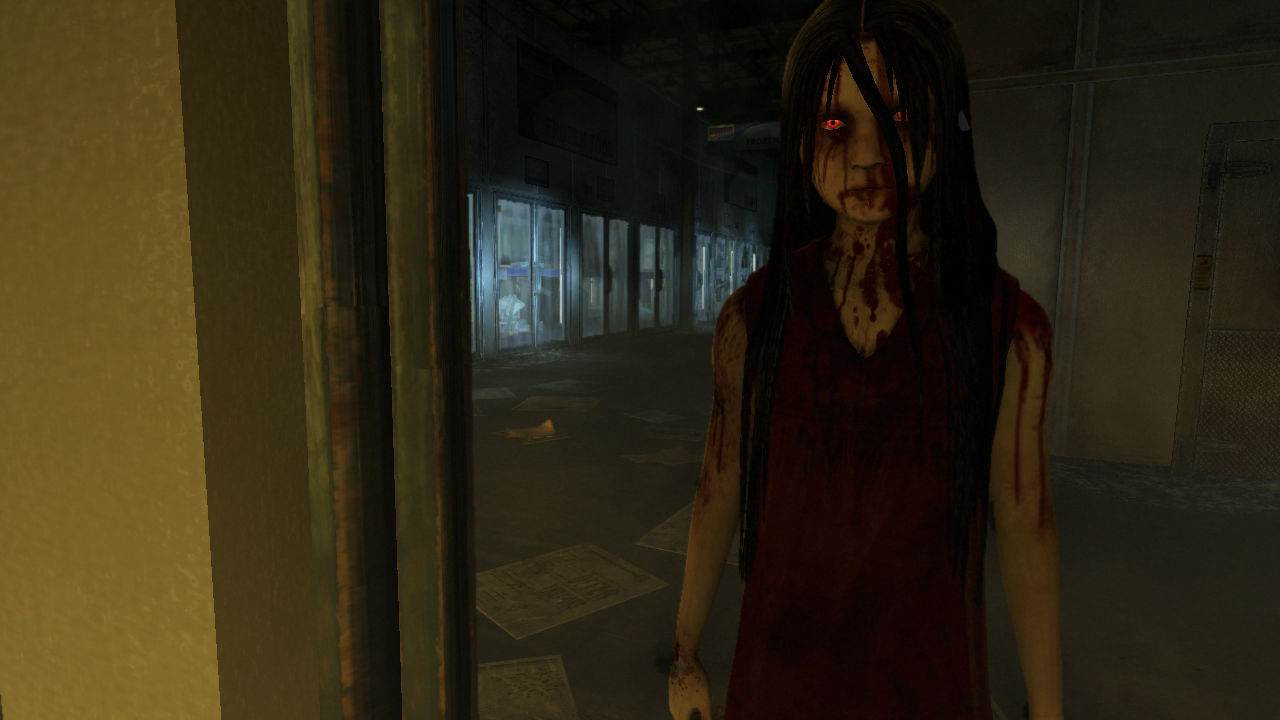
As Alma nears childbirth, her sons Point Man and Paxton Fettel return to confront her and the family history that binds them. This first-person horror shooter follows their mission through hostile soldiers and psychic horrors, with Point Man’s time-slowing combat and Fettel’s possession powers creating two distinct ways to fight in solo play or the campaign’s divergent cooperative mode.
F.E.A.R. 3 begins with Alma expecting a child and her sons drawn back toward the mother whose psychic presence has shaped their lives. Point Man, a genetically enhanced soldier with superhuman reflexes, and Paxton Fettel, his brother and a paranormal entity, undertake a mission to reach Alma and confront the family history between them. The premise puts a military operation beside a supernatural crisis: hostile troops remain a direct threat, while psychic forces and creatures born from Alma’s influence make the world increasingly unstable. The campaign follows the brothers’ journey through several locations rather than remaining only in Fairport, and its family conflict supplies the human thread behind the horror. The story’s tension comes from seeing these two characters pursue the same destination through sharply different identities and abilities.
The player experiences that journey as a first-person shooter campaign built around both combat pressure and sudden paranormal disruption. Point Man is the conventional armed combatant: he carries firearms, fights at close range and can manipulate time to gain an opening against groups of soldiers. Fettel is an undead spirit whose normal ghost form does not operate like a soldier carrying a gun. He instead uses psychic powers to affect enemies and the battlefield, including suspending a target, striking with an energy blast and taking possession of enemy soldiers. The protagonists therefore share the same broad campaign events while changing the available actions and the way an encounter can be approached. A level first played as Point Man can later be replayed solo as Fettel, making the second character a distinct campaign perspective as well as a co-op partner.
Point Man’s combat combines weapon handling with a slowing ability that creates time to aim and respond while the surrounding action moves more slowly. He can use firearms and close-range attacks, and his reflex-time power helps him challenge several enemies at once. Cover is active in every direction: the player can move behind objects, lean to either side, look over cover or vault across it, then shift quickly from one position to another. Those movement options make cover a way to manage angles and incoming fire rather than a static place to wait. When the player needs to change sides or avoid a flank, vaulting can carry Point Man into a new position. Combat also includes powerful mech sequences, adding a heavier weapon platform to sections otherwise centered on infantry weapons and psychic threats.
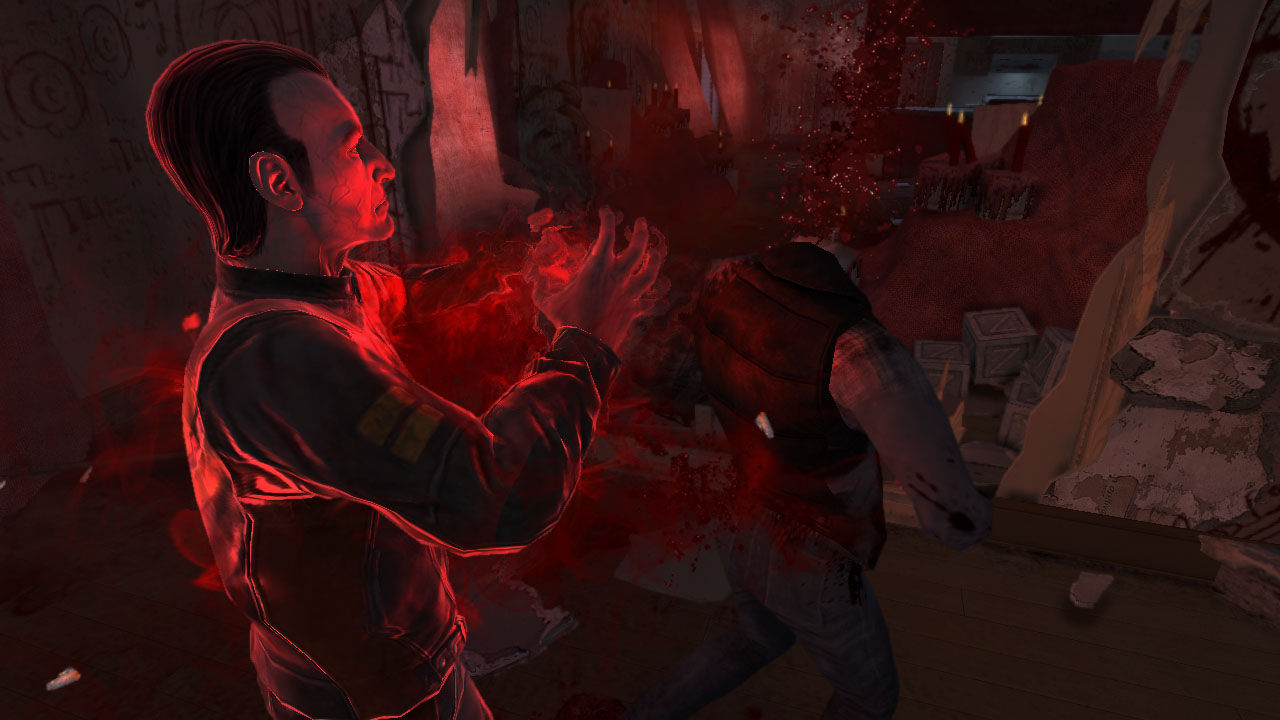
Fettel changes the logic of a firefight because he can control opponents rather than simply trade gunfire with them. In ghost form, he can suspend one enemy while attacking another with an energy blast, or hold an explosive object and throw it into a group. His most consequential ability is possession: he takes over a soldier’s body and uses the position, weapons and height that enemy already has. A possessed soldier on a balcony or walkway can give Fettel an elevated line against troops below, while taking an enemy from behind can disrupt a formation. Possession is temporary, but killing more soldiers can extend the time available in the body. That resource loop encourages Fettel’s player to enter a crowd through one target, use the borrowed body to affect the next few seconds, and then continue with his ghost powers when the possession ends. He and Point Man can combine their different attacks when controlled by separate players.
The campaign’s divergent cooperative design puts these contrasting roles together. One player uses Point Man’s weapons, cover and slow motion while the other uses Fettel’s suspensions, blasts and possessions, so their abilities shape both their own combat and what their partner can do. The game also supports a solo route centered on Point Man and allows completed levels to be replayed as Fettel. The shared path lets a player revisit the same places with different tools: a soldier who is a target for Point Man may instead become a temporary vehicle for Fettel, while a group that needs a direct firefight can be disrupted by a held enemy or thrown explosive. The cooperative design makes these abilities affect the other player as well, so the two characters approach the same fight through linked but distinct roles.
Across the campaign, Alma’s influence also alters the spaces the brothers cross. Her psychic contractions tear rifts through the environment, and their intensity and frequency increase as the journey advances. The altered spaces can introduce creatures associated with her psychic world, making the surrounding danger shift between armed human opponents and unnatural threats. Its generative system creates random events to heighten isolation and unpredictability during solo or cooperative play, so a return through a location can include a different unsettling beat. Alongside the story campaign, F.E.A.R. 3 includes four additional multiplayer modes: F**king Run!, Contractions, Soul Survivor and Soul King.
- Developer
- Day 1 Studios
- Genre
- First-person shooter; horror/action