
About FATAL FRAME / PROJECT ZERO: Mask of the Lunar Eclipse
Ten years after five girls vanished at a festival on Rōgetsu Isle, the survivors return to investigate two deaths and their lost memories. Ruka, Misaki, Madoka and detective Chōshirō explore the island’s abandoned buildings, searching for clues while using cameras and light to repel ghosts.
FATAL FRAME: Mask of the Lunar Eclipse is a Japanese horror adventure set on the remote Rōgetsu Isle in southern Japan. Ten years before the main investigation, five girls disappeared during the island’s Rogetsu Kagura festival. They were later found and rescued, but their memories of the event were lost. A decade passes, and two of the girls die in troubling circumstances. The remaining survivors return to the island to discover what happened to them and recover the memories that never came back. Ruka Minazuki leads the search, with Misaki Aso and Madoka Tsukimori also drawn to the place. Detective Chōshirō Kirishima’s investigation provides another perspective on the island and its history.
The mystery is built around memory, ritual and the island’s relationship with the moon. The Rogetsu Kagura is a festival held every ten years, and its imagery of masked participants and a lone dancer lingers in Ruka’s fragmentary recollection. The island’s inhabitants connect the moon with memory and the return of spirits, while the ritual is associated with remembering the dead. This cultural framework gives the investigation its central question: what happened to the girls during the festival, and why do they remember so little? The game reveals the past through places, notes, records and encounters rather than treating the island as a simple sequence of haunted rooms. Each discovery contributes another piece to a story whose characters cannot fully trust their own memories.
Exploration takes place in dim buildings and outdoor routes where moonlight and a flashlight provide limited visibility. The player searches abandoned hospitals, mansions and other locations for items and clues. The story often advances when a character examines something that attracts attention, and documents such as old newspaper articles add context to the island’s incidents. A Spirit Filament indicates the direction of nearby ghosts and items, offering guidance without removing uncertainty from a dark space. Objects can glimmer when illuminated, but picking them up carries its own risk: ghostly hands may reach out and take the item unless the player pulls away in time. The search mechanics make curiosity part of the tension.
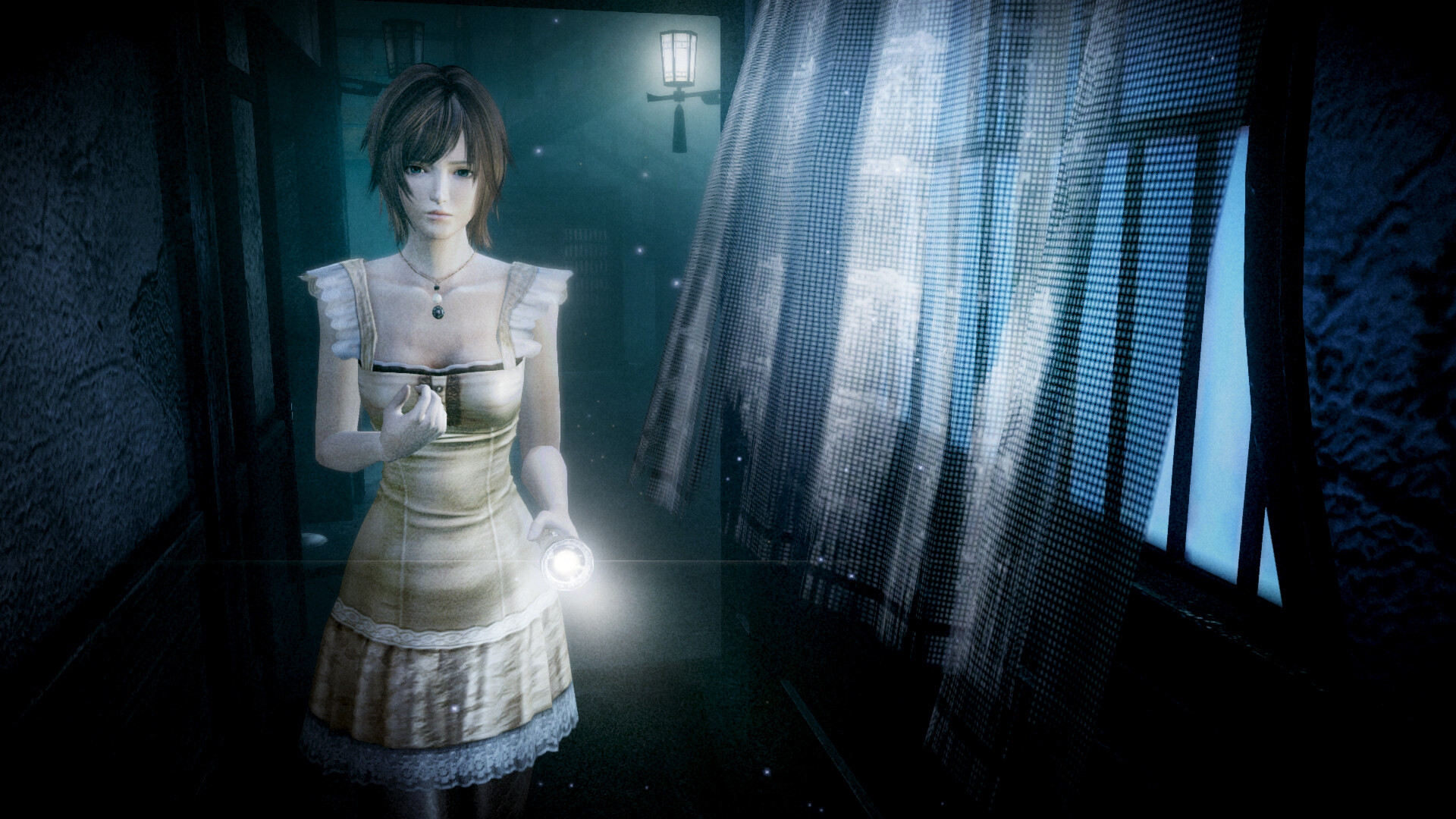
The Camera Obscura returns as the primary way to repel ghosts. Aiming and photographing a spirit inflicts damage, and capturing multiple targets in a single frame can earn more photo points. The viewfinder encourages the player to hold a ghost in focus and choose when to take a picture. A charged shutter opportunity or a precisely timed photograph can deal critical damage, so combat involves watching an enemy’s movements rather than firing continuously. Photo points can be spent on items at lantern save points. The camera’s role connects survival to observation: it is both a defensive tool and a way to reveal things that cannot normally be seen, helping the characters locate lost objects and interpret their surroundings.
Not every protagonist uses the same method in every encounter. Some characters can use the Spirit Stone Flashlight, which stores moonlight in a spirit stone and projects it to damage ghosts within its illuminated area. Its power replenishes over time, and the player can expand the area of effect at the cost of more lunar power. This alternate tool changes how the player approaches a confrontation: the camera rewards framing and shutter timing, while the Spirit Stone Flashlight asks the player to position targets within a cone of light. The difference gives the multi-character structure a mechanical dimension without turning the game into an action game. The protagonists remain vulnerable, and combat unfolds within a broader cycle of searching, reading clues and moving through threatening spaces.
The island’s locations serve as evidence of the past as well as places to survive. Haibara Infirmary is a ruined hospital associated with attempts to treat Moonlight Syndrome, while Rogetsu Hall was built as a sanatorium for that illness. Ruka’s family home connects to her childhood, and the lighthouse occupies a significant position in the island’s moon-centered traditions. Each site points toward different people and institutions that shaped Rōgetsu Isle. Exploring them means piecing together relationships and events from traces left behind, while the possibility of a ghost encounter keeps the player attentive to the present. The environments therefore support both the practical route through the game and the slow reconstruction of the characters’ lost histories.
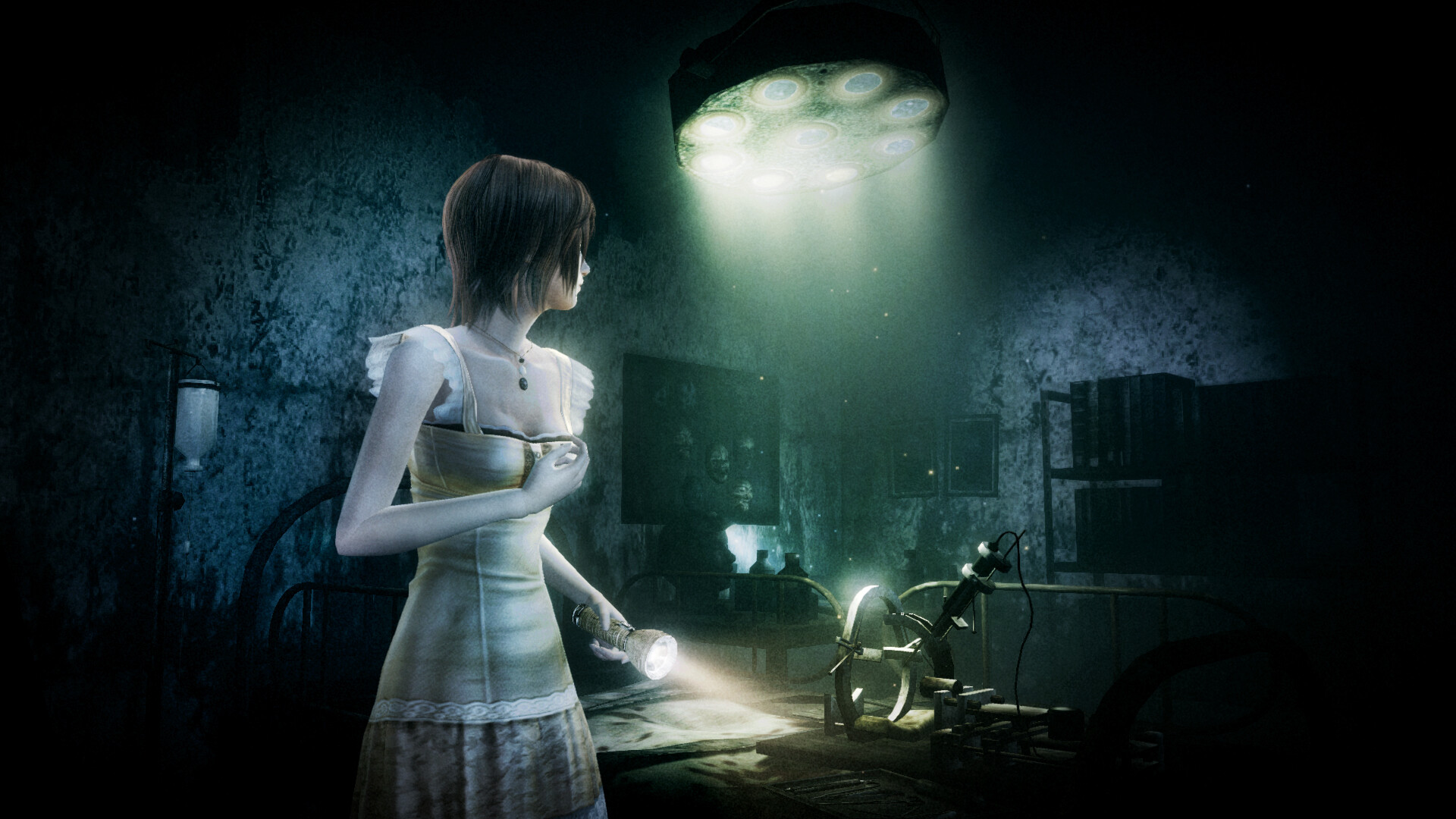
The playable viewpoints widen the mystery instead of giving the player a single fixed account. Ruka’s return is tied to a melody and fragments of childhood, while Misaki and Madoka bring their own reactions to the deaths of their friends and the question of what happened on the island. Chōshirō investigates a separate thread connected to the island’s medical history and people he has pursued. The episodes let these strands cross and provide context for one another. This structure encourages the player to compare details found in different places and to notice where a personal memory fits into a larger history. The story’s focus remains on the characters’ attempt to recover what was lost, without requiring an account of its final revelations.
The Steam edition released in 2023, reviving and remastering the earlier Wii survival horror adventure for modern platforms. Its base game combines the returning Camera Obscura combat with the Spirit Stone Flashlight, and the current release also includes features such as Photo Mode. Cosmetic costumes and edition bonuses do not define the investigation, while the core story is built around the island, its environments and these tools. Rōgetsu Isle is both a haunted place and a record of its inhabitants’ beliefs, illnesses and choices. By moving through its abandoned buildings, reading its evidence and facing spirits through carefully timed light or photographs, the player gradually connects the lost festival memories to the present-day search.
- Developer
- KOEI TECMO GAMES CO., LTD.
- Genre
- Japanese horror adventure