
About Fashion Police Squad
Sergeant Des patrols Trendopolis as fashion crimes return to its streets, from sagging trousers and dull suits to socks worn with sandals. This single-player retro first-person shooter turns each clothing offence into a combat problem with a matching tool, while platforming routes, flamboyant characters, boss encounters and a citywide mystery shape the campaign.
Fashion Police Squad casts the player as Sergeant Des, an officer called into action as Trendopolis faces a resurgence of fashion crime. The setting treats bad outfits as public disorder on a grand scale: baggy trousers, dull suits, socks with sandals and neon excess become offences that demand a response. Des is part of a single-player story that moves through a colourful city, introduces unusual characters and builds toward a mystery about why fashion crime has returned. The police procedural setup is played for comedy, but it gives the campaign a clear structure: respond to incidents, pursue the forces behind them and bring the city’s most prominent offenders to account.
The central combat rule is that a fashion crime needs the right fashion solution. Enemies are not simply targets with interchangeable health bars; their clothing problem determines which weapon can affect them. Des carries tools such as the Belt of Justice and Tailormade Sewing Machine, and the arsenal includes weaponised Sock Gnomes. Some foes need a splash of colour, while others require seams to be taken in. Choosing a mismatched tool does not solve the offence, so the player has to read what each opponent is wearing and swap equipment accordingly. This makes weapon selection part of identifying the target, with the joke and the combat instruction built into the same visual clue.
Trendopolis is navigated as a series of first-person spaces rather than as a static shooting gallery. Jumping, climbing and swinging help Des reach different levels of the city and uncover secrets tucked away from the direct route. Those movement options connect combat encounters with environmental traversal: the player can move between platforms, use height to change approach and search around the spaces that link one incident to the next. The campaign’s locations support both the bright fashion theme and the retro shooter format, shifting the action through streets and other city environments while preserving the sense that Des is patrolling a single connected urban setting.
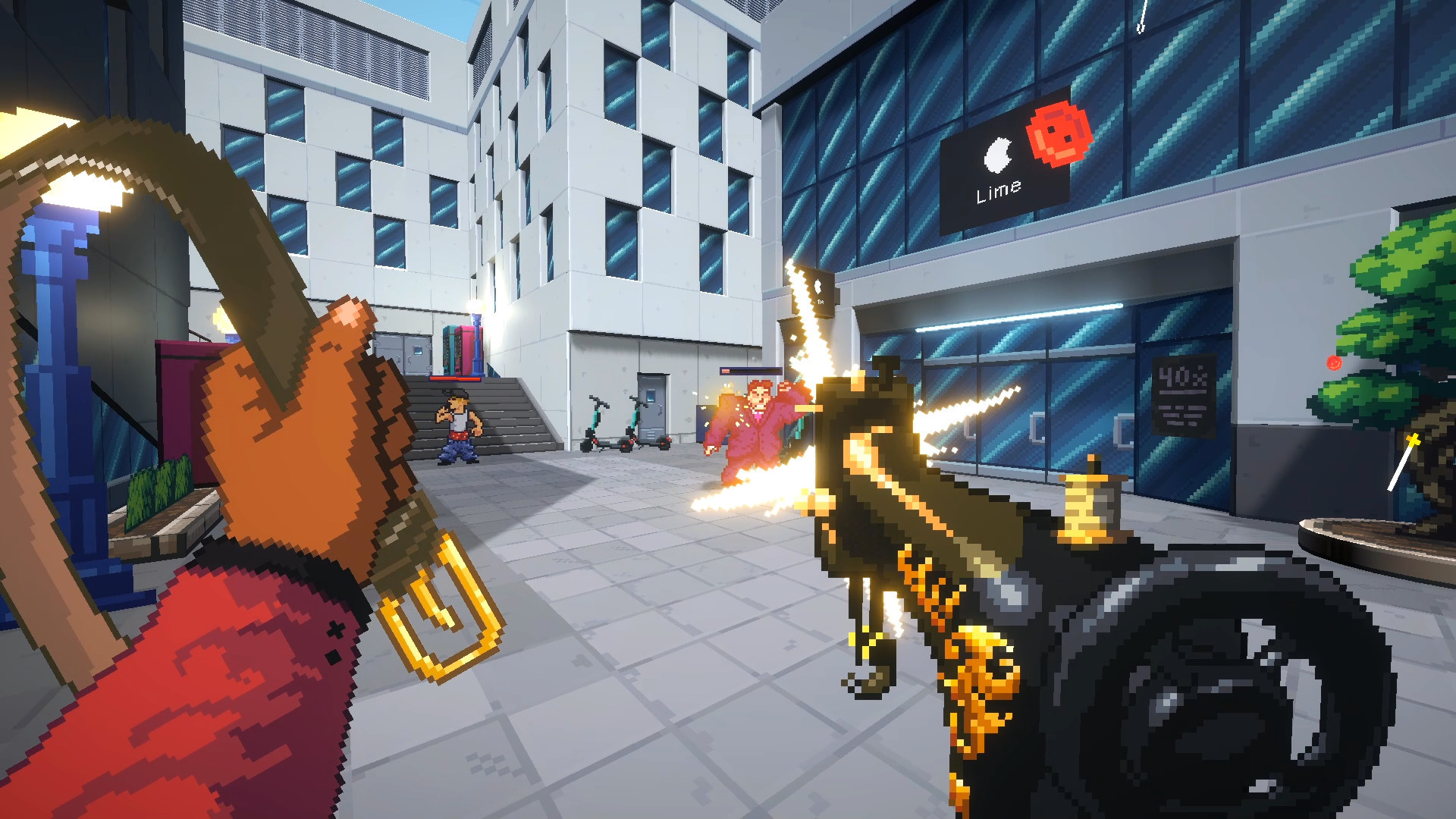
Encounters combine enemies whose offences call for different tools, encouraging the player to keep more than one weapon ready. A crowd can include several fashion problems at once, which means a single preferred weapon may not cover the whole fight. The useful sequence is to identify a target’s clothing issue, switch to the matching device and then move to the next opponent while keeping the room in view. That process is different from relying on one damage type against every enemy: the game asks for visual recognition and equipment changes as part of the shooting rhythm. Specialised weapons make the fashion conceit operational, so solving the outfit problem is also how Des clears a combat space.
The investigation advances through larger confrontations as well as ordinary street encounters. The Steam description points to fierce runway shows and major bosses from the fashion industry, framing these set pieces as theatrical extensions of the campaign’s clothing-based conflict. Boss fights place the player against prominent figures rather than another anonymous offender, while the story’s mystery supplies a reason to connect individual cases. Des’s work therefore moves between responding to everyday faux pas and following evidence of a broader return of fashion crime. The game keeps its premise deliberately heightened, turning the language of law enforcement and the fashion world into one shared comic vocabulary.
Exploration gives the player reasons to look beyond the route needed to finish each encounter. Trendopolis contains secrets, and reaching them makes use of the same jumping, climbing and swinging abilities that support ordinary navigation. These detours sit alongside the campaign’s main pursuit: the goal remains to uncover the source of the renewed fashion offences and confront the people at the top. Across the story, Des alternates among city traversal, reading enemy outfits, selecting a specialised weapon and facing more elaborate opponents. The result is a single-player retro FPS whose defining loop depends on matching tool to clothing crime while moving through a stylised urban comedy.
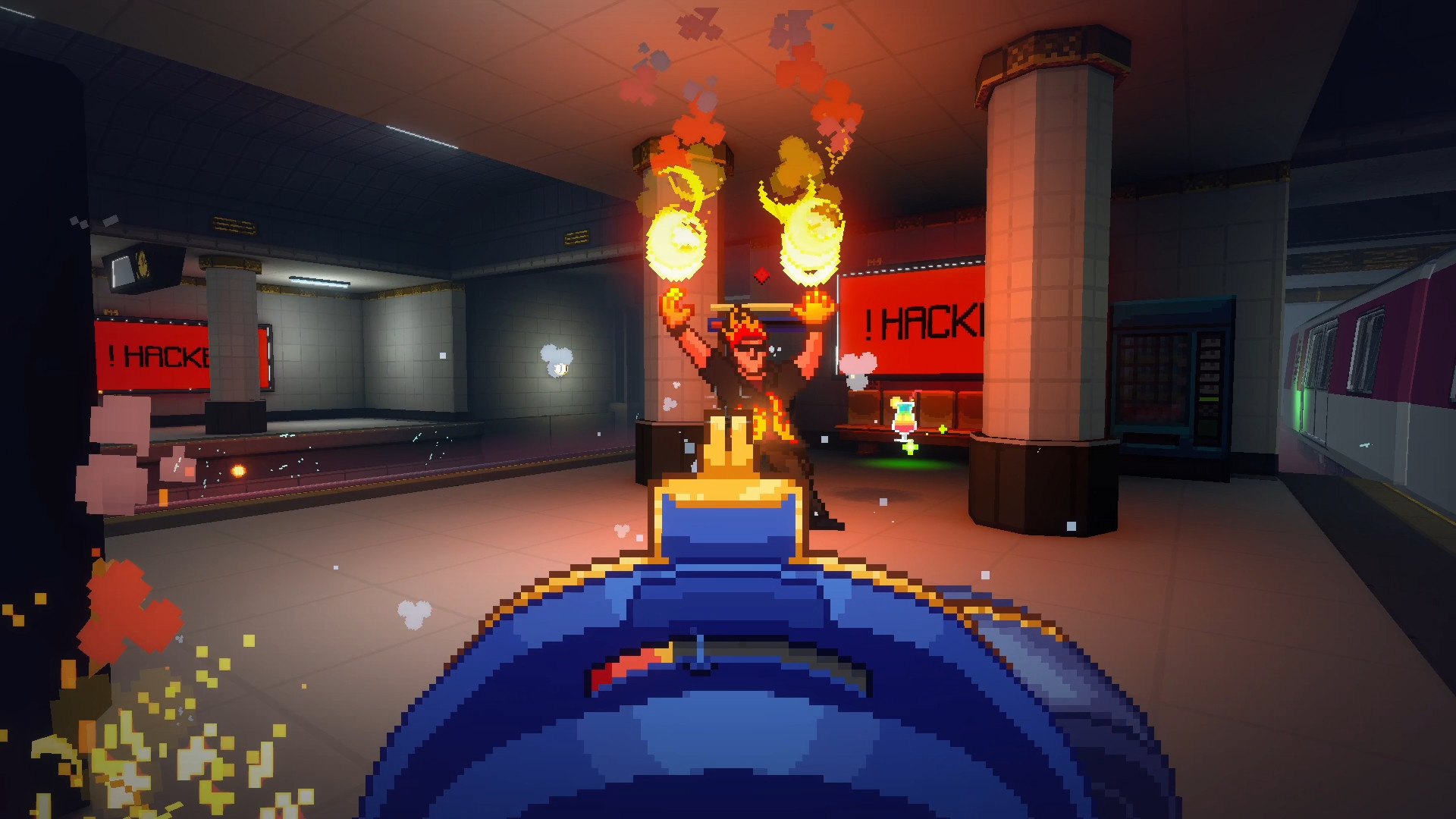
The campaign is structured as a sequence of a dozen levels that combine platforming with combat. Des’s work moves from street-level fashion incidents toward larger showdowns, while the traversal paths add vertical routes and hidden areas within the stages. A level is therefore more than a chain of rooms: the player also jumps, climbs and swings through Trendopolis, looking for a way onward or an optional secret. Those platforming sections give the campaign a second pace beside its fights, asking for navigation and spatial awareness between encounters. The city’s route-based stages keep the central fashion-police premise in view while varying how the player reaches the next group of offenders.
The arsenal includes weapons with different fashion-oriented identities. Alongside the Belt of Justice, Tailormade Sewing Machine and weaponised Sock Gnomes, the game names the 2DYE4 Carbine Elite and W.A.R.drobe Launcher. These titles make the equipment part of the setting’s wordplay, but their practical role is still to alter outfits and resolve the clothing offences opponents display. Switching weapons remains important because a mismatched tool has no effect. Across the campaign, the player builds familiarity with which forms of fashion crime call for a different response, then applies that knowledge while moving through the levels and their larger runway and boss encounters.
- Developer
- Mopeful Games
- Genre
- Single-player retro first-person shooter; Steam genre categories Action, Adventure and Indie