
About Farming Simulator 25
Build a working farm across rural regions inspired by North America, Central Europe and East Asia. Farming Simulator 25 lets you cultivate crops, raise livestock, manage forestry, operate branded machinery and expand into production, construction and local trade, alone or with other players in cooperative multiplayer.
Farming Simulator 25 is an open-ended agricultural and business simulation developed and published by GIANTS Software. There is no fixed protagonist or story campaign: the player takes responsibility for a farm and decides whether its daily work will centre on field crops, animal care, forestry or a mix of these activities. The game offers three regional environments representing North America, Central Europe and East Asia, each built around farms, fields, roads, businesses and local scenery. You can work through the operation alone or share it in cooperative multiplayer. Progress comes from managing equipment, land, time and money over repeated seasons, then deciding which parts of the business to grow next.
Crop farming turns a field into a sequence of linked jobs. Players prepare soil, choose suitable machinery and seed, maintain crops as they grow, then bring in and transport the harvest. The base game includes familiar crops alongside rice, long-grain rice, spinach, peas and green beans. Rice makes a distinct workflow: it uses purpose-built paddies that can be shaped through the construction menu, a pump to control water and specialized planting equipment. Regular rice is planted after the paddy is flooded, while long-grain rice is sown dry before flooding. Both approaches ask the farmer to monitor water during growth, then harvest, store, sell or send the crop to a production facility.
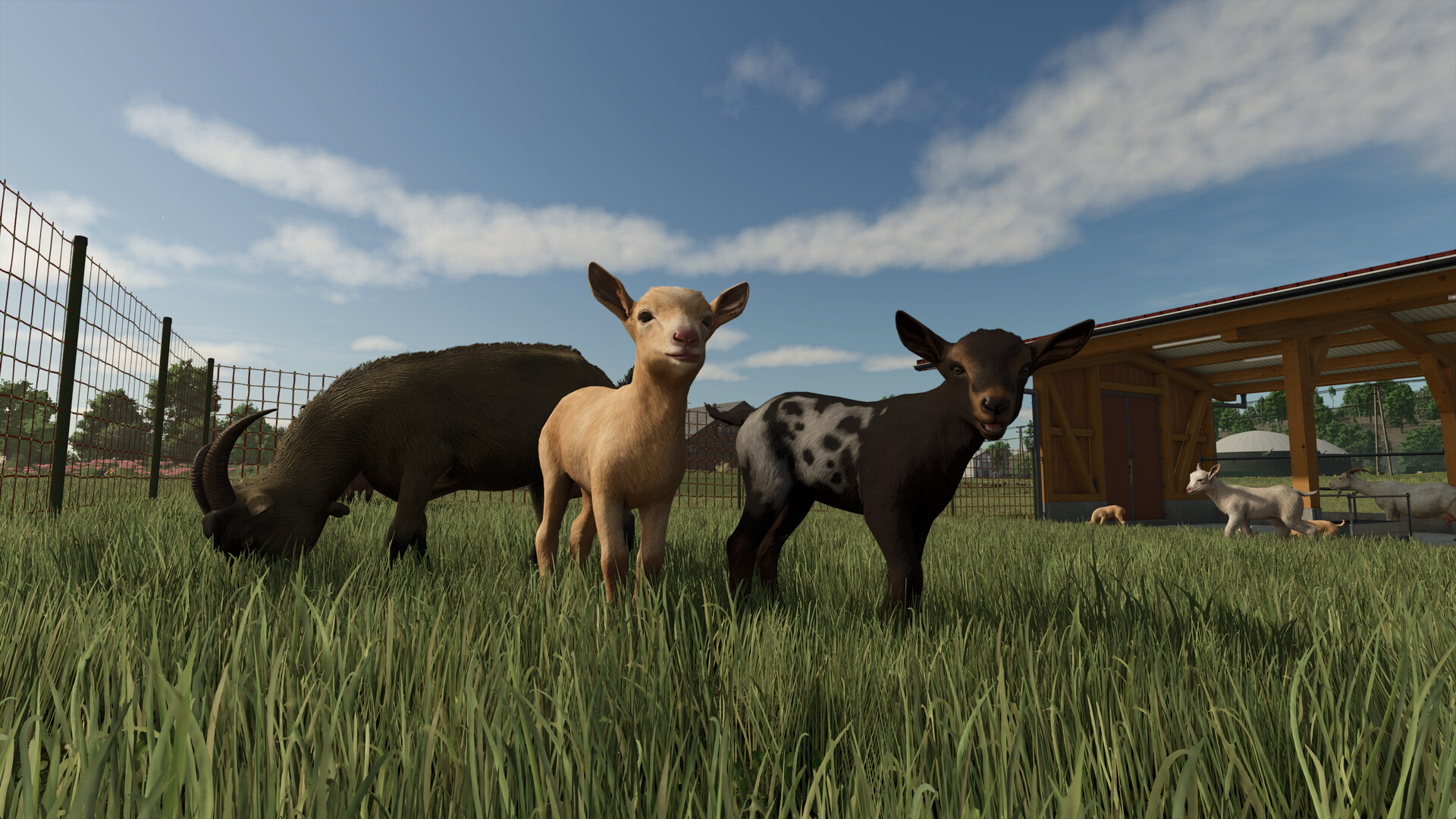
Livestock creates a second kind of farm routine. Pens or barns need to be supplied and animals cared for; their age and condition affect when they become productive, while their outputs can be sold directly or processed. Farming Simulator 25 adds goats and water buffalo to the farm, alongside offspring that grow through life stages. Goats can be housed in a pasture or barn, fed grass or hay, and produce milk that can be sold or sent to a dairy for products such as bottled milk, butter and goat cheese. Pastures also require water, which adds hauling and supply decisions. Leaving room in housing allows healthy, mature goats to reproduce, extending the herd as a long-term investment.
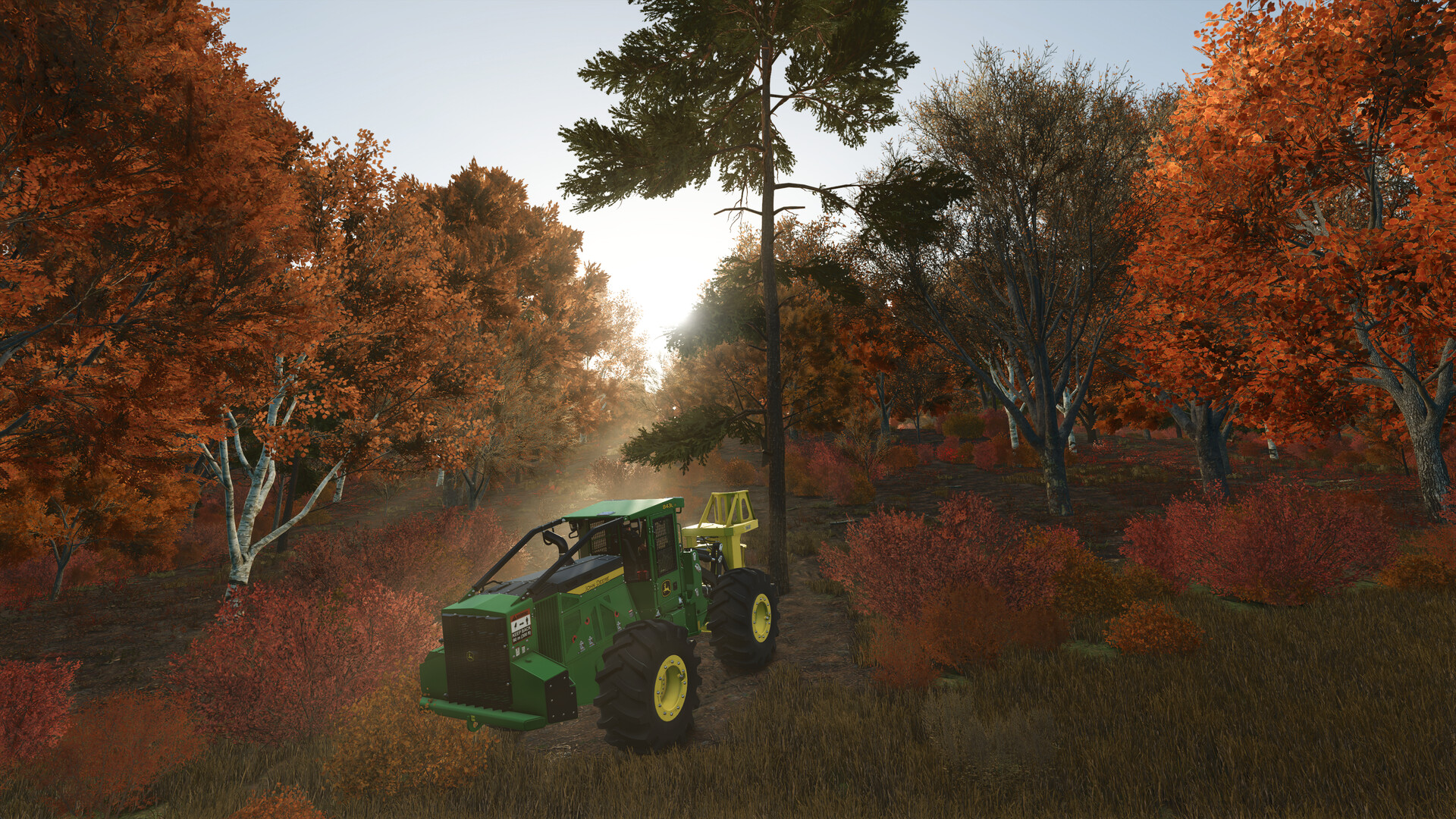
Machinery is central to how players plan each operation. Tractors, planters, cultivators, combines, trailers, loaders and forestry equipment each serve different jobs, and the game offers hundreds of branded machines and tools. Choosing a vehicle is a practical budget decision: equipment must fit the task and the fields available, while larger operations can make hired workers and GPS-assisted steering useful for repetitive jobs. Forestry offers a different production path from crops and livestock, with trees to plant or cut and wood to sell or process. Across these specialities, the player moves between operating machines, maintaining a work plan and deciding whether to handle a task directly or bring in help.
The farm’s financial loop continues after a crop or product leaves the field. Harvests can be delivered to businesses, sold, stored or used as ingredients in production chains; processing adds buildings, input requirements and another stage of transport before goods reach buyers. Some local enterprises and construction projects ask for supplies, giving materials a role beyond immediate sale. Factories can turn raw agricultural output into more finished goods, while farm shops and markets offer another destination for produce. Large construction projects, including community landmarks, create extended goals that require a stream of resources and money. These systems let players choose between simpler selling and investing in a longer chain of production and delivery.
The calendar and local conditions shape what the farm can accomplish. Crop schedules and growth stages give field work a seasonal rhythm, while storms such as twisters and hail can threaten fields and unroofed bales; crop destruction from weather can be turned off. Ground deformation changes the surface beneath machinery, and the maps’ weather and terrain affect how work is approached. Riverbend Springs, for example, is organized around a winding river and smaller waterways, with a ferry crossing that can carry machinery. Tutorial characters, improved information, GPS steering and reworked hired workers help players learn or delegate as their workload grows. The result is a set of connected jobs whose scale and direction remain in the player’s hands.
Cooperative multiplayer lets more than one person take part in the same agricultural operation, so the farm’s work can be approached together rather than as a solo schedule. One player can concentrate on field preparation or harvest while another handles deliveries, animal supplies or machinery, then meet again at the farm as materials move between jobs. The value of this arrangement comes from the systems already linked across the map: a field produces a crop, a vehicle transports it, and a shop or factory turns it into income or another product. The scale of work also leaves room for players to divide attention between crops, animals and forestry. Each participant can contribute to the same evolving business while the group decides whether to spend earnings on more land, specialist equipment or production buildings.
- Developer
- GIANTS Software
- Genre
- Agricultural simulation