
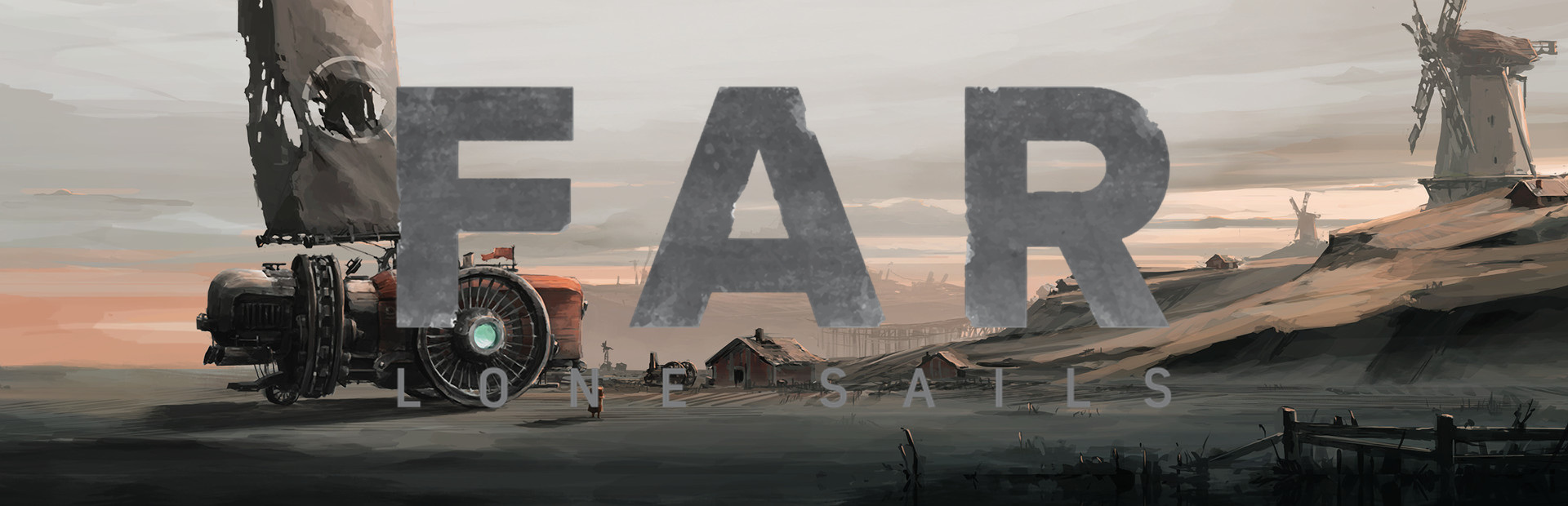
About FAR: Lone Sails
FAR: Lone Sails sends a solitary traveler across a dried seabed in a wheeled vessel managed by hand. Engine pressure, wind-driven sails, salvage, repair equipment, and environmental machinery shape the journey, while a foggy palette and abandoned architecture hint at the civilization that once lived beside the sea.
FAR: Lone Sails begins at a quiet home and follows one traveler across the exposed bed of a sea that has disappeared. The route passes through open flats, stranded ships, ruined buildings, and industrial structures from a civilization that once lived beside the water. No speaking cast explains the disaster or identifies a faction; the player reads what remains in the architecture, objects, and changing landscape. The traveler is small against a long horizon, and that difference in scale makes each structure feel like evidence of a society much larger than the one person now crossing it. The destination and full history remain open. The subtitle carries a double reference: it suggests solitude and sailing, and the character is called Lone in development material, though that name is never spoken in the game. The game's wordless presentation keeps the journey focused on a person, a machine, and the landscape left between them.
The wheeled vessel is operated from stations the traveler must reach on foot. Boxes, barrels, and other usable objects are picked up outside and carried aboard; at the refuelling platform, a control breaks them down into energy stored for the engine. Hooks around the vehicle hold extra pieces, making collected cargo part of the ship's working layout. The fuel gauge reports stored energy, while a speed indicator shows the effect of propulsion. To run the steam engine, the player holds its control; it releases itself, so powered travel requires periodic attention instead of a fixed cruise setting. Engine use also builds pressure. A separate steam button releases that pressure and can trade some of it for a brief speed boost. The brake brings the vessel to a stop, which gives the player a way to pause at salvage or before an obstruction.
The sail adds wind as a second propulsion system. Its control is mounted at the sail, and once deployed it can remain open while the wind is useful. A red flag on the vessel indicates wind direction, helping the player choose when to let the sail carry the craft and preserve fuel for the engine. The sail is fitted at a large crane encountered along the route, turning the installation of a new movement system into part of the journey itself.
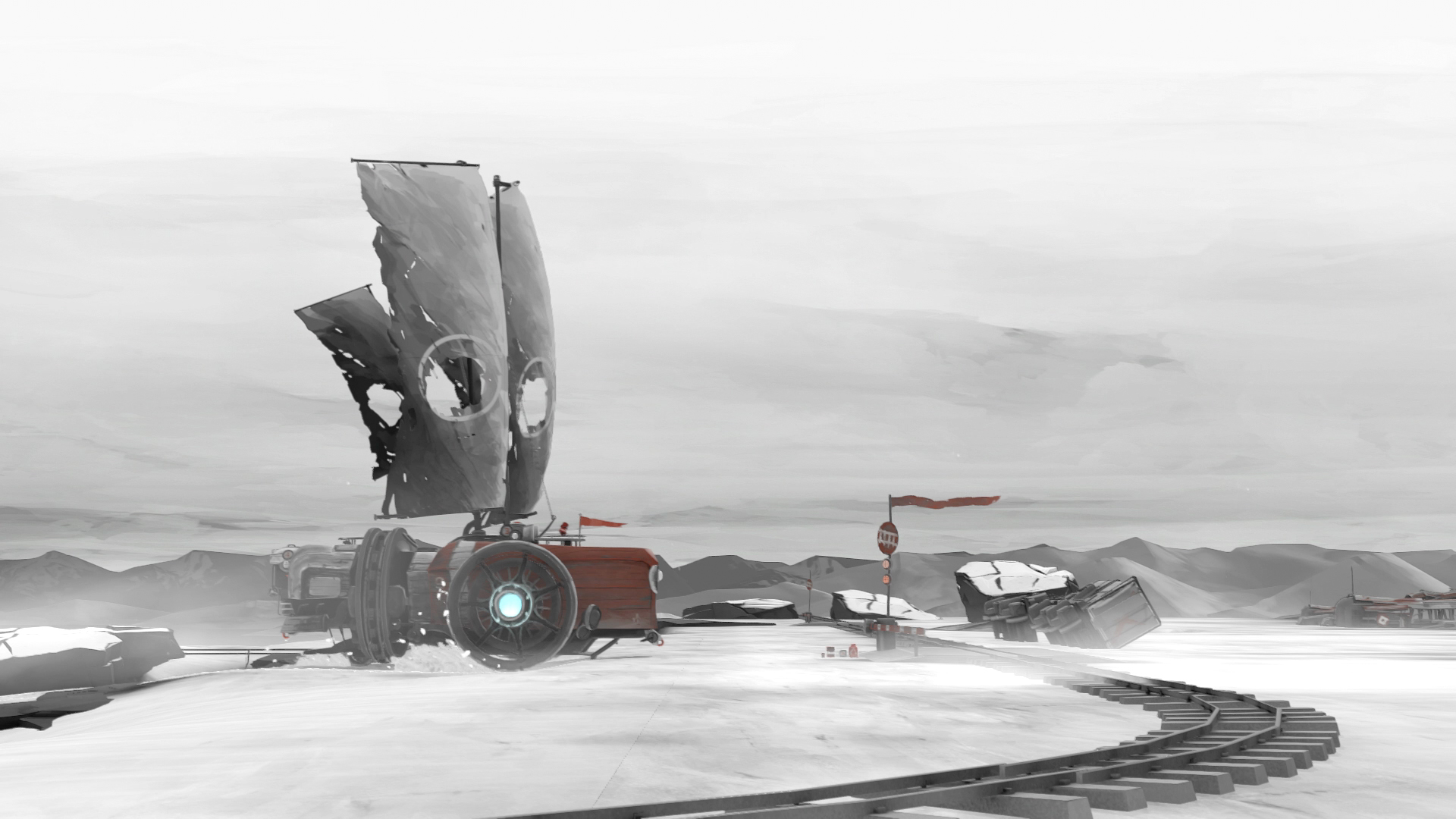
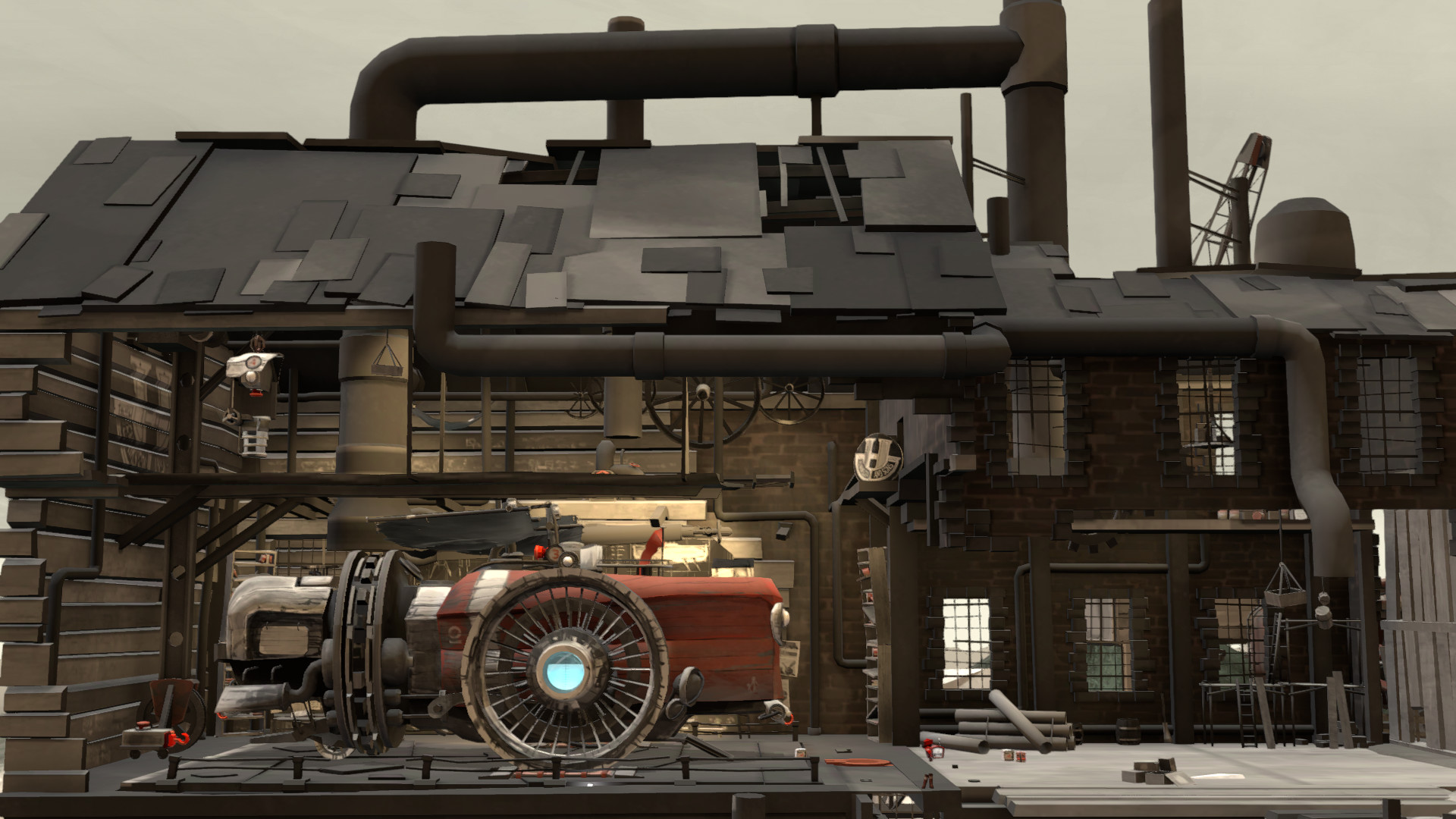
Storms and collisions can damage individual parts of the vessel, including the engine and refuelling equipment. Small indicators show which systems need attention, and the ship carries a fire hose for onboard emergencies. After an early storm, a repair unit becomes part of the vehicle's equipment; the traveler holds its tool beside a damaged component to restore that part. This is more specific than a single health bar: damage to the engine affects powered movement, while damage to the refuelling station threatens the process that turns salvage into fuel. Repairing means moving through the ship to the affected component, while the player still has to manage fuel and pressure at their own controls. The machine's condition is consequently legible through its stations and gauges. There is no combat phase when it is damaged; the problem is deciding which system to restore before continuing through the environment.
The route's puzzles involve operating environmental machinery as well as maintaining the vessel. The traveler can carry an object to a generator, press a control that moves a barrier or platform, or use a rope and pulley to pull the ship past a difficult point. These actions make objects serve different functions depending on context: a barrel may be converted to fuel aboard the vehicle, while a crate may be needed to activate equipment outside it. The traveler can leave the hull to reach a control, then return to the vessel and continue. Later, an automatic vacuum collects fuel pieces as the ship moves, reducing the need to stop for every item. That convenience has a clear hazard: a flame-marked propane tank can explode and damage the engine if the vacuum draws it into the fuel area, so the player must eject it. The puzzle and resource systems meet through the same carried objects and working machinery. The central elevator links the vessel interior with the roof, where the traveler can reach upper equipment.
The visual design reinforces the difference between the traveler, interactive machinery, and distant landscape. Lone Sails uses a limited colour palette and foggy atmosphere; three-dimensional backgrounds add depth, while interactive objects stand out against the muted surroundings. Much of the art is composed for the game's side-on viewpoint, so structures can be layered and arranged to show their most useful silhouette from the route. The story was built during development around a clearer aesthetic and architecture, rather than beginning with a complete historical timeline. That approach suits a world learned through passing scenery: buildings can imply age, purpose, or collapse without a character stopping to explain them. The game began as a university thesis project before Okomotive developed it into a commercial release. The studio name itself comes from the vehicle's name, connecting the machine at the center of play with the identity of the team that made the game. Assets are composed for a mostly fixed viewpoint, and the same structures can appear from a different angle or in a new combination elsewhere. Hand-painted textures preserve the painterly quality of the concept art, while distant detail is kept restrained so buildings blend into the background instead of competing with the foreground machinery.
The score gives the largely wordless journey another way to suggest an emotional thread. Joel Schoch composed music with real performers and instruments, including piano, Rhodes, synthesizer, and percussion, joined by saxophone, trumpet, cello, violin, voice, and other strings. The independently sold soundtrack has 21 tracks and about 53 minutes of music, with titles that evoke vehicle, weather, travel, and landscape. These musical cues sit beside the clank of the engine, hiss of steam, and sound of wind rather than replacing them. The score grew alongside the game, so changes in its direction also affected what the music needed to support; the composer's challenge was deciding when ideas were fixed and when to keep them open. The downloadable album includes MP3 and FLAC files, and its credits also list mandoline, bouzouki, guitar, contrabass, and flugelhorn. The base game is available on Steam and other PC storefronts, consoles, and mobile platforms, with technical details varying by release.
Don Schmocker began the project as a bachelor’s thesis at Zurich University of the Arts in 2015. Its early idea placed a person directly inside and around a slow-moving vehicle, so the player would control the operator instead of steering the machine from an invisible cockpit. Schmocker developed the prototype with other students and publisher Mixtvision as the vehicle and its world grew into a commercial game. An invitation to the ID@Xbox showcase at E3 in 2016 gave it a wider audience while development was still under way. Festival appearances and player feedback followed, and the vehicle’s design became more sophisticated across that period. The studio name Okomotive had first been used for the machine itself, before becoming the name of the team building the game. This history is visible in the finished journey’s unusual emphasis: a button, lift or carried barrel matters because the traveler must reach and operate it personally. The machine’s growing number of functions stays connected to the simple original idea of one person keeping a large vessel moving.
- Developer
- Okomotive
- Genre
- Vehicle adventure