
About Far Cry Primal
In Far Cry Primal, hunter Takkar is stranded in Oros after his Wenja hunting party is attacked. He searches the Stone Age valley for scattered members of his people while contending with rival tribes and dangerous wildlife. Hunting, crafting, taming animals and building a village shape how the Wenja reclaim a home.
Far Cry Primal takes place in Oros, a broad prehistoric valley of forests, wetlands, mountains and caves. Takkar begins as a hunter separated from the Wenja after a mammoth hunt turns into an ambush. Finding other survivors gives the story its central direction: gather the scattered Wenja and establish a community that can withstand its neighbours. The Udam, led by Ull, threaten the Wenja from the north, while the Izila form another organised rival tribe. The conflict grows through missions tied to these groups and to people Takkar meets while travelling, rather than through a modern military campaign. The setting changes the everyday threats too: animals hunt across the same land as people, and night brings greater danger.
Oros is navigated on foot through open terrain, with paths leading between settlements, enemy sites, hunting grounds and mission areas. Hunter Vision helps Takkar pick out useful plants, resources, animals, enemies and clues; wounded prey can leave trails that help continue a hunt. The world is not simply a backdrop between fights, since wood, stone, reeds, hides, meat and other gathered materials feed into survival and equipment. Fire has practical uses: a lit club can illuminate dark places and burn obstructing brush, while fire-tipped weapons can be used tactically. When darkness arrives, predators become a more immediate concern, so shelter and a reliable source of light matter during travel.
The basic arsenal is built around the bow, spear, club and throwable shards, with ammunition and replacements crafted from gathered supplies. A bow supports quiet ranged attacks, while spears can be thrown and clubs work at close range; weapons can also be set alight when fire is available. The weapon wheel lets Takkar craft ammunition during an expedition, connecting preparation to resource collection. Hunting serves more than one purpose: animals provide food and materials, and their hides can be required for upgrades. Tracking a wounded animal and recovering its remains turns a missed shot into another piece of the resource loop. Larger predators can interrupt travel or combat, so the player must judge when to fight, avoid, or use fire and terrain.
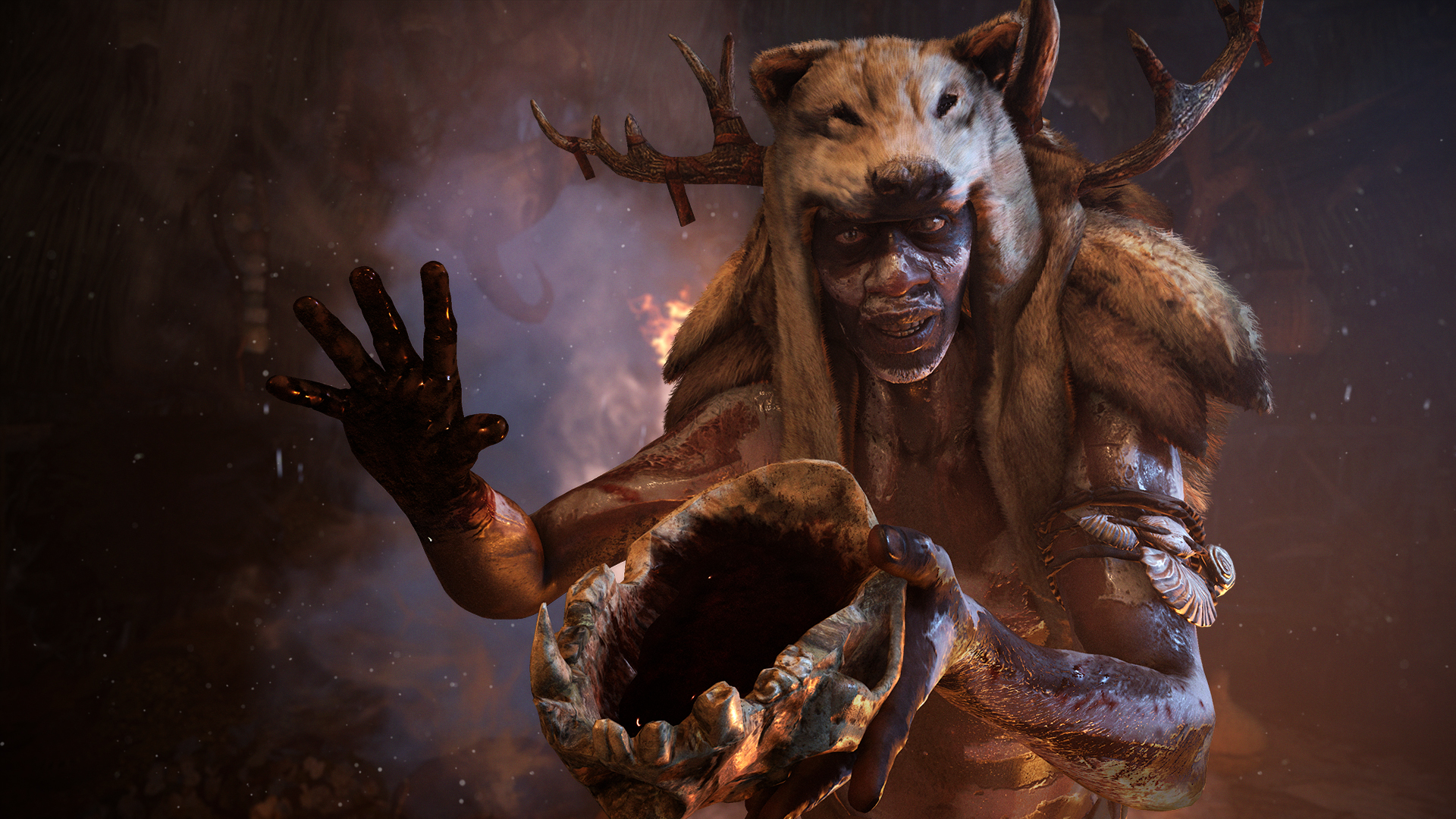
Tensay the shaman introduces Takkar to animal companions and the owl. The owl can scout ahead and tag enemies, helping reveal a camp before Takkar approaches on the ground. With further skills, it gains additional actions, including attacks and the ability to drop certain bombs. Ground animals are tamed by using bait and approaching while they feed; once recruited, a beast can be directed toward a target or recalled. Different companions support different approaches. Wolves can warn of nearby threats, stealthier cats suit a quieter advance, while stronger animals can draw attention and attack directly. The companion system makes wildlife a resource and a tactical consideration at once, since untamed predators remain dangerous in the same territory.
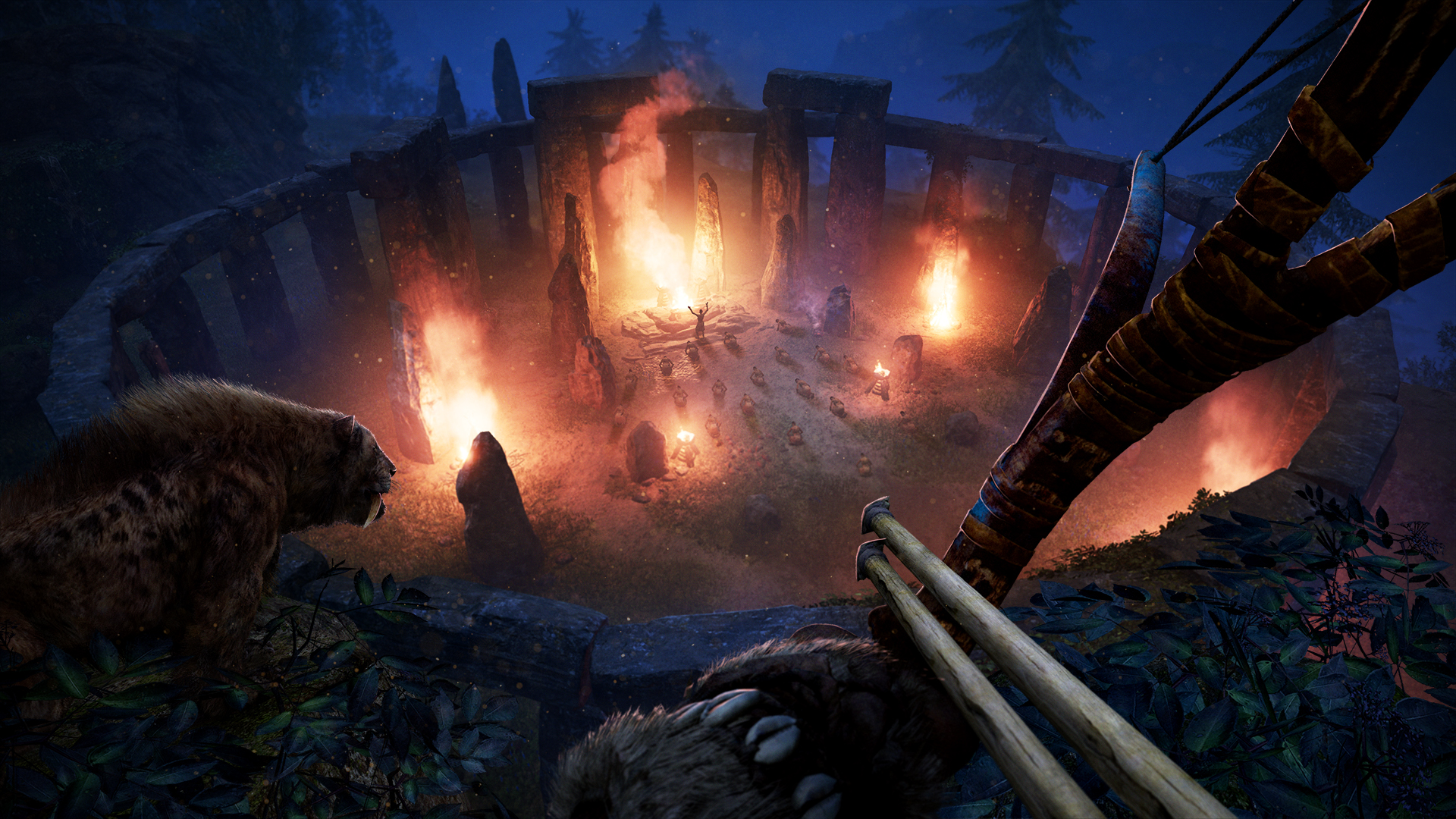
Taming expands through skills that become available as Takkar meets specialists and develops their place in the Wenja village. The early companion roster leads toward stronger animals: after taming several beasts and unlocking the relevant skills, Takkar can recruit apex predators such as sabretooth tigers and brown bears. Later progression adds the ability to ride certain beasts, changing movement across Oros while keeping combat actions available. Beasts can be injured and require care, and a badly hurt companion can be revived with resources. Their uses also differ outside a fight: some gather materials or process carcasses. Building Tensay’s hut opens more of his skill tree, so the village’s growth directly expands the ways Takkar can use animal allies.
The village is Takkar’s main base and a visible record of the Wenja gathering there. Rescued people join the settlement, increasing its population and bringing specialists whose huts can be built and improved with specific materials. Sayla, a gatherer, and Tensay are among the first figures to shape this system; other skilled Wenja add further missions and development paths. Hut construction does more than change the settlement: it unlocks specialist skills and additional tasks. The village therefore connects the story of reuniting the tribe with character progression. Exploring for the right supplies, recruiting a specialist, then returning to improve a hut forms a recurring loop that makes remote expeditions contribute to the community at home.
Equipment upgrades depend on hunting and gathering particular resources, including hides from different animals as well as common materials found across the valley. Improvements can expand carrying capacity or enhance weapons and protective gear, giving exploration a practical goal beyond reaching a map marker. Experience gained through missions and other activities awards skill points, which Takkar spends across abilities associated with combat, gathering, hunting and the specialists. Some skills depend on recruiting a character or building their hut, while others require earlier abilities or particular accomplishments, such as taming several animals. This creates two connected forms of advancement: skills make Takkar more capable, and village development opens new branches of those skills.
Human settlements and outposts provide another kind of objective within Oros. Takkar can observe an enemy site with the owl, mark defenders, and choose an approach using stealth, ranged weapons, a companion or direct combat. Fire and the environment can change how an encounter unfolds, while alarms risk drawing additional enemies if guards are allowed to call for help. Capturing territory strengthens the Wenja presence and supports movement and supplies across the region. The main campaign mixes these confrontations with specialist missions, rescues, hunts and village defence. Between objectives, the player returns to the open world to find materials or deal with wildlife. The result is a progression built from the same actions—hunt, gather, recruit, craft and defend—rather than a separate menu-only upgrade track.
- Developer
- Ubisoft Montreal (official Ubisoft announcement and Steam product listing)
- Genre
- Open-world action adventure / first-person shooter