
About Far Cry 6
Far Cry 6 is an open-world first-person shooter set on Yara, a fictional Caribbean island ruled by Antón Castillo. As Dani Rojas, a Yaran drawn into the rebellion, you work with Libertad and regional allies, disrupt military control, and build a guerrilla network using improvised weapons, Supremo backpacks, animal companions and camp facilities.
Far Cry 6 takes place on Yara, a fictional island nation governed by Antón Castillo, who promises to restore its former prosperity while preparing his son Diego to succeed him. The regime’s military power and forced labour shape daily life across the island, and Dani Rojas begins as a Yaran trying to escape rather than as an established revolutionary. After becoming involved with Libertad, the rebel group led by Clara García, Dani is pulled into a campaign to weaken Castillo’s rule. The story moves between Dani’s perspective and scenes that show Castillo and Diego away from the guerrillas, while its open structure lets the player decide when to pursue several regional storylines. The central conflict remains the fight to free Yara, but each part of the island has its own allies, opponents and local stakes.
After the opening on Isla Santuario, the larger island opens toward three regions: Madrugada, Valle de Oro and El Este. Their story arcs can be tackled in a player-chosen order, with each region introducing its own network of people resisting Castillo. Valle de Oro includes the anti-regime music group Máximas Mátanzas, while the other regions bring their own local allies into the conflict. Helping these groups means completing missions tied to their members and the pressure Castillo’s forces place on their home region. Clara and Libertad’s broader campaign continues alongside these local stories, so mission progress can alternate between allies’ immediate struggles and the larger effort to unite resistance across Yara. The island’s different fronts are linked by progression-triggered operations that reconnect Dani with Libertad and the central conflict, but they do not force one fixed order through every regional mission. That open structure lets the player move between local causes and the rebellion’s overall campaign.
Yara’s open world connects settlements, farmland, beaches, mountains, jungle and the fortified capital of Esperanza. Dani can travel on foot, by horse, or in vehicles that include boats and aircraft. Exploring and crossing the island brings the player into contact with military roadblocks, checkpoints, supply routes and FND bases controlled by Castillo’s forces. Taking these installations weakens the regime’s presence and provides practical access to parts of the map, while discoveries and conversations can reveal additional activities and resources. The setting’s military occupation affects movement: some routes are dangerous because of patrols or air defenses, while guerrilla paths and liberated camps provide alternative ways through the landscape. This makes travel part of the rebellion’s push to open up territory, not just a pause between story missions.
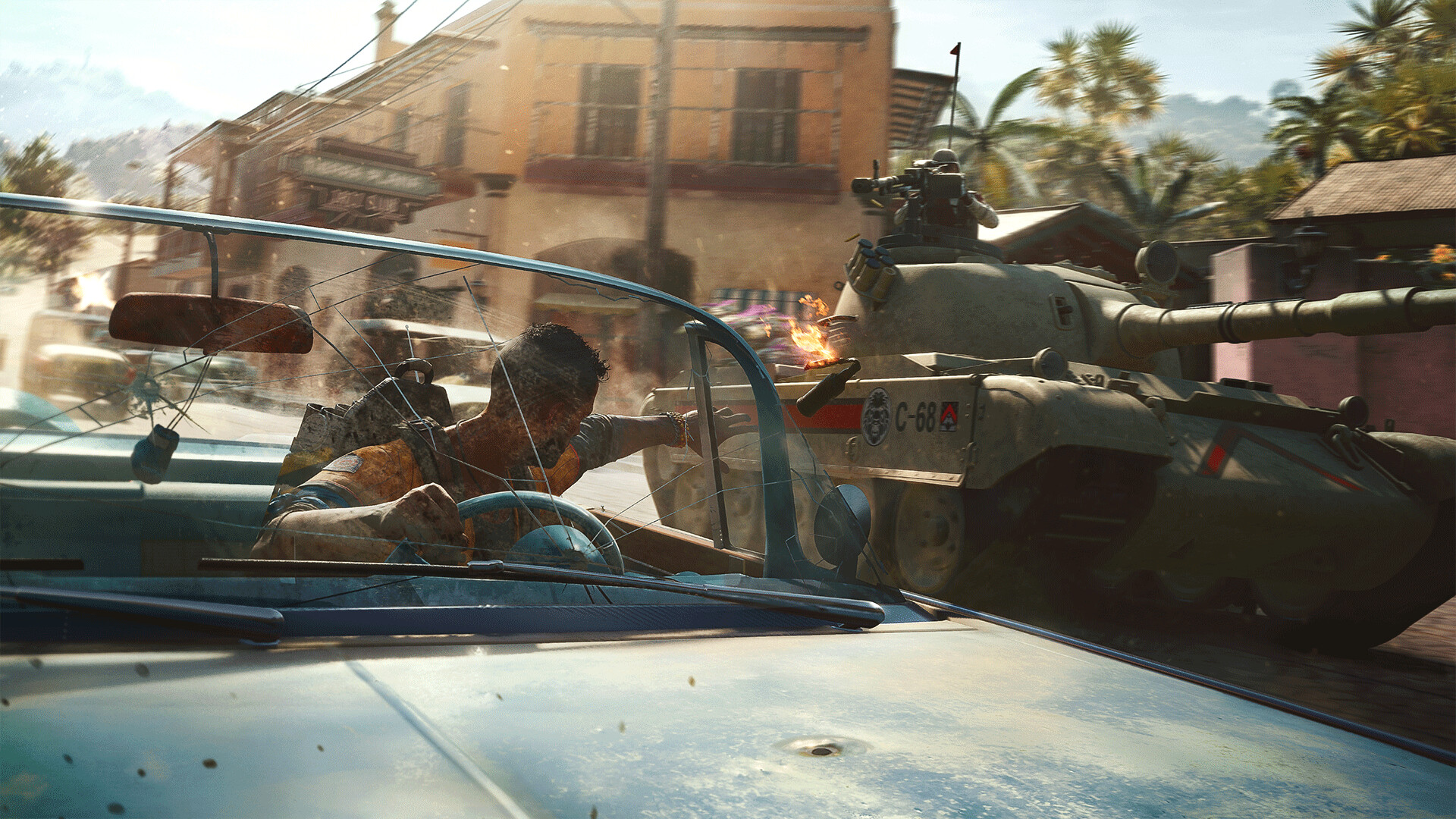
Combat is built around attacking a better-equipped military with flexible tactics. Dani can approach an FND site quietly, use enemy cameras and alarms as intelligence, sneak through gaps in a perimeter or start an open firefight. Ammunition types serve different purposes against different enemy protection, so a weapon can be fitted with armor-piercing rounds for helmeted soldiers or other ammunition for other targets. Captured bases and checkpoints remove hostile control from useful locations, while destroying anti-aircraft installations helps open the skies to aircraft. Enemy facilities also contain resources and gear that feed into later upgrades. A failed stealth approach can therefore change a carefully planned infiltration into a battle, while equipment, routes and the chosen entry point affect how much of the base Dani must confront directly. Co-op supports playing through the campaign with a second player, but the main story can be played solo.
The Resolver idea gives Dani improvised weapons alongside conventional firearms. Juan Cortez acts as a guerrilla mentor and craftsman, introducing weapons assembled from scavenged components and the Supremos carried on Dani’s back. At workbenches, collected materials such as gunpowder can be spent to fit weapon modifications, including ammunition, optics and muzzle attachments. A hunting rifle can be set up for quieter, longer-range use, while a makeshift weapon may solve a very different combat problem. These choices shape the loadout rather than a fixed character class: Dani can change weapons and equipment when the situation calls for a different balance of stealth, range or direct force. Scavenging, looting caches and disrupting military sites all contribute to the material supply that lets the player tune gear for the next operation.
A Supremo is an active backpack ability with a cooldown, giving Dani a powerful effect that must be timed around combat rather than used continuously. The Exterminador launches a volley of tracking rockets, the Volta’s EMP can disable electronics, and the Medico supports recovery; Supremo-specific modifications add gadgets or adjust how the pack works. Dani’s worn gear is also modular: pieces for the head, chest, legs, feet and wrists grant different bonuses, and the player can change clothing to suit stealth, mobility or protection. Animal companions called Amigos add another way to handle encounters. Chorizo can distract soldiers to create an opening, while Guapo attacks enemies directly. These systems can be mixed: gear can support quiet movement, a Supremo can disrupt security, and an Amigo can occupy guards while Dani moves through a base. Their functions give preparation concrete effects in the field.
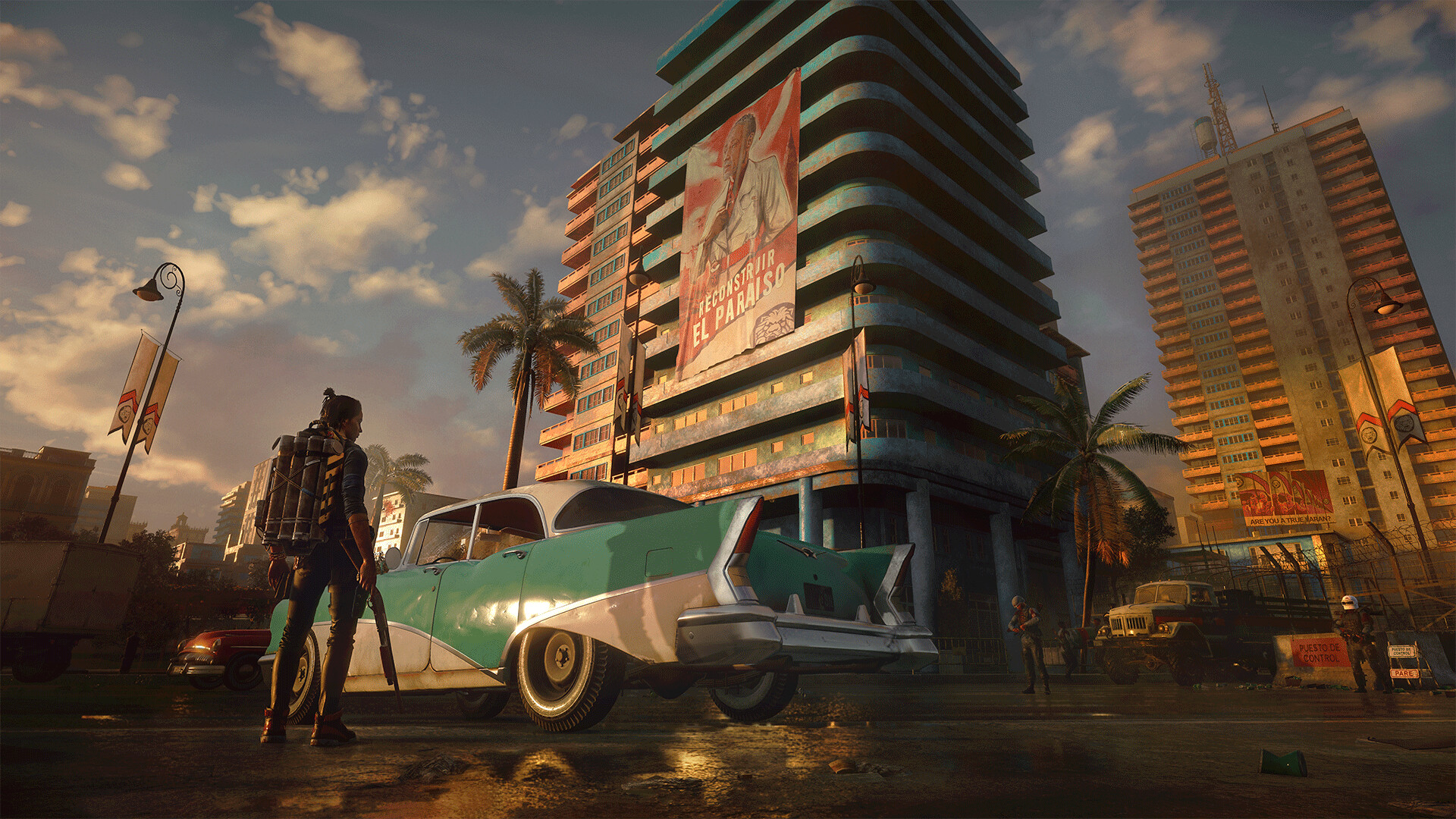
Guerrilla camps turn collected supplies and regional progress into lasting infrastructure. The construction desk becomes available after Dani reaches a main guerrilla base; there are six facility types, and each of the three regional bases can build two. Facilities cost resources such as metal, gasoline and medicine, so their benefits depend on what the player invests in. The Hideout Network reveals purchasable guerrilla hideouts, expands fast-travel options and provides the wingsuit for airdrops. Bandidos Barracks support Los Bandidos operations, while the Guerrilla Garrison improves allied fighters’ weapons and adds reconnaissance at military sites. From operation boards, Dani can send a leader and recruits on staged assignments where choices affect success and possible rewards. These background missions sit alongside direct field work: upgrade a camp, gather recruits and materials, then return to exploring and fighting across Yara with a stronger rebel network.
- Developer
- Ubisoft Toronto, Ubisoft Montreal, Ubisoft Kyiv, Ubisoft Shanghai and Ubisoft Berlin
- Genre
- First-person shooter, open-world action-adventure