
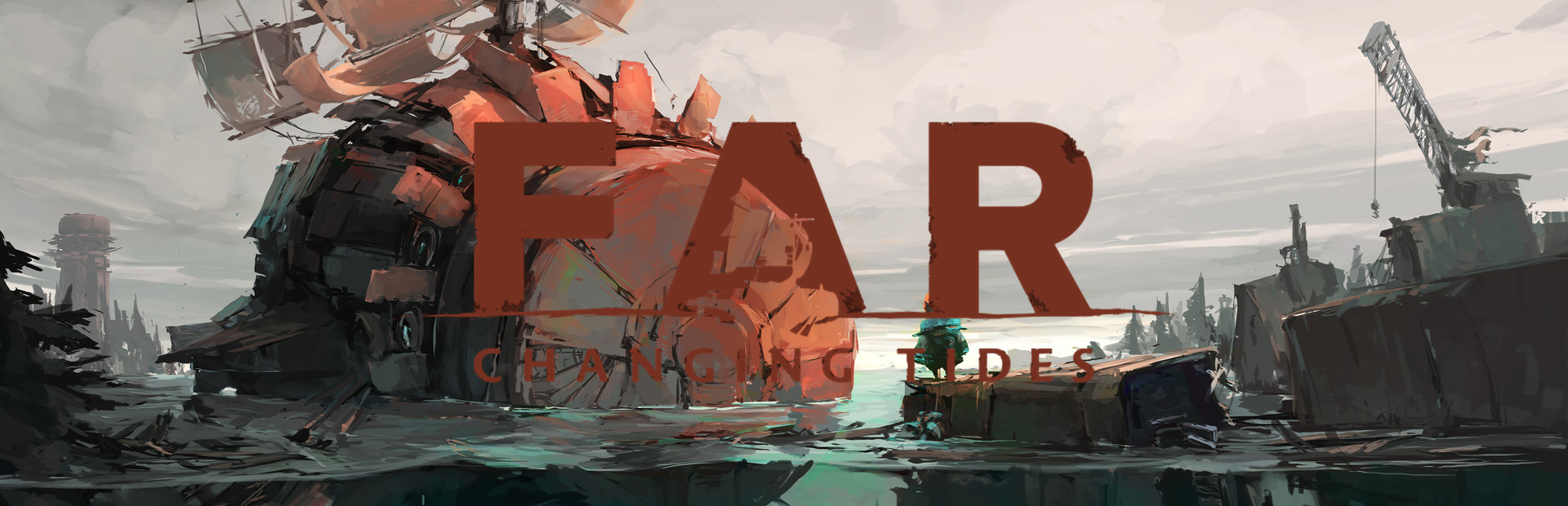
About FAR: Changing Tides
FAR: Changing Tides follows Toe through a flooded world in a ship that can sail on the surface and travel below it. The voyage combines wind and engine management, salvage, repairs, and puzzles in which Toe and the vessel solve different parts of the same obstacle, as submerged remains trace a search for a new home.
Toe wakes to find their home submerged, then sets out through a world of flooded settlements, open water, storms, and structures at or below the surface. Images, buildings, and abandoned objects hint at the people who lived here without supplying a complete history or a spoken explanation. An abandoned ship becomes both shelter and the means of travel. Toe is small beside it, and the story repeatedly makes that practical difference matter: the child can reach a switch or swim through a narrow space, while the ship supplies weight, machinery, and passage through larger obstacles. FAR: Changing Tides is Okomotive’s companion title to FAR: Lone Sails, not a direct continuation of that game’s plot. It keeps the solitary vehicle journey but changes the dry seabed for a flooded world, giving this voyage its own protagonist, vessel, and environmental problems. The search for a new home supplies direction while leaving room for the scenery to tell its own story.
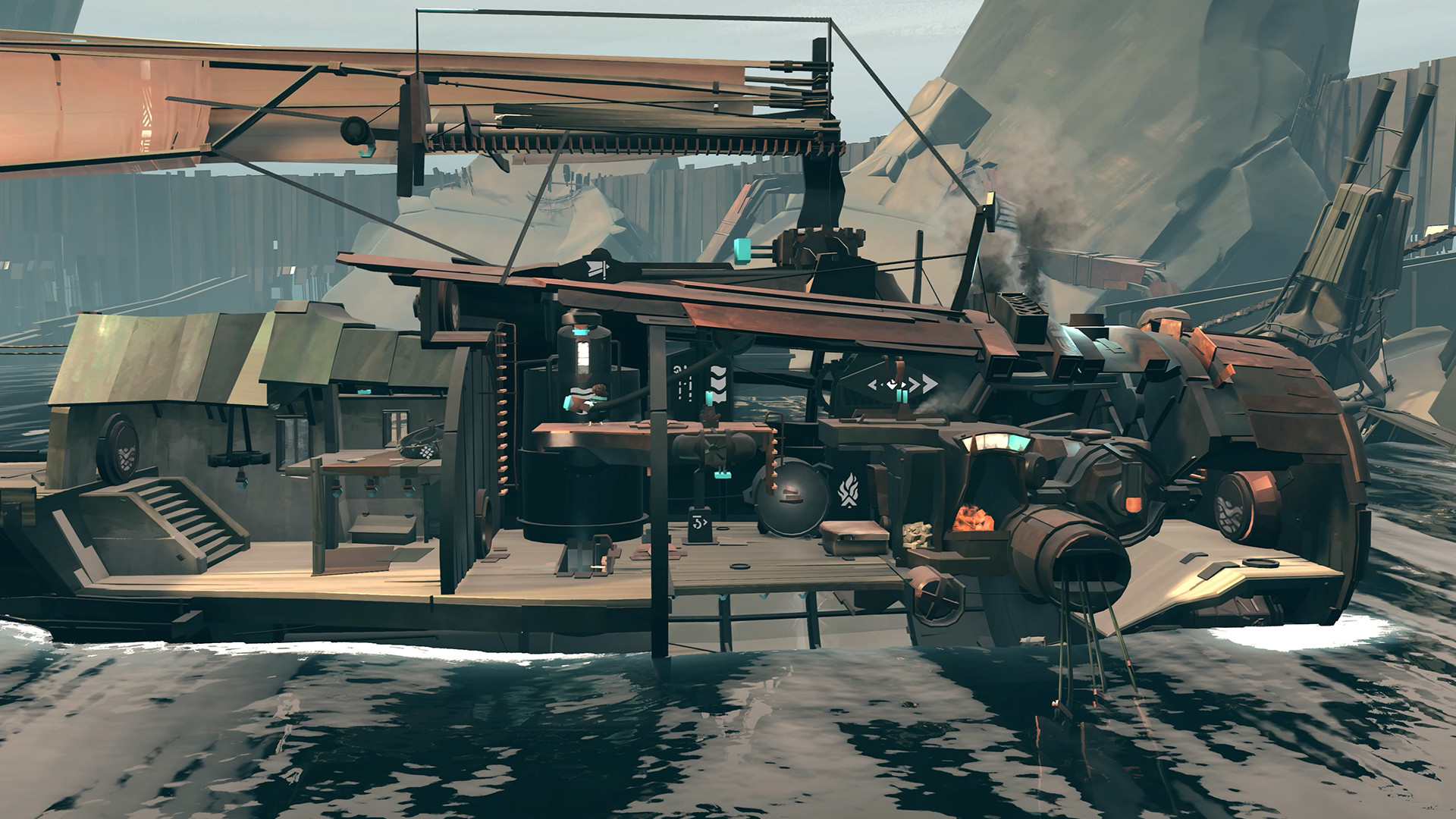
Above water, the vessel can move with sails and oars. Toe raises the mast, hoists the canvas, and uses a lever to adjust its angle to the wind; the mast can also fold down when the ship’s configuration needs to change. These operations turn a simple sailing image into a sequence of physical controls, with Toe moving between stations around the deck. Oars provide another way to maneuver, while wind and obstructions determine when the sails help. The player reads the surroundings and adjusts the ship rather than selecting a route from a map. The ship occupies much of the side-on view, and Toe’s movement between controls gives each course change a visible cost in time and effort. Surface travel therefore has a different rhythm from the underwater sections, where the canvas is stowed and powered movement takes over. The distinction also reinforces the series’ identity: this is a ship crossing water, not Lone Sails’ wheeled land vessel crossing a dry ocean.
Salvage gives the ship a powered option for stretches when wind is insufficient. Toe carries fuel aboard and feeds it to a furnace, then pumps bellows to bring the fire to life. The resulting heat drives the engine, but keeping it running involves more than watching a fuel gauge: overworking it can cause overheating, and the player must leave the controls to use the cooling hose. Fuel collection, fire-starting, movement, and cooling are separate jobs performed with the same vessel. They make the craft feel like a place the player works in, not a vehicle that runs unattended. The engine also has a role beyond propulsion. When a puzzle needs electrical power, heat from the operating machinery can supply it, linking ship maintenance to environmental exploration. The player learns these functions as the vessel gains equipment, so progression changes what the ship can do without introducing a character skill tree or combat build.
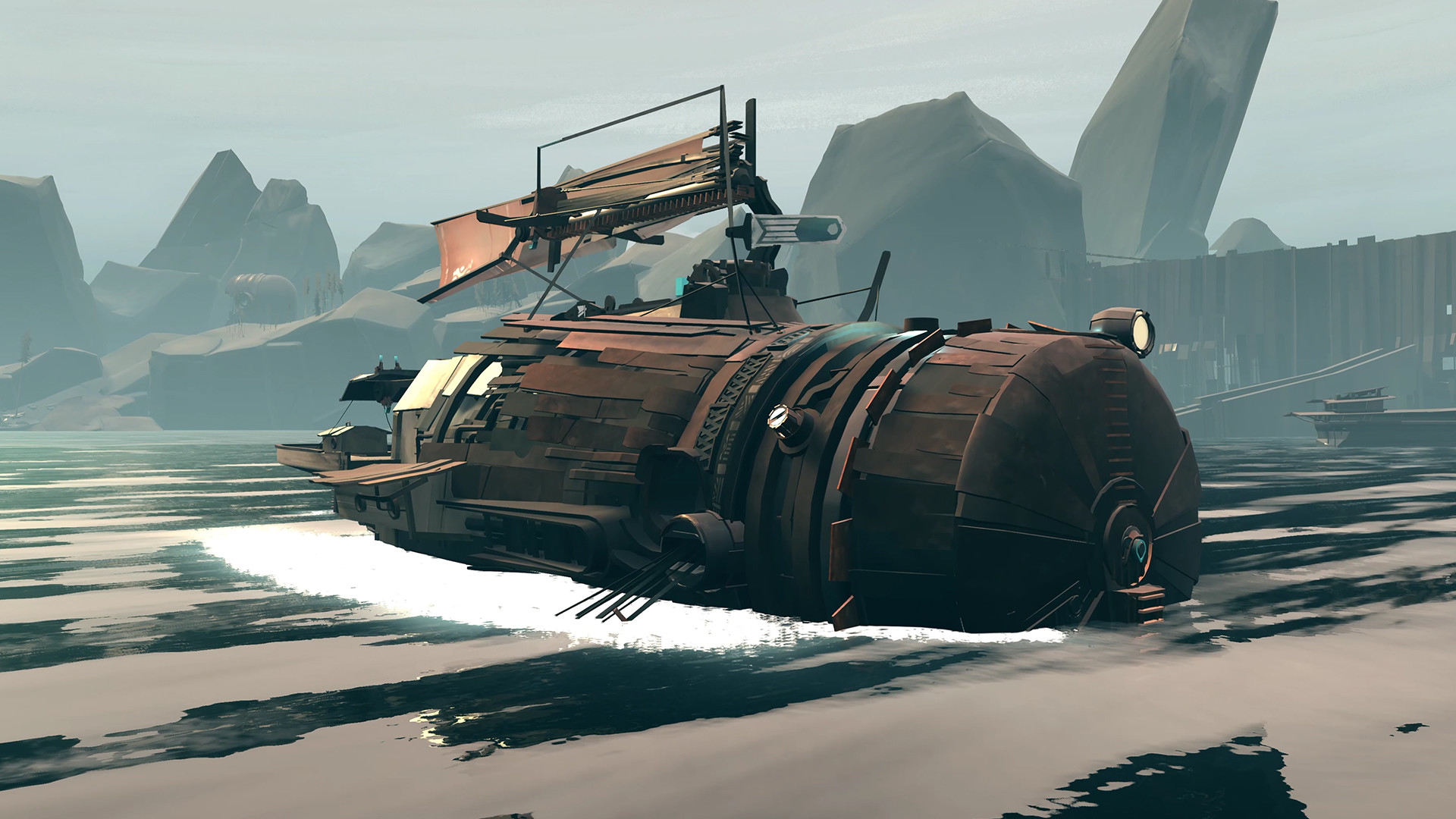
The ship’s underwater configuration changes how it travels. Its sails retract and an engine-driven propeller carries it below large formations; the player adjusts depth as well as direction to pass through caves and built passages. Collisions can take away momentum, making a careful approach and retreat part of steering. Toe can leave the hull and swim into spaces that the larger ship cannot enter, using a propeller-equipped diving suit to move through deeper water. These are complementary scales of movement: the vessel navigates a broad submerged route, while Toe reaches nearby mechanisms and confined areas. Underwater travel consequently alters the spatial problem rather than serving as a brief visual effect. Objects and structures may guide the eye toward a passage or control, and the player explores those cues while managing clearance around the ship. The changing relationship between the child and the craft is central to the design: neither can perform every task alone.
Environmental puzzles ask the player to connect a local machine with the ship’s capabilities. A crane can reposition a power source, a saw can prepare or free wood, and a heated engine can provide electricity for a separate device. These are contextual uses of objects rather than inventory recipes: the relevant question is how to make a machine or piece of salvage affect the obstacle in front of the vessel. Toe may have to leave the ship to reach equipment, then return and position the hull as part of the solution. Ship parts arrive over the journey and expand access to new spaces; repairs keep those systems usable. There is no enemy combat loop in the consulted descriptions. Storms, blocked routes, the ship’s condition, and environmental mechanisms supply the challenges. This keeps the puzzle language grounded in the same machinery used for travel, while avoiding a need to explain every obstacle as a separate rule system.
Okomotive’s art direction supports exploration through restraint and readable environmental cues. In its developer discussion, the team describes keeping background structures sparse enough for players to notice them and using environmental lines to lead attention toward objects such as a buoy or chain. Underwater spaces were designed to invite exploration, with landscape and submerged details helping the player find where to go. These choices matter in a largely wordless game: the scenery must carry atmosphere while still making relevant objects legible. The side-on presentation gives a clear view of the ship and nearby structures, but depth and scale come from layered backgrounds and the water itself. Rather than naming every flooded settlement or explaining the society that built it, the game lets architecture and objects indicate past use. This approach continues Lone Sails’ interest in unobtrusive storytelling while giving Changing Tides a different visual vocabulary of water, submerged routes, and traces of habitation.
Sound design extends that environmental storytelling. Composer Joel Schoch describes an organ built from roughly 400 wooden pipes and a glass instrument called the Chromatic Aquarion, made with instrument builder Jim Double. The score was implemented with FMOD Studio so music could respond to the player and the environment, instead of remaining a single fixed layer throughout the voyage. Its changing passages accompany shifts between travel and active problem-solving, while the ship’s machinery, wind, and water remain part of the soundscape. The official soundtrack is also sold separately, and Steam lists it in a Deluxe Edition bundle with the game. Okomotive’s press kit credits Frontier Developments as publisher, while the current Steam listing identifies Frontier Foundry; the distinction reflects the names used by those sources. Okomotive developed the 2022 single-player game, which is available on PC storefronts and consoles, with platform packages varying by release.
Okomotive planned the flooded world with a different production approach from its first FAR game. For Lone Sails, the team began with a strong visual idea and developed much of the background story as the project grew. For Changing Tides, it wrote most of the story and world-building during pre-production, then designed environments alongside that narrative. A submerged structure could therefore serve as both a route for Toe and evidence of the lives that preceded the flood. Water had to remain part of almost every scene, so the team used changing landscapes and colour palettes to give the voyage visual variety without losing the sense of a connected world. The studio also had to decide which familiar ideas earned a place in the new ship: its creative lead said features were tested for whether they worked here on their own terms, rather than added only because they resembled Lone Sails. That explains the emphasis on sailing, diving and a vessel with its own set of controls. The ship is introduced to Toe and to new players together, with each added function changing what can be reached next.
- Developer
- Okomotive
- Genre
- Vehicle adventure