
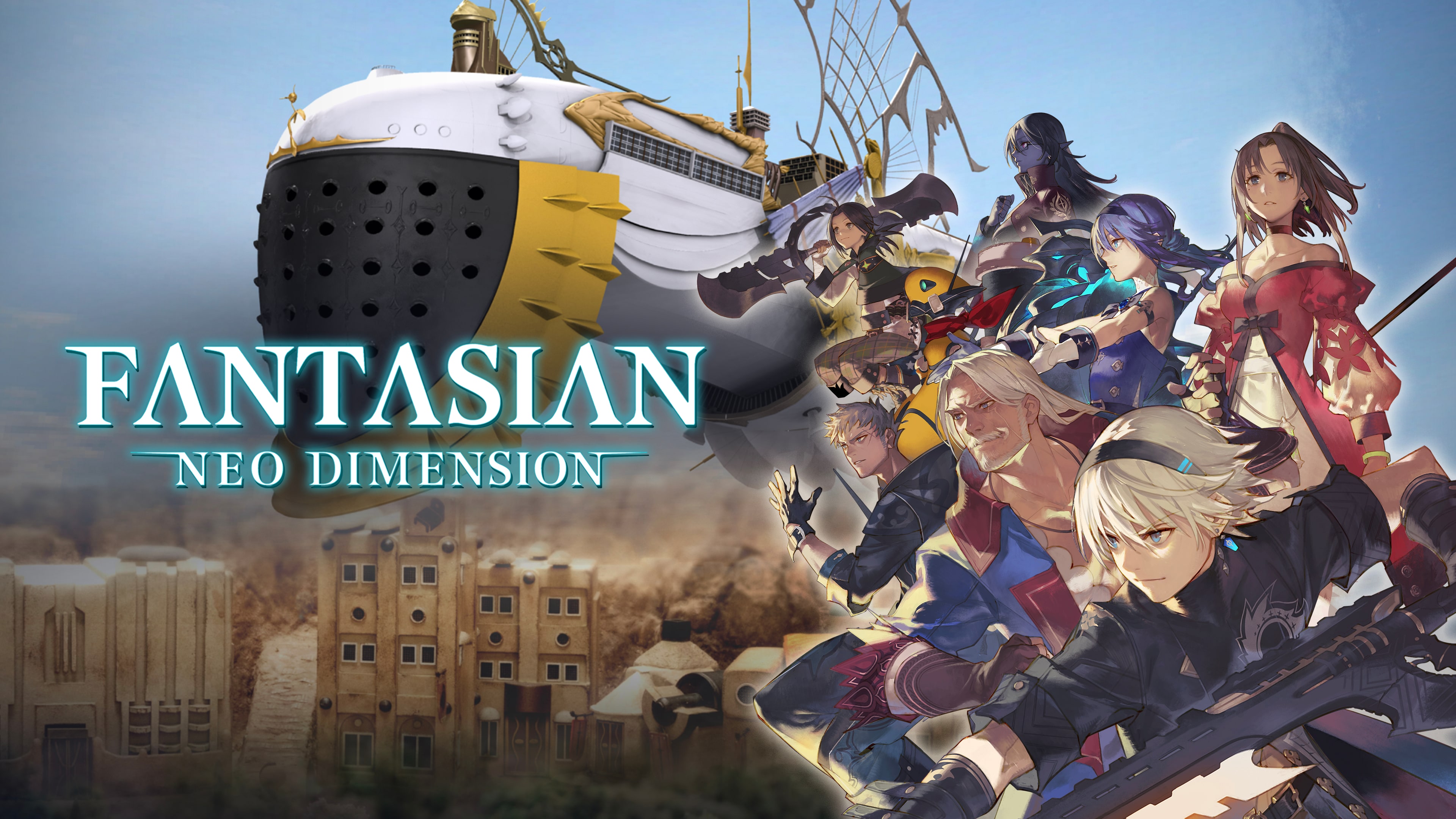
About FANTASIAN Neo Dimension
Leo awakens in a machine-filled land with almost all his memories gone, while Mechteria spreads through human settlements. A Warp Device carries him between connected dimensions as he searches for answers and allies. Turn-based battles let players curve skill paths across enemy groups, while the Dimengeon stores familiar foes for a later fight.
FANTASIAN Neo Dimension is a role-playing adventure about Leo, who wakes in a strange land filled with machines and can remember only one thing about himself. A mechanical infection called Mechteria is spreading through the world and stripping people of emotion and life. Leo's search for his lost memories becomes part of a larger effort to stop that threat. The setting spans the human world, a machine world, and dimensions beyond them; the Warp Device left behind for Leo allows travel between these connected places. The story begins with a personal mystery, then gives it a wider stakes as Leo meets other people affected by the infection and discovers how the worlds relate. The game presents this as a new RPG story from Hironobu Sakaguchi, with music by Nobuo Uematsu. Its premise combines an amnesiac protagonist, a spreading crisis and interdimensional travel, while the party's changing objectives lead Leo through towns, field areas and dungeons.
Movement through the world is organized around distinct field areas rather than a single uninterrupted landscape. Leo can walk through settlements and environments, inspect objects, speak with characters and uncover hidden items or quests. The Warp Device connects separated dimensions and supports the wider journey; within a field, the player navigates routes and searches the visible environment for points of interest. Handmade miniature dioramas provide the source material for many of these locations, which are photographed and rendered as three-dimensional spaces. This gives towns, natural landscapes and machine-filled regions different physical textures even though the player explores them through the same basic character controls. The adventure spans more than 150 field areas, with quests and hidden items rewarding close attention to each place. Exploration connects directly to the story's mystery: the player visits places touched by Mechteria, learns what has happened to their inhabitants and finds items that support the journey. Camera transitions can change the orientation of movement when the view shifts, so directional input follows the active angle of each space. Quest markers also help locate optional content, and a hint feature points toward rare loot without automatically removing the search. Those detours can reward equipment or lead to additional boss fights, so exploration feeds preparation for combat instead of serving only as passage between story scenes. The player can follow the main route or spend time looking for rewards that may offer another way to adjust the party.
Combat uses turns, a visible order of action and a party whose members can be exchanged as the situation changes. Instead of treating every skill as a simple single-target selection, the player can adjust the trajectory of certain attacks before they resolve. A curved shot or spell can sweep across a line of enemies, while another skill may cover a defined area; drawing multiple foes into the path can turn one action into a coordinated strike against a group. The timing and shape of an attack therefore matter alongside the character and ability selected. Enemy weaknesses and status effects create additional reasons to choose one element or technique over another, and powerful opponents introduce patterns that ask the party to change tactics. Some attacks cost MP, so the player weighs broad coverage and damage against the resources needed for later turns. The battle system makes the field geometry part of command selection, connecting the act of aiming to the tactical decision about which targets to include.
The Dimengeon Machine changes how repeat encounters interrupt travel. After the party has fought a kind of enemy in an area, subsequent encounters with familiar foes can be stored inside the device instead of immediately opening another small battle. Those enemies accumulate until the player chooses to release them into a larger Dimengeon fight, where multiple opponents can be targeted together with trajectory-based attacks. This lets the player decide when to handle a group rather than stopping for every separate encounter, and it turns enemy management into a resource decision: store a set for a later burst or clear the machine before it fills. The device is not a way to avoid combat altogether; its stored enemies still have to be fought, and larger groups make positioning and area coverage important. By linking random encounters to a later planned battle, the Dimengeon ties field movement, enemy frequency and the combat system's multi-target skills into one recurring choice.
Character growth gives the player tools for tailoring the party to different encounters. Growth Maps provide skill paths where points can raise attributes, add new attacks and strengthen abilities. The party's skills include attacks with different ranges and areas, supportive effects and ways to exploit weaknesses, so point allocation changes what a character can contribute in a battle. Party members can be swapped during combat, allowing the player to bring a different specialist into the active group without treating the initial lineup as permanent. This flexibility matters when an enemy's defenses or attack pattern call for a different mix of skills. Equipment and gems add another layer of preparation, letting the player adjust defensive properties or other battle advantages before entering a dangerous area. When a boss resists the current setup, Growth Map points can be reassigned and characters can be reconfigured to test another approach. Progression is therefore about expanding and tuning the set of available answers, not only raising numbers through repeated fights. Bosses often introduce a pattern or special gimmick that changes which answers are useful, making a new Growth Map allocation one way to respond when a setup stops working. Skill points can be reassigned, so those choices are reversible; the player can redirect points toward a needed ability or stronger attribute before trying the encounter again. Equipment and gems, however, must be considered before the battle begins, since they cannot be changed during the fight. The distinction gives preparation two different time horizons: skill development can be retuned after learning an opponent's pattern, while defensive gear and elemental protection need to be anticipated in advance.
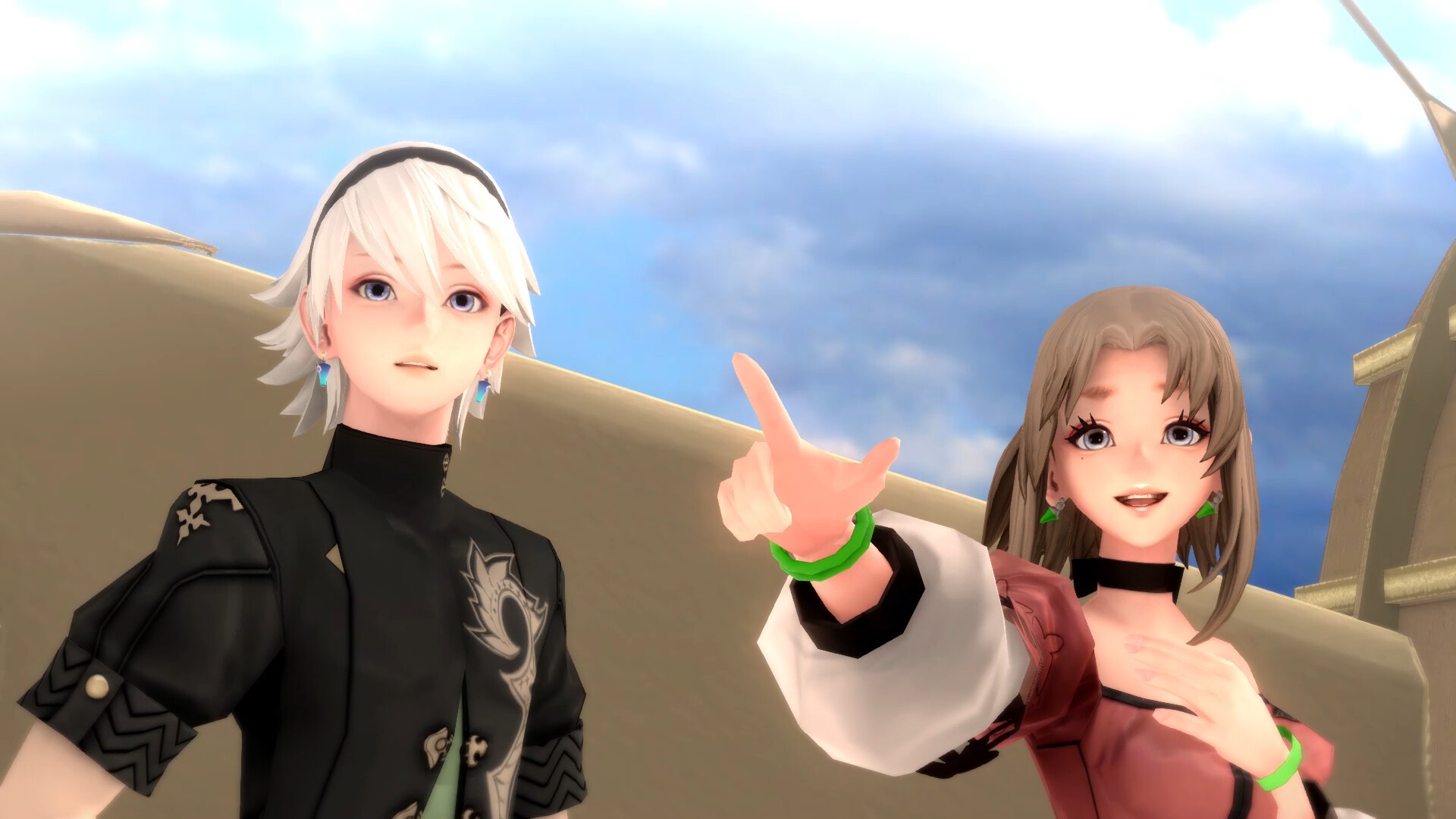
The Neo Dimension edition adds features to the earlier FANTASIAN release, including English and Japanese voice performances, a choice between Normal and Hard difficulty, and higher-resolution presentation options on supported hardware. The Steam version also allows the player to replace the original battle music with selections from FINAL FANTASY games, drawing on the series associated with Sakaguchi and Uematsu. Its visual world combines photographed, handcrafted dioramas with computer-generated environments and three-dimensional characters. These miniature sets create the basis for fields that feel materially different from one another, while camera framing guides the player through their paths and points of interest. These additions distinguish Neo Dimension from the original Apple Arcade release while preserving its story, Dimengeon encounters and trajectory-based battles. The full PC edition is separate from a Steam demo covering the opening, whose save can transfer into the purchased game.
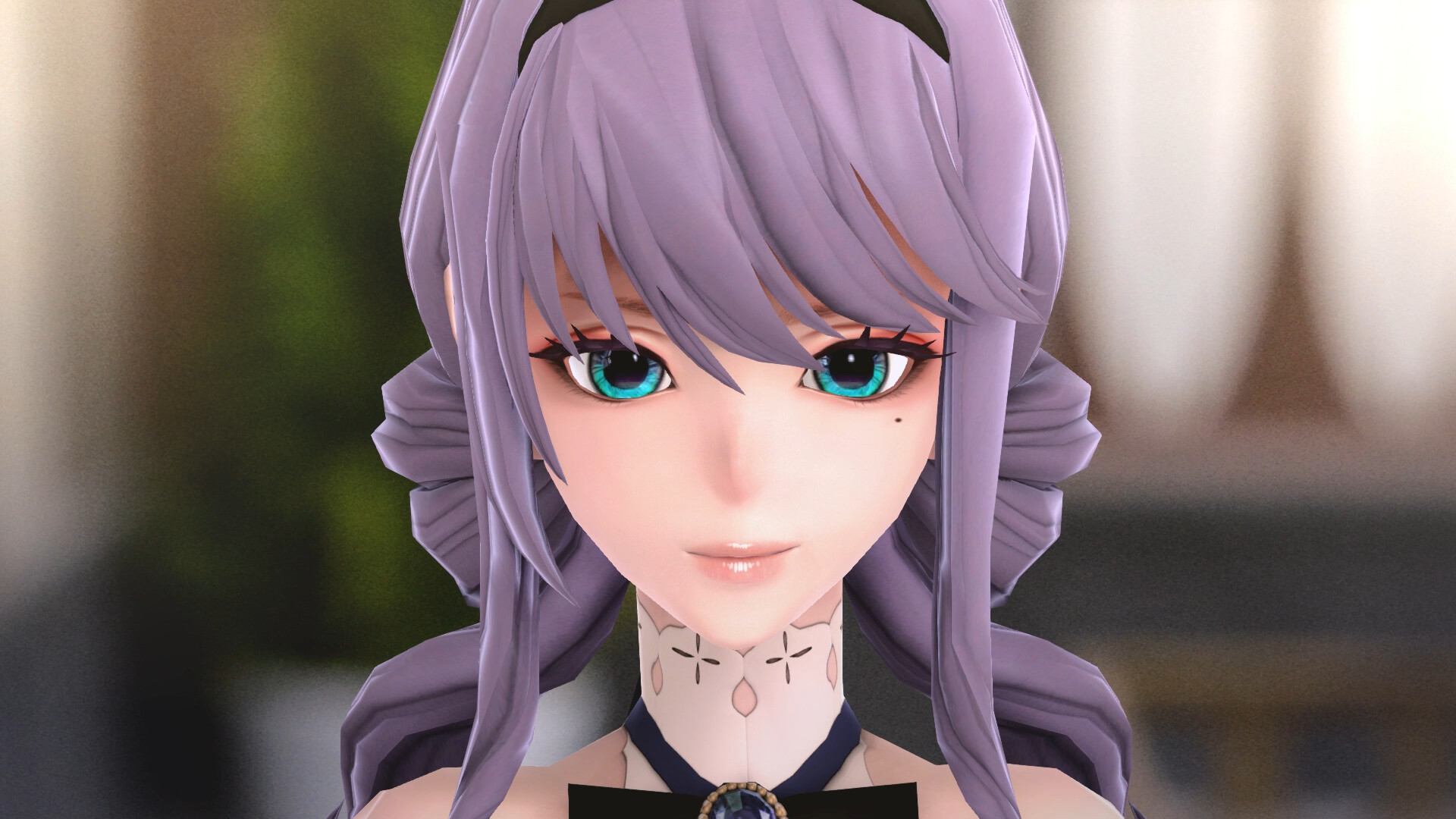
Memory vignettes provide a focused way to learn about the party: each is a short text-and-image account of a character’s past. They sit apart from the voiced scenes and the photographed diorama environments, using illustration and writing to present personal history in compact form. The player encounters these recollections alongside the main adventure, which otherwise advances through field exploration, conversations, quests and turn-based battles. This creates a distinct narrative texture for character context without turning each memory into another navigable area or combat sequence. The vignettes add a separate visual mode to Neo Dimension’s blend of fully voiced dialogue, three-dimensional characters and handcrafted scenery.
- Developer
- Mistwalker Corporation
- Genre
- Turn-based role-playing game