
About Fallout: New Vegas
Survive an ambush and trace the people behind it across the Mojave Wasteland. As a courier, investigate settlements, take on quests, build skills, fight with firearms or V.A.T.S., and navigate rival groups whose plans converge on New Vegas and Hoover Dam.
The Mojave is a desert of settlements, military outposts, old highways and ruins, with New Vegas glowing at its centre. You play a courier who survives an attempt on their life and sets out to find the person responsible. That search carries you from Goodsprings through communities with their own disputes and needs, then into a contest over the region’s future. The city’s casinos and Strip sit beside a much harsher landscape, where water, power, trade routes and security shape what people can afford to hope for. The main story moves toward Hoover Dam, a source of electricity and a strategic prize for groups trying to govern the Mojave.
The New California Republic, Caesar’s Legion and Mr. House each offer a different answer to who should rule. NCR soldiers and officials try to extend the Republic’s law and influence eastward; Legion forces seek to bring the region under Caesar’s command; House relies on the Securitron army and his plans for New Vegas. Smaller groups add local pressures, including the Boomers at Nellis Air Force Base, the Great Khans, the Powder Gangers and the Followers of the Apocalypse. Their interests overlap and clash. You can take contracts, help communities, negotiate, or refuse to commit, and quests can bring you into contact with several sides before you decide where your loyalties lie.
Conversations are a practical part of character building. The Courier’s SPECIAL attributes shape starting strengths, while skills such as Speech, Barter, Science, Lockpick, Repair, Medicine and Guns improve as you gain experience and assign skill points. Certain dialogue options appear only when your skill, perk or faction standing meets a requirement; some can also be temporarily enabled with chems or magazines. Those checks let a character solve a problem with expertise rather than a weapon, bargain for a better outcome, or gain access to information. Quests record active objectives and optional tasks in the Pip-Boy, where the map, notes and radio signals sit alongside inventory and character information.
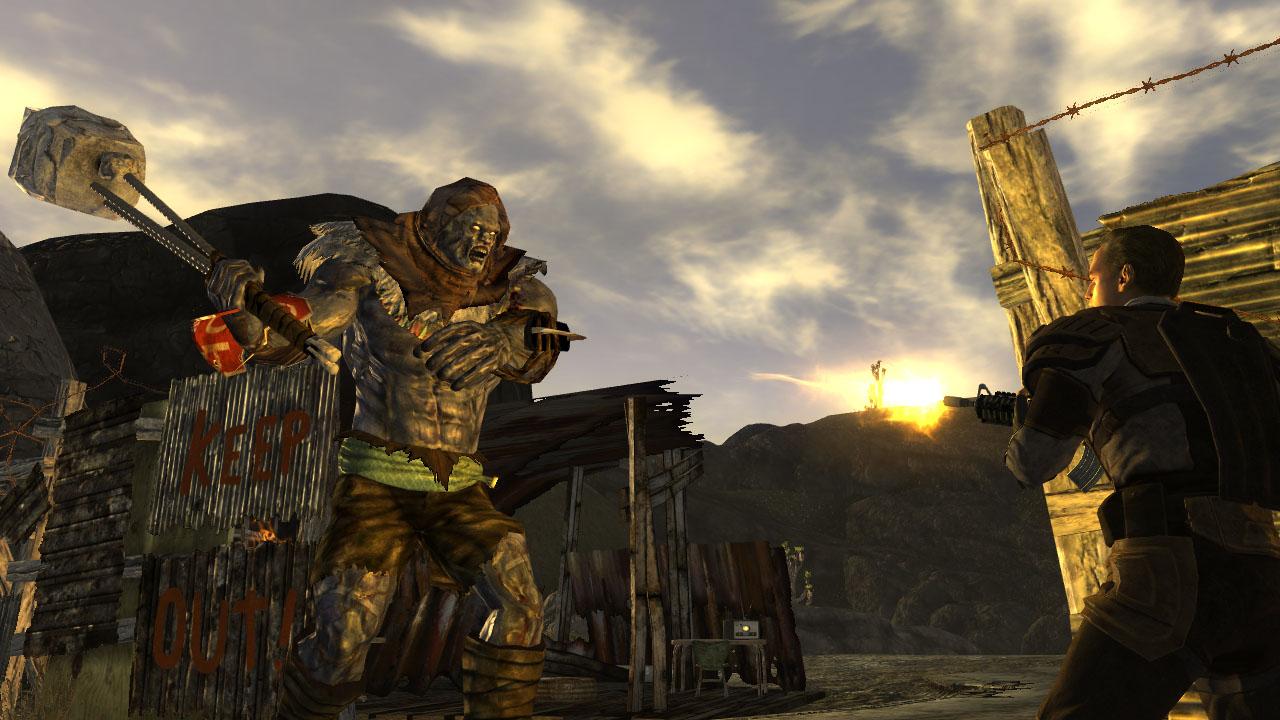
Combat supports direct shooting as well as Vault-Tec Assisted Targeting System, or V.A.T.S. In real time you can aim, move, fire and reload; entering V.A.T.S. spends Action Points to queue attacks against particular targets or body parts. A weapon’s condition and available ammunition matter, and you can switch among firearms, energy weapons, explosives and close-range attacks to meet a threat. Iron sights give guns a more deliberate aiming option. The Pip-Boy shows a weapon’s condition beside its ammunition, giving Repair a role beyond dialogue checks: keeping equipment useful is part of preparing for another trip. As the Courier levels up, skill points tune capabilities and perks add lasting benefits at intervals. This lets you develop around a preferred approach, while still leaving room to improve secondary skills for a locked terminal, a tense conversation or a difficult repair.
The Pip-Boy also helps turn the open map into a record of where you have been. Discovered locations appear on the world map and become available for fast travel; local maps, quest markers and written or audio notes help track leads encountered on the road. Travelling on foot exposes detours, creatures, abandoned buildings and people who may have a job to offer. Friendly characters can join as companions, and the manual allows one human or humanoid and one non-human companion together. They assist automatically in a fight, provide individual bonuses and have personal storylines; talking with them can open quests or abilities. A companion wheel lets you change their stance, ask them to wait or follow, and manage party needs.
How the Courier treats a group can change how its members respond later. Dialogue and actions feed faction reputation, while crimes such as theft or trespass can make witnesses hostile. Skill or reputation checks can unlock lines that would otherwise be unavailable. A faction may reward useful service with access or equipment, while antagonizing it can close off opportunities or bring danger. Because groups oppose one another, advancing one relationship can complicate work for another. The result is a journey where the same town can become a source of aid, suspicion or conflict depending on what you have done and what you say next.
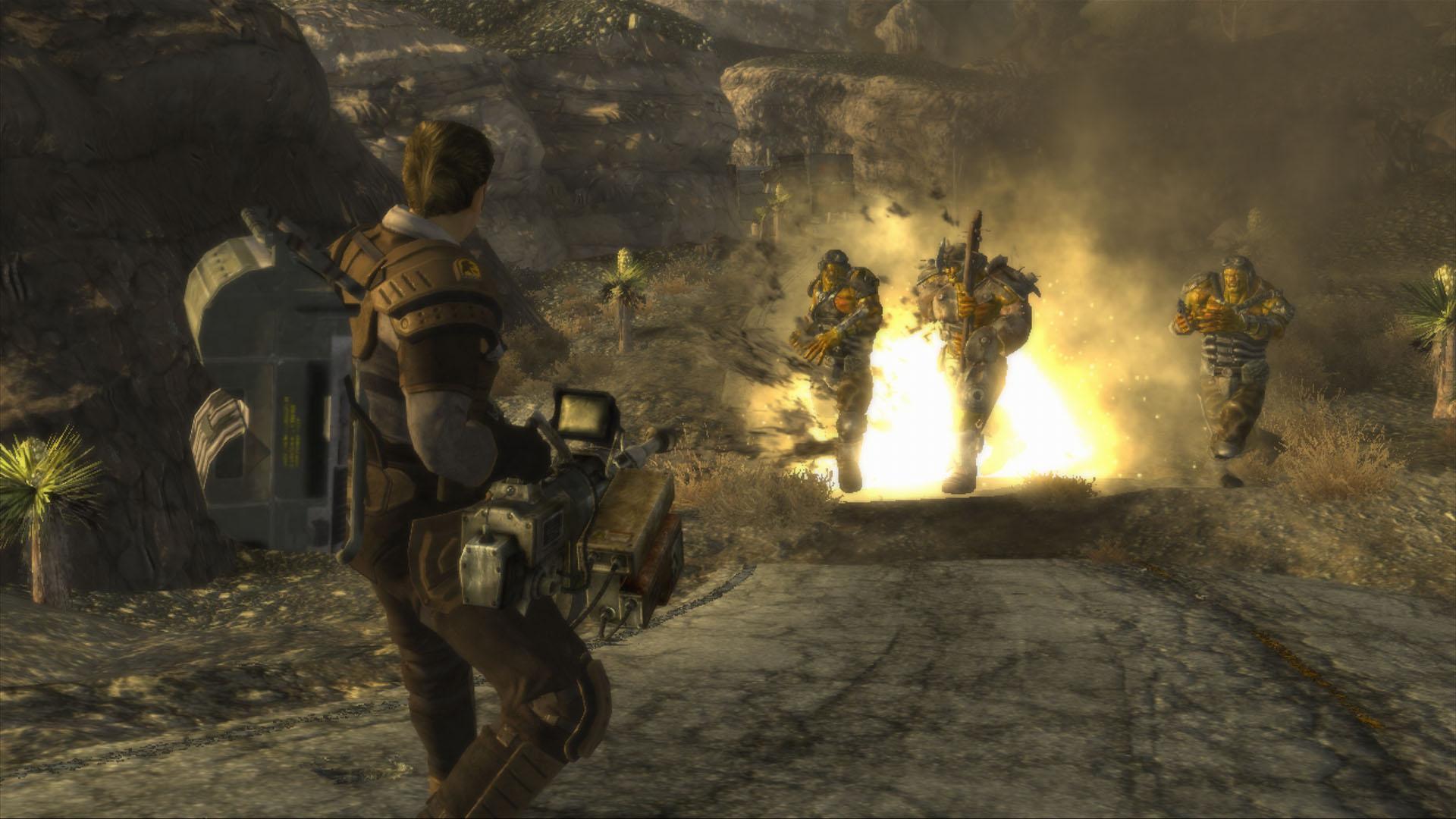
Outside the main conflict, the Mojave includes settlement errands, exploration, casino games and small stories that branch away from the Courier’s pursuit. The casinos on the Strip offer gambling, while Caravan is played with a deck assembled from cards found in the world. Its three opposing piles must be built in ascending or descending order and kept within a narrow value range, so the card game uses its own planning rules. Hardcore Mode is an optional ruleset for people who want survival needs to matter: food, water, sleep, weighted ammunition and more consequential injuries demand attention. Together, these activities give the base game space for wandering and role-playing between the larger decisions about the Dam.
- Developer
- Obsidian Entertainment
- Genre
- Action role-playing game