
About Fallen Aces
In Switchblade City, boxer Mike Thane is drawn into a criminal conspiracy that reaches beyond the local mob. Fallen Aces is a first-person noir action game where players navigate hand-drawn levels, choose stealth or direct confrontation, and make improvised weapons, firearms, and the environment part of each fight. Early Access currently includes two episodes.
Fallen Aces places players in Switchblade City, a hardboiled crime-noir setting presented through hand-drawn characters, voiced comic-book cutscenes, and dense period dialogue. The protagonist, Mike Thane, is a boxer caught in a web of crime, corruption, and betrayal. His immediate path runs through hostile streets and interiors where mobsters and other armed goons control the space, but the larger story links the city’s criminal violence to a wider mystery. The game frames this as an episodic first-person action story rather than a sequence of detached arenas: scenes establish characters and stakes, then levels let the player move through the places where those conflicts unfold. Its rough comic art and gangster banter give the city a distinct identity while the play focuses on how Mike gets through each encounter.
The available campaign is divided into two episodes, Heart of Glass and Shadow of Death, both identified as currently included in Early Access by the developers. The first establishes Mike’s struggle against the forces targeting him; the second continues the story with Mike and his companions trying to get out of town and investigate a serial killer. The campaign moves between distinct chapters and locations rather than one continuous open world. Episode 2 takes the action through the countryside and suburbs, back through the slums, and into places including a police station. Delia, introduced earlier in the story, becomes a controllable companion in this episode: Mike can direct her to move, stay, or attack a target. The planned third episode belongs to the eventual full release and is not part of the presently described playable campaign.
Each chapter gives Mike objectives and a space to read, with routes and encounters that support different approaches. The Steam description calls the levels nonlinear and explicitly allows stealth, a loud assault, or a mixture; the player is not confined to shooting every enemy from the main path. Exploring rooms, side entrances, and connecting spaces can uncover supplies or offer another way through a guarded area. Light and shadow contribute to concealment, while enemy sight and sound make movement choices consequential. A player can try to slip by, distract a guard, or use a moment of exposure to start a fight. These options sit inside authored mission spaces with objectives and story scenes, so exploration serves both practical navigation and the unfolding crime narrative.
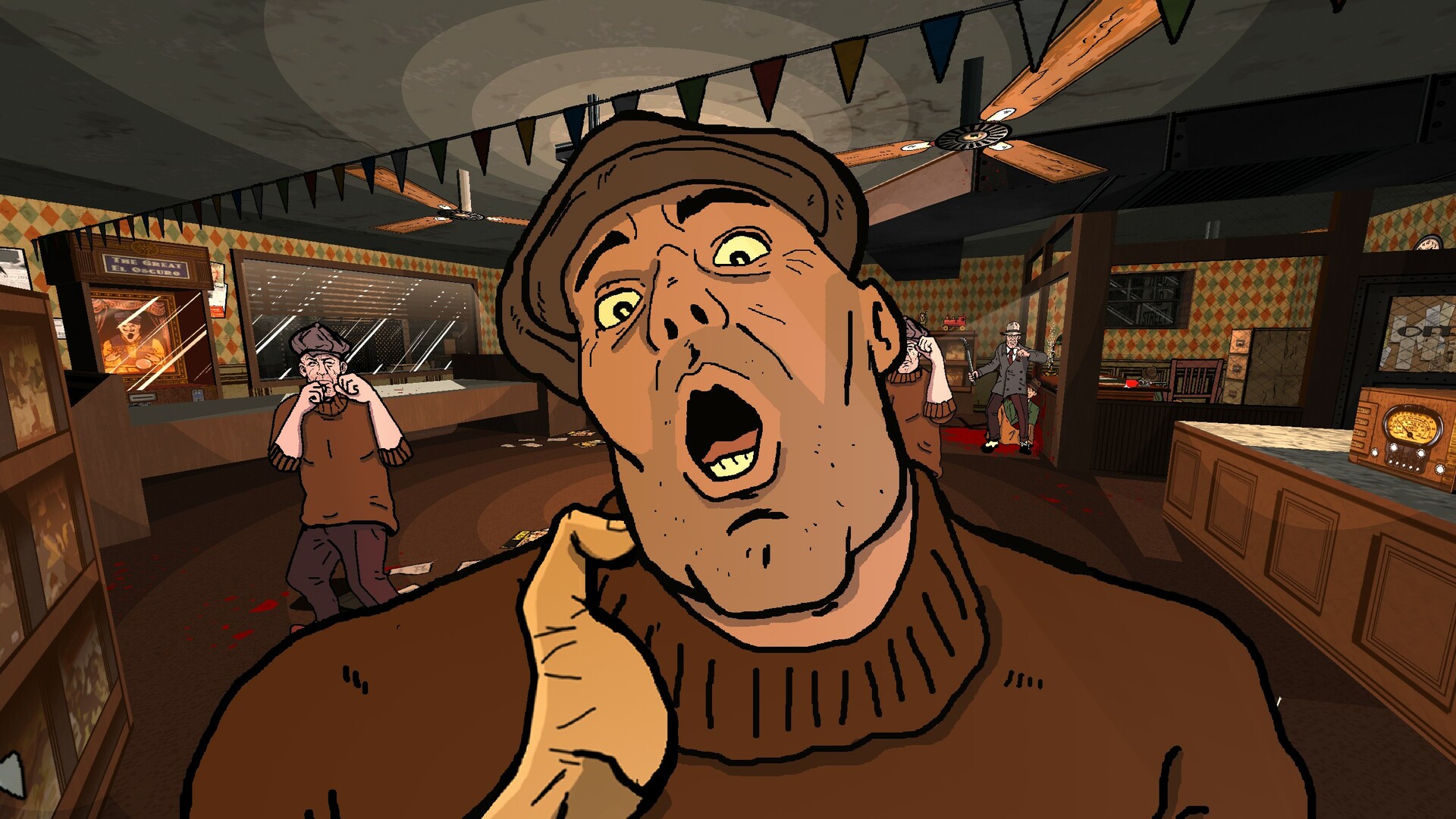
Close combat is central to Mike’s boxer identity. He can strike with punches and use a dodge to avoid incoming blows, making timing and spacing important when a group closes in. The city also supplies improvised weapons such as pipes, bats, knives, bottles, and other objects that can be picked up and turned against enemies. These weapons wear down with use; when one breaks, its remains can still be thrown before Mike reaches for another tool. Objects in the environment can also become projectiles, so a chair or trash can may create an opening or interrupt an opponent. A successful finisher can restore health, tying aggressive close-range play to survival. The player therefore weighs staying in the brawl against backing away to recover position and find another weapon.
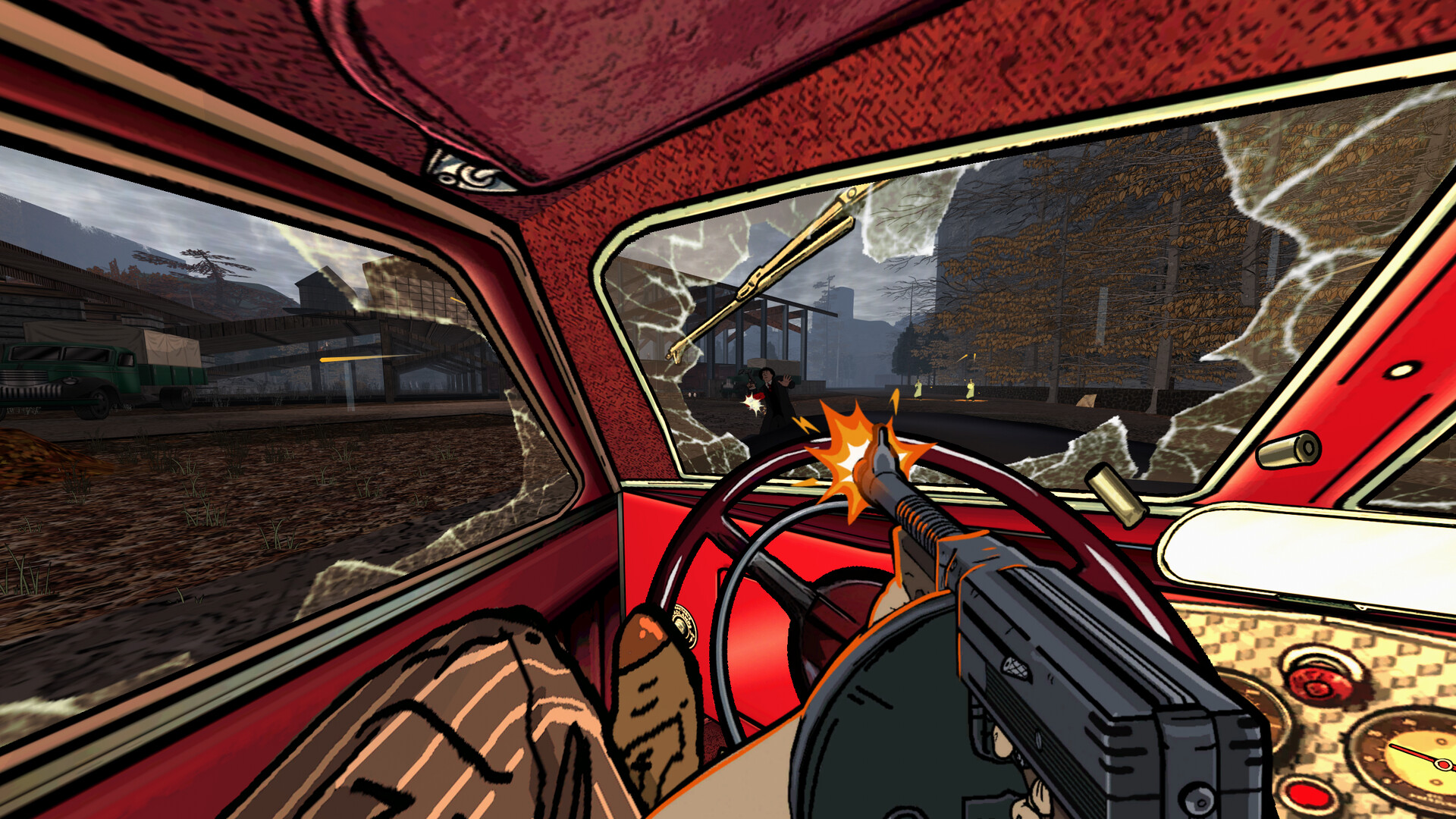
Firearms provide a different kind of leverage, with the arsenal including pistols, revolvers, shotguns, nail guns, spear guns, sniper rifles, and Tommy guns. A gun can end a threat quickly, but ammunition is a separate item to find and carry, and gunfire can draw attention in a level where other enemies may be nearby. The game’s three-slot inventory makes that trade concrete: a firearm, spare ammunition, and a healing item can fill every available space, while a melee weapon or extra supplies compete for those same slots. Food such as sandwiches can restore health, and first-aid kits provide another recovery option. Choosing what to keep is part of preparing for the next room, not a distant loadout screen; the player adapts with what can be found and carried through the mission.
The campaign’s fights combine these tools with the geometry and objects in each location. Mike can approach an occupied room quietly, use an object as a distraction, or start an open confrontation and pick up weapons dropped during the scuffle. The same narrow passage that helps limit the number of attackers may also leave little room to dodge, while a throwable object can interrupt an enemy long enough to change position. Stealth and combat remain connected because detection changes the immediate situation without removing the player’s ability to react. The goal is to complete chapter objectives and advance the story, not clear every room in one prescribed way. This gives exploration a tactical role: looking around can reveal supplies and useful objects before they are needed, and a detour can change how the next encounter begins.
The current Steam release also includes a level editor and Workshop support. Custom levels give players more spaces in which to test the game's stealth, brawling and improvised weapons outside the authored campaign. The developers' Episode 2 announcement refers to updates to the editor and a mod manager for installed Workshop content, confirming these tools are already available during Early Access. The main story remains episodic: Heart of Glass and Shadow of Death are playable, while a third episode is planned for the full version. The separation matters for anyone entering Switchblade City now, since the community-made levels can extend the action without completing Mike's unfinished campaign.
- Developer
- Trey Powell and Jason Bond
- Genre
- First-person crime-noir action with stealth and immersive-sim elements