
About Fable Anniversary
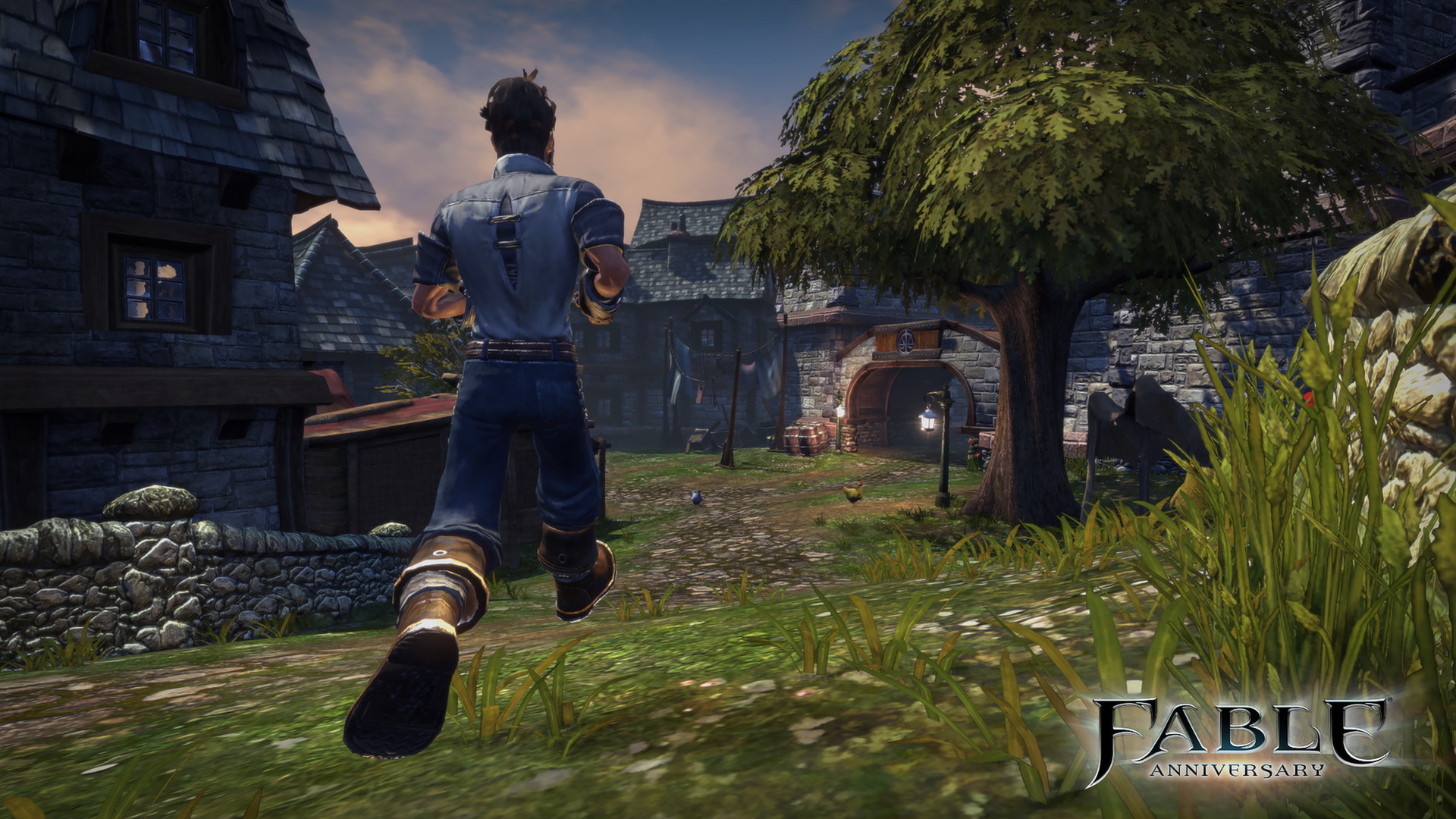
In Fable Anniversary, an orphan from Oakvale trains with the Heroes’ Guild before shaping a life as a Hero in Albion. Quests, combat, and everyday decisions influence the character’s abilities, appearance, morality, and reputation. This remastered edition includes the original Fable story and the additional chapters from Fable: The Lost Chapters.
Fable Anniversary places the player in Albion, a storybook fantasy land of villages, wilderness roads, monsters, and a society that measures a person by reputation as much as deeds. The player guides an orphan from Oakvale into the Heroes’ Guild, where the Guildmaster and veteran Hero Maze oversee the boy’s training. After the childhood opening, the Guild sends its graduate out to answer quests and build a name across the realm. The central role is deliberately personal: this is one Hero whose appearance, abilities, standing, and moral alignment develop through the player’s actions. The story follows that character’s life and growing place in Albion, while the Guild’s map table provides a practical link between the larger narrative and the next task.
Quests come in different forms and give the journey its structure. Gold quests advance the main story and are usually accepted from the map table at the Heroes’ Guild. Silver quests are optional assignments with their own rewards, while Bronze quests tend to be ongoing errands or item-gathering requests that begin with people around Albion. A quest can take the Hero through a town, a dangerous stretch of countryside, or a combat encounter with creatures and hostile people. The Guild Seal, awarded after the apprenticeship, lets the Guildmaster send messages and allows the Hero to travel back to the Guild or to Cullis Gates already reached. That makes returning to the Guild useful for both selecting work and developing the character.
Combat switches among three disciplines: Strength-based melee, Skill-based ranged weapons, and Will magic. Swords, axes, maces, and other close weapons vary in speed, reach, and power; blocking reduces incoming damage, and a successful deflection can leave an attacker open to a counter. After a short melee combo, a Flourish becomes available as a stronger, wider attack that enemies cannot block. Bows and crossbows let the Hero strike from a distance, trading the bow’s faster reload for the crossbow’s heavier hit. Spells consume Will, which recovers gradually when unused. Heal Life can restore the Hero or a nearby companion, while offensive spells such as Lightning or Enflame provide different ways to pressure enemies. These approaches can be mixed during a fight rather than locked to a chosen class.
Fighting also feeds character growth through experience. The game awards general experience alongside category-specific Strength, Skill, or Will experience according to how the Hero takes part in combat. Returning to the green experience platform in the Guild’s Map Room lets the player spend those pools on attributes and spells. Strength can improve Health, Toughness, and Physique; Skill includes abilities such as Speed, Accuracy, and Guile; Will expands magical power and the spell selection. The differences show up in play: Physique helps with damage and heavier weapons, Guile affects stealth and prices, and Will investment makes additional spells available. There is no class menu at the start. A class label emerges from the Hero’s most-used combat style and strongest attributes, so the build reflects play rather than a single opening choice.
The way the Hero behaves changes more than a quest outcome. Helpful or cruel decisions shift alignment toward good or evil, alter the character’s appearance, and affect how Albion’s people respond. Renown tracks fame or infamy as public deeds, including questing and victories, make the Hero more widely known. Before some quests, the player can also accept a boast at Lookout Point by staking gold on a restriction, such as completing the job without taking damage or without using weapons. Meeting the condition pays out the wager; breaking it loses the stake. These optional challenges turn the same mission into a test of restraint, style, or allegiance.
Albion’s citizens are part of the play space as well as the scenery. Expressions let the Hero greet, entertain, insult, or flirt with people, and the available gestures grow with Renown, alignment, and attributes. Villagers react to the Hero’s behaviour, fame, and appearance, while followers can be asked to accompany the Hero on the road. Relationships can develop through conversation, flirtatious expressions, gifts, and attention to clothing and grooming; marriage requires an accepted ring and a home in town. The Hero can also earn and spend gold through quests, trading, and buying or selling property. These quieter activities give the player options between Guild assignments and combat, and they connect everyday choices to the same reputation and morality systems that shape the Hero’s public identity.
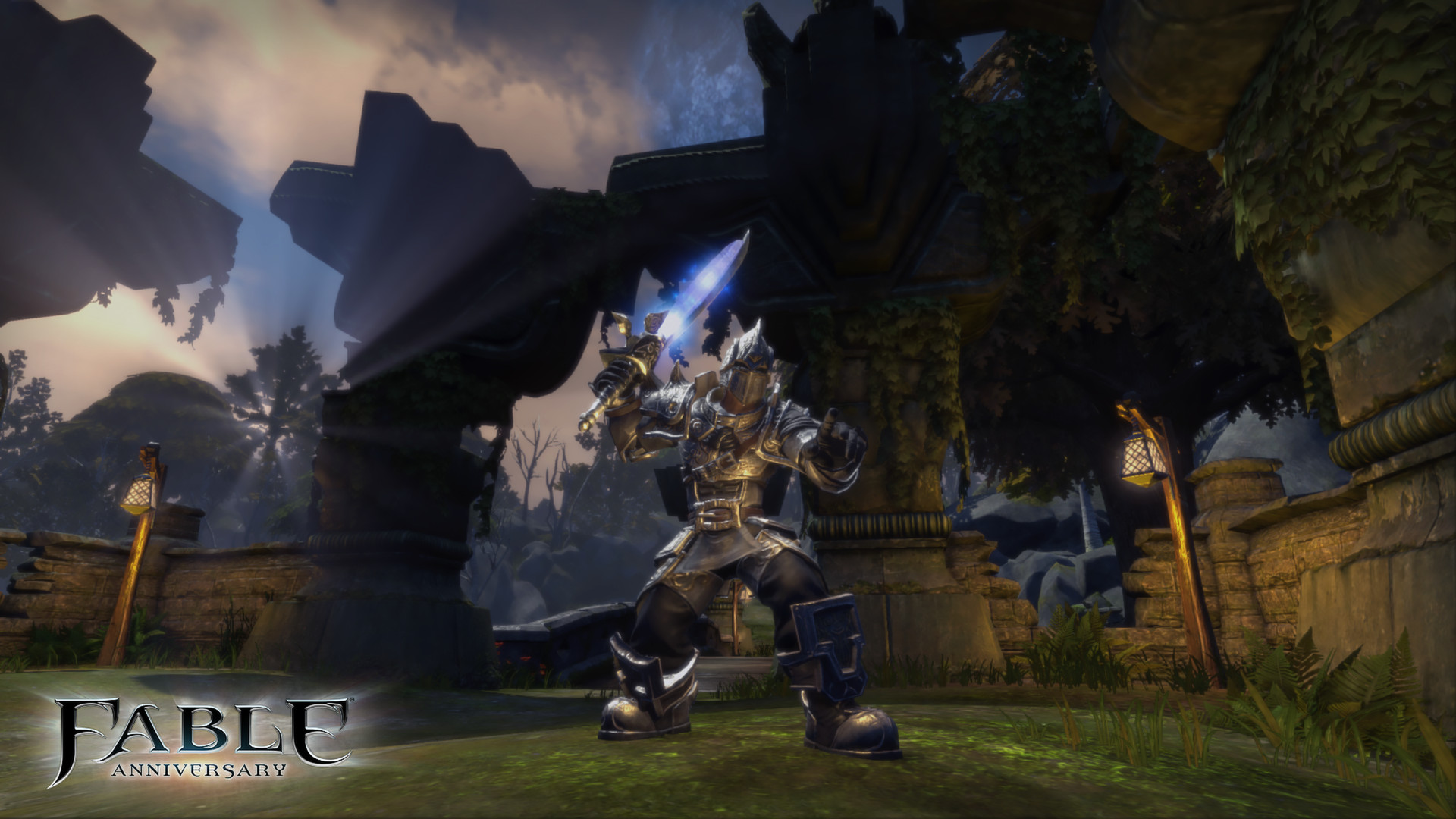
Fable Anniversary is the remastered edition of the first Fable, rather than a new sequel or the later Fable II and Fable III. It keeps the original game’s central story and also includes the additional chapters from Fable: The Lost Chapters, extending the journey beyond the original release’s endpoint. On Xbox 360, the remaster updated the visuals, lighting, textures, models, interface, save system, and achievements; the Windows release is listed on Steam as developed by Lionhead Studios and published by Xbox Game Studios, with remastered HD visuals and audio. Anniversary also adds a Heroic difficulty setting, where Resurrection Phials are removed and enemies are more lethal. Those edition changes sit around the same Oakvale-born Hero, Albion, Guild, and choice-led role-playing structure.
- Developer
- Lionhead Studios
- Genre
- Action role-playing game