
About Everybody's Gone to the Rapture
In 1984, Yaughton Valley in rural Shropshire is suddenly empty, and a strange presence moves through its abandoned villages and fields. Explore the open landscape, follow luminous traces and listen to fragments of residents’ memories to piece together their relationships and the events behind the disappearance.
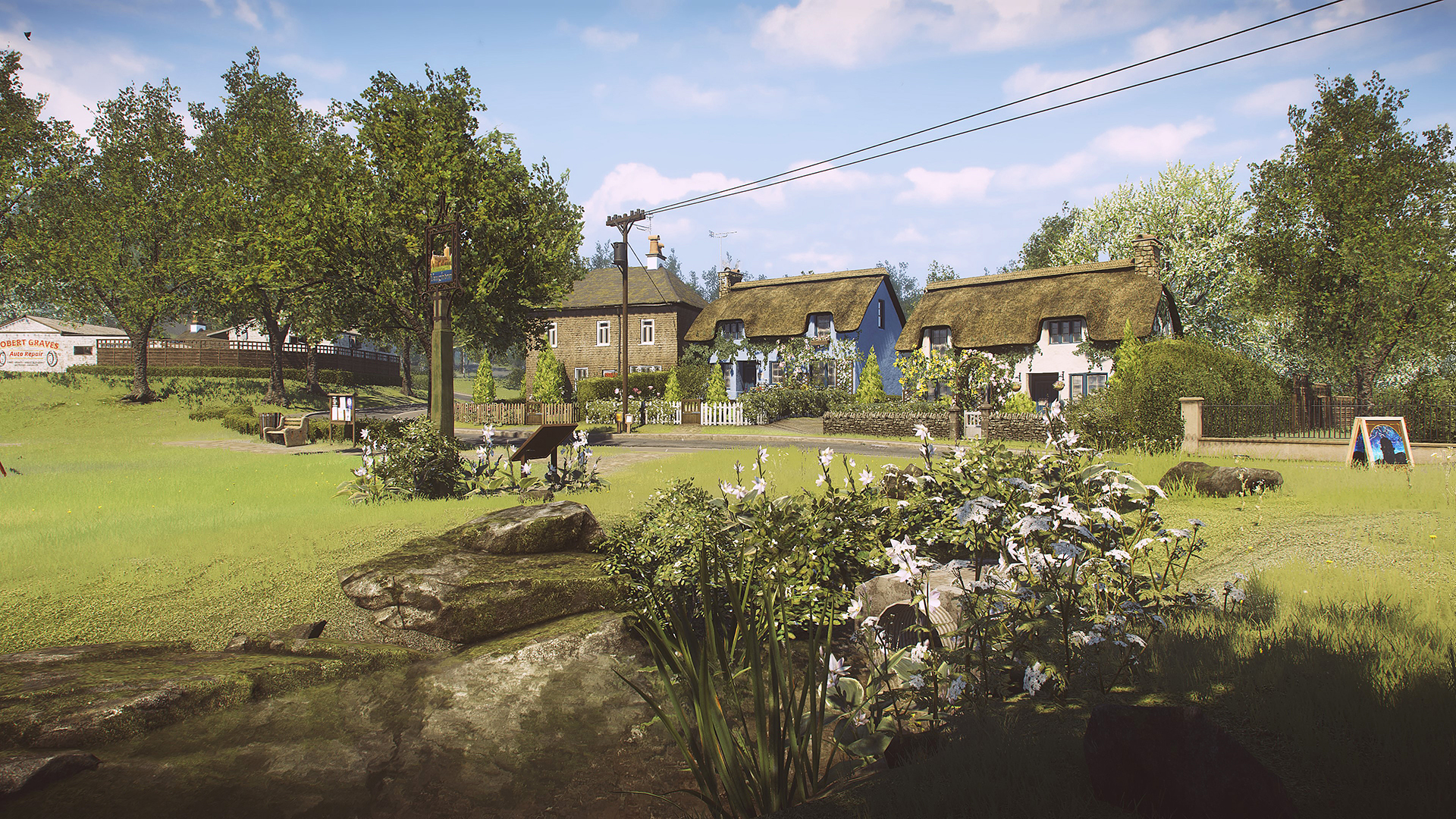
Everybody’s Gone to the Rapture begins in Yaughton, a fictional village in rural Shropshire, on a morning in 1984. The countryside appears recently inhabited but abruptly abandoned: homes, farms, a churchyard and public spaces retain the traces of ordinary routines, while the people themselves are gone. The player moves through this open valley after a catastrophe, following the question of what happened to its inhabitants. Rather than placing the player in the middle of a conventional survival scenario, the game makes the empty landscape the central subject. Weather, buildings, domestic objects and distant sounds suggest a community whose life stopped in progress. A luminous, moving presence offers a way to navigate the area and encounter remnants of the past, while the mystery gradually shifts from the fact of the disappearance toward the individual lives that preceded it. The premise is introduced through the contrast between a familiar English village and signs that something has fundamentally changed.
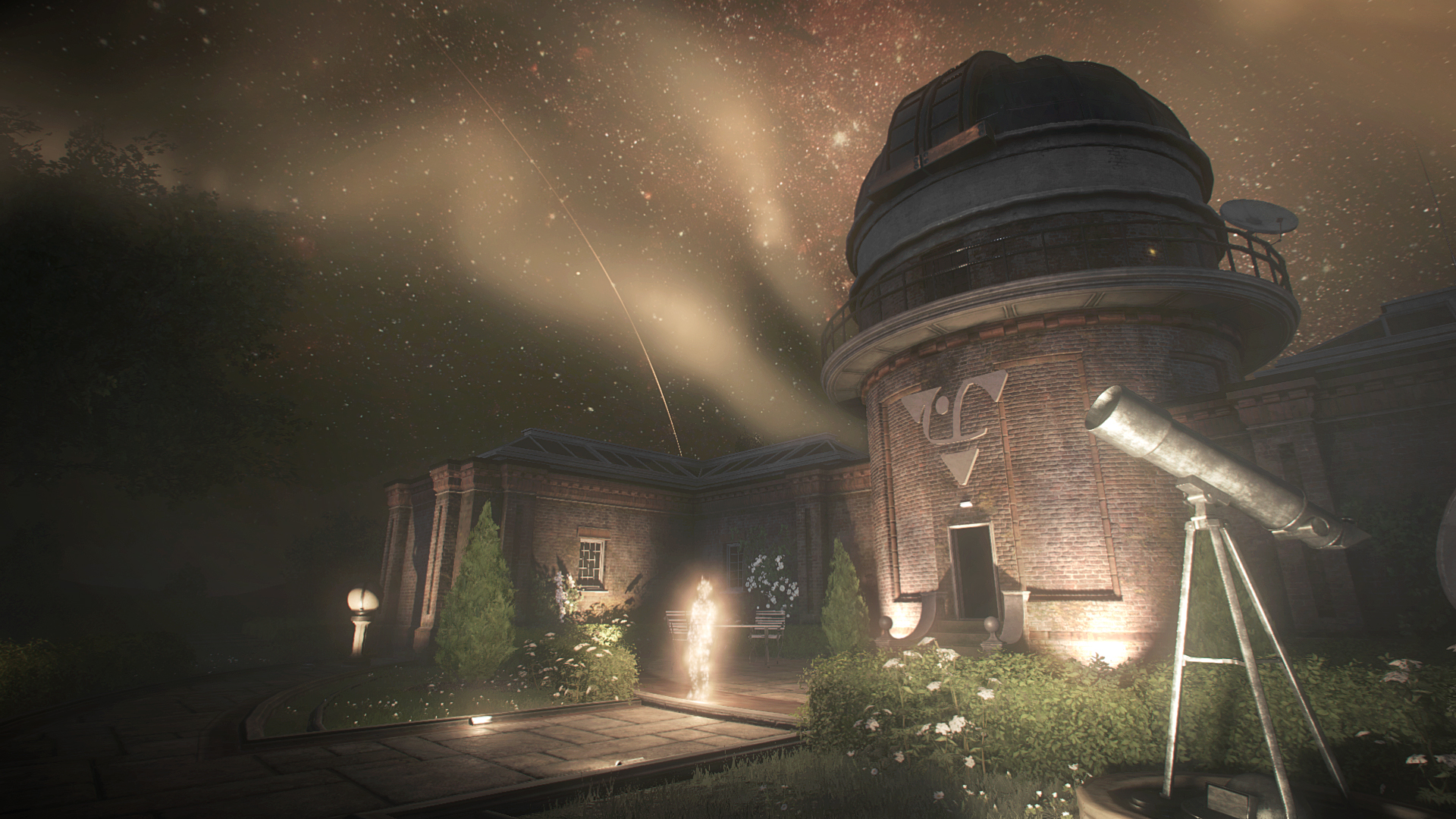
The valley is divided into connected areas that include Yaughton, the surrounding countryside and Little Tipworth, alongside places such as the local pub, church, school, farm and observatory. Roads and footpaths let the player travel between these places without a mission list dictating a strict sequence. This non-linear structure supports investigation: a player can notice a light or sound in the distance, follow it, and encounter a memory before moving to another part of the valley. Familiar places acquire a different meaning when they are empty. A kitchen, a telephone, a noticeboard or equipment left at work can suggest what people were doing immediately before the disaster. The landscape also carries a science-fiction atmosphere through radios, televisions and the observatory’s attention to events beyond the village. Its rural details keep the story grounded in a close-knit community even as the mystery points toward something on a much larger scale. The setting is both a map to explore and evidence of how daily life was interrupted.
The principal activity is exploration on foot. There is no combat system or inventory-driven puzzle structure; progress comes from moving through the environment, noticing points of interest and interacting with the strange light that guides the journey. The light forms shapes and trails that can be followed, and at key locations it reveals scenes drawn from the inhabitants’ experiences. These encounters are presented as fragments rather than a continuous, fully staged chronology. The player can move around the figures and listen as conversations play out, with some scenes offering a clearer account when approached from particular directions. This makes attention part of the interaction: a voice may be audible before its source is visible, or a scene may become intelligible only after the player closes the distance. Finding and attending to a memory is the equivalent of advancing through a more conventional sequence of challenges. Listening and looking are the main verbs, making discovery itself the central form of progression.
The memories follow several residents and intersecting groups, so the valley’s story is assembled from multiple points of view. Conversations reveal family ties, work, friendships, fears and disagreements, and they show how people responded differently as strange events unfolded. No single character functions as a straightforward narrator who explains everything. Instead, each remembered scene contributes a limited perspective, leaving the player to connect people and events across locations. The order in which discoveries occur can vary, which affects when particular information enters the player’s understanding. The broad shape of the mystery remains, but the route through its evidence belongs to the exploration. Environmental storytelling and spoken scenes work together: an empty building gives a setting, while the voices reveal how that place mattered to the people who used it. The focus on ordinary relationships gives the supernatural premise a human scale and keeps the central question tied to the community rather than to an abstract phenomenon alone.
Sound and visual design carry much of the atmosphere. The countryside’s quiet is punctuated by radio transmissions, distant voices, environmental sounds and Jessica Curry’s musical score. Interior spaces and outdoor routes each have distinct acoustic character, so listening can help direct attention as well as establish mood. The visual world contrasts recognisable English rural architecture and fields with the moving light that signals the presence of memories. This contrast makes the uncanny element feel embedded in a specific place rather than separated into a different world. As players move through the valley, discoveries accumulate into a history of the crisis without turning the experience into an action adventure. The pace leaves room to examine surroundings and decide where to go next. The game’s core loop remains consistent throughout: travel, observe, locate a memory, hear another part of a resident’s story, and use that information to build a broader account of Yaughton Valley and its vanished population. The community remains the subject even as the scale of the mystery grows.
- Developer
- The Chinese Room
- Genre
- First-person open-world narrative exploration adventure