
About Europa Universalis IV
Europa Universalis IV is a grand strategy game about guiding a nation through the early modern era, from the late Middle Ages toward the Napoleonic period. Choose a country, manage its government and resources, shape trade and diplomacy, and use war, exploration and changing historical events to pursue your own version of history.
Europa Universalis IV gives the player control of a country across roughly four centuries, beginning in the late Middle Ages and reaching the Napoleonic era. Rather than following one fixed protagonist, it frames history through the fortunes of the nation selected at the start. Hundreds of countries are available, and the game can begin at different dates across its historical span, with rulers appropriate to those periods. This makes the central task one of governing over time: respond to events, protect the state, and decide what kind of power it should become. The broad historical outline supplies the setting, while the chosen nation and the player's decisions determine how closely the unfolding world follows familiar history.
The map is the working space for that long-term project. A country is made up of territory that can be defended, developed, traded through, or brought under its rule. The official overview places the player in a world map before the Renaissance and describes the era as one of voyages, changing borders and competing states. Expansion can mean taking nearby land, while other strategies depend on strengthening what is already held. The choice of country changes the circumstances of that task: states begin with different positions and opportunities, and the map connects them to neighbours, rivals and distant regions. Progress therefore involves reading both the condition of one's own nation and the pressures created by the surrounding world.
Governing requires attention to the ruler and the resources available to the state. The monarch's ability affects the pace at which the nation can develop, so a capable ruler may create room for faster progress while a weaker successor can slow it. Monarch power is a resource to spend carefully, linking current decisions to the country's future. Using it is part of planning rather than a simple measure of strength: spending in one area has to be weighed against other needs as the decades pass. Dynastic change can alter the outlook of a reign, making it useful to consider what the next ruler may bring. The game ties political continuity and national development to people on the throne, even though its main perspective remains the state as a whole.
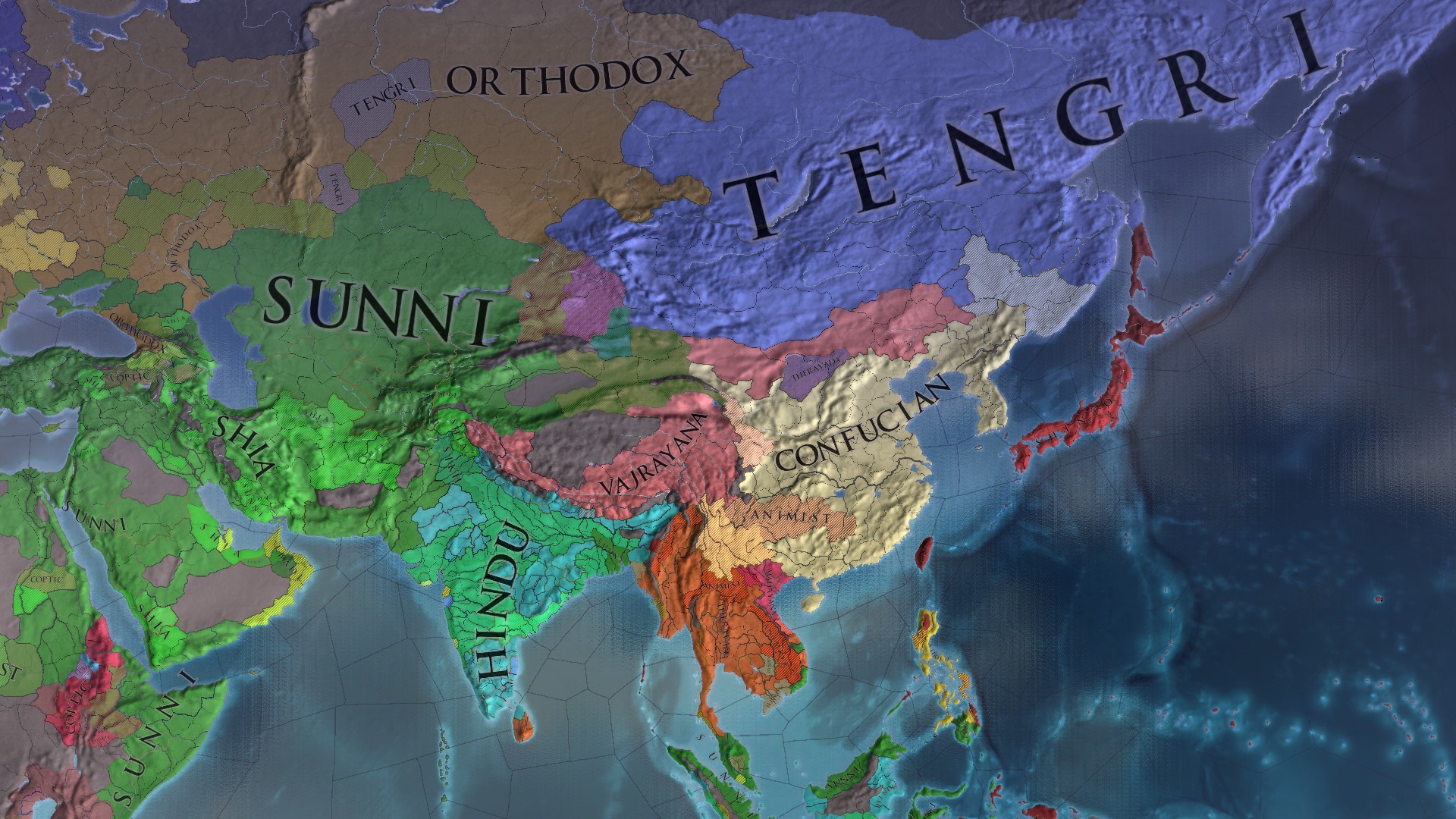
Research offers another way to shape a country's trajectory. Over the course of the game, investment in new approaches to warfare, administration and trade can unlock weapons, buildings and ship types. These advances affect what the nation can do and support different priorities: a state may seek a stronger military, more capable administration or better tools for commerce. National ideas add a further layer, representing both a country's historic legacy and its ambitions. They let long-term direction become part of the nation's identity as it develops. Technology and ideas unfold across the same extended timeline as rulers and events, so the player is continually balancing the immediate demands of the present against capabilities that may strengthen the country later.
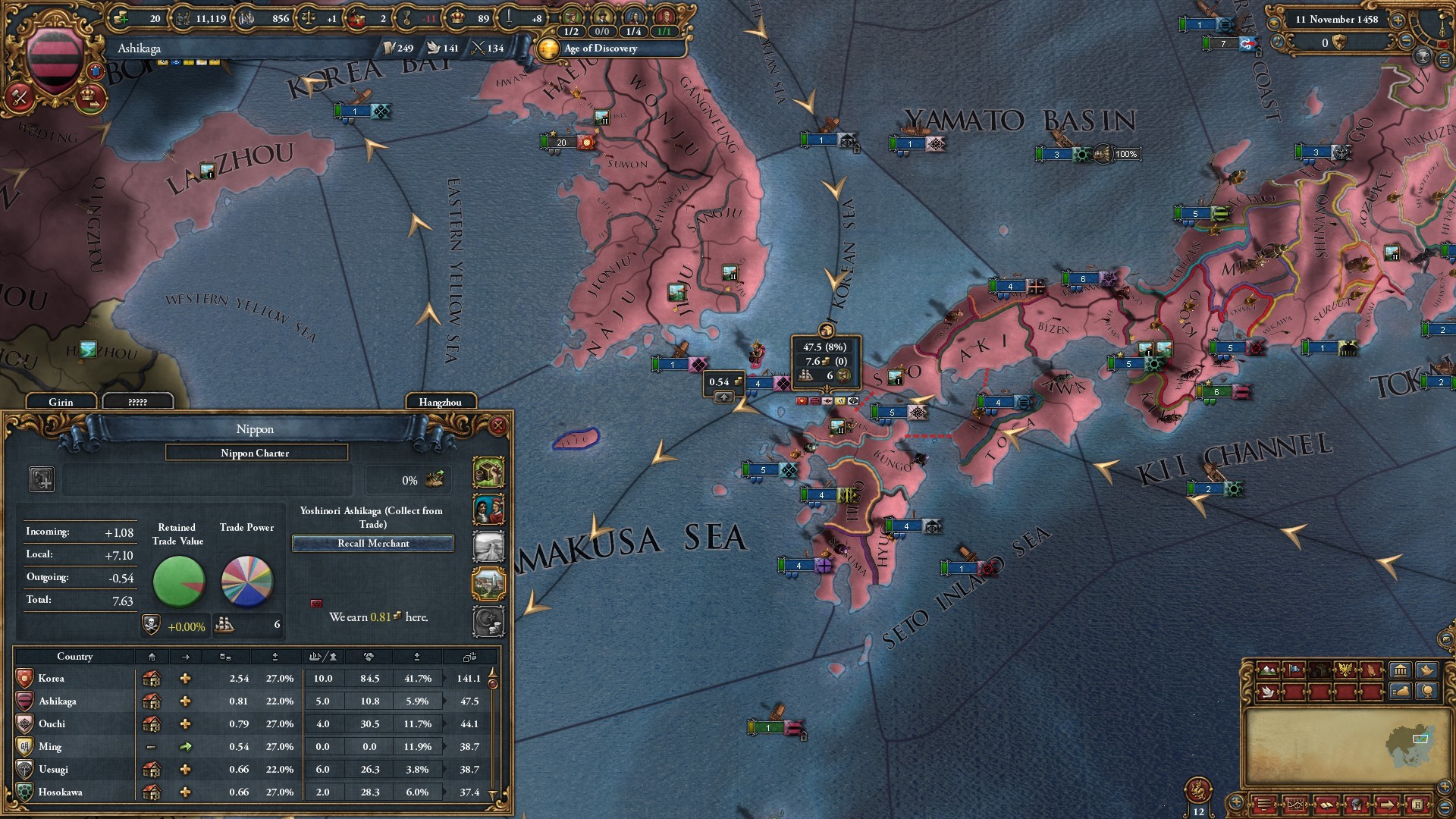
Trade is a system of influence as well as income. Developing trade power in key provinces, then using ships and government policy to direct wealth toward the country's own ports, gives economic planning reach beyond simply producing or collecting money: position, maritime strength and state decisions all affect where value flows. A country with influence over important parts of trade can try to benefit from commerce passing through them, while a rival may contest that control. These choices connect the map to the treasury and give naval activity a purpose beyond warfare. Trade power, provincial development, ships and policy work together as tools for building resources that can support administration, research and military plans.
Diplomacy lets the player manage competition before it turns into fighting. Alliances can create commitments between countries, and royal marriages can reinforce those bonds. Keeping options open is also a stated approach, since diplomatic flexibility may matter more than a permanent alignment when circumstances change. War is another instrument of policy: armies can seize territory and the resources it offers, but choosing when to strike depends on the strength of opponents and the position of potential allies. The game places negotiation and force within the same international landscape, where a decision about one neighbour can affect relations with others. The player has to judge whether cooperation, patience or military pressure best serves the country's aims at a particular moment.
Historical events make the course of a campaign less predictable than a sequence of routine turns. The game includes hundreds of events, from civil wars that trouble a state internally to transformations such as the Protestant Reformation that alter the wider world. These developments can change the problems a country must address, placing domestic stability and international opportunity in tension. Exploration also belongs to this era: the player can discover and settle parts of the New World, or choose to resist European conquest there. Such choices fit the larger question running through the game—how a nation responds to a changing world and what legacy it leaves. The historical frame supplies recognizable turning points, while the player's choices can produce a different balance of power and a different account of the period.
Europa Universalis IV also supports multiplayer, including competitive matches and cooperative play. In co-op, several players can work together to control one nation, sharing responsibility for its direction instead of each governing a separate country. Cooperative sessions support up to 32 players and cross-platform multiplayer, extending the same political and military systems into a shared session. Coordination changes the practical shape of rule: players have to agree how to use the nation's resources, handle foreign relations and respond to events as they arise. Multiplayer does not replace the campaign's focus on managing a country across time; it makes that management a joint activity or puts different national ambitions into direct competition.
- Developer
- Paradox Tinto (current Paradox About page); Steam also currently lists Paradox Development Studio
- Genre
- Grand strategy; Steam lists Strategy and Simulation and uses Grand Strategy as a user tag