
About Euro Truck Simulator 2
Drive articulated trucks across a broad, condensed network of European roads, collecting freight from depots and delivering it to businesses in other cities. Begin with jobs using borrowed vehicles, then build a company through truck ownership, skills, garages, and hired drivers. Routes, cargo, vehicle handling, fuel, rest, and delivery timing shape each haul.
Euro Truck Simulator 2 puts the player in the cab of a commercial truck driver travelling between a large selection of European cities. The map is a playable road network rather than a one-to-one replica of the whole continent: motorways connect urban areas, while smaller roads lead to industrial estates, depots, service areas, and border routes. Freight gives each journey a practical destination. Loads originate at a company yard and must reach another business, so a trip has a clear pickup, route, and delivery even when the player is free to spend time driving between contracts. The player creates a profile and names a trucking company, but there is no fixed protagonist or story cast. Progress comes from the jobs accepted and the business built around them.
At the beginning, Quick Jobs let the driver take work using a truck and loaded trailer supplied by an employer. This is a contained way to learn the controls and road network: the company provides the vehicle and covers operating costs, so the player can focus on carrying the cargo to its destination. The job board shows contracts available in places already discovered, making exploration useful as well as scenic. After buying a personal truck, the Freight Market offers company jobs with greater responsibility. The player must travel to the source depot, collect the load, and pay for fuel and repairs. Choosing a nearby contract or planning an empty repositioning leg can matter as much as the haul itself.
Driving asks the player to manage a heavy vehicle and trailer through traffic, junctions, curves, gradients, and restricted spaces. Throttle, braking, steering, gear selection, indicators, lights, mirrors, and parking all contribute to the task; available control options range from simplified automatic shifting to manually configured keyboard, controller, or wheel inputs. The trailer follows a different path from the cab when turning, so lane position and swing room matter when entering a depot or navigating a tight corner. The player can use the route adviser and map to follow the planned course, while in-cab views and mirrors help judge nearby traffic. Damage to the truck or cargo can affect the outcome, giving steady control a practical role beyond simply arriving at the marker.
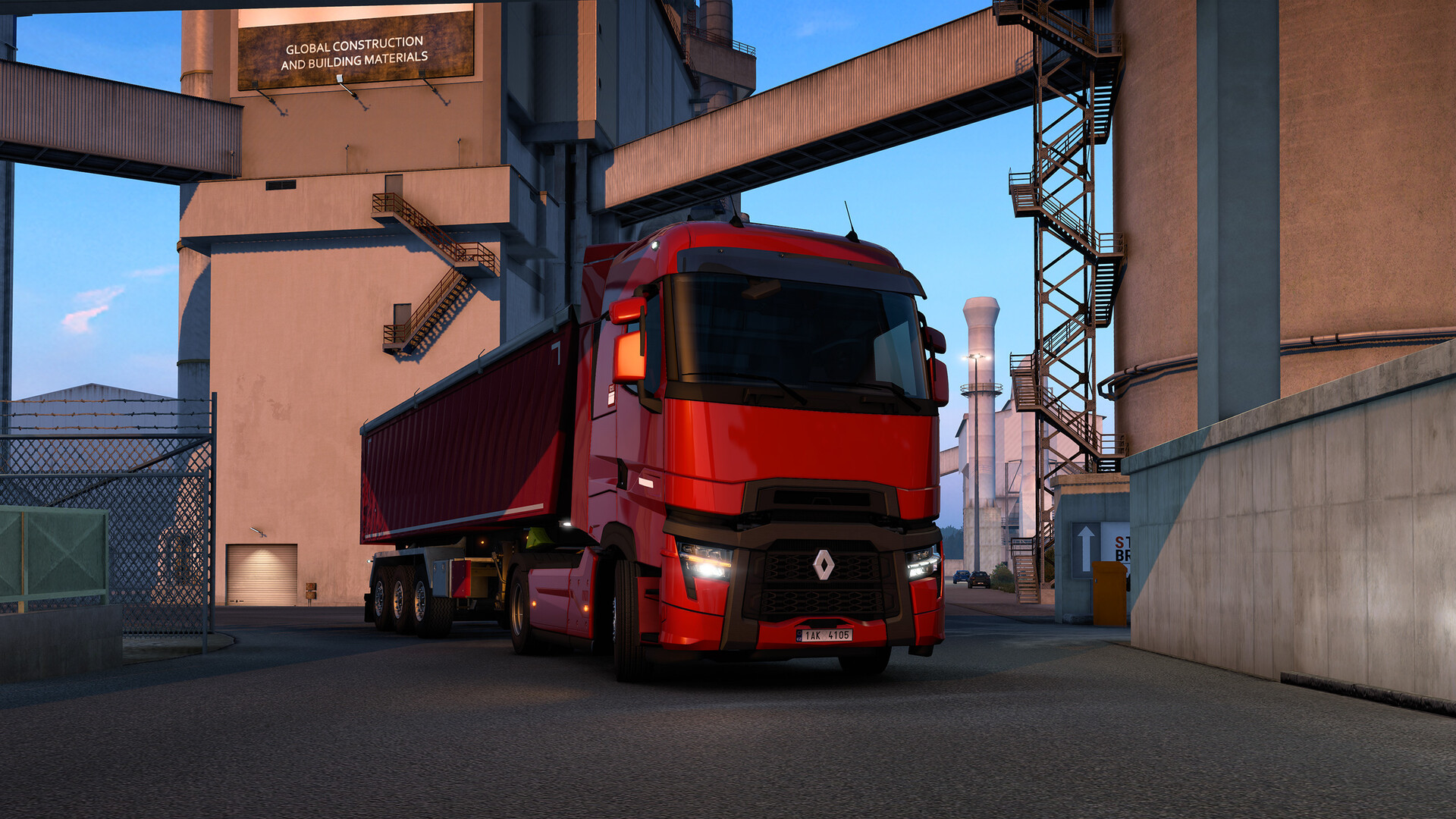
A delivery is also a small logistics problem. The player compares the offered destination, distance, cargo type, reward, and time allowance, then decides whether the route suits the current truck and schedule. On the road, fuel consumption, tolls, service stops, and fatigue simulation can influence how much of a job’s payment remains. Rest becomes a planning concern when fatigue is enabled, because the driver has to find a suitable stop rather than continue indefinitely. Depots and service areas turn a long drive into connected decisions: whether to refuel now, repair accumulated wear, or continue toward a planned rest. The road network rewards learning how towns connect and where the route branches, but the map does not turn that knowledge into a single required path.
Experience from completing work raises the driver’s level and provides skill points that open more specialised contracts. Long Distance extends the range of freight offers; High Value Cargo and Fragile Cargo add categories with their own handling stakes; ADR certificates cover dangerous goods; Just-in-Time Delivery introduces urgent work; and Eco Driving supports fuel-conscious operation. These are distinct qualifications rather than a single linear vehicle tree, so development can shape what appears in the job market. As the available jobs change, the player can select contracts that fit a preferred rhythm: short regional trips, extended routes, delicate loads, hazardous materials, or timed deliveries. The progression is therefore tied directly to hauling, with the route and cargo becoming more varied as the driver gains experience.
Earning money can shift the focus from independent driving to company management. A personal truck opens the Freight Market and can be configured with different engines, chassis, transmissions, cabins, and accessories, each affecting the vehicle’s capabilities or appearance. The driver can purchase or expand garages, acquire further trucks, and recruit drivers to fill available vehicle slots. Those drivers complete jobs and gain experience of their own, while the player continues taking contracts from the cab. This creates a repeating business cycle: deliver freight, collect income, maintain or upgrade equipment, and use profits to expand the fleet. Loans can accelerate that growth, but repayments sit alongside fuel, repairs, and other costs. The game lets the player keep the enterprise modest or gradually coordinate more trucks and staff.
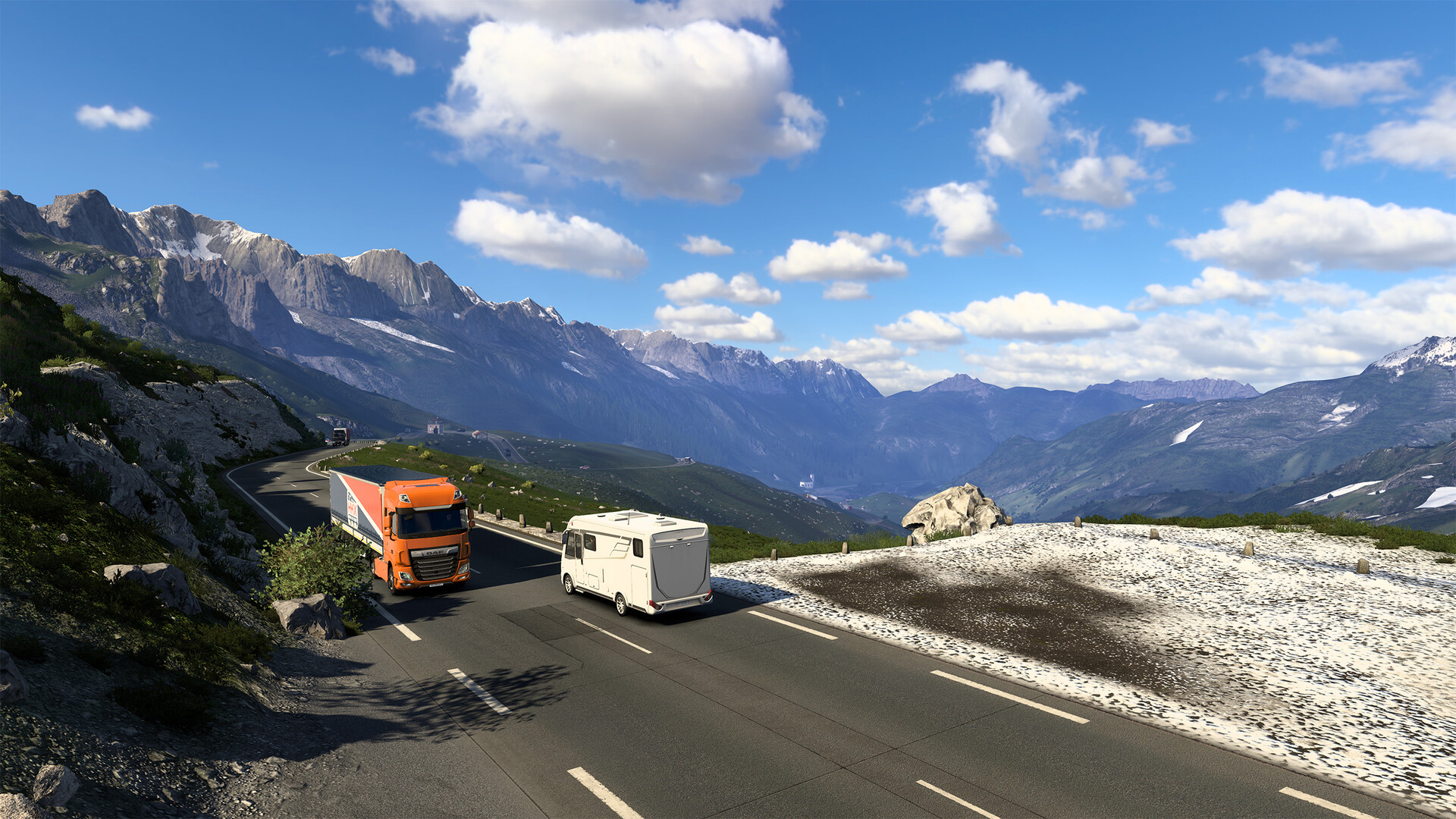
The wider road experience can also include online features. World of Trucks links the profile to External Contracts, which use the service’s own delivery conditions and real-time deadlines; these jobs remain distinct from ordinary local job-board work. Convoy sessions let drivers travel together and take part in shared contracts, adding other human-operated trucks to the same trip. Meanwhile, discovering more cities expands the set of available freight origins and destinations, and truck customisation lets an owned vehicle carry the player’s chosen company identity. The central activity remains the same at every scale: select a load, prepare the truck, drive across the network, and complete the handoff. What changes over time is the scope of that routine, from one borrowed rig and a single delivery to a managed fleet operating across many connected routes.
- Developer
- SCS Software
- Genre
- Truck driving and business simulation