
About En Garde!
En Garde! is a third-person swashbuckling action game starring Adalia de Volador, a quick-witted swordswoman opposing the cruel Count-Duke. Parry, riposte and lunge while using acrobatics and selected objects in the arena to manage groups of guards. Four story episodes and a replayable mode of randomized fights build on the same expressive combat system.
En Garde! casts Adalia de Volador as a daring swordswoman challenging the Count-Duke and his rule. The setting draws on Spain’s Golden Age, especially Andalusian architecture and theatrical traditions, then filters those references through the heightened tone of a swashbuckling comedy. Marketplaces, dungeons and palaces become stages for sword fights, escapes and character banter. Its focus is on opposing tyranny with wit and panache, keeping the conflict lively and personal without treating the fictional world as a historical simulation. The player controls Adalia in third-person action, moving through built spaces that are designed to frame both combat and movement.
The campaign is divided into four story episodes, each structured as a self-contained adventure with its own locations, characters, enemies, combat situations and challenges. Adalia’s entourage appears as she works against the Count-Duke’s plans, and the changing episode settings take the action through places such as marketplaces, dungeons and palaces. Between fights, points of interest and secrets scattered through levels can add context to the cast and events. Challenges and hidden discoveries sit alongside the main route, so advancing through an episode can involve more than clearing every guard in the most direct way.
Swordplay is built around a small group of readable actions that work together. Adalia can attack, parry incoming blows, riposte after a successful defence, lunge across a gap and use acrobatic movement to reposition. Fighting with style fills the Panache Meter, which unlocks special skills and gives the player a reason to vary the rhythm of a fight. A parry can interrupt pressure and create an opening; a riposte turns that moment into an answer, while lunges help close distance or pursue an opponent. The game encourages the player to respond to the current formation rather than repeat one attack in place. Special skills provide additional options when Panache is available, giving the player a resource earned through swordplay that can change how a crowded encounter is handled.
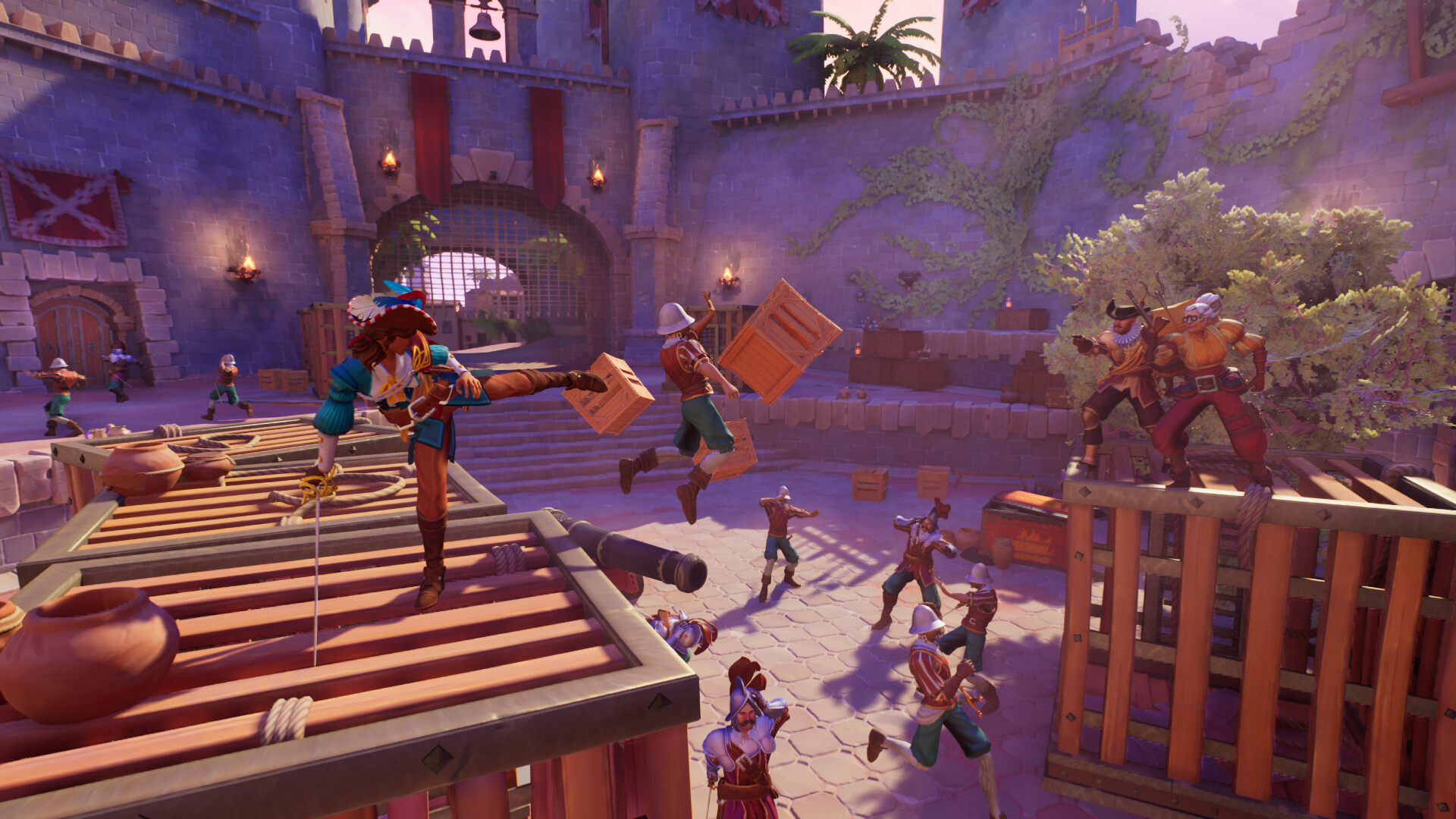
Most encounters ask Adalia to manage several opponents who can threaten her from different positions. Attacking focuses on one foe at a time, so a large group can make a direct exchange inefficient; dodges, jumps and other acrobatics help her escape a cluster, spread the guards out or return from a better angle. The enemies also differ in how they approach a fight, and the game encourages learning their weaknesses rather than treating every guard as identical. Adalia’s taunts and quick dialogue add a theatrical layer to these exchanges, but combat still depends on timing and space: recognising a threat, choosing to parry or evade, then using the brief opening to strike or move. Difficulty levels and combat assists, including automatic parries, give players ways to adjust how demanding those reactions need to be.
The arenas make selected pieces of scenery part of the combat toolkit. Rolling barrels and chandeliers can surprise or stun enemies, while other highlighted objects can disrupt a group. These interactions give Adalia ways to affect several opponents at once, which contrasts with the more focused reach of her sword. The game does not treat every bottle or furnishing as interactive; its combat spaces place specific objects where their function can be read and used. The result is a loop that alternates between fencing and improvising with the room instead of asking the player to rely on either one alone.
The Steam release has 30 achievements built around optional objectives. Their requirements include completing combat challenges, finding all secrets and finishing Arena Mode. These milestones reach across both sides of play: the campaign’s levels contain the secrets, while the arena supplies a separate completion target alongside its waves and modifiers. They give players clear goals to pursue beyond following each story episode to its conclusion.
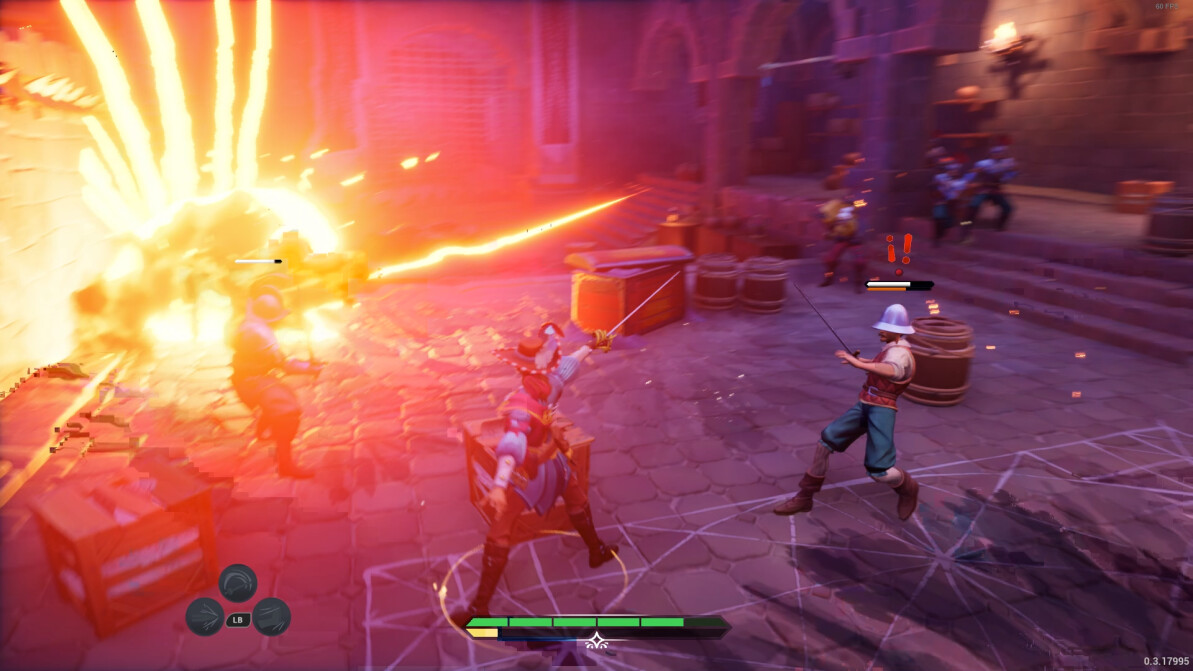
A separate Arena Mode turns the same combat into repeatable waves. Each run moves through randomized arenas with different environmental setups and successive groups of enemies. Between arenas, a modifier strengthens the opposition, while the player selects one of three beneficial modifiers to shape the next bout. More than sixty modifiers can be combined, creating changing constraints and opportunities across attempts. The mode rewards adapting the familiar sword and environment tools to new combinations rather than following the campaign’s fixed episode sequence. Banter continues during arena fights, keeping the characters’ comic exchanges present even when the narrative is no longer advancing. Players who want another challenge after the story can return to these randomized scenarios and try a different mix of modifiers and arena situations.
The soundtrack runs for more than 40 minutes of orchestral music, drawing on Hispanic music and old-school adventure films. Its score includes character themes, atmospheric tracks and combat cues, with recordings from flamenco guitar performers. Composer Jean-Claude Charlier gives the music a connection to the game’s Spanish-inspired world and theatrical swashbuckler setting. Character, atmosphere and battle each receive a distinct kind of cue, reflecting the game’s shifts between its cast, places and sword fights.
- Developer
- Fireplace Games
- Genre
- Third-person swashbuckling action-adventure