
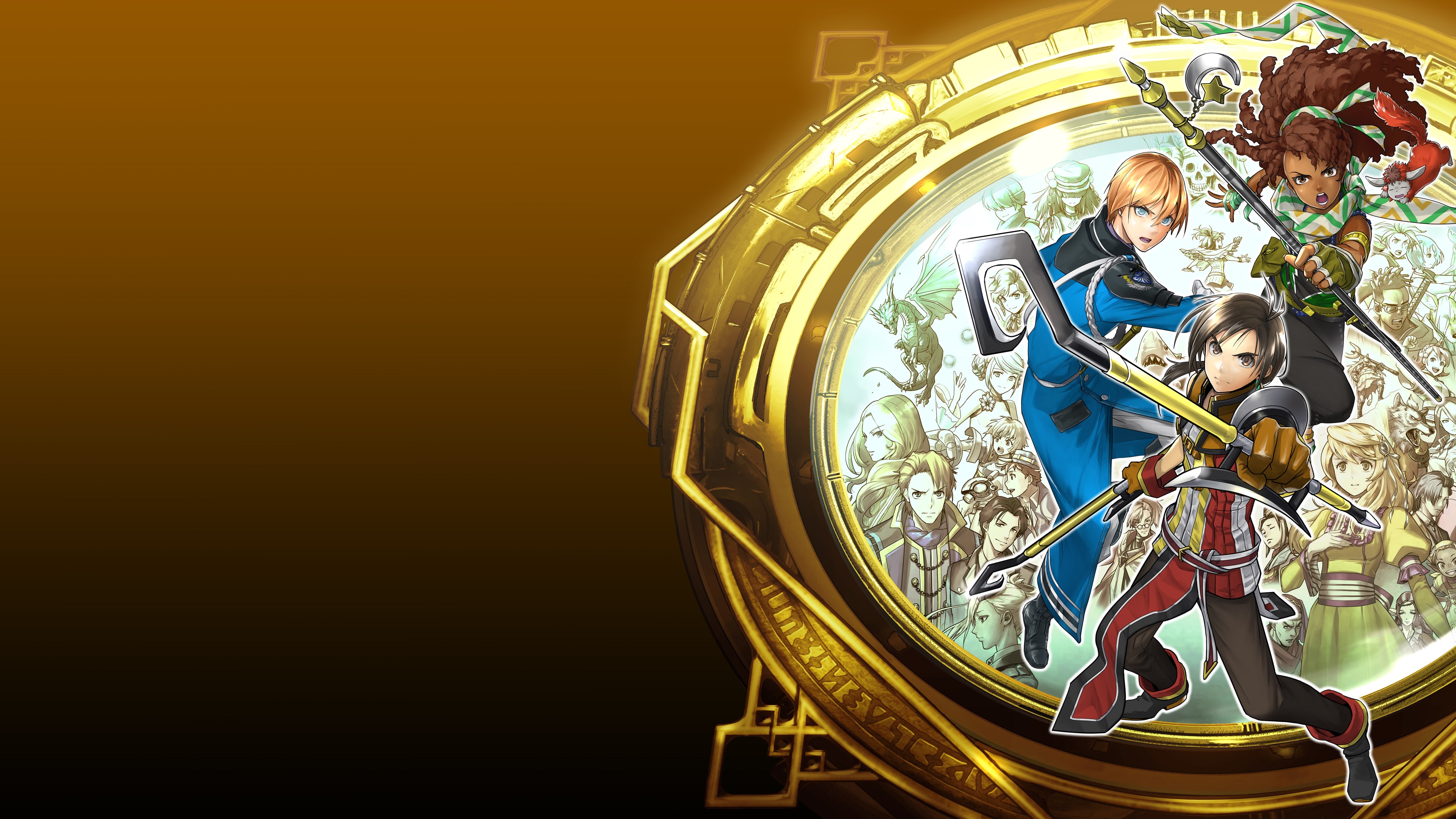
About Eiyuden Chronicle: Hundred Heroes
When a joint expedition by the League of Nations and the Galdean Empire uncovers an ancient rune-lens, village volunteer Nowa and imperial officer Seign Kesling find themselves on opposing sides of a conflict reshaping Allraan. Build a roster of allies, lead six-character turn-based parties and develop a growing fortress town.
Allraan is a continent where humans, beastmen, elves and desert people share a history shaped by alliances, rivalry and rune-lenses: magical objects that let their users channel power. The Galdean Empire has gained an advantage by developing technology that amplifies those lenses, and now searches across the continent for an artifact that could extend its influence. The story begins when the League of Nations and the Empire undertake a joint expedition. Nowa, a young man from a remote League village, joins the mission alongside Seign Kesling, a gifted officer from a powerful imperial house. They meet as companions, but the discovery of an ancient rune-lens becomes the spark for war. Their friendship gives the conflict two personal viewpoints: Nowa is drawn into the League’s resistance, while Seign must reconcile his military duty and ideals with the consequences of the Empire’s actions. The narrative follows the widening struggle and the people each man encounters, rather than treating the war as a clash of anonymous armies.
The cast is central to the way the journey unfolds. More than a hundred characters can be recruited, and the game invites players to bring different combinations of them on the adventure. The early introductions establish how varied those perspectives are. Nowa is an impulsive village youth who tends to help people before considering the risks. Seign is shaped by his noble upbringing, military training and the death of his older brother in a border rebellion; his strategic outlook can seem cold even though he is guided by strong ideals. Marisa belongs to the Guardians, a clan that protects the forest and has developed its own way of using rune-lenses. Lian leaves her dojo home after the Empire invades League lands, while Garr is a veteran beastman mercenary accustomed to a life defined by conflict. Recruitment changes the available party combinations, and ordinary dialogue can react to the group currently travelling together. Newly added heroes also have voiced lines for the circumstances of the current party, helping make a fresh recruit feel present in the ongoing journey.
Recruitment is part of exploring Allraan. Prospective allies appear in different locations, and some require the player to revisit a place already crossed as the campaign opens further possibilities. This turns the large cast into a reason to speak with residents and return to earlier settlements, rather than limiting recruitment to a fixed sequence of story scenes. The cast also includes optional stops away from combat: the player can pause at hot springs, play cards or take part in the theatre. These diversions sit beside the wartime route and give the party time in places shaped by local life. Because recruits have separate perspectives and the travelling lineup changes, the people gathered across the continent become part of the adventure’s moment-to-moment texture as well as its eventual army. The result is an exploration loop that combines following the conflict, looking for new companions and choosing when to step aside for an activity.
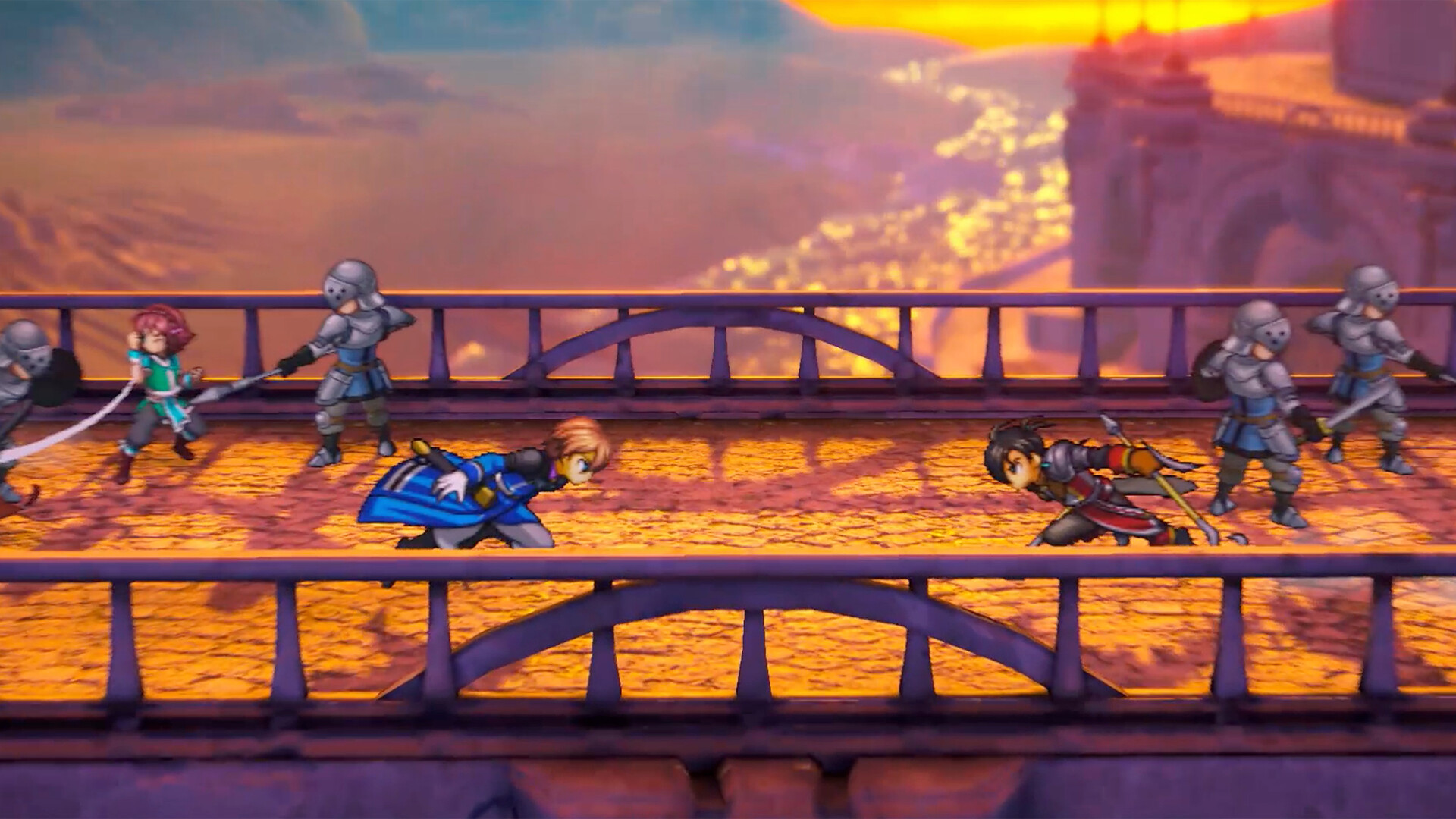
Most ordinary encounters use turn-based command battles, with six characters forming the active party. Random encounters transition into a separate battle scene, making the shift from exploration to combat explicit. Some recruits instead support the active party without occupying one of its six slots; one can appear at the start of combat and grant an attack bonus. Party preparation matters because recruited characters bring different capabilities, and the party can be built from warriors with complementary skills. Enemy placement can also affect who can reach a target: a selected character may be unable to hit a foe stationed in the back row. Combat environments add verticality and obstacles, while higher difficulty places more weight on character attributes and action order. That combination links roster building to the battlefield itself: selecting allies is only one part of preparation, because their strengths must be considered alongside the conditions of the encounter. The game includes more than one kind of confrontation: alongside standard encounters and boss battles, the story features one-on-one duels and larger war battles with their own presentation. Duels narrow attention to an individual matchup, while war battles expand the scale to the armies drawn into the conflict. These modes connect the personal scale of a chosen party to a conflict involving nations. Rather than relying on one real-time action system, Hundred Heroes asks players to consider their roster, issue commands and respond to the tactical situation presented in each battle format.
Rune-lenses connect Allraan’s magic to individual character growth. Characters can equip the lenses as they level, and different runes add magic, improve attributes, grant new abilities or provide automatic skills. The distinction matters in battle: abilities expand the actions available through commands, while automatic skills contribute without requiring the player to choose them on a turn. With a roster larger than the active party, these lenses allow recruited fighters to be prepared for different jobs before they enter the six-person lineup. Automatic battle tactics offer a separate layer of control. The player can set how an automated party behaves, including whether it should conserve its resources before a difficult fight or simply attack. Manual command selection remains available, so a team can be controlled directly or given instructions to follow. The rune setup changes what each character can do; the tactical settings govern how the automated team uses those options during a battle.
Combat also gains options from the relationships between selected heroes. Certain party combinations unlock Hero Combos, coordinated attacks in which several characters strike together with a unique animation and bonus damage. This makes roster selection matter beyond comparing individual abilities: bringing particular companions together can provide an extra attack option when their combination is active. These systems complement the separate duel and war formats. A duel narrows the conflict to a one-on-one matchup, while a war battle presents a larger military confrontation. Across these scales, the player moves between building a roster, selecting compatible heroes and using their combined abilities rather than relying on a single protagonist’s moveset.
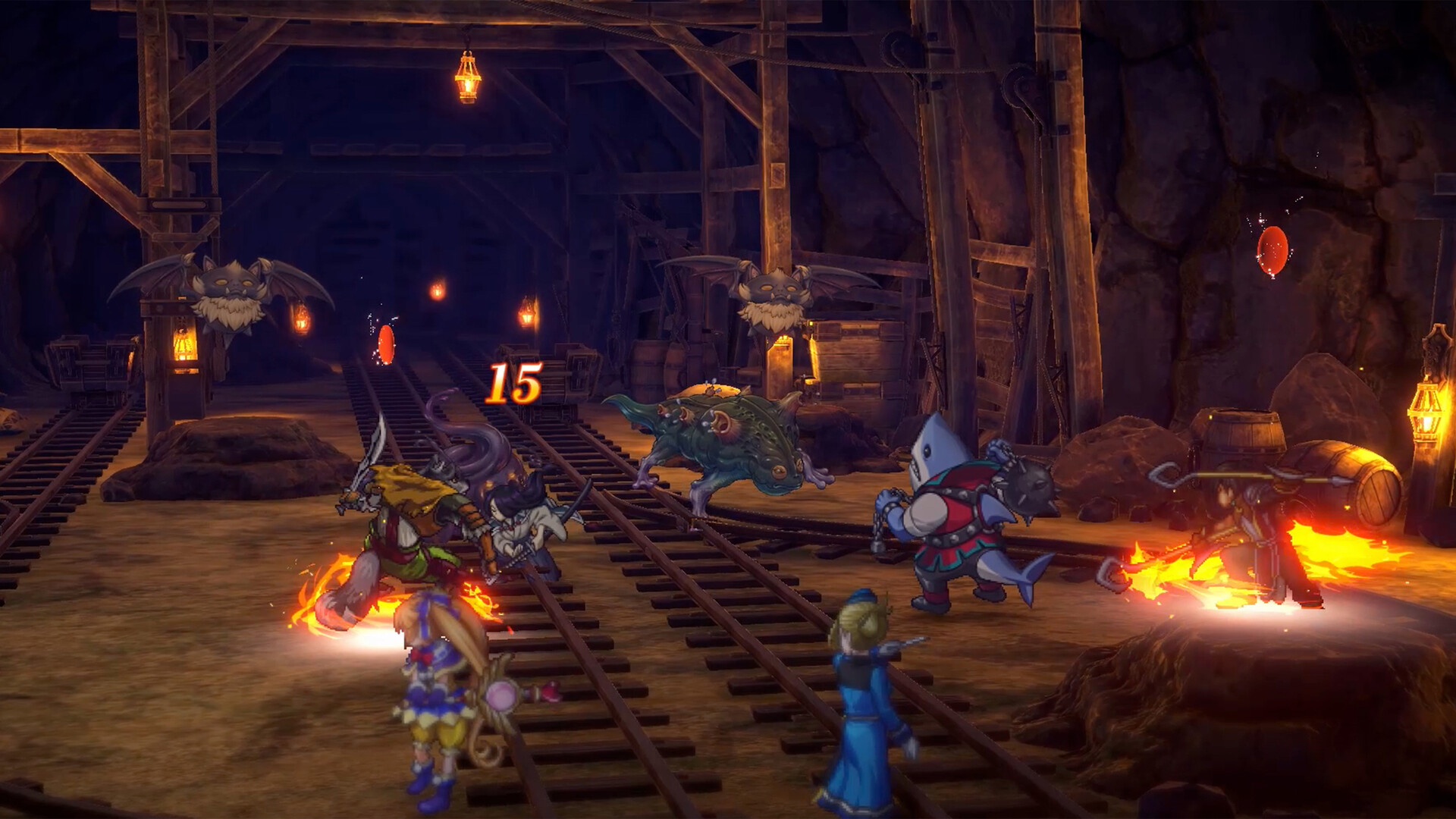
Fortress Town develops later in the campaign rather than being available as a finished base from the start. Its growth is not only an automatic reward for reaching a new level: the player chooses structures and recruits people who can build or maintain them. A technology grid can require particular resources and characters to unlock town mechanics, while the recruit B’baba can help track down heroes who are still missing. The town therefore develops through a connected set of choices: finding a recruit may satisfy an unlock requirement, and securing the requested resources makes a new facility or mechanic available. This links building choices to exploration and collecting the people needed to develop the stronghold. Town development consequently rewards revisiting the wider roster, not only choosing a structure. The presentation pairs detailed pixel-art characters with three-dimensional backgrounds, making individual designs and accessories visible across the large cast. The higher pixel resolution keeps the many characters’ expressions and distinctive accessories legible. The Windows Standard Edition is the base game, while Digital Deluxe extras and story expansions add separate content. Eiyuden Chronicle: Rising is a prelude in the same universe, with action-RPG combat and town-building elements; Hundred Heroes instead centers on turn-based battles, town development and an ensemble cast.
- Developer
- Rabbit & Bear Studios
- Genre
- JRPG; turn-based role-playing game