
About Echo Point Nova
An explorer crash-lands on a planet controlled by mercenaries exploiting ancient technology. Echo Point Nova follows the effort to dismantle their operation across a seamless world of grappling, hoverboarding, gunfights and colossal encounters. The campaign supports solo play or online co-op for up to four players, with shared saves and flexible difficulty.
Echo Point Nova begins with an explorer crash-landing on a mysterious planet. A ruthless mercenary force dominates the world and uses ancient technology to build powerful weapons. The protagonist has exceptional combat skills, while the central objective is to dismantle the mercenaries’ operation. Players can pursue the main quest or move through the world at their own pace, which makes the setting both a campaign route and a space for unscripted exploration. The story gives a clear conflict without requiring the player to follow every encounter in a fixed sequence. Instead, distant sites remain visible and reachable, inviting movement toward a landmark, a fight, or a discovery before returning to the principal objective.
The world is seamless, so exploration and combat can flow together without loading between large outdoor spaces. The grappling hook and hoverboard provide the core ways to cross distance, and unlockable powers add further options as the campaign develops. Traversal is designed around carrying speed from one action into another: a player can pull toward a surface, launch onward, then transition into a fight or land near a point of interest. The planet’s terrain is not merely scenery around mission arenas; it forms connected routes through which the player can approach objectives, search for hidden items, or encounter threats away from the main path. That arrangement gives the campaign room for detours while keeping the mercenary conflict visible across the landscape.
Combat takes place in the same open spaces as traversal. The game includes varied enemy classes, among them pyromancers that attack areas, sappers that set turrets, and helicopters that fire rockets. These threats make position and movement part of aiming: an area attack can close off a patch of ground, a turret can establish a dangerous angle, and a helicopter can pressure the player from above. Large colossi serve as major opponents in the main quest and can also be encountered during exploration. Meeting a boss outside a prescribed sequence reinforces the open-world structure. A battle can interrupt a journey, and the terrain around it offers routes to reposition rather than a single fixed combat lane. A player can leave an exposed approach by grappling to higher ground, then use the hoverboard to carry momentum toward another opening. Those choices tie the encounter to the surrounding landscape and keep movement useful while threats arrive from several directions.
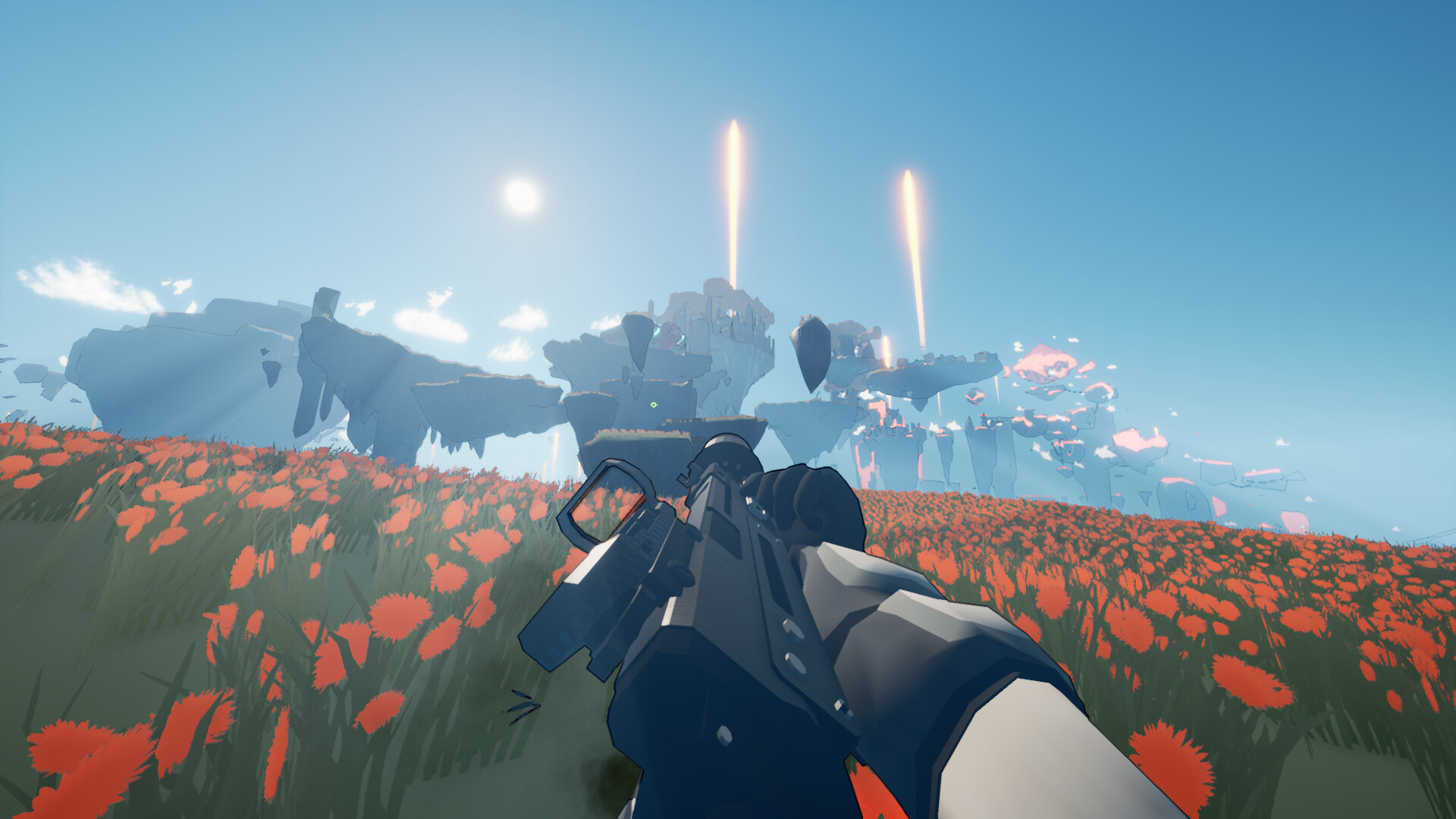
Weapons and abilities expand the ways to handle these encounters. Hidden weapons, character enhancements and cosmetic items are distributed through exploration, while weapon attachments unlock by accumulating kills. Agility orbs improve mobility, linking exploration rewards to the game’s main movement language rather than treating collectibles as purely decorative. As the player acquires tools, they can combine combat and traversal with more options than the initial kit provides. Reward paths and loadouts can vary, leaving players free to choose what to search for and when to pursue it. Moving through the world uncovers objects and challenges, and combat can contribute toward weapon customization that shapes later fights.
Echo Point Nova supports single-player and online cooperative play for as many as four players. Cooperation is available from the start, and the game carries progression on the same save whether it is played alone or with friends. Difficulty settings can be adjusted for individual players within one session, allowing a group to share the same world without requiring identical challenge preferences. Co-op uses Steam Friends invitations; random matchmaking is unavailable. The campaign’s shared-save approach also means solo and cooperative sessions belong to one ongoing progression rather than separate modes with disconnected advancement.
The game includes several layers beyond the primary quest. Hidden weapons and enhancements reward close inspection, cosmetic items provide additional unlocks, and the Steam edition includes a level editor and Workshop support. Community-created levels can extend the kinds of spaces and challenges encountered, while the Under the Clouds expansion adds a separate world to explore. That expansion brings forests, mountains, rivers and caves, with swimming and surfing adding water-based movement. Players can travel over water on the hoverboard or dive beneath it, changing how they explore and approach fights. A day-and-night cycle and flashlight add a shift in visibility to this expansion world, and new enemies and weapons widen its combat encounters. Co-op, rogue mode and Workshop content are also supported there. These environments and systems belong to the expansion’s world, while the original campaign follows its own terrain and objectives.
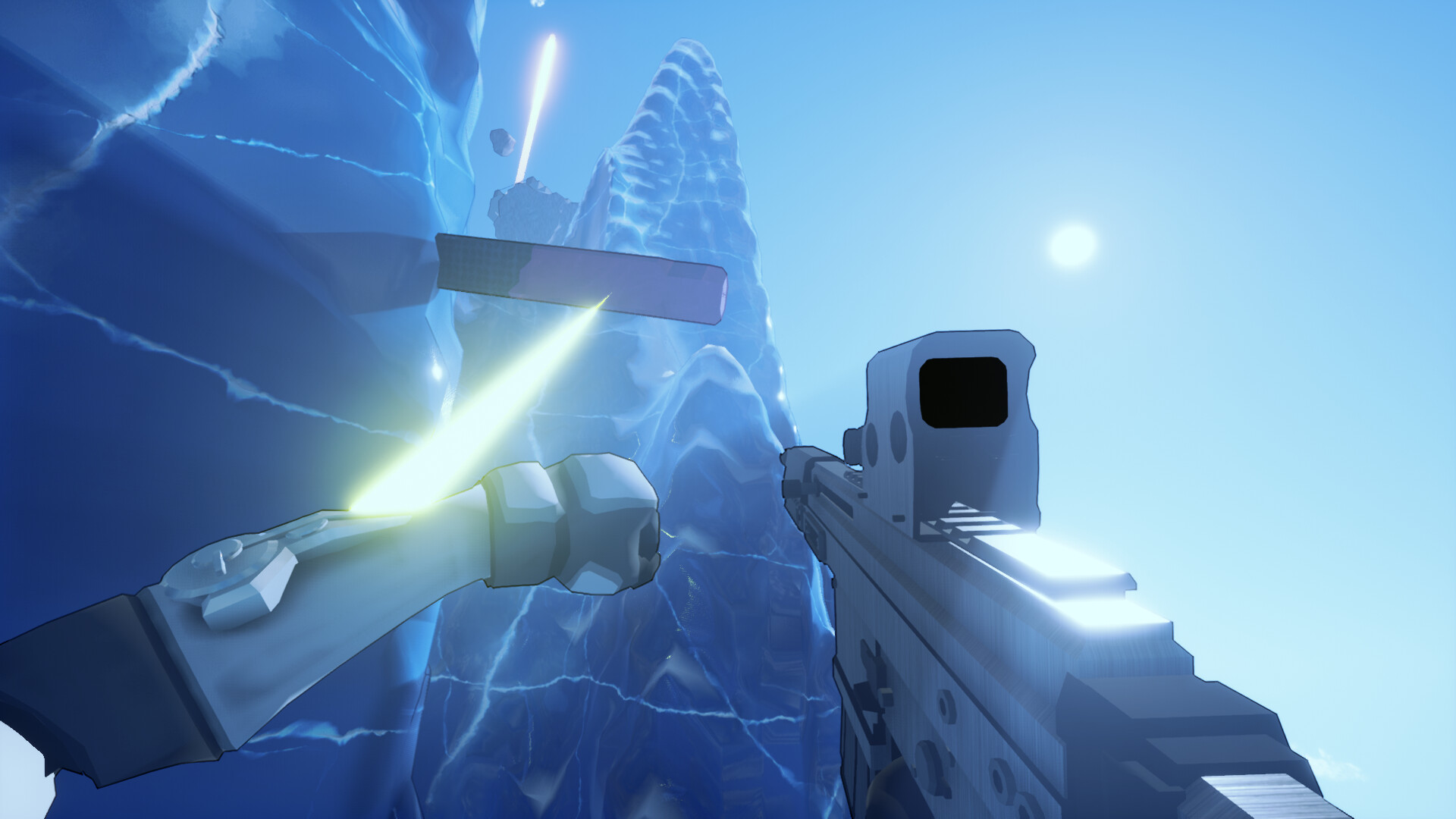
Updates have also added replay options to the released game. New Game Plus allows players to carry selected unlocks into a new run, with difficulty modifiers and randomization settings, as well as optional movement systems such as a rope grapple, jetpack and sprint. These are post-launch additions and replay choices, not requirements for understanding the original crash-landing premise. Taken together, the game’s structure moves between a broad central objective, freely chosen routes, upgrade hunting and high-pressure fights. The explorer’s task remains to disrupt the mercenary exploitation of ancient technology, while the open terrain lets each player decide how much time to spend pushing forward, ranging outward or returning to familiar ground with new tools.
- Developer
- Greylock Studio
- Genre
- Open-world first-person shooter