
About Dying Light
In the quarantine city of Harran, GRE operative Kyle Crane enters a collapsed urban world where survivors depend on dwindling supplies and the infected control the streets. First-person parkour, scavenging, improvised weapons and a shifting day-night cycle shape the base campaign as Crane navigates the outbreak and its human conflicts.
Dying Light takes place in Harran, an isolated city sealed off after a viral outbreak turned its population into violent Infected. Small groups of people remain in makeshift settlements while the Global Relief Effort (GRE) sends medical supplies and airdrops into the quarantine zone. Kyle Crane, a GRE operative, parachutes into the city to investigate the outbreak and pursue an assignment connected to the organization’s interests. Events quickly place him among the survivors whose day-to-day needs are very different from the mission he arrived to complete. The base campaign follows Crane through Harran’s districts as he moves between GRE orders, the people sheltering in the Tower, and the growing threat posed by the infected and armed human groups. It focuses on the original city campaign; the countryside journey and buggy systems belong to the separate story expansion The Following.
Harran is built for movement across rooftops, balconies, scaffolding and narrow alleys. Crane can run, jump, climb ledges, vault obstacles and use ropes or environmental structures to cross gaps, so routes often pass over street-level crowds rather than through them. Safe zones provide places to rest and manage equipment, while rooftops and elevated paths let the player move around clusters of infected or approach a destination from another direction. The same city supports combat and exploration: a climb can become an escape from a pursuit, and a drop from above can turn into an attack. Missions and side quests send Crane through apartments, shops, industrial spaces and public buildings, where supplies, weapons and crafting materials can be found. The map and quest tracking tools help set destinations, but the actual route still involves choosing which streets, roofs and interiors to cross.
The day-night cycle changes the danger of travelling through Harran. During daylight, infected occupy the streets and buildings, but Crane has more room to observe a route, search containers and return to a safe zone. Darkness brings stronger infected and night pursuits, making exposure outside a safe area more dangerous. The player can prepare for a night trip by carrying useful equipment, then decide whether to continue toward an objective or retreat as the threat increases. Surviving until morning contributes to character advancement, so remaining outside can bring a reward while also putting carried progress at risk. The cycle turns time into a practical part of route planning: an errand that is manageable in daylight can become a tense escape if it runs late, while some resources and activities draw the player toward riskier places after dark.
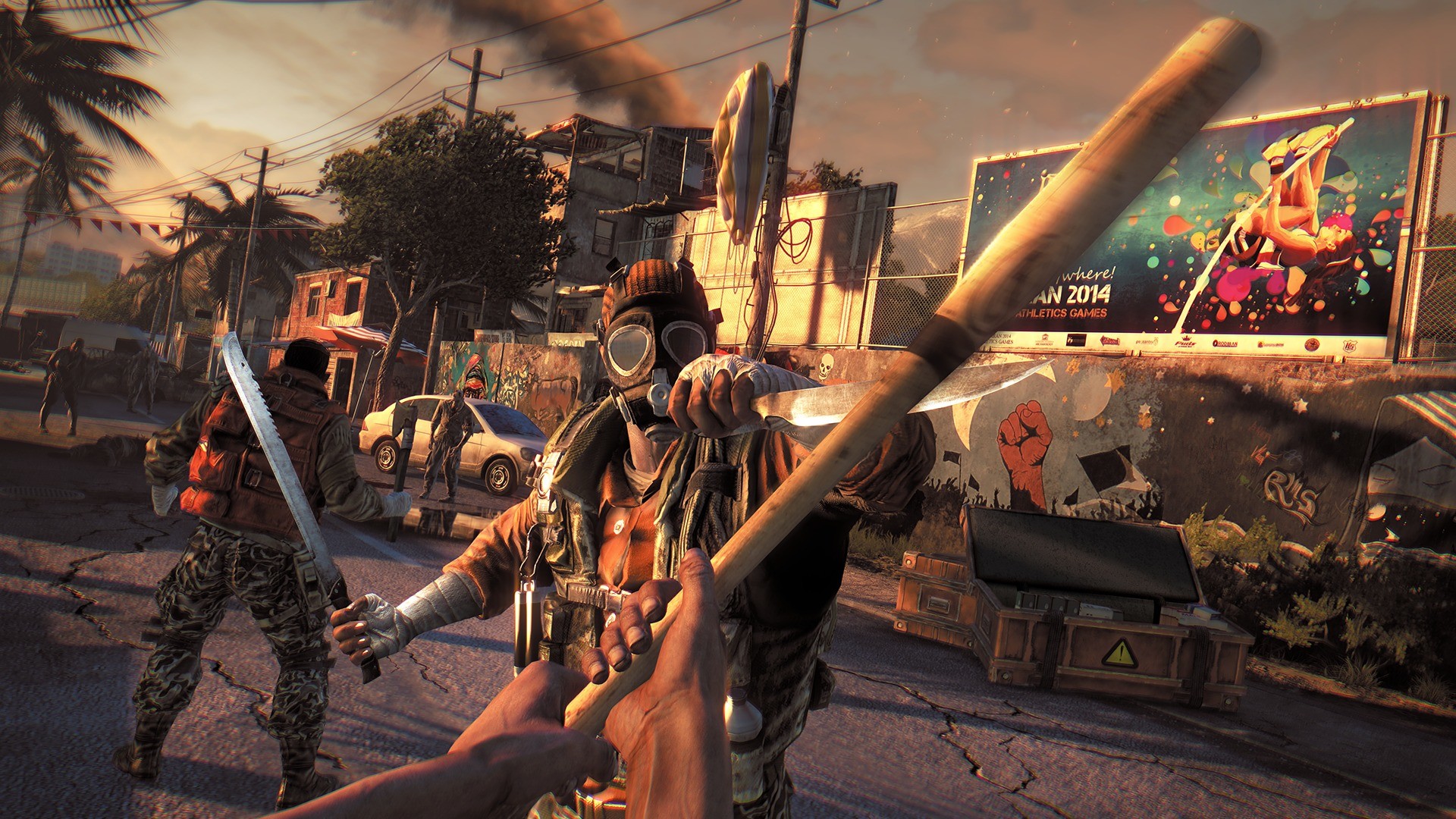
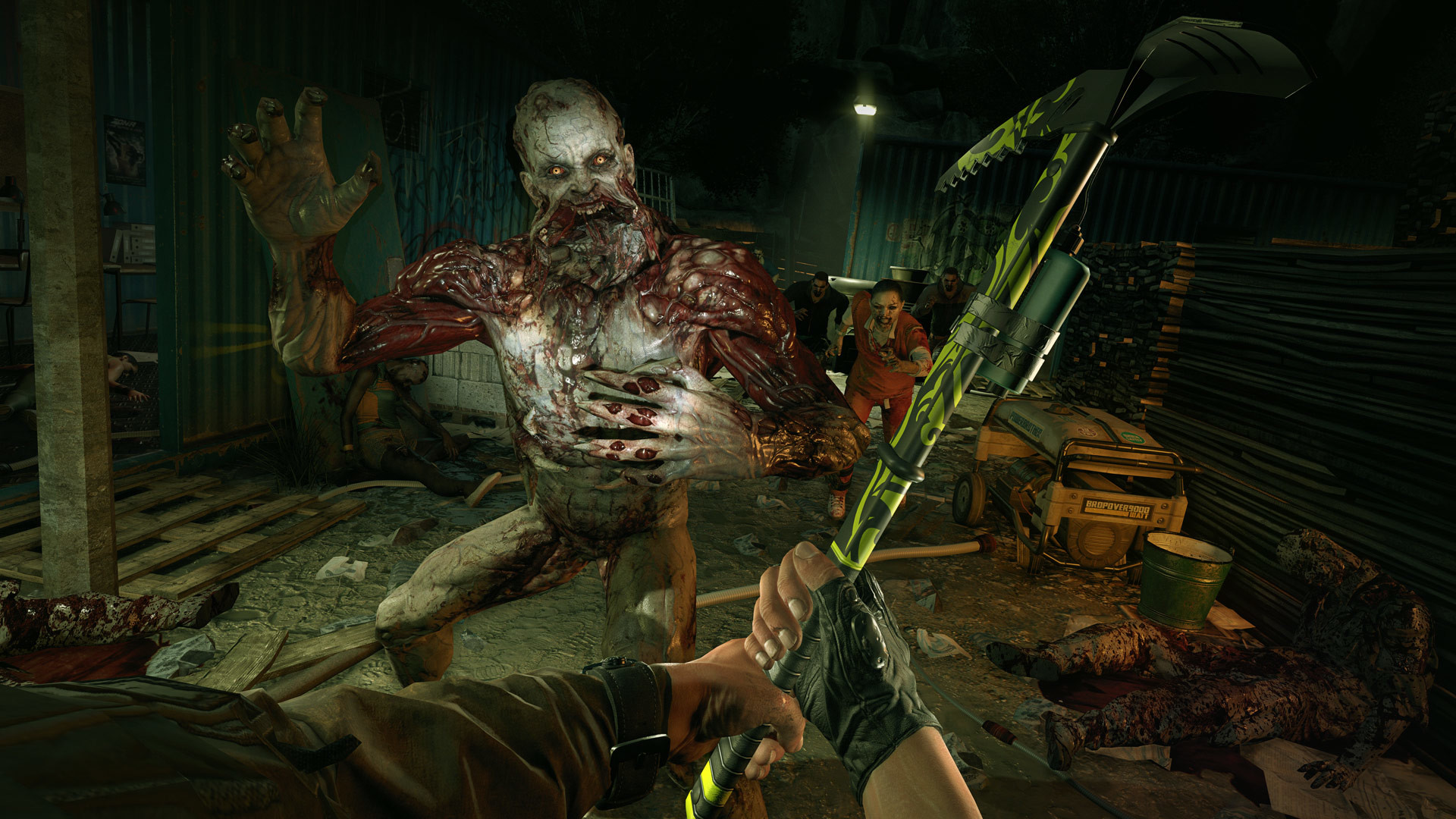
Combat is built around close-range weapons, kicks, throws and environmental opportunities. Early on, a damaged pipe or other improvised weapon can provide reach, but weapons wear down and must be repaired or replaced. Crane can shove or kick enemies away, use the surrounding space to break up a group, and strike infected or hostile survivors with blunt and bladed tools. Human opponents use weapons and can make a direct approach costly, while larger infected demand room and careful timing. Firecrackers can attract infected toward a chosen spot, and traps or hazards can alter how an encounter unfolds. The player can also move through a fight instead of staying to defeat every enemy, using ledges, doorways and climbable surfaces to create distance. The result is a combat loop that combines weapon condition, stamina, crowd position and escape routes.
Scavenging feeds the crafting and equipment loop. Containers, vehicles, buildings and work areas hold components such as metal parts, alcohol, gauze, electronics and blades; different locations tend to contain different kinds of supplies. Blueprints allow collected materials to become medical items, thrown equipment and weapon modifications. Crafting can be done from the character interface, while weapon repairs, upgrades and inventory decisions help keep a loadout usable. Recipes and skill unlocks add options over time, so new blueprints change what the player can make from familiar materials. Searching costs time and can bring Crane close to infected or armed people, which makes detours a trade between gathering useful components and staying on a safer route. Exploration therefore supports survival directly rather than functioning only as sightseeing.
Character development tracks three distinct kinds of experience: Survivor, Agility and Power. Helping survivors and advancing through missions contributes to Survivor progression; freerunning and movement activities build Agility; fighting enemies develops Power. Each track has its own skill tree and gives points that can be spent on different capabilities. Agility skills expand movement and evasive options, Power skills improve combat actions, and Survivor skills support general equipment and survival. The player develops whichever parts of Crane’s abilities match the activities they perform, while challenges and side jobs create additional reasons to use those systems. Co-operative play allows other players to join the campaign as fellow survivors, with the city’s missions and combat forming the shared activity. These systems apply to the original Harran campaign, while The Following adds a separate countryside map, buggy driving and its own progression elements.
- Developer
- Techland
- Genre
- First-person action survival horror with parkour