
About Dying Light: The Beast
After captivity, Kyle Crane escapes Castor Woods with human and infected DNA. He pursues revenge while struggling to control his changing powers. Explore the Swiss Alps-inspired valley by parkour and vehicle, scavenge by day, and face greater threats at night. This first-person survival horror adventure includes cooperative play and a separate solo mode with scarce resources and lasting consequences.
Dying Light: The Beast follows Kyle Crane after years held captive by the Baron, whose experiments have left Crane with both human and infected DNA. He escapes into Castor Woods changed, with a growing set of beast-like abilities and a personal reason to confront the man responsible. Revenge gives the story its direction, while Crane’s altered nature creates an internal conflict: the power that can help him survive also threatens his grip on himself. The game can be approached as a standalone story, though familiarity with Crane and the earlier Dying Light games adds context to his return.
Castor Woods is a broad valley inspired by the Swiss Alps, built from distinct areas including a tourist town, industrial sites, a national park, farm fields and swamps. The landscape moves between quiet scenery and signs of collapse, with infected and human activity shaping the routes through it. Exploring is part of survival: players search buildings and outdoor spaces for supplies, discover locations, and decide how to cross exposed ground or move through occupied areas. The setting supports both the immediate needs of Crane’s journey and the slower pleasure of seeing how the valley’s places fit together.
The familiar Dying Light rhythm of day and night gives travel and scavenging a changing level of risk. Daylight offers more room to explore and gather what is useful, but the clock keeps pressure on each outing. When night falls, more dangerous horrors emerge and a route that felt manageable can become a desperate escape. Players must judge whether to keep moving, hide, or fight. This cycle connects preparation to exploration: supplies collected earlier can matter when returning becomes harder, and the changing conditions encourage attention to timing as well as direction.
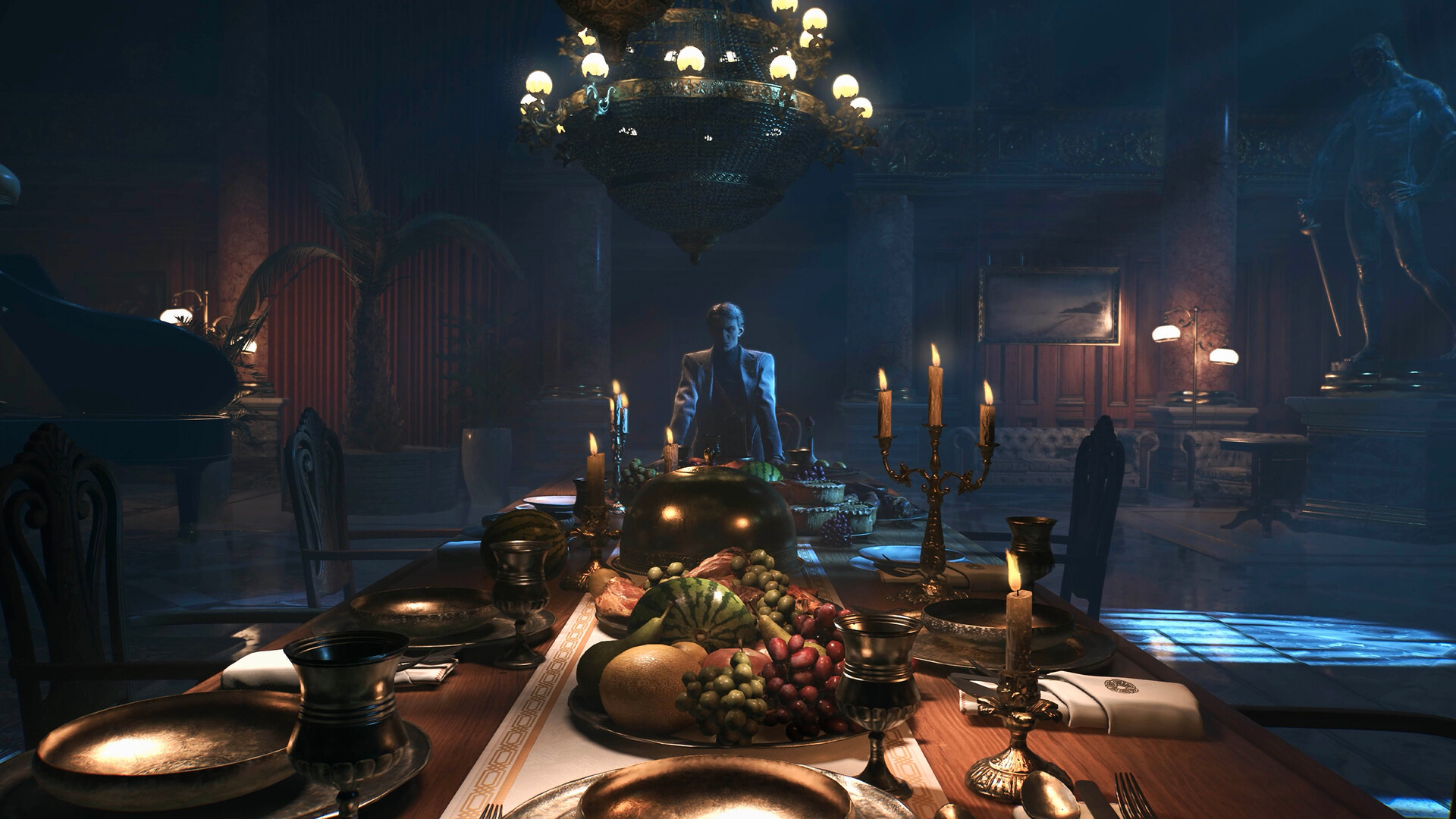
Movement combines first-person parkour with off-road vehicles. Crane can run and jump across rooftops, climb through the built environment and use momentum to get past obstacles, making the layout itself part of traversal. Roads and open terrain provide another option: an off-road vehicle can carry him through the valley and into groups of infected. These ways of moving offer different trade-offs in how quickly and visibly Crane travels. On foot, rooftops and obstacles shape the available path; behind the wheel, speed and force become tools for crossing dangerous ground.
Combat emphasizes physical melee, with attacks carrying weight and enemies reacting to impacts. Weapons and their modifiers provide different ways to deal with threats, while Crane’s emerging beast abilities add another layer when ordinary fighting is not enough. The two playstyles express the tension at the centre of the character: a human survivor using learned skills and resources, and a more dangerous force that can be unleashed at a cost to his control. Encounters therefore ask players to balance immediate effectiveness against the risks of allowing that power to take over.
The main adventure can be played solo or in cooperative play for up to four players, with shared progression across the story. Friends can explore Castor Woods, take on encounters and discoveries together, and advance through the same unfolding adventure. Co-op changes the social shape of the journey without removing its survival pressures: players still face infected, manage their movement through the valley and contend with the day-night cycle. The shared progression lets a group follow the same campaign without treating each encounter as a separate, disconnected excursion.
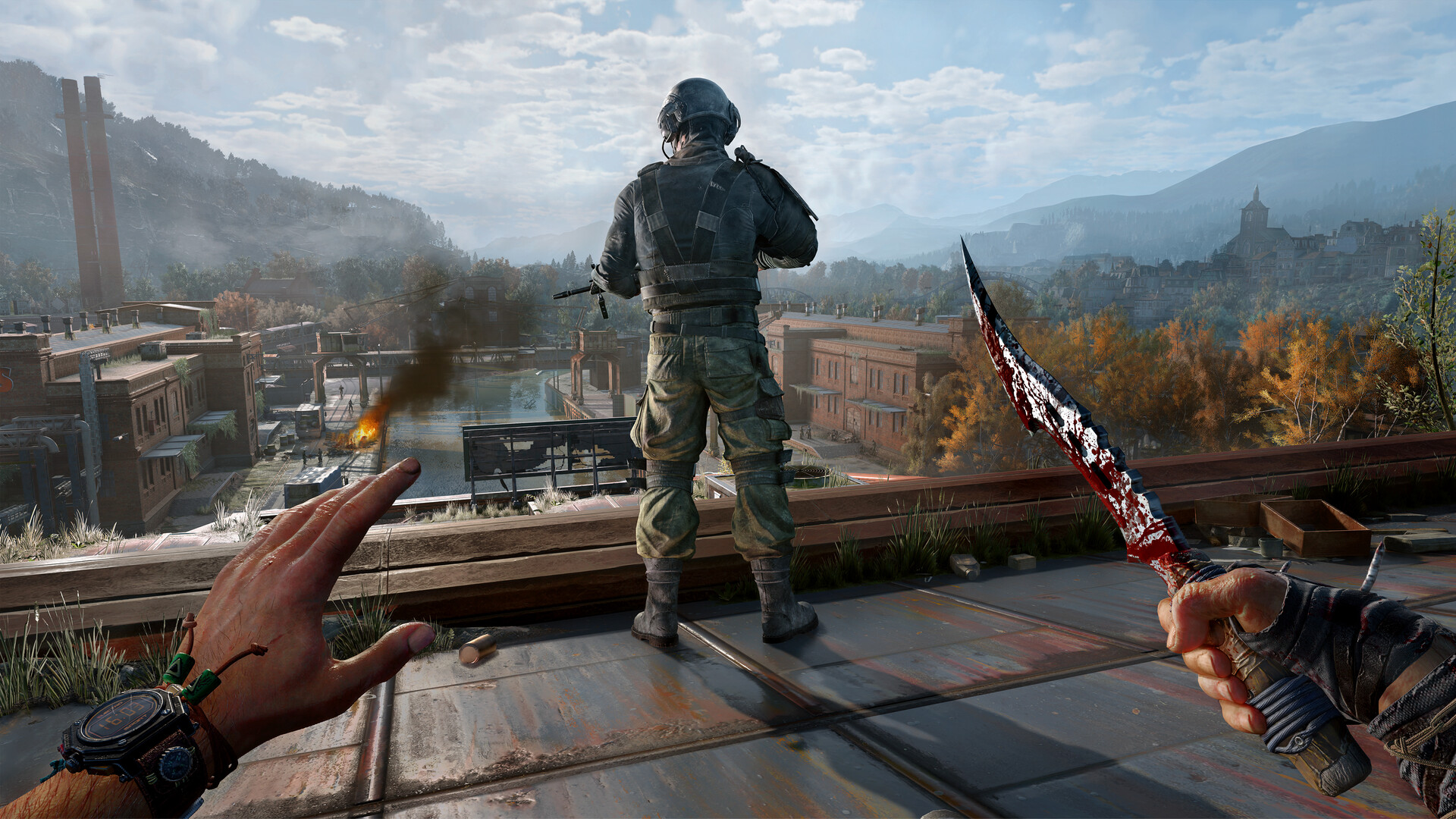
The current game also includes Restored Land, a distinct solo survival mode that changes how the world responds to the player. In this mode, defeated infected do not respawn, resources and items are limited, and activities such as convoys, dark zones and nests can only be completed once. Clearing an area can therefore have lasting consequences, while planning around food, equipment and light becomes more important. An optional One Life rule ends a run on death. These rules offer a more consequential way to inhabit Castor Woods alongside the story-focused adventure, emphasizing scarcity and permanent changes to the world. Each cleared route can become a record of choices made on an earlier outing.
Crane’s search for the Baron draws him into a valley with other survivors and former subjects of the same research. Olivia Bennet escaped the laboratory when Crane did; her knowledge of the experiments makes her an ally and guide while he pursues revenge. Florence McCallum, the Sheriff, leads people sheltering in Castor Woods Town Hall, where order depends on difficult choices. Lydia leads a hidden group of escaped test subjects and has developed an ability to influence the infected. The Baron, Marius Fischer, comes from a family that has ruled the valley for generations and sees the outbreak as an opportunity for experimentation. These characters give the setting more than a series of infected encounters. Crane has to navigate institutions and alliances shaped by the same crisis that changed his body, while deciding how much of his growing strength he can control.
- Developer
- Techland
- Genre
- First-person survival horror action-adventure with RPG elements