
About Dwarf Fortress
Dwarf Fortress places a small group of dwarves in a generated fantasy world shaped by its own history, creatures and resources. In Fortress mode, plan a settlement and manage its needs; in Adventure mode, travel through that world as an individual, meeting its people and pursuing your own reputation.
Each new Dwarf Fortress world is more than a landscape waiting to be built on. Its geography, weather, civilizations, creatures and histories are generated together, so a settlement occupies a place within a larger setting rather than an isolated map. Mountains contain different stone and mineral resources; rivers, rainfall and temperature affect the environment; nearby societies can become trading partners or threats. The simulation tracks inhabitants as individuals with personalities, relationships and needs, while cultures develop their own forms of music, poetry, crafts and belief. These details give a fortress a changing context: the site’s resources shape what can be produced, and events beyond its borders can affect who arrives or what dangers approach. The player begins by selecting a region and a group of dwarves, then works with the particular conditions of that world rather than following a fixed campaign map.
Fortress mode turns that starting group into a settlement under the player’s direction. The player designates digging, gathers materials and lays out rooms, workshops, stockpiles and other structures; the dwarves carry out suitable jobs according to their assigned work and the resources available. A mine can expose useful stone or ore, but excavation also changes the space and may uncover hazards. Workshops convert gathered materials into goods, furniture and equipment, while stockpiles and work orders help organize the flow of items through the settlement. The basic cycle is to identify a need, provide the place and materials for a job, and then watch the residents attempt it alongside their other tasks. A successful plan depends on access and supply as much as the blueprint: a workshop cannot make an item without appropriate inputs, and goods stored in awkward places can complicate later work.
Keeping the residents alive and content requires attention to ordinary routines. Dwarves need food and drink, including beer, and their thoughts provide clues about how they are experiencing life in the fortress. The player can arrange farming, cooking, brewing and storage, then connect production to the places where residents eat, drink and socialize. Poor supply, danger or unhappy experiences can undermine a settlement even when its buildings look complete. At the same time, residents have skills and personal traits that shape their work and reactions. As the community grows, new arrivals bring additional labor and needs. Managing a fortress therefore means balancing immediate necessities with longer projects: enough food and drink for daily life, suitable workshops for useful production, and spaces where dwarves can meet, practice a craft or take part in community life.
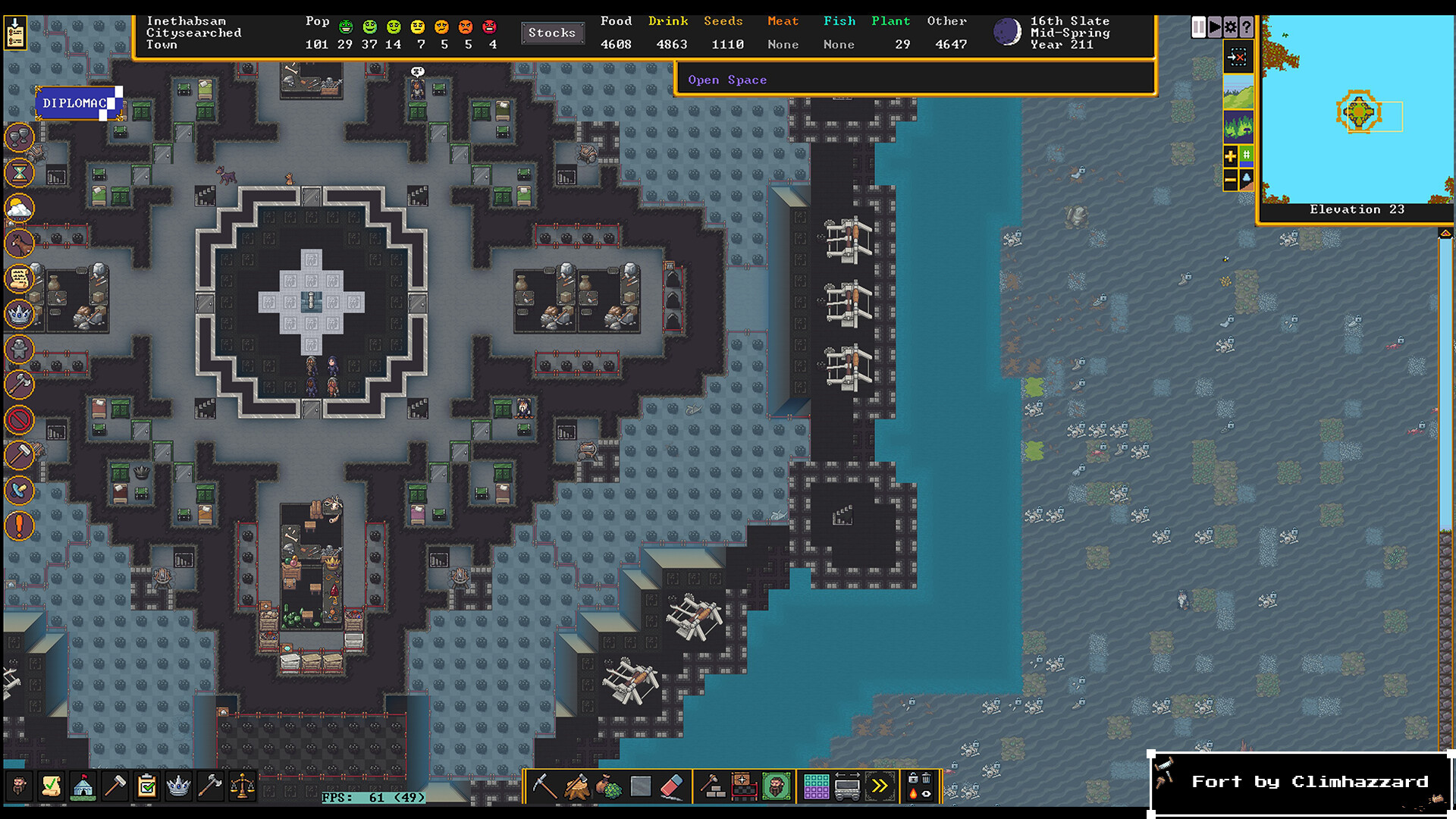
A settlement’s economy and institutions grow beyond basic survival. Dwarves can make goods from different materials, and the qualities of those materials matter to what is produced. Traders connect the fortress to other civilizations, creating opportunities to exchange what the settlement has made for items it lacks. Leadership can also change the work ahead: establishing a barony brings nobles whose demands and responsibilities become part of fortress management. Temples, libraries, taverns and guild spaces let the community develop social and cultural activity, while books, performances and skilled work add their own projects to the schedule. These buildings are not just decorative endpoints. They organize activities, respond to residents’ interests and create further requirements for labor and supplies. As a fortress becomes more established, decisions about workshops, storage, trade and civic spaces affect each other, making the settlement’s growth a chain of connected responsibilities.
The same world also presents dangers that can turn planning into defense. Hostile civilizations, creatures in the wilderness and the dead may threaten residents, while accidents inside the fortress can be just as consequential. The player can prepare by making equipment, organizing a military response and shaping the built environment. Water and magma are both resources and hazards: channels and floodgates can bring water to farms or redirect it, but an uncontrolled flow can ruin rooms and kill inhabitants. Digging deeper may open access to valuable materials while exposing the fortress to more serious threats. Dwarf Fortress treats combat as a simulation of bodies, skills, weapons and materials, so an attack can affect specific parts and produce lasting injuries rather than resolve as an abstract exchange of points. The player sets conditions and orders, then follows the results through reports and the evolving state of the settlement.
Adventure mode shifts the player’s role from managing a colony to inhabiting a character in the generated world. The Steam edition presents it as a way to travel among civilizations, build a reputation, recruit followers and explore sites such as mythical dungeons in search of artifacts. A character’s journey takes place in the same broad kind of setting that can support a fortress, so settlements, factions and histories provide context for travel. The goals are less centralized than fortress survival: movement, encounters and personal ambitions determine what the character pursues. Fortress mode emphasizes a community’s labor, supplies and defenses; Adventure mode emphasizes an individual’s route through the world and relationships with other people. Together they frame Dwarf Fortress as a simulation that can be approached through collective settlement or personal exploration, with the generated world providing the setting for both.
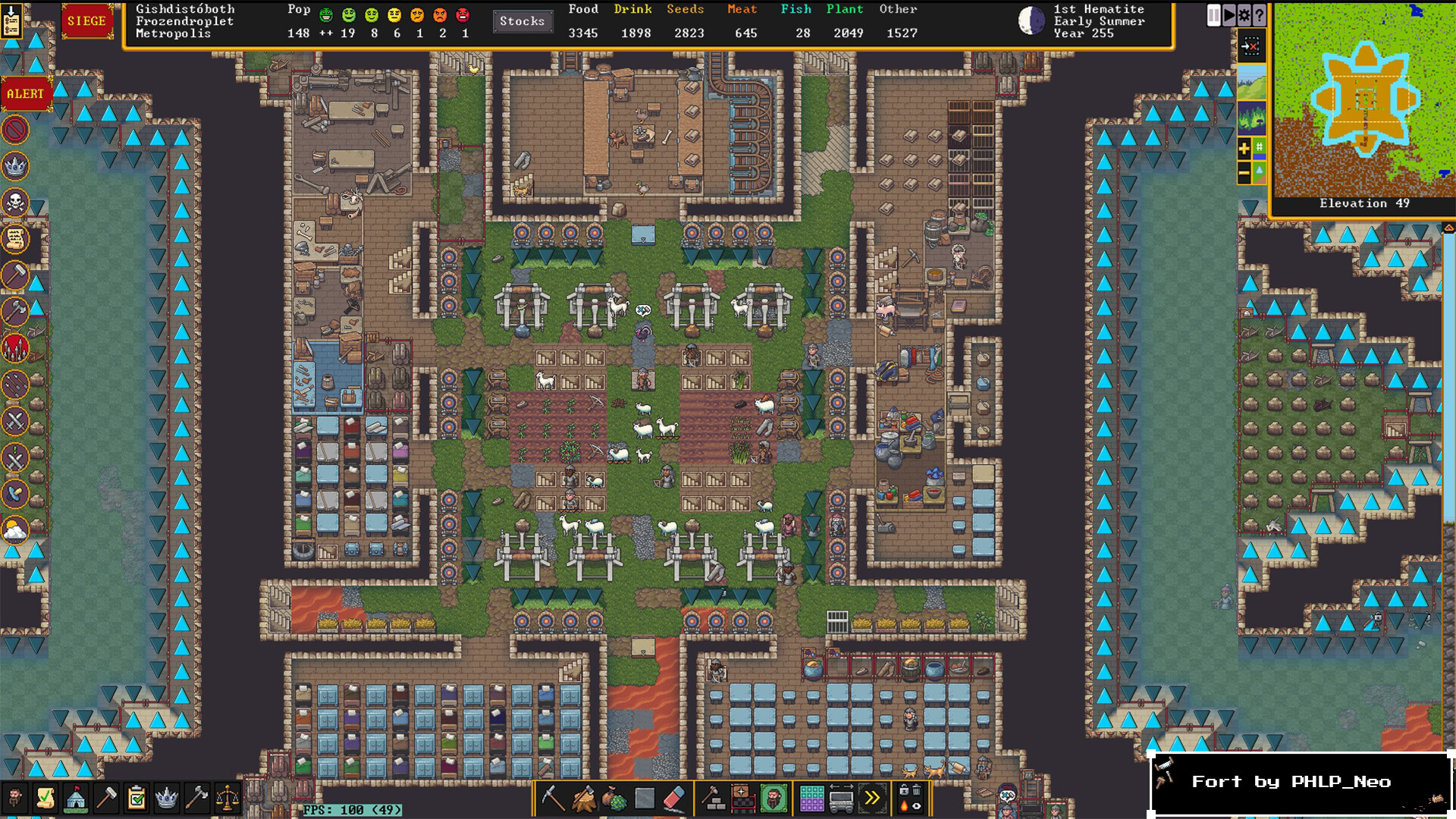
World creation also gives each attempt a different starting point for learning how the simulation behaves. A region rich in stone may invite extensive construction, while its climate, water and neighbors introduce other priorities. In Fortress mode, a new plan can respond to lessons from an earlier settlement: place storage near production, secure food before expanding, or account for the consequences of a mine reaching a dangerous layer. The game does not present one prescribed route through those decisions. Instead, the player builds a community, assigns work, examines the results and adjusts as needs or circumstances change. The Steam release adds graphical presentation, music and in-game tutorials to the long-running simulation, while Bay 12 also maintains a distinct Classic version. The generated history, the lives of individual dwarves and the material systems of the settlement remain central to the experience across its two modes.
- Developer
- Bay 12 Games
- Genre
- Fantasy colony-management and world simulation with strategy elements