
About DUSK
DUSK is a retro-styled first-person shooter set in a rural landscape overtaken by cultists, possessed militants and stranger forces. Across three handcrafted campaign episodes, players sprint, dodge and fight through farms, industrial sites and underground spaces while searching for what lies beneath the earth. Endless survival and online arena modes extend the combat beyond the campaign.
DUSK opens in a corner of rural America where the familiar has turned hostile. Farms, wooded edges, old buildings and industrial sites become corridors into a larger threat beneath the earth. The campaign pits the player against backwater cultists, possessed militants and other unnatural enemies, while its low-resolution textures and angular models recall the first-person shooters of the 1990s. Those visuals sit alongside more modern lighting and effects: a country church can look uncanny, and a dark passage can conceal movement just beyond the reach of a flashlight. The horror comes through place as much as through the creatures, with ordinary rooms and work areas made unsettling by what has happened there. The premise leaves the deeper mystery to unfold across the campaign rather than explaining it all at the outset.
The single-player campaign is divided into three distinct episodes made from individual, handcrafted levels. Its environments shift from rural farms and barns to industrial buildings, apartments and underground spaces, giving each area a recognizable shape and purpose. Levels often link rooms through locked doors, keycards and hidden routes, so progress involves more than moving forward through a firing lane. A colored key can send the player back across a familiar location to find the matching door, while an overlooked corner or concealed passage can reward a closer look. The spaces are compact enough to revisit landmarks while moving quickly, and level timers make that structure legible to players who want to track their runs. Exploration sits beside combat: doors, switches, supplies and secrets make the route through an episode part of the challenge. The route structure also encourages players to search for side passages instead of treating every locked door as a dead end.
Movement is the first tool in a fight. The player can sprint, jump and build speed through bunny hopping, then strafe or change direction to avoid incoming attacks. Cultists and other opponents use close-range strikes or projectiles, so staying mobile helps turn a crowded room into a shifting path through danger. Enemies differ in size, behavior and the speed of their attacks, which changes how a group presses the player. Open ground gives room to circle or draw pursuers together; tight halls can make a quick dodge harder and put several threats in view at once. Explosive barrels provide another way to affect a fight when enemies gather near them. The campaign’s momentum comes from moving through spaces while choosing a useful angle, then switching weapons as the pressure changes.
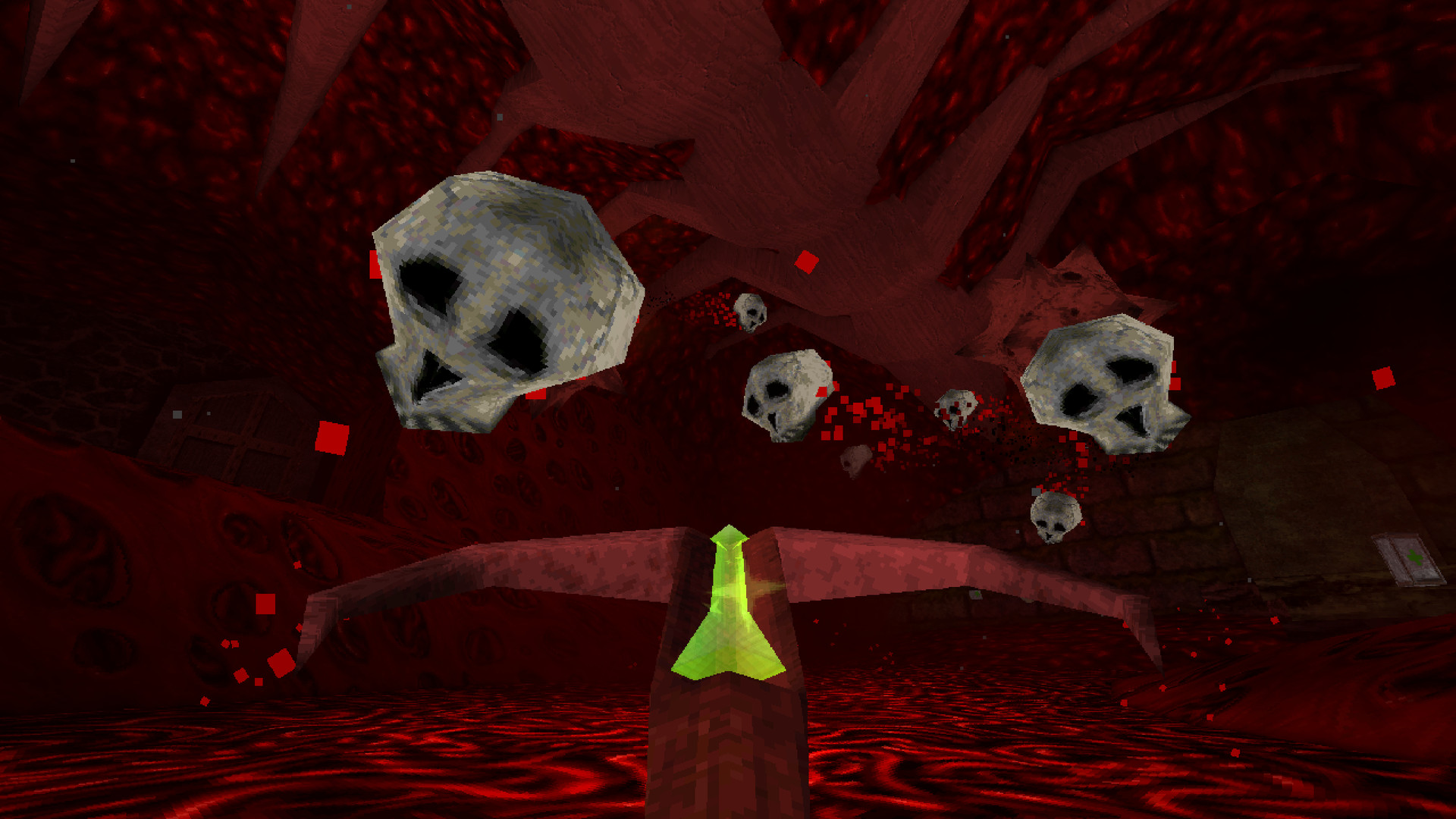
DUSK builds its arsenal from familiar firearms and stranger tools. The player starts with sickles, then gains pistols, lever-action rifles, shotguns, assault and sniper rifles, grenade launchers and rockets. Some weapons can be carried or fired in pairs, while a crossbow or sword changes the rhythm of an encounter. The Riveter fires heated construction rivets that explode on impact, giving an industrial tool an unusual place in the shooter’s arsenal. Enemies and spaces make these choices matter: a rifle offers a different reach from a close-range shotgun, while explosive weapons can hit groups or punish a poorly chosen angle. The game keeps weapons available as part of moment-to-moment movement through each level, so combat is about combining aim, speed and the appropriate tool rather than relying on one attack for every opponent.
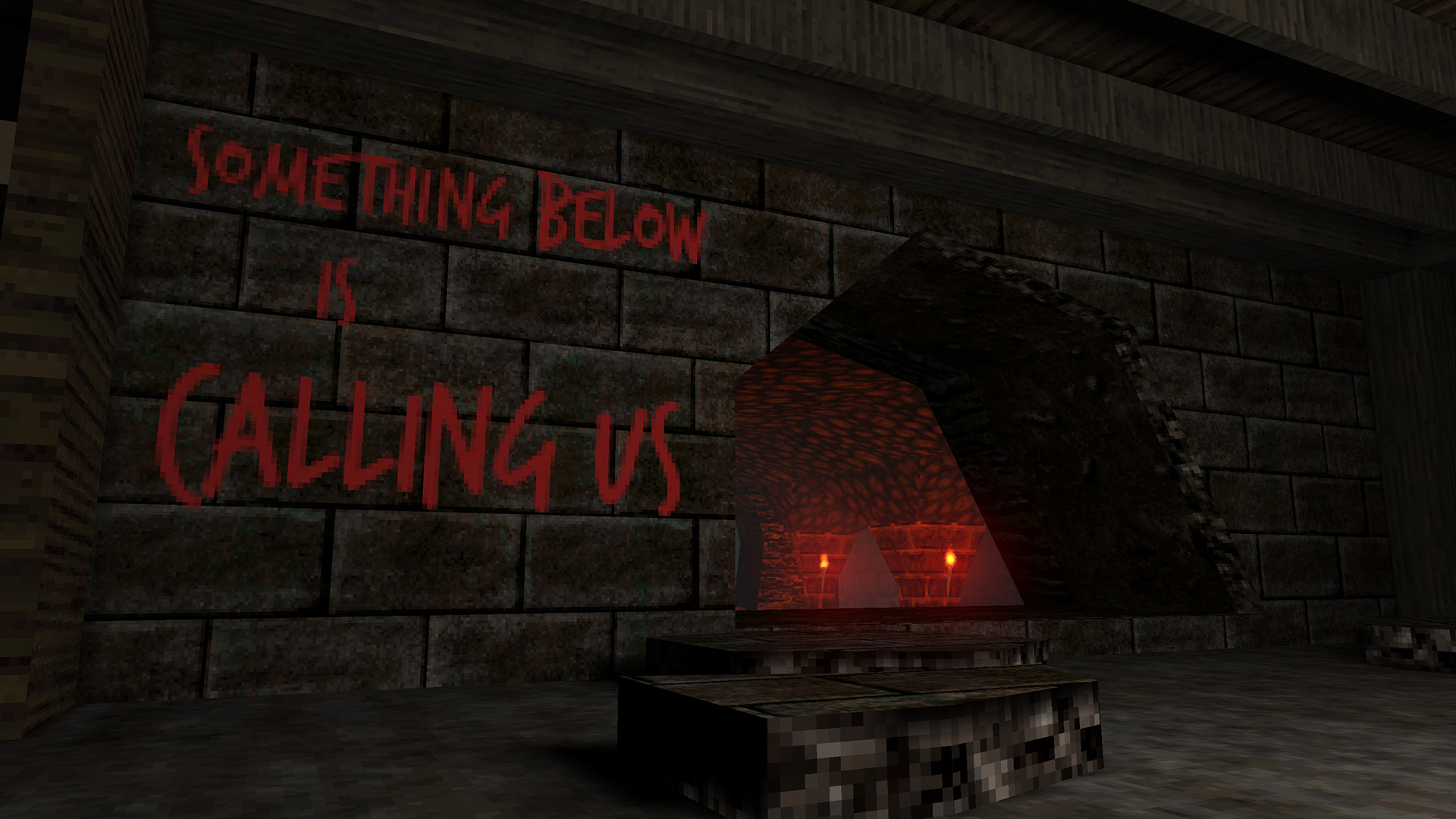
The campaign mixes fast firefights with quieter stretches of searching and unease. A flashlight can matter in dark areas, and environmental clues can hint at threats before they appear directly. A blood-marked wall, an unusual sound or a passage that seems unsafe helps turn navigation into a small act of interpretation. The same level can contain recognizable spaces such as a bar, shop, bedroom or laboratory, along with hidden walkways and passages opened by interacting with the surroundings. Keycards and locked doors encourage backtracking, but visual landmarks help players remember where a route leads. Finding a secret may reveal a useful item or simply expose another strange corner of the setting. The game uses these discoveries to give its horror identity without pausing the first-person action for long exposition.
Outside the campaign, DUSK includes Endless Survival, where enemies arrive in successive waves, and DUSKWorld, its online arena mode. These modes use the movement and weapons in a different structure: survival asks the player to withstand continuing attacks, while arena matches put combat against other players. The Steam Workshop adds community-made maps, and the developer has released mapping tools and updates to the DUSK SDK. DUSK HD is a separate optional free download that refreshes the game’s visuals; it is not a new campaign episode. The original campaign remains the centre of the package, with its three episodes joining rural horror, fast movement and maze-like level exploration. The additional modes and community maps offer other ways to use the same spaces and combat systems after, or alongside, the story.
- Developer
- David Szymanski
- Genre
- Retro-style first-person shooter with horror themes