
About Duck Detective: The Ghost of Glamping
Eugene McQuacklin heads to a luxury campsite where ghostly incidents have made an ordinary getaway into a case. Duck Detective: The Ghost of Glamping sends him to inspect clues, interview a voiced animal cast and complete written deductions. His eager new partner Freddy follows along, giving the solo detective an unwanted second opinion.
A luxury campsite should offer its guests comfortable distance from the everyday. In The Ghost of Glamping, that promise is disturbed by reports of haunting, and Eugene McQuacklin is pulled into another investigation. The setting replaces The Secret Salami's office with outdoor accommodation, camp facilities and people whose reasons for being there do not necessarily match the stories they tell. The case is framed as a no-murder mystery. That is important to the tone: the unsettling signs around the glampsite give Eugene something to investigate without turning the case into a conventional homicide plot. A nearby old sanatorium appears in the developer's account of the premise, adding a place that can feed ghostly speculation before the detective has established what actually happened. The player should expect to sort observation from rumour. Something sounding supernatural may still leave physical clues, while a witness's reaction can matter as much as the incident being described. Eugene's own troubles have travelled with him, including a failed marriage and his dependence on bread. The campsite offers a new case, but it does not magically turn its hard-boiled duck into a more settled person.
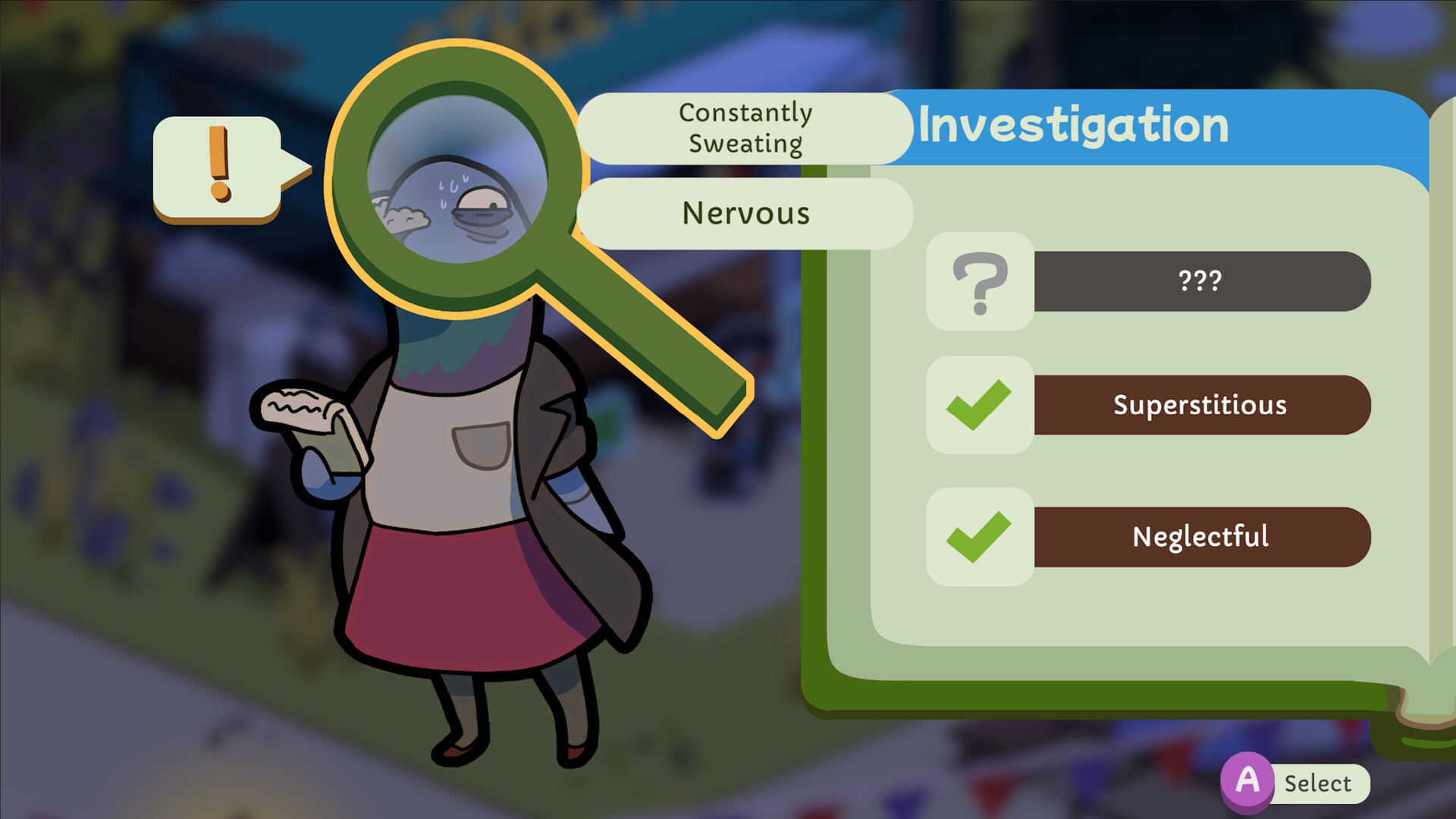
The investigation follows the series' established rhythm of examining an environment, speaking with suspects and fitting evidence into written deductions. The player inspects objects and people for details that an initial impression might miss. Conversations supply names, relationships and conflicting explanations. A deduction sentence with blank spaces asks for the facts that make its claim coherent; arranging words correctly turns a collection of observations into a conclusion. This makes the player an active participant in Eugene's reasoning rather than an audience for a reveal that happens automatically after enough dialogue. A plausible word can still belong to the wrong question, and a sentence that will not hold together can send the player back to a particular scene or speaker. The developer described this as the same logic-puzzle formula as the first case, with a somewhat broader scope and a spookier setting. It remains a compact adventure, officially described as a two-to-three-hour mystery, so the campsite can be learned as a social space instead of an endless open world. The question is what its residents have seen and what each is willing to say about it.
Freddy changes the shape of that work. He is Eugene's new partner, although the arrangement pleases Freddy much more than it pleases the detective. Annika Maar of Happy Broccoli Games describes Freddy as Eugene's biggest fan, someone who follows him around and offers what he believes are useful insights. This gives a familiar investigative action a new social texture. Eugene can no longer carry out every interview as a solitary figure delivering grave pronouncements; another character is present to comment, ask or intrude. Their contrast supplies comedy without replacing the player's responsibility to weigh evidence. A companion's enthusiasm may draw attention to a detail, but the deduction still needs facts from the site and its people. The pairing also gives the standalone sequel its own identity. Returning players recognise Eugene's voice and method, while first-time players meet a clear relationship immediately: a self-serious investigator and a fan who refuses to keep a respectful distance. The resulting dialogue can make even a walk between clues feel like part of the case's character story.
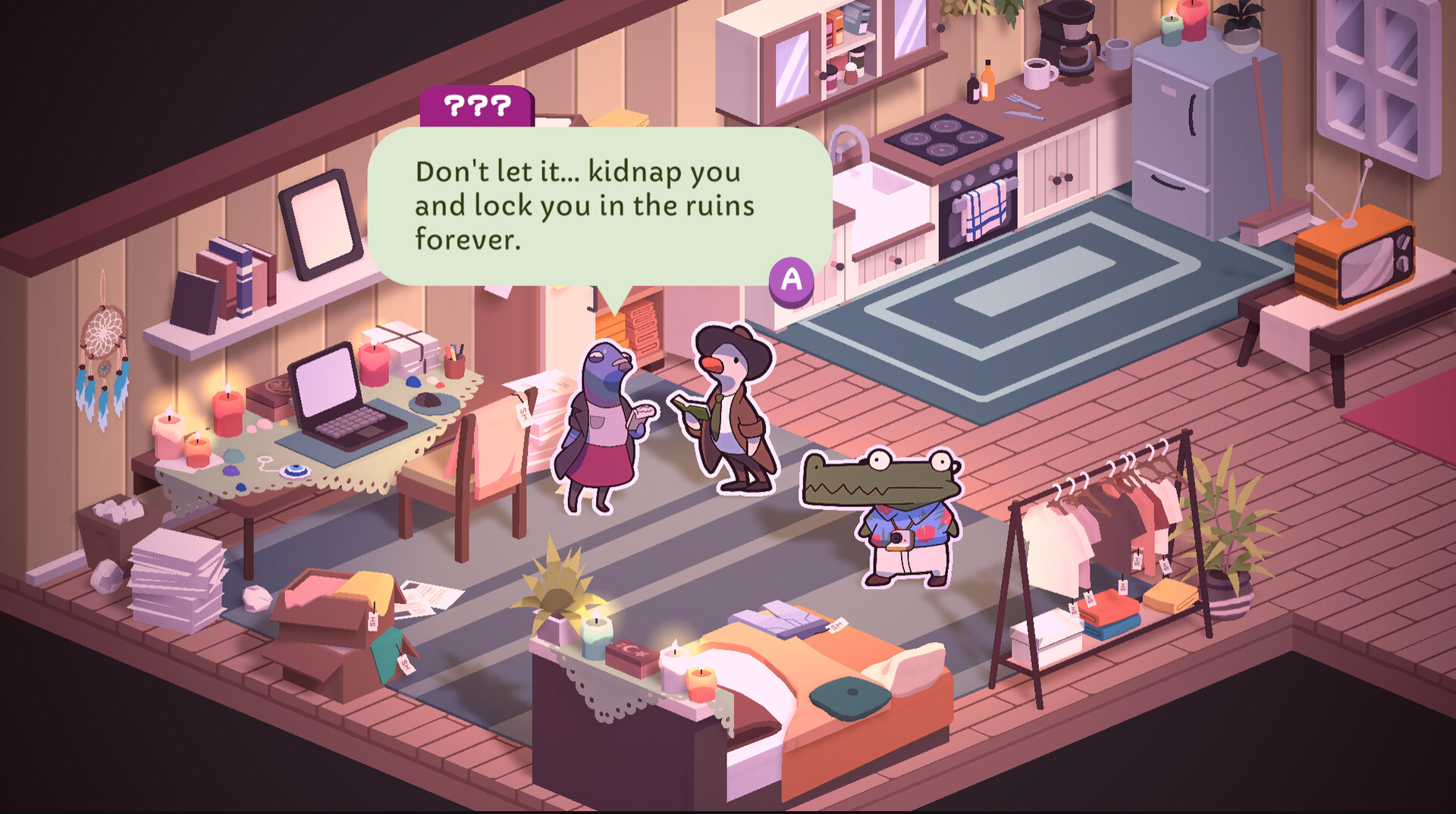
Glamping itself is a useful setting for this sort of mystery. It brings a temporary group of people into shared outdoor space, then lets them retreat to private shelters where objects or conversations may be hidden. A path, a cabin and a communal area have different kinds of visibility. What one guest calls an eerie event might have been seen from another angle by someone else. The developer's description of a campsite beside a haunted sanatorium invites suspicion but does not settle the question of ghosts in advance. The player must work through the evidence rather than assume the genre supplies the answer. The animal cast and expressive art keep the place inviting even while the story reaches for a mild chill. Fully voiced performances help each person sound distinct, which matters in a mystery where a contradiction may emerge from how several accounts fit together. The case uses spooky trappings as a reason to ask precise questions: who was where, what did they actually observe and which claim rests on fear or guesswork rather than a discovered fact? The developer describes a game that is slightly more ambitious in scope than Eugene’s first outing while retaining its logic-puzzle basis. More scope here need not mean a vast map or a maze of unrelated supernatural cases. It gives this small group of holidaymakers and their unsettling surroundings space to make the new partnership useful. An interview can move from a joke about the detective’s reputation to a practical question about a guest’s whereabouts. A second character can comment on that exchange, but the player still has to keep the facts straight. Returning to a space after hearing another account can make an innocuous detail take on a different meaning. The campsite feels like a holiday setting precisely because its comfort can be disrupted: a pleasant place to stay becomes a place in which every strange sound asks for an explanation.
The balance of comfortable and uncanny follows Eugene's own contradiction. He wants the gravitas of a noir detective, yet his bad habits and domestic disappointment remain close to the surface. Freddy's constant admiration threatens that carefully controlled image from another direction. The player sees both the theatrical investigator and the bird who has to keep working through an awkward trip with a partner he did not seek. Happy Broccoli Games has said the companion was a reason to revisit Duck Detective after the first case: Freddy made a second investigation feel different rather than merely moving the original cast to another location. The glampsite supports the change by being less routine than the call centre. Holiday expectations, ghost stories and the neighbouring sanatorium give witnesses more room to interpret an event dramatically. Yet the actual play still rewards careful reading of the small things. A costume, a piece of evidence or an oddly chosen phrase should be judged in relation to the rest of the case, not treated as a supernatural answer by itself.
Happy Broccoli Games developed and published The Ghost of Glamping in 2025, with PC and Nintendo Switch editions. It is explicitly described as a standalone sequel, so a visitor can begin with this campsite case without first solving The Secret Salami's lunch theft. The earlier game establishes Eugene's detective identity, but its culprit and setting are separate from the new inquiry. Store descriptions promise a short, fully voiced story built around interviews and fill-in deductions; the developer's own announcement names Freddy and the no-murder premise. Those are more useful expectations than a detailed list of clues or a claim about how the haunting resolves. The point of arriving at the glampsite is to move from unnerving report to supported explanation alongside Eugene and his unsolicited assistant. Each deduction has to make sense of what people said and what the player can see. The campsite may look cosy, eerie or ridiculous from one scene to the next, but its truth is meant to be assembled rather than supplied by the title. This overview leaves that truth inside the case for the player to uncover.
- Developer
- Happy Broccoli Games
- Genre
- Short comic detective adventure