
About Dreamfall: The Longest Journey
In 2219 Casablanca, Zoë Castillo investigates disturbances tied to a missing person and a conspiracy spanning Stark, magical Arcadia and the mysterious Winter. Her story intersects with April Ryan and Kian Alvane in a third-person adventure that mixes exploration, dialogue, puzzles, stealth and combat.
Dreamfall: The Longest Journey is a separate 2006 sequel to Funcom's 1999 adventure, set ten years after April Ryan's earlier journey. It follows three protagonists whose circumstances and outlooks differ. Zoë Castillo lives with her father in Casablanca, has left university and is trying to decide what to do with her life when strange disturbances and a missing person draw her into a widening conspiracy. April is no longer the inexperienced art student from the first game; she has spent the intervening decade in Arcadia and is now a hardened, disillusioned figure. Kian Alvane begins as a soldier and Apostle serving the Azadi faith, trained to enforce its authority. Their paths connect across worlds, but the game gives each a distinct perspective rather than presenting April's earlier point-and-click adventure again. The story moves between personal uncertainty, political authority and the consequences of a threat whose effects appear in more than one reality. Reza, her former boyfriend, is part of the personal search that pulls her out of the routine she has lost confidence in, even as the danger spreads across worlds.
Stark is a technologically advanced Earth of the future, with Casablanca in 2219 as Zoë's starting point. Its apparent modernity is unsettled by a phenomenon called the Static: connected devices flicker or fail, transport is disrupted and the population cannot identify the cause. The setting also includes the Wire, a pervasive network linking devices, and WATIcorp, a corporation whose robotic products and coming project have major public importance. In Arcadia, magic takes the place of technology, and events are shaped by occupation and resistance. The Azadi Empire has liberated Marcuria from an earlier invasion, yet its armies remain in the city, extend their influence and confront local rebels. Kian's assignment places him inside that system; April's experience gives her a different relationship to it. Beyond these twin worlds lies the Winter, a desolate, uncanny place tied to Zoë's visions. Moving among Stark, Arcadia and the Winter makes the shared crisis legible as more than a local mystery, while keeping each setting distinct in its politics and atmosphere. The Azadi presence makes Arcadia a contested place: April’s resistance and Kian’s duty put them on opposite sides of the same occupation before their accounts begin to converge.
The three storylines alternate rather than allowing the player to choose a permanent character or roam freely between protagonists. Zoë's search takes her across locations in Stark and eventually toward the boundary between worlds; April is involved in the conflict around Marcuria and the Azadi presence; Kian's chapters begin from the position of a committed servant of that power. Each has a different history and ability set, so a scene's playable character changes how it is approached. The story alternates those separate perspectives and locations, with the characters' destinies converging through the narrative. Progress is organized into chapters and authored locations. The player follows routes through cities, interiors and other environments, speaking to people and examining surroundings before the story moves to another character or place. This structure creates contrast between simultaneous developments without turning the game into an open-world quest system. The threads build toward a shared conflict, but the character-specific context affects what the player knows and what a conversation or obstacle means at that moment. Zoë approaches the disturbance as a personal search, April from a rebel position in Arcadia, and Kian from inside the faith and military power enforcing its rule.
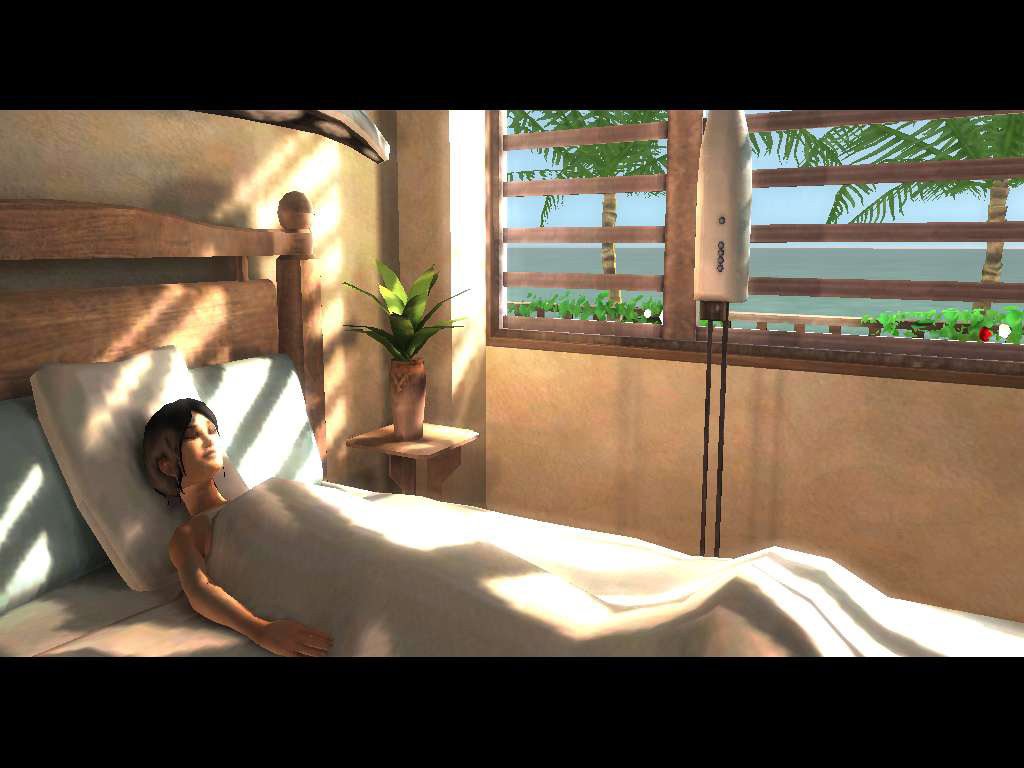
Unlike the fixed-screen, mouse-driven interface of The Longest Journey, Dreamfall uses directly controlled third-person movement through three-dimensional environments. The player can move with keyboard, mouse or gamepad, with the camera arranged behind the active character by default or adjusted in the options. Objects and characters enter a focus field that can scan visible surroundings and surface available interactions, including some actions from a distance. Approaching an object may provide a different action from examining it at range. Movement and observation therefore work together: the player explores a space, focuses on points of interest and chooses whether to inspect, use, take, navigate or speak. The interface maintains an inventory for collected objects and permits some items to be combined, preserving a familiar adventure-game puzzle layer inside the more immediate 3D controls. The mobile device, which becomes a journal in Arcadia, records messages, conversations and diary updates. These tools help the player manage clues across the alternating storylines without reducing exploration to a cursor moving across a still background. That difference lets a player survey a crowded room before deciding which person or object deserves a closer approach.
Challenges vary between conversation, environmental puzzles, item use, stealth and occasional fights. Dialogue choices let the player select a response, and a preview of the highlighted line appears before the player chooses it; a character's tone can be direct or conciliatory, though the narrative remains chapter-led rather than a branching role-playing campaign. Sneaking offers a way to move through some dangerous situations. Combat has explicit light and heavy attacks, blocking and directional dodging, so encounters involve timing and positioning rather than menu-based turns. The game's puzzles also use devices and security systems, including hacking or lock-related tasks, as well as inventory items and environmental clues. These systems are not present in equal measure for every character or every chapter. Instead, each episode presents the interaction that fits its immediate circumstances, shifting between a conversation, a traversal problem, a concealed route or a direct confrontation. The variety gives the player more than one kind of task while keeping the main emphasis on learning what is happening and reaching the next part of the story. The shifting tasks keep a quieter investigation alongside moments when timing, concealment or an immediate physical response matters.
Progression depends on advancing through the three interlocking storylines and using information gathered in one place to make sense of another. Zoë's mobile stores messages and a diary, while the Arcadian journal maintains related story information; both record conversations and can be revisited as new events occur. Inventory objects support a limited set of combinations and uses, while focus-field observations reveal which environmental elements can be examined or activated. Progress follows chapter goals and character-specific actions rather than experience levels or equipment builds. The player learns the controls and context-specific actions as the chapters unfold. Character switches alter the available perspective, while the broader plot gradually connects what Zoë, April and Kian know. Some immediate encounters permit different approaches, such as talking, sneaking or fighting, but the central storyline advances through a fixed sequence of locations and scenes. This makes the journal, messages and dialogue logs practical supports for following a conspiracy that spans people and worlds, not a substitute for a branching campaign map or a collection of optional character quests. Messages and conversation records remain available as the story switches protagonists, helping link a new scene with information learned earlier.
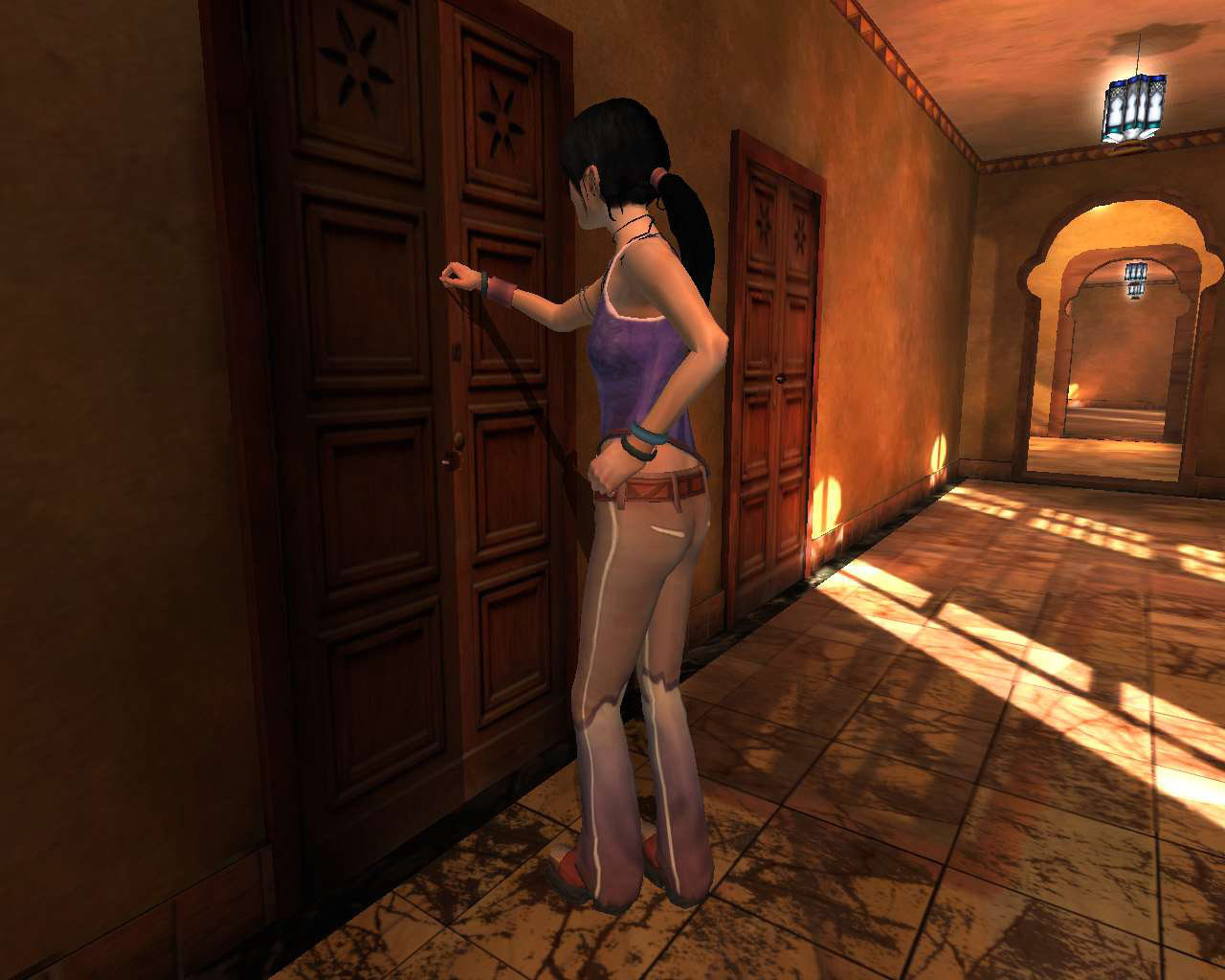
Dreamfall presents its settings as detailed three-dimensional spaces populated by expressive characters, with voiced dialogue and a cinematic soundtrack carrying much of the narrative. The motion and camera distance distinguish it from the earlier game's painted, fixed-angle scenes; city streets, interiors and fantasy locations are explored by moving the active character through them. The game features more than fifty professional voice actors and lets players follow three playable characters across the setting. Funcom released Dreamfall for PC and Xbox in 2006. This PC edition uses directly controlled 3D movement, the focus field and the inventory system to tie exploration to puzzles. Dreamfall is a single-player narrative adventure, not a remake of The Longest Journey or the later Dreamfall Chapters. Its story takes place in the same wider series but uses direct movement, a focus-field interface and action-adventure encounters. The two entries share characters and setting history, yet their interfaces and playable structures are distinct. The changes in control, location and sound mark whose story the player is following while Stark, Arcadia and the Winter draw into one conflict.
- Developer
- Funcom
- Genre
- Single-player third-person adventure with exploration, puzzles, stealth and combat