
About DreadOut
A school excursion leaves Linda and her classmates in an abandoned Indonesian town, where ghosts turn familiar buildings into dangerous ground. She explores in third person, raises a smartphone or SLR camera to confront apparitions and solve puzzles, and follows a story told across three acts in the current original-game package.
A group of school students lose their way on an excursion and arrive at a town that seems to have been left behind. At first, the place invites the ordinary questions of an exploration game: where did its residents go, which building is open, and can the group find a route back? Then the abandoned streets and interiors begin to suggest that the absence is anything but ordinary. Linda, one of the students, becomes the centre of DreadOut's story as her classmates face forces they do not understand. The setting is Indonesian, and Digital Happiness drew on local ghost stories and visual traditions in designing its supernatural world. That background distinguishes the game's spaces and apparitions from a generic empty-town horror premise, though the game is telling its own fiction rather than serving as an account of any real belief. The story begins with a school trip, but the immediate subject becomes Linda's effort to understand what has happened to the group and why the town can hold them there.
DreadOut is played largely from behind Linda as she moves through the town and its buildings. Streets give way to classrooms and other enclosed rooms, so finding a path is as important as facing whatever occupies it. Looking into a room can reveal an object, a clue to a puzzle or a danger that changes how the same space should be crossed. The camera can switch to a first-person view when Linda raises her device, narrowing the scene to what she can frame. That change is more than a way to see an object up close. It asks the player to decide when to stop moving, aim and expose Linda to something she might otherwise have passed at a distance. A town that appears navigable from third person becomes more uncertain when examined through a phone screen. Even an apparently quiet corner can need a second look if its history or its occupant is visible only through the camera-led systems.
Linda's smartphone and SLR camera are her defining equipment. They can be used to detect or confront supernatural beings, placing the act of looking directly inside a dangerous encounter. Rather than gather an arsenal of ordinary weapons, the player learns to read an apparition's position and decide when a shot or flash may matter. The principle is simple enough to grasp, but the framing creates pressure: Linda has to turn toward what frightens her, often within a confined room, instead of firing safely from a distant viewpoint. There are also puzzles to solve between encounters. The game does not reduce a haunted building to an uninterrupted chain of ghost battles; it asks the player to inspect the surroundings, connect evidence and work out a route. A camera may expose a clue as well as a threat. That double use makes it both a tool for understanding the space and a way of surviving it, joining exploration and confrontation in the same gesture.
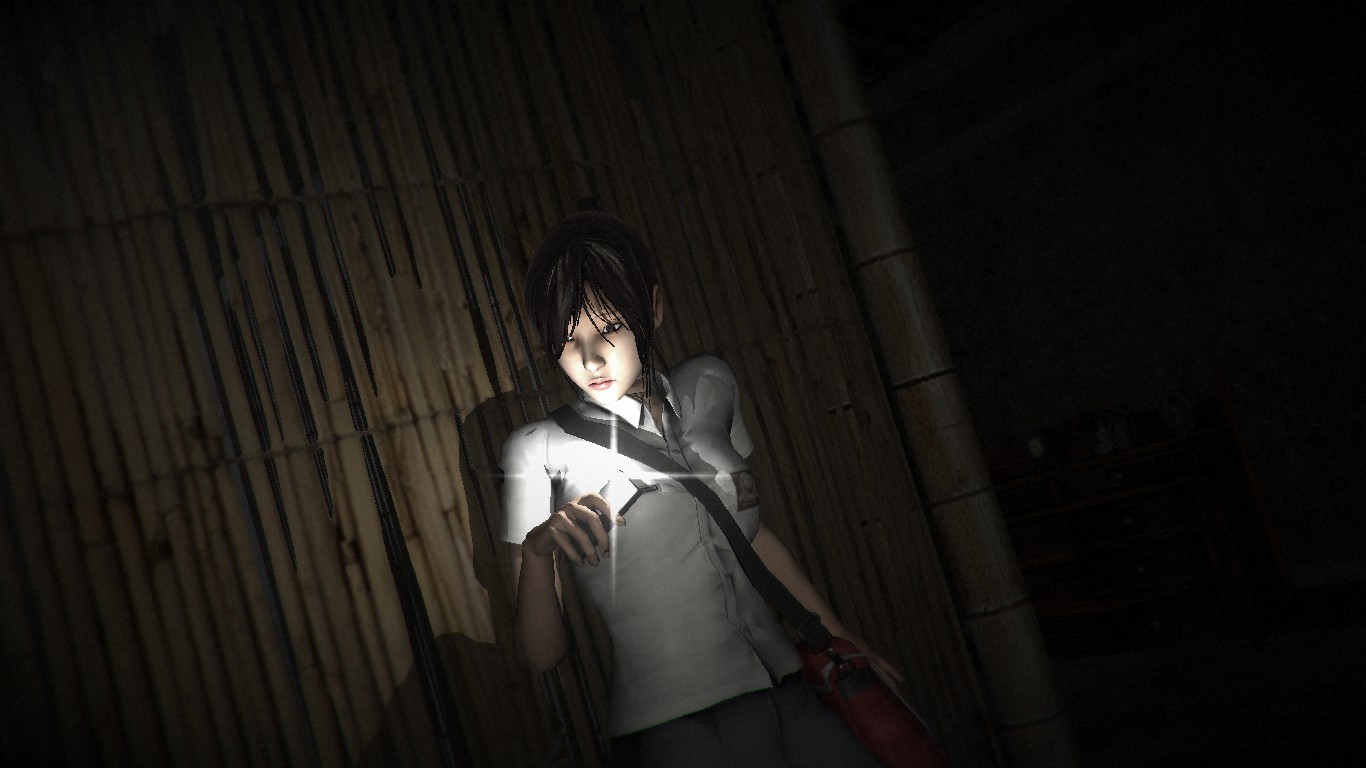
Its school-trip premise matters because Linda is not simply clearing monsters from a map. Other students are caught up in the town's mystery, and the growing suggestion that she has unusual abilities gives her a particular responsibility within the group. The official story describes those powers as emerging within her rather than arriving as an inventory upgrade at the beginning. That leaves the early journey grounded in uncertainty about what Linda can do and what the town wants from its visitors. The school and its surrounding spaces can also carry different associations for a student than for a trained investigator: a classroom should be mundane, yet here it can become a place where records, images and apparitions demand attention. The game draws suspense from that reversal. Rooms associated with schedules, teachers and daily life are examined for traces of a much older disturbance. Linda's immediate wish to get herself and her friends out continues alongside the wider question of what survives in the deserted town.
Death in DreadOut has its own presentation. An early detailed account describes Linda reaching Limbo and searching toward a light after a fatal encounter, instead of moving straight to a conventional game-over screen. The observation comes from the game's initial Act I release, so it is useful for understanding the original design without claiming to describe every later sequence. It fits the broader structure in which moving, seeing and surviving are all tied to a place that behaves unlike a normal town. An encounter is not merely a loss of health against an enemy; it can interrupt an investigation and force a return through spaces whose threats have become more familiar. The same account records that environmental visual clues could matter when working through puzzles. This is why patient inspection belongs to the game as much as reflexes do. The player must keep enough of the town in mind to connect a blocked path with something seen elsewhere, while remembering that the route back may itself be hazardous.
DreadOut was first released in 2014 and its present original-game listing should be read with that history in mind. The current Steam description includes Act 1 and Act 2 of Linda's journey, together with Act 0, which had previously been released as a demo. An old review written while only the first act was available therefore describes a narrower game than a present buyer receives. The listing also mentions an unlockable wardrobe, but it separates the Soundtrack & Manga DLC from the main purchase. DreadOut: Keepers of the Dark is a distinct item in the collection, and DreadOut 2 and the later Remastered Collection should not be mistaken for episodes of this base entry. These distinctions matter for a game with several similarly named products. The developer's discussion of the project also makes clear that its ghosts and camera mechanic were designed together, giving the act of photographing a spirit a reason to belong to this particular setting. The Indonesian influences shape what Linda confronts, but recognising that influence does not require treating every depicted being as a literal reproduction of a traditional story. This profile concerns Linda's original story across the acts now listed for DreadOut, while making no promise that the separately sold material belongs to every edition or storefront.
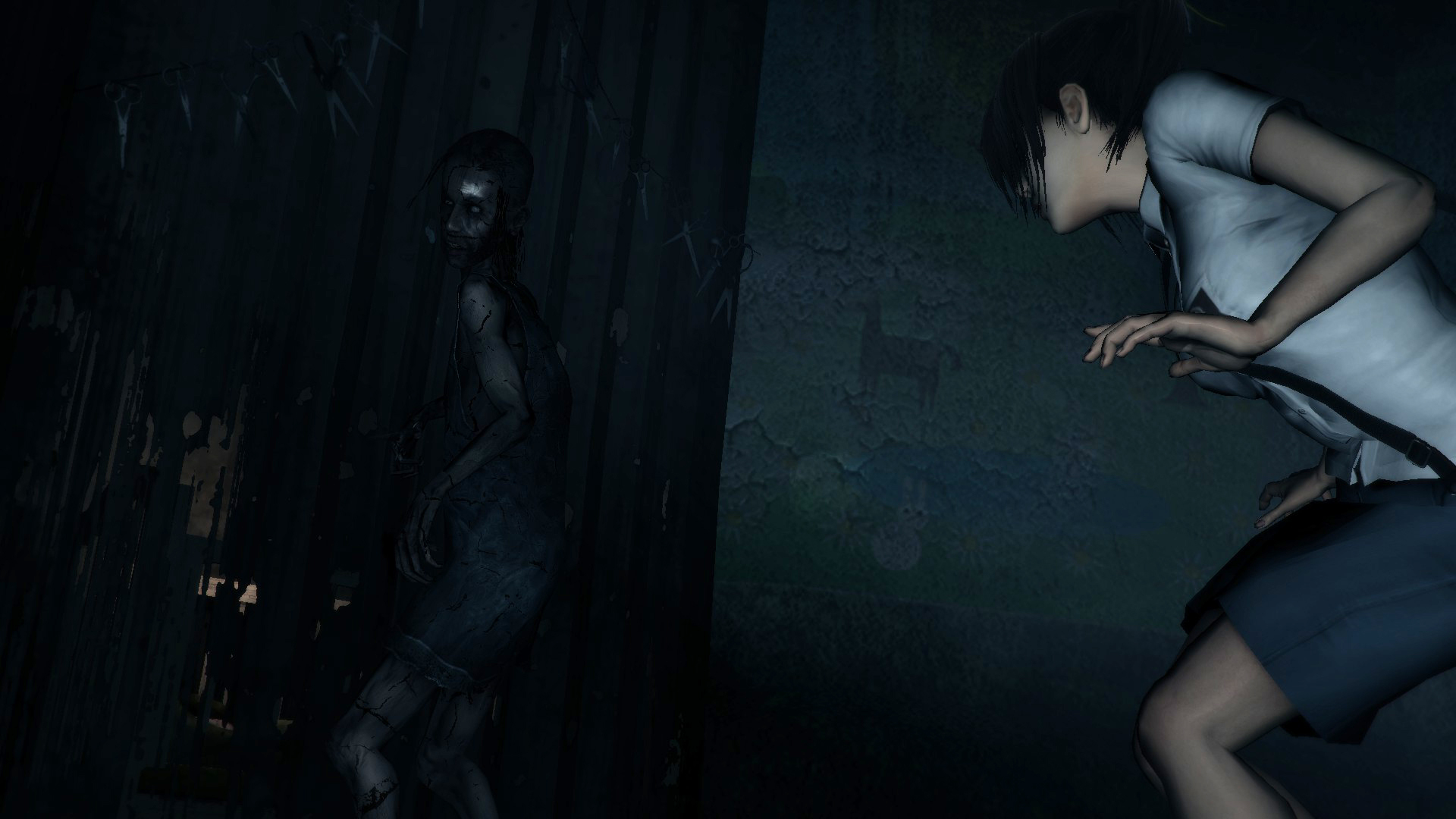
What brings these parts together is the camera's uneasy promise of clarity. The player repeatedly needs a careful, deliberate, often uncomfortable closer view to understand a clue or resist a spirit, but taking that view can make the character feel less free to run. Digital Happiness's Indonesian setting gives the town its own visual and narrative identity, while the transition from exterior streets to enclosed buildings lets the haunting grow more intimate. A student trip that should have been temporary becomes a search through a place whose forgotten details do not stay buried. The acts provide a longer arc for that mystery without changing the central activity: explore, notice what the environment reveals, face the apparitions that impede Linda, and solve enough of the town's riddles to keep her group moving. Someone looking for a straightforward action shooter will find a different rhythm here. DreadOut's horror depends on the cost of stopping to look closely when the thing being studied may be looking back.
- Developer
- Digital Happiness
- Genre
- Third-person supernatural survival horror and puzzle adventure