
About Dread Templar
A demon hunter pursues revenge through a fast-moving, retro-styled first-person campaign. Dread Templar pairs dashing and bullet time with a broad arsenal, upgrade combinations, demanding enemy encounters, and large levels full of secrets, side areas, and puzzles, with a retro pixel-art presentation and soundtrack.
Dread Templar gives its campaign a direct motive: a demon hunter is driven by vengeance and follows that pursuit through hell and other hostile realms. The story frames the journey around a personal vendetta rather than a military operation or a party of heroes. Its world mixes infernal imagery with stranger settings, including frozen pirate ships, while the opposition ranges from demonic creatures to larger boss threats. That clear premise leaves room for the campaign to tell much of its story through places, enemies, and the route forward. The player is always moving deeper into dangerous territory, with each area presenting another part of the hunter’s path toward revenge.
The game uses the first-person perspective and the visual language of 1990s shooters, then adds contemporary movement and a layered upgrade system. Its more than twenty-five large levels include main routes, hidden side areas, secret locations, and puzzles. Exploring every corner can uncover upgrades and other unlocks, so looking around is part of character development as well as navigation. A hallway may lead toward the next combat space, while a concealed passage or puzzle can offer a detour with a reward. This structure gives the campaign two rhythms: quick decisions in active fights, followed by slower searching for switches, clues, and openings that are easy to miss while rushing ahead.
Dashing and bullet time are the central movement tools identified by the game. A dash helps the hunter cross a dangerous space or avoid an attack, while bullet time slows the action and creates a short window to read the battlefield. These abilities matter because encounters bring groups of enemies into arenas where remaining in one place can leave the player exposed. Moving between targets, changing position, and choosing when to slow time are all part of dealing with incoming threats. The abilities also sit within a broader set of unlockable skills, so progression can shape how often they are available or how they support the player’s preferred approach.
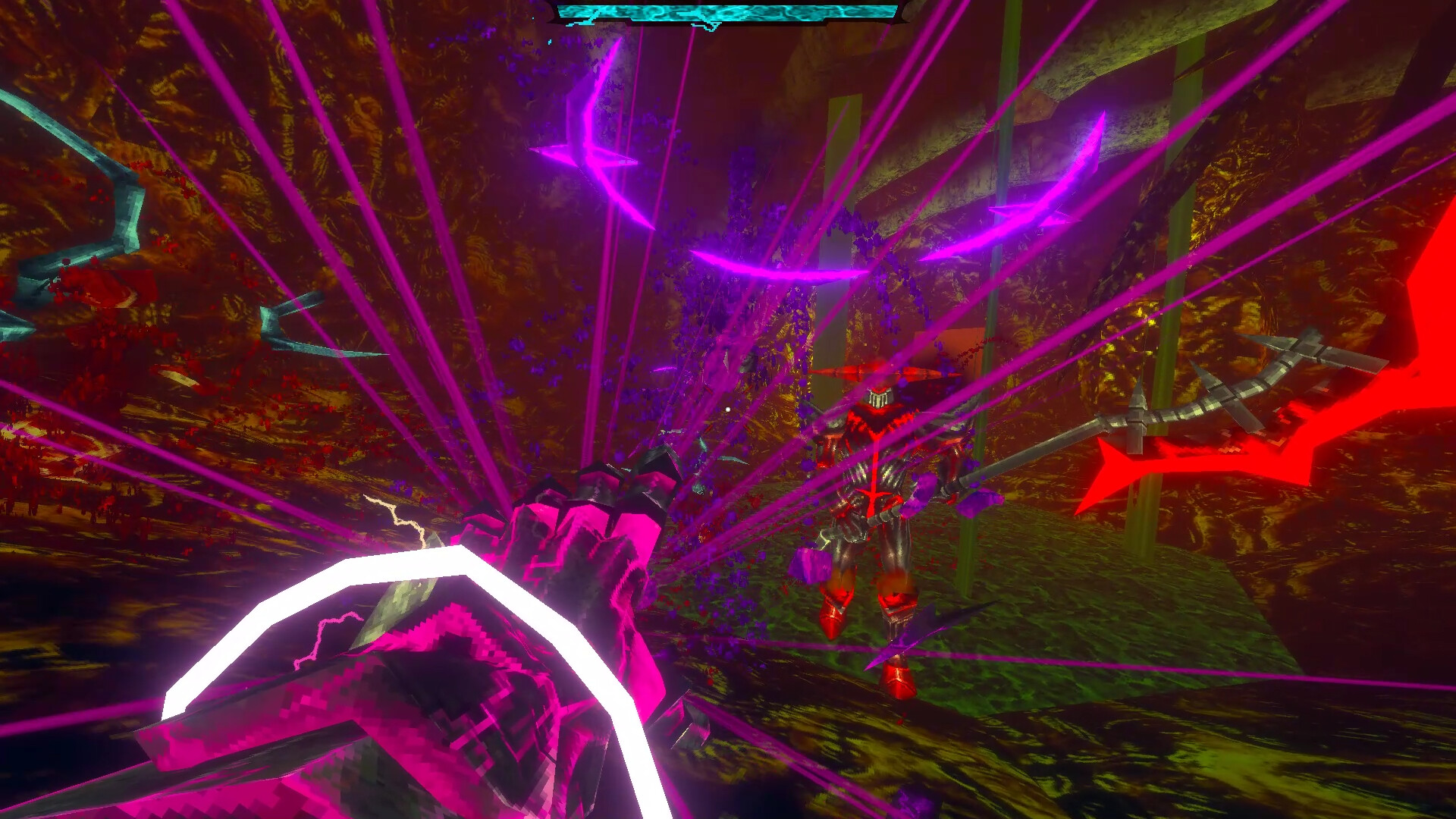
The arsenal contains more than ten weapons, including firearms, infernal weapons, and katana swords. Rather than treating every gun as a fixed tool, Dread Templar lets players unlock and combine more than one hundred weapon upgrades and skills. The combinations can alter weapons and powers, allowing a loadout to develop around a chosen playstyle. This creates a progression loop that links exploration to combat: hidden areas and puzzle rewards can contribute to the range of options available later. The game does not require one prescribed build in its store description; instead it presents experimentation as a way to tailor the hunter’s equipment and abilities while advancing through the campaign.
Enemy encounters draw on a roster of more than twenty types, with up to nine different bosses described for the full game. The variety matters because a crowd can include foes that demand different distances, timing, and attention. A player may need to thin out a group, avoid attacks with a dash, or use bullet time to create room for a more deliberate shot. Boss fights make those movement and weapon choices more focused, asking the player to pay attention to a more powerful opponent while reacting to its attacks. The campaign’s fast pace comes from combining these decisions under pressure, rather than relying on a single weapon or ability for every situation.
Exploration is unusually prominent for a shooter built around fast combat. The levels contain nineteen side areas, more than 170 secrets, and over twenty puzzles, with rewards tied to searching and problem-solving. A hidden location may be tucked away from the route that leads to the exit, and a puzzle can make the player examine a room instead of simply clearing it. Those discoveries help unlock the broad arsenal and skill options, so exploration can change how the hunter is equipped as well as how much of a level is seen. Players who keep moving quickly can stay with the main route, while careful searches reveal more of the campaign’s optional spaces and progression.
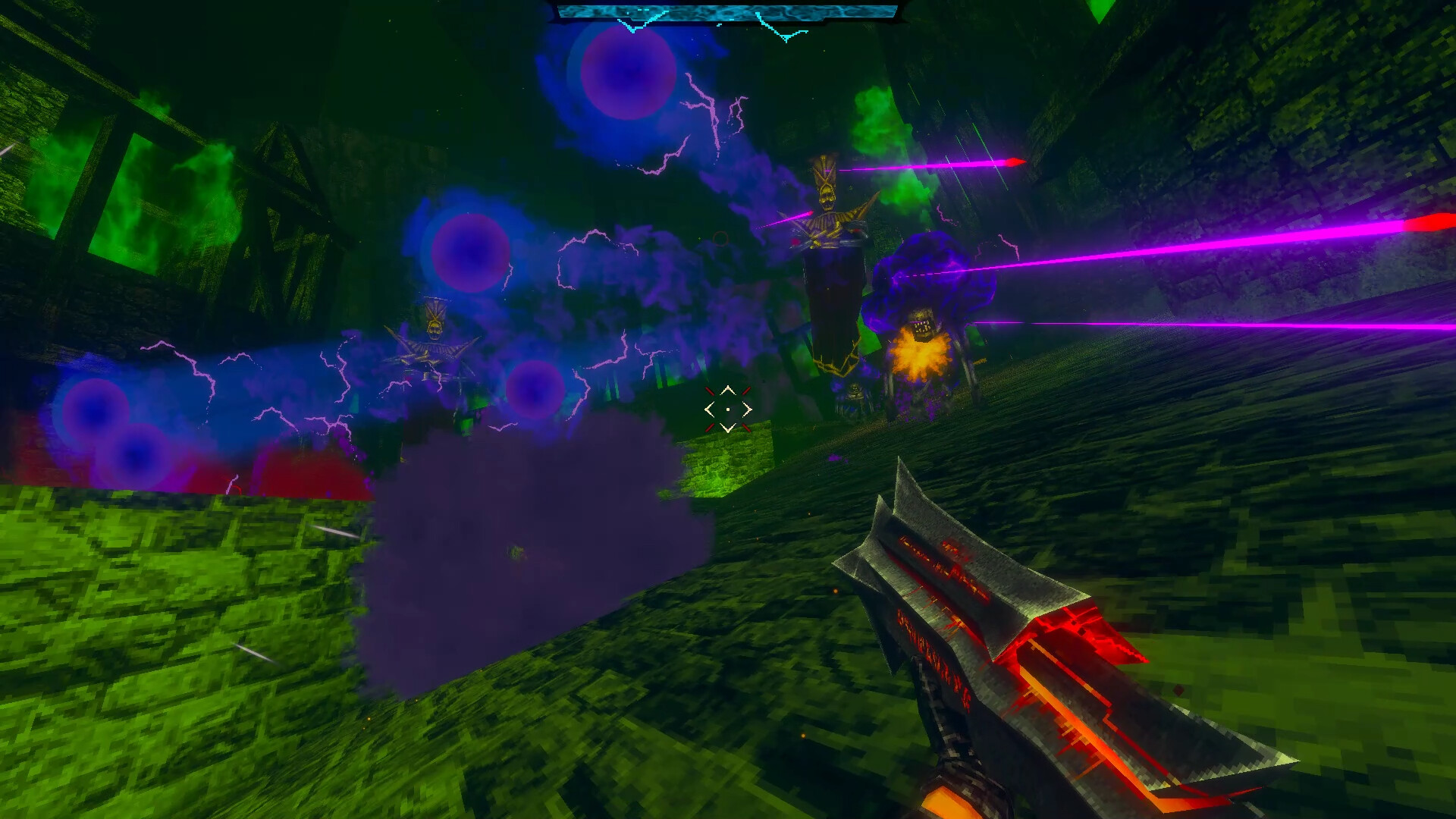
Dread Templar presents its retro influence through handmade pixel-art environments, enemies, and weapons, paired with a heavy original soundtrack. The art direction moves between hellish spaces and distinct campaign locations, while five visual filters let players change the presentation. That look supports the game’s combination of familiar shooter structure and expanded systems: large stages, hidden routes, rapid movement, weapon choices, and increasingly demanding fights. Across the campaign, the central loop stays consistent—advance, fight, explore, and improve the tools available for the next encounter—while the setting and upgrade combinations give that loop room to vary.
The hunter’s combat toolkit also includes ninja equipment and the option to land headshots, alongside firearms and infernal weapons. These details broaden the way an encounter can be approached: precision targeting rewards attention to enemy placement, while the varied equipment gives the player alternatives to standard gunfire. Dashing and bullet time remain useful for creating openings, but the available attacks invite the player to consider where to aim and which tool fits the moment. The campaign’s action therefore draws on both movement and weapon choice, with the hunter carrying a mix of old-school shooter firepower and more specialized equipment into the demonic realm.
- Developer
- T19 Games
- Genre
- Single-player retro first-person shooter