
About Dread Delusion
Humanity clings to flying continents above a world consumed by an undead curse. In this open-world role-playing adventure, explore strange regions, speak with townsfolk, pursue quests, develop practical and magical skills, and decide whether to heal the land or seek power and profit from its ruin.
Dread Delusion takes place in a broken world whose surface is consumed by an undead curse. Humanity survives on flying continents above it, separated from the blighted ground yet still tied to its fate. The setting moves between mushroom forests, undead mausoleums, curious settlements and stranger regions, giving the journey an uneven geography rather than a single continuous kingdom. At its center is a question with material consequences: whether to help heal the land or seek power and profit from its condition. The player character is not assigned a fixed heroic identity by the premise; the world is presented as a place where motives and methods can differ. This tension informs quests, factions and conversations, placing personal advancement beside the possibility of changing the wider world.
The game is an open-world role-playing adventure viewed through a retro-styled three-dimensional world. Its main structure alternates between moving through landscapes, entering settlements, following quests and choosing when to depart from the suggested route. The world-spanning quest gives exploration a larger direction, while self-directed travel lets players investigate places and people in a less linear order. Towns offer practical services: a traveller can rest through the night, trade goods, take on quests and speak with residents. These stops are more than scenery because they connect local concerns to the broader state of the land. The visual language combines fantasy architecture and creatures with a low-resolution, old-school 3D presentation. The setting feels strange through its forms and atmosphere rather than realistic detail.
Character development allows different approaches to the problems the journey presents. The player can build a character to suit a preferred style, and alternatives to fighting include: charming non-player characters, picking locks and drawing on forbidden knowledge. These options make skills relevant beyond combat. A locked route may invite a different investment than a hostile encounter, while conversation can affect what becomes possible in a quest. Decisions shape how the story unfolds, and the world’s factions pursue goals of their own, creating opportunities to join or oppose them. Role-playing is partly about choosing which capabilities to develop and partly about deciding where to apply them. The game does not reduce every obstacle to a single combat check; it frames intelligence, social ability, occult learning and force as distinct tools.
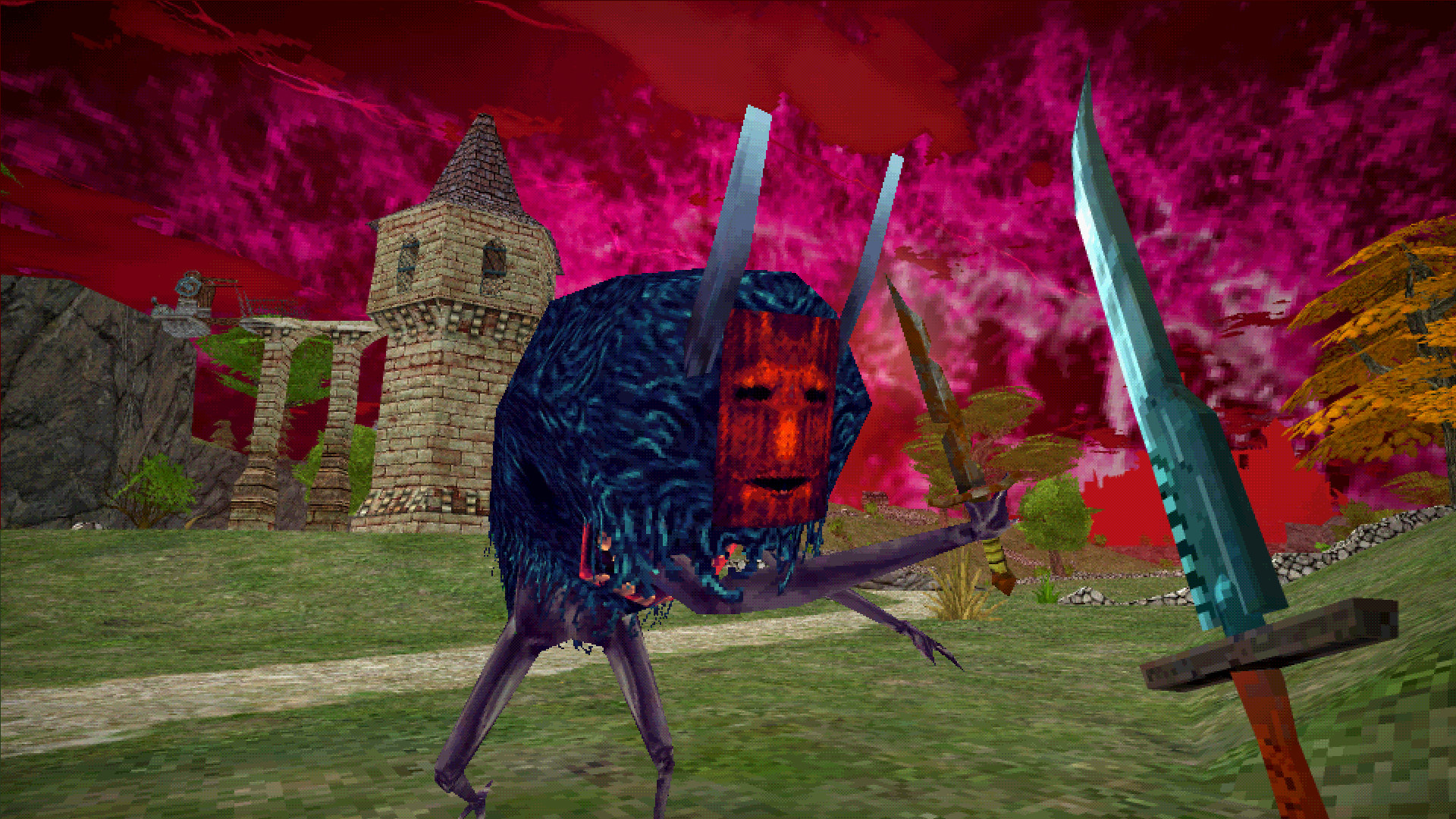
Combat and exploration share the same world, but fighting is only one of the systems available to the player. Swords and other equipment provide direct responses to danger, while spells and potions bring supernatural abilities into encounters. Magic is part of the world’s unsettled condition: strange forces are regulated in some places, feared in others, and available to the character as a means of changing what can be done. Smithing and Alchemy improve equipment. A rusty blade can be developed into a master-crafted clockwork sword, an example that links material crafting to the setting’s mixture of medieval forms and mechanical oddity. Weapons, spells, potions and upgrades give equipment a changing role over an adventure. Their balance depends on character choices and how the player wants to meet challenges.
Quests provide a route into the setting’s people and conflicts, while open exploration leaves room to find locations, secrets and treasure away from immediate objectives. The world includes unique characters, creatures and challenges, and settlements make conversation and trade part of the journey’s rhythm. Factions add longer-running interests to this local scale: their goals can align with the character’s aims or stand in opposition. A decision can therefore affect a particular interaction and the shape of a larger quest. Rather than present every region as an isolated dungeon, the game links travel, community and political allegiance across a world-spanning story. Players may follow quests or simply choose a direction and explore, so pacing can shift between directed narrative and roaming discovery. Returning to settlements can also change what the player knows before pursuing a lead: conversations reveal the concerns of local people, and the choice to accept a quest can draw attention toward a new part of the world. Trade and rest provide practical pauses between those investigations. This gives exploration a social dimension alongside searching landscapes for secrets or treasure, and lets the player alternate between the demands of the wider quest and matters raised by individual communities. That freedom supports both focused pursuit of a named objective and slower attention to places, characters and factional interests encountered along the way, without requiring one fixed order for every discovery.
The central conflict is framed without revealing its resolution. The world faces a spreading undead curse, and people endure the consequences of corruption across the lands above and below. The character's choices can shape whether the land is approached as something to heal or a source of power and profit. That decision gives exploration and faction relationships a moral dimension: a new region can present opportunities to help, bargain, seek knowledge or pursue personal advantage. The story combines local encounters with a wider question about the fate of the world, while leaving the character's precise loyalties open. Dread Delusion's scope rests on exploration, social and practical skills, equipment growth, supernatural power and consequential decisions. Its settlements and landscapes create room to pursue the main quest or follow a separate curiosity, while the character's chosen methods determine how challenges are met.
- Developer
- Lovely Hellplace
- Genre
- Open-world role-playing game