
About DRAGON QUEST III HD-2D Remake
The child of Ortega sets out from Aliahan to finish the quest against Archfiend Baramos in this HD-2D remake of Dragon Quest III. Build a party, cross a world of towns and dungeons, fight turn-based battles and discover optional stories alongside the main journey.
Dragon Quest III HD-2D Remake begins with a task inherited from a parent. Ortega left home to confront Archfiend Baramos and never completed that mission. On the sixteenth birthday of Ortega's child, the king of Aliahan calls the young hero forward and asks them to take up the same quest. The journey forms the narrative beginning of the Erdrick Trilogy, even though Dragon Quest III is the third numbered game. That placement gives the adventure its broad frame: the hero leaves a familiar home, gathers companions and travels outward into a world threatened by Baramos. The story's opening tells players why they are going, while the places and people encountered along the way give the trip its texture. Towns and castles offer information and services; caves and towers draw the party toward discoveries and danger. The destination matters, but learning how to travel and whom to bring is central to the experience.
A party starts to take shape at Patty's Party Planning Place, where the hero can recruit companions for a team of up to four. A companion's vocation determines the spells and abilities they can learn, the equipment they can use and how their attributes develop. Choosing a Warrior or Martial Artist places a different kind of fighter beside the hero than choosing a Mage or Priest; a less conventional role such as Gadabout opens another approach. The remake also lets players customize recruited characters' appearance and voice rather than accepting a fixed look for each vocation. Personalities affect strengths and weaknesses, so party creation involves more than putting a name on a class. The hero remains the fixed point of the quest, but the companions around them can be shaped to answer different battle problems and give the travelling group an identity of its own.
The remake adds the Monster Wrangler vocation to that roster. A Monster Wrangler can use abilities inspired by the world's creatures and help befriend friendly monsters found during exploration. These monsters serve a separate purpose from the four-person adventuring party: after being scouted, they can enter Monster Arenas around the world. An arena team contains three monsters, and the player sets tactics that guide how they fight rather than issuing every action directly. Tournaments have ranks and award prizes, making scouting a reason to notice tucked-away corners of towns, dungeons and the world map. The distinction matters: the Monster Wrangler is a playable party vocation, while the recruited creatures provide an additional activity with its own team-building decisions. Searching for them can pull the journey away from its direct route to Baramos without disconnecting it from the wider world.
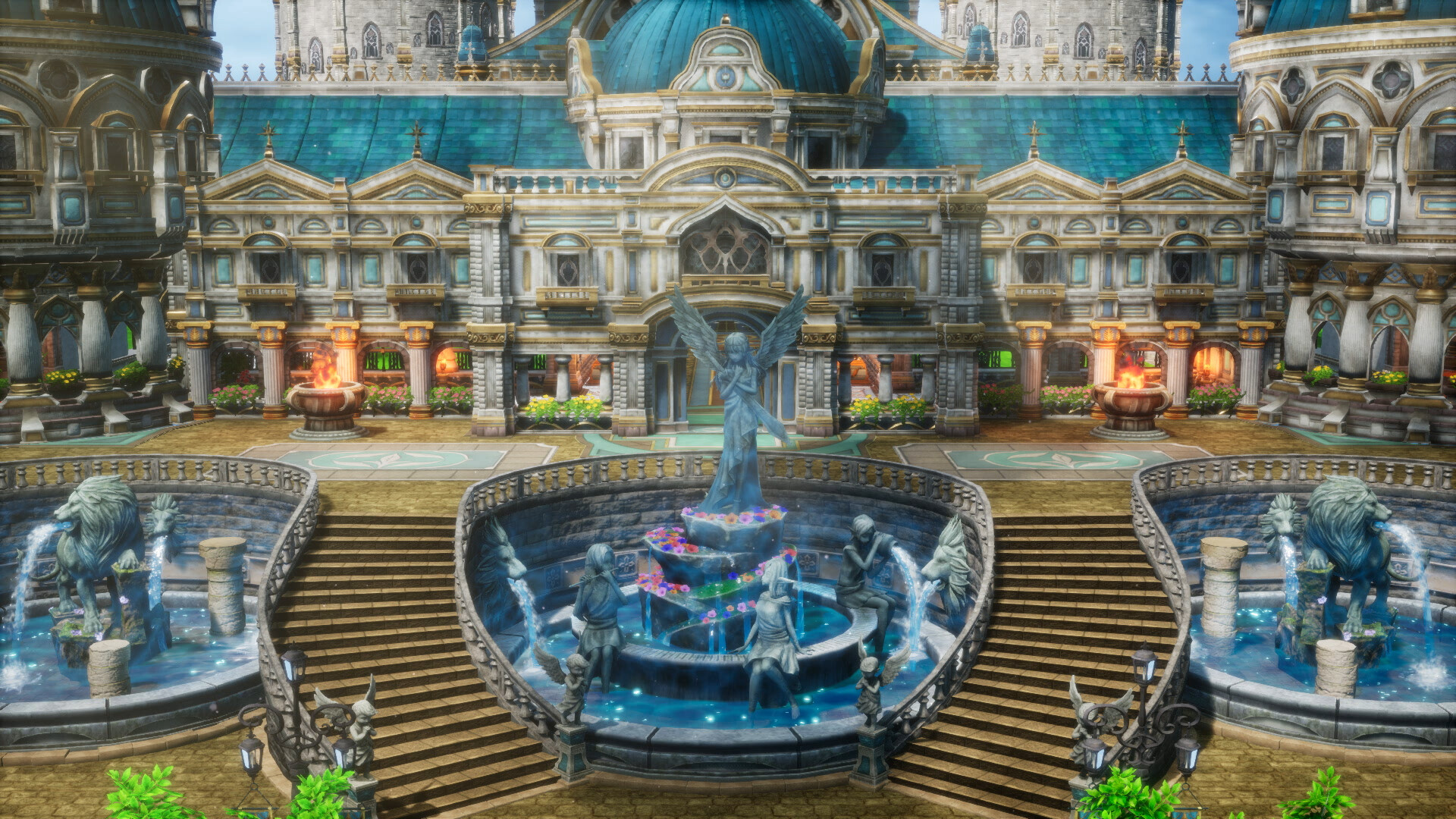
Exploration links the main quest to smaller local problems. Square Enix's example of Norvik shows how this works without describing every place in the game: travel north after Romaria and the party can find a village whose residents are trapped in sleep. One person who remains awake asks for the Dreamstone to be returned to the fairies, sending the group toward the Underground Lake. That is an optional thread discovered through travel and conversation, followed by a dungeon with monsters and valuables. It illustrates the rhythm beyond simply following a destination marker. A village can contain a request, a clue can point to a distant place, and the route to an answer can become its own expedition. Paying attention to locals is useful because information about the world's problems does not all arrive through the main royal commission in Aliahan.
When the party meets hostile monsters, battles unfold through turn-based commands. The player chooses actions for the group and then watches those orders resolve, deciding when to attack, use a spell, strengthen allies or deal with a dangerous enemy ability. Vocations give those choices different shapes: a Mage has offensive spells, a Priest can support the group, and physical fighters offer other ways to handle the same encounter. Abilities and spells expand as the adventure progresses, so the party built early on gains more possibilities rather than repeating a single opening tactic. The remake also offers adjustable battle speed and tactics for companions. A player can retain direct control with Follow Orders or let allies act according to selected priorities, such as conserving MP. These options change the amount of moment-to-moment command required without changing the basic importance of party composition and resource use across a long trip.
The HD-2D presentation rebuilds the landscape around pixelated characters and three-dimensional environments. The remake's producer describes a deliberate effort to keep Dragon Quest's bright colors while giving settlements, dungeons and the overworld more depth. It is not only a sharper view of old tiles: the distances and scale of the map were reconsidered so moving between places would still feel like a journey. Distinctive lighting and color help separate locations, while changes such as evening scenes add another look to inhabited places. That visual treatment supports the game's travel structure. A tower, lake or town is somewhere the party must reach and explore, not simply a backdrop to a battle menu. The world map connects those spaces and leaves room for the player to notice places that are not immediately required by the main quest.
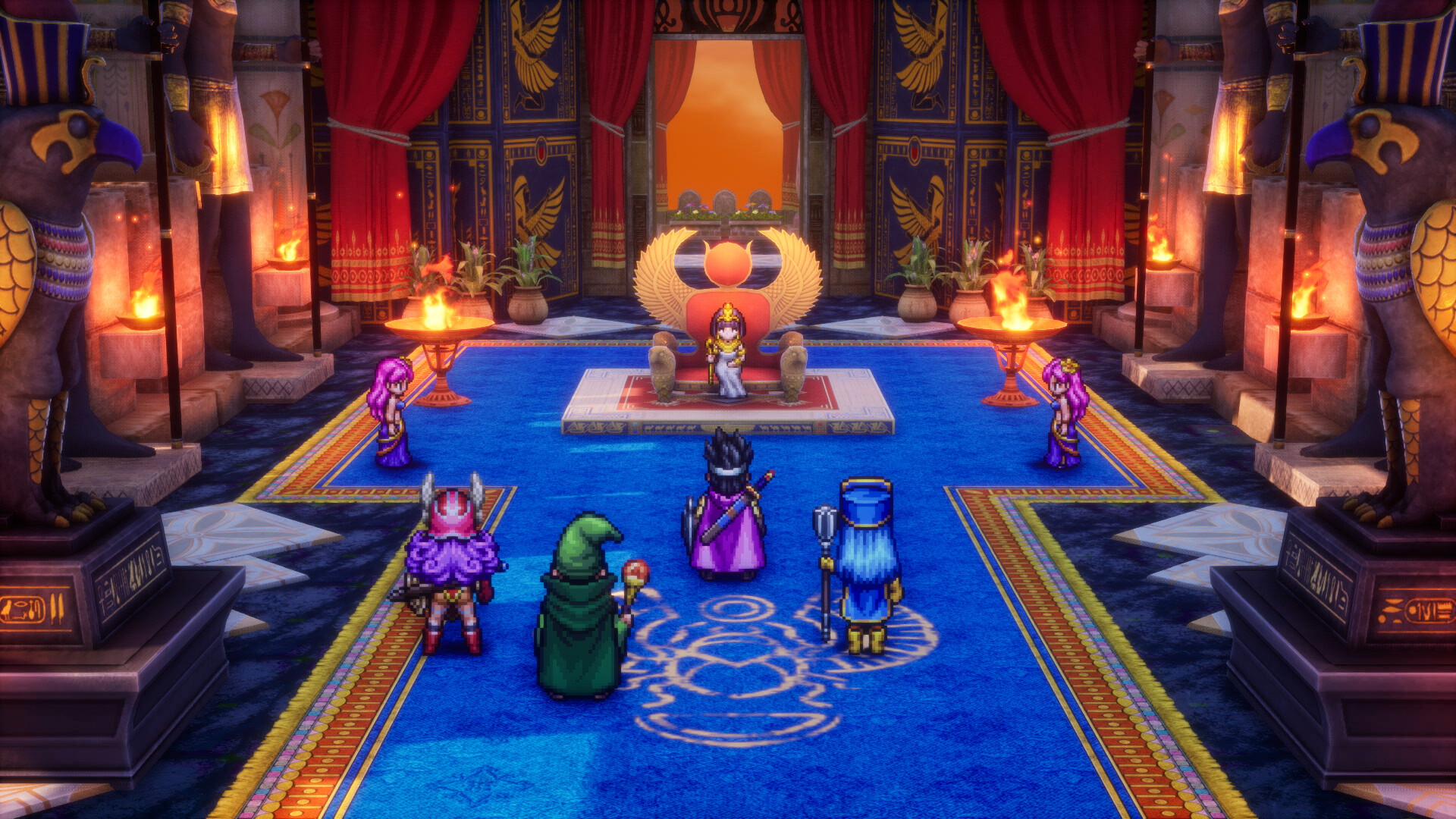
This is a remake of a classic role-playing adventure with additions that affect how it is explored and managed. The inherited mission against Baramos gives the journey direction; party recruitment and vocations decide what tools the group carries into danger; optional quests and monster scouting reward attention away from the direct path. Someone looking at the game for the first time can expect to spend much of their time moving between settlements and dungeons, listening for useful information, preparing companions and choosing actions in turn-based fights. The remake's new character options, arenas and presentation broaden that familiar structure, while the larger story remains the hero's attempt to finish Ortega's task. It is a game about assembling a capable travelling party and understanding a world one stop, encounter and clue at a time.
- Developer
- Square Enix, ARTDINK (Steam listing); published by Square Enix
- Genre
- Role-playing game