
About Dragon Age: Origins - Ultimate Edition
In Ferelden, a new Grey Warden is drawn into a struggle against the returning darkspawn while the kingdom fractures around them. Choose a human, elf, or dwarf hero, shape their history through one of six Origins, recruit companions, and seek allies whose support can determine how the Blight is confronted.
Dragon Age: Origins begins with a character whose place in Thedas is defined through race, class, and background. The player chooses a human, elf, or dwarf, then selects a warrior, mage, or rogue, subject to the setting’s restrictions: dwarves cannot become mages, for example. The defining Origin is not a brief cosmetic biography. Six backgrounds have distinct opening acts, and each establishes relationships and circumstances that continue to shape later interactions. A human noble from House Cousland, a city elf from Denerim, a Dalish elf, a dwarf noble or commoner, and a mage from the Circle each enter Ferelden’s crisis from a different social position. After those beginnings, the stories converge on the Grey Wardens, an order that stands against the darkspawn. The larger conflict combines the approaching Blight with a kingdom divided by civil war, giving the Warden a practical aim: gather support across Ferelden and face the threat to the land.
The journey develops through a chain of substantial regional quests and smaller requests rather than a single uninterrupted march. Characters can travel between available locations, speak with locals and party members, inspect places for clues, and decide which leads to pursue. The journal tracks active tasks and an in-game reference records information about the setting; both help connect new names and events to the wider conflict. Many quests permit more than one path or outcome, so investigation and conversation can matter as much as clearing a room. Ferelden’s political and cultural divisions are part of the practical problem: potential allies have their own interests, histories, and grievances. The Warden’s answers can open a route, complicate a negotiation, or leave a dispute unresolved. The game keeps the central danger in view while allowing the order of regional business and the way it is handled to reflect the player’s decisions.
Conversation is an active system for gathering information and changing the course of encounters. Dialogue choices can ask for help, challenge a speaker, reveal the Warden’s point of view, or bring companions into the discussion. The Coercion skill supports persuasion and intimidation, but the checks draw on different attributes: persuasion uses Coercion and Cunning, while intimidation uses Coercion and Strength. A failed attempt can worsen a situation, so a forceful line is not automatically the most effective one. Other dialogue options may depend on an attribute such as Cunning and can expose a distinct observation. Choices do not always announce their consequences immediately; some affect later events. The player also needs to return to companions and talk with them directly, since their knowledge and reactions add context to the group’s changing circumstances. These exchanges make character development visible outside combat, while the Warden’s choices help determine what cooperation looks like in a kingdom under pressure.
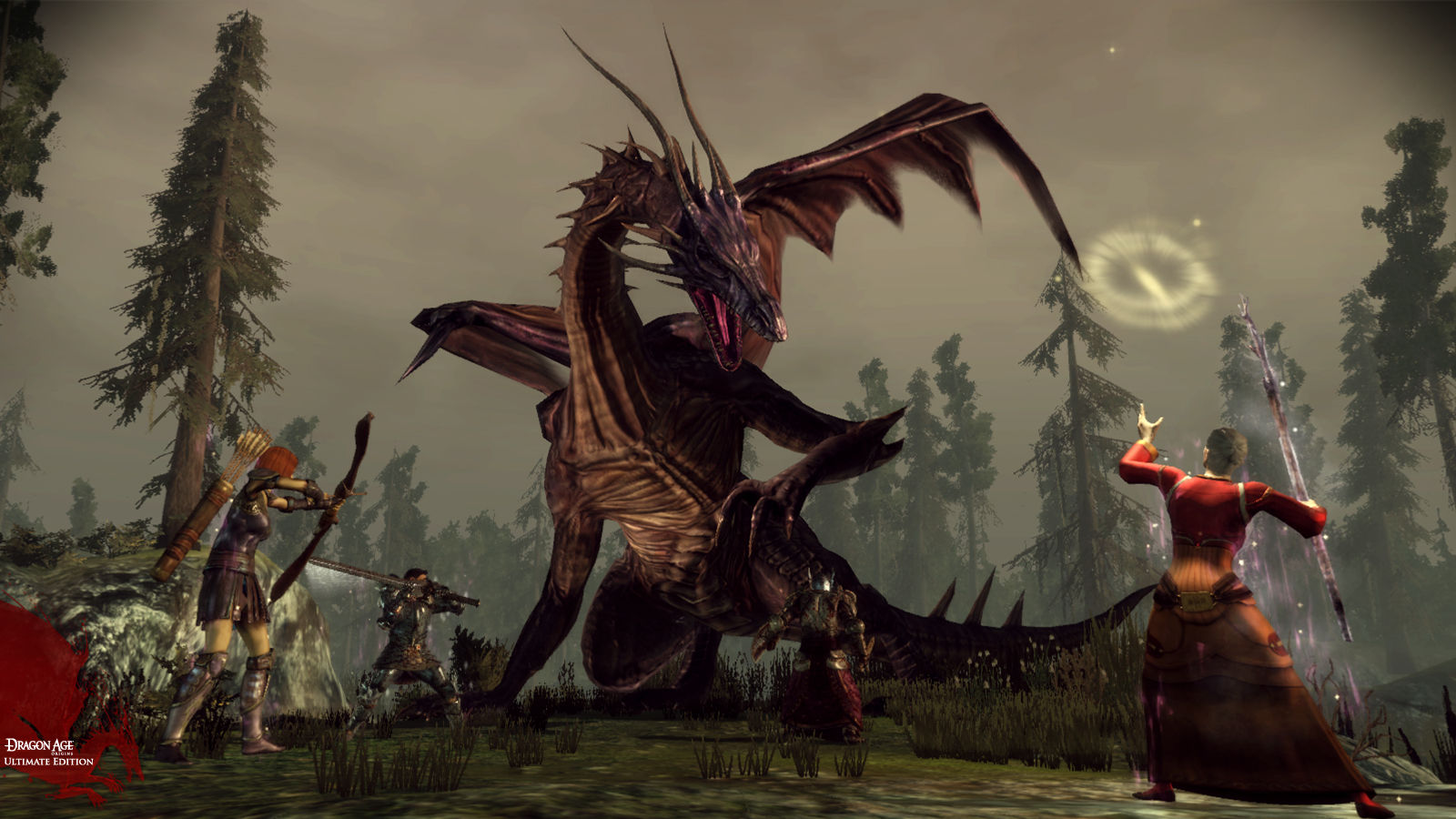
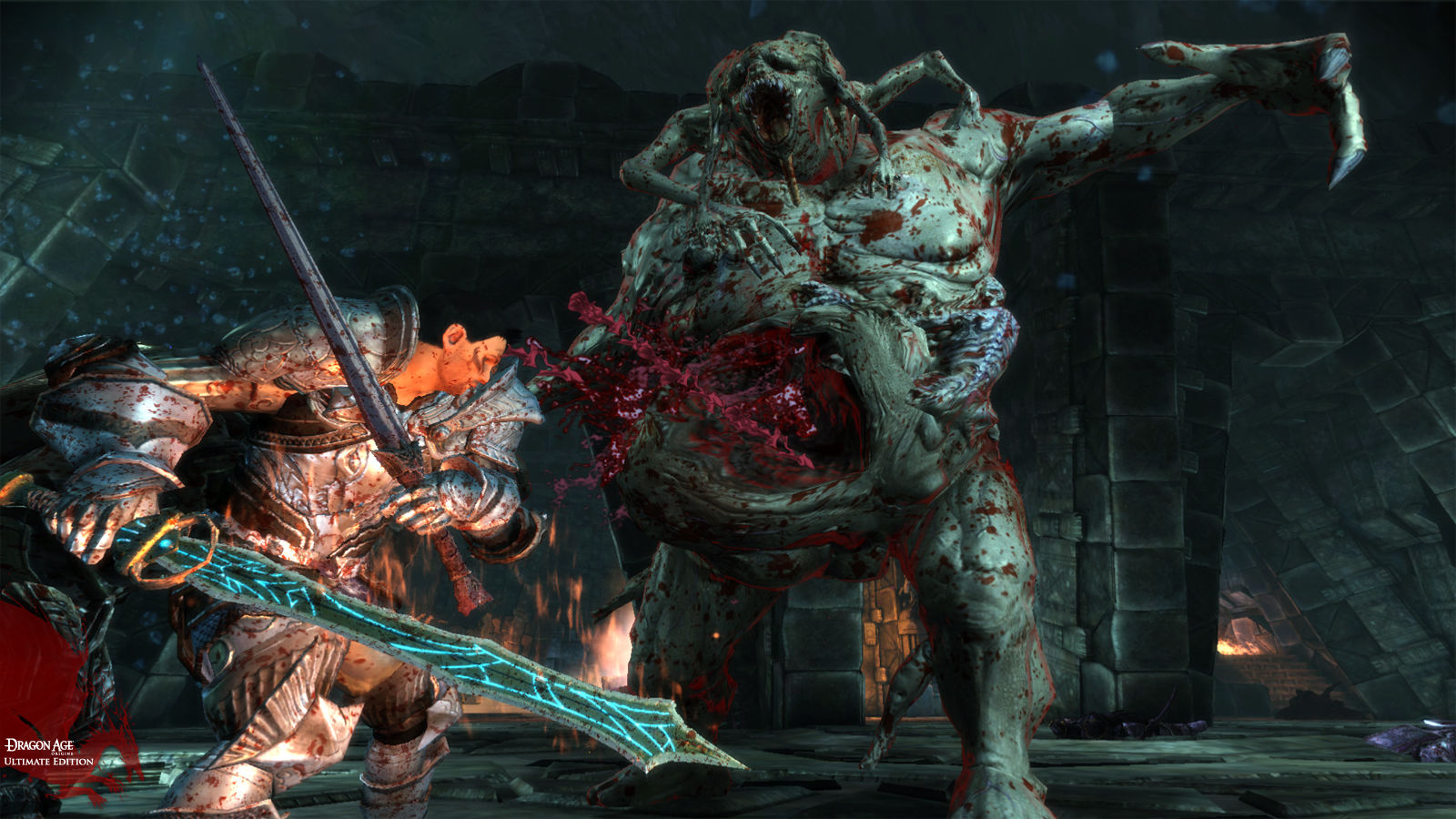
Combat is built around a party of four drawn from the Warden and recruited companions, with warriors, mages, and rogues contributing different tools. Warriors can hold ground and use weapon talents; rogues bring stealth, lockpicking, disabling effects, and backstabs; mages attack at range, support allies, and manipulate fights with spells. The player can pause to issue orders, change the active character, and inspect the battlefield from a pulled-back view. Stamina or mana pays for abilities, while health and defensive attributes determine how long a character can stay exposed. Position and target choice matter because enemies can disable party members, and area spells may catch allies as well as opponents. Spell combinations can produce stronger or unusual effects when particular spells interact. The result is a combat loop of reading a fight, choosing a response for each role, and adjusting when an enemy’s threat or a spell’s side effect changes the plan.
Companion behaviour can be shaped through the tactics screen. Each character follows a prioritized list of conditions and actions: when a condition is true, the associated action is triggered; otherwise the character checks the next rule. A player can make a companion use a healing poultice below a chosen health threshold, target a particular enemy type, or use an available talent in response to a situation. Presets such as Healer, Defender, Archer, and Scrapper provide starting rules, and new options become available as characters learn spells and talents. General behaviour settings cover how a companion approaches enemies, maintains distance, pursues targets, or switches between ranged and melee weapons. The controlled character still requires direct commands, but these settings let the rest of the party respond consistently while the player focuses on a priority target. Tactics slots expand through leveling and Combat Tactics ranks, so this system grows alongside the group’s combat vocabulary.
Progression makes the party’s specializations more distinct. Gaining levels grants points to distribute among attributes and unlocks skills, talents, or spells, with class and attribute requirements affecting access. Warriors, rogues, and mages develop through different ability trees, while specializations add a further focus such as a Champion, Arcane Warrior, Assassin, or Spirit Healer. Resources shape those choices in play: Willpower expands stamina or mana for repeated abilities, Magic improves a mage’s spellpower and also strengthens healing items, and Cunning helps with advanced skills and persuasion. Equipment adds another layer. Weapons and armor vary by material tier, some matching pieces provide set bonuses, and items include combat supplies, crafting ingredients, quest objects, and gifts. A rogue can open many locked containers through lockpicking talents and Cunning, making party composition relevant during exploration as well as battle. The base campaign ties these systems to the Warden’s effort to bring a divided Ferelden together before the Blight overwhelms it.
- Developer
- BioWare
- Genre
- single-player party-based role-playing game