
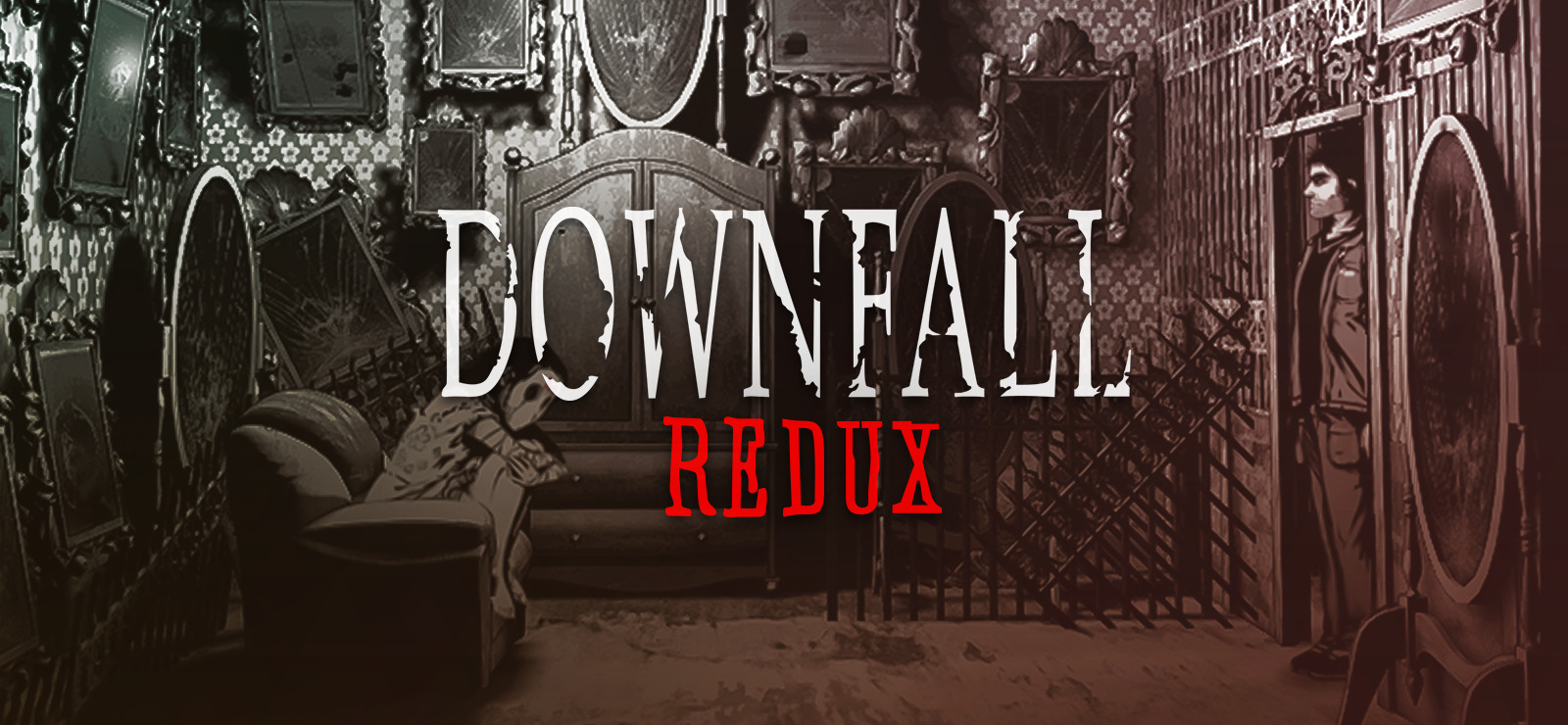
About Downfall
Joe and Ivy Davis take a getaway to the Quiet Haven Hotel hoping to repair their marriage. In the 2016 Downfall remake, the trip turns into a horror story about Joe's attempt to find and save Ivy, with his choices shaping the path. Direct keyboard movement, dialogue, inventory puzzles and disturbing encounters replace the original game's cursor-led interface.
Joe and Ivy Davis arrive at the Quiet Haven Hotel with a relationship already under strain. Their getaway is meant to put distance between them and the arguments of ordinary life, but the hotel gives their difficulties a harsher and stranger setting. The opening question is personal before it becomes supernatural: can Joe still reach the person he came with, and what does he understand about the distance between them? As the trip turns threatening, he pursues Ivy through spaces whose appearance and inhabitants make it harder to trust a simple account of events. The game introduces love, madness and murder without supplying a reliable outside narrator to sort each one into a fixed explanation. Joe can present himself as devoted, skeptical or embittered, and the player has a part in determining which responses he makes when the hotel pushes him. That does not turn him into a blank hero. He has a marriage, a voice and a history with Ivy before anyone takes control. The question of what kind of man he is becomes a thread through the journey, as consequential to the shape of its horror as any individual locked door or frightening encounter.
Quiet Haven works as more than a place to sleep between incidents. A hotel promises orderly rooms, staff and a route back to the street, so each departure from that ordinary pattern can be felt. Joe moves through the building and the wider locations that the chapters open up, encountering people whose words may help him, unsettle him or make his account of the trip less certain. The remake's creator describes its chapters as shifts in place and narrative direction, not one corridor repeated until a final confrontation. That gives the player a reason to notice where an event happens and who seems at home there. Joe's search for Ivy is sustained by these immediate tasks: speak to someone, understand what is obstructing progress, inspect what the room offers and work out whether something carried earlier belongs in the present situation. The hotel keeps drawing the marital story into the horror. If Ivy were merely an absent prize, the search would lose its emotional stakes; the 2016 rewrite gives her more character and makes the effort to reach her part of Joe's difficulty in understanding their relationship.
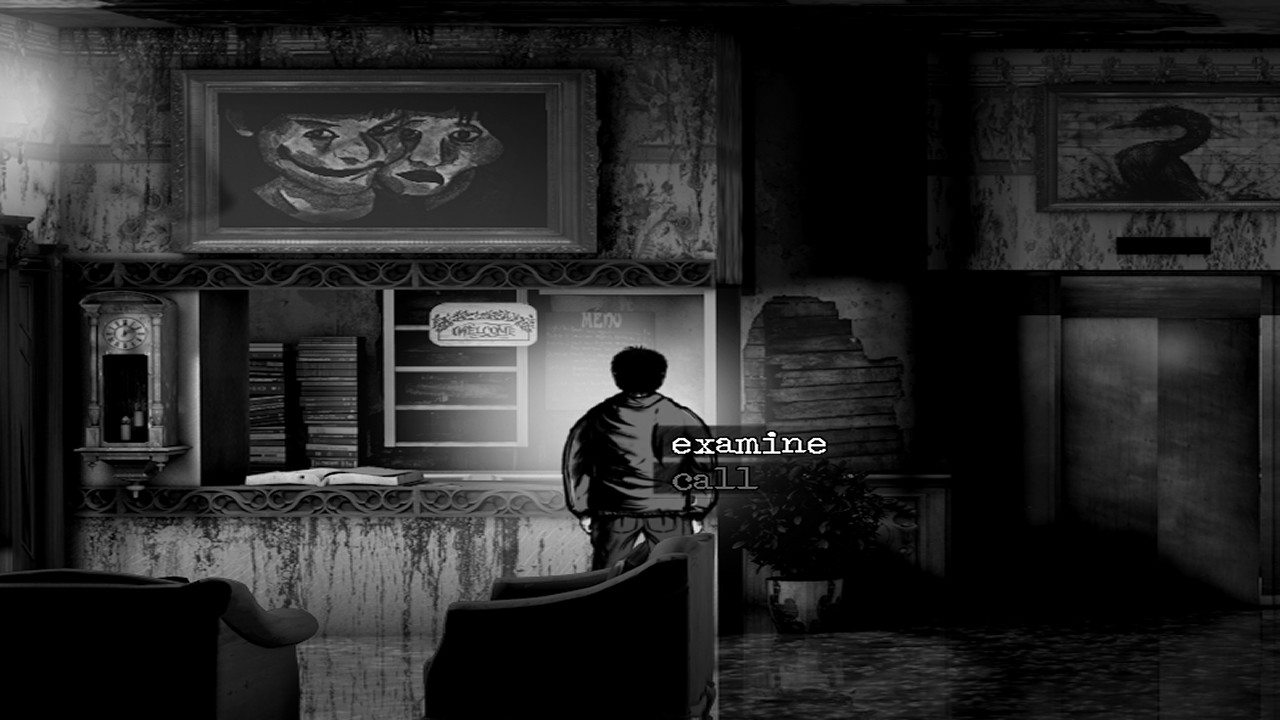
This version of Downfall uses direct keyboard control, following the interface Harvester Games developed for The Cat Lady. A player moves Joe through a side-on scene with the arrow keys and calls up interactions when he approaches a person or object. The official manual says a mouse is not required. This distinction matters because the 2009 original was a more conventional point-and-click adventure, and storefront genre tags can make the remake sound mechanically identical to it. Direct movement allows an event to begin as Joe walks into a region; it places the player in the room rather than at a detached cursor over it. The puzzles still ask for close attention to objects, conversations and timing. An item acquired in one place can become relevant elsewhere, while another clue may change how a line of dialogue is read. The creator says the redesigned interface affected the puzzles and that the rewrite was broad, so this is more than the earlier game with a new coat of paint. Knowing the control scheme also prevents a false expectation of fast combat. The old version's boss battle was deliberately removed; the remake is built around exploration, story decisions and adventure-game problem solving.
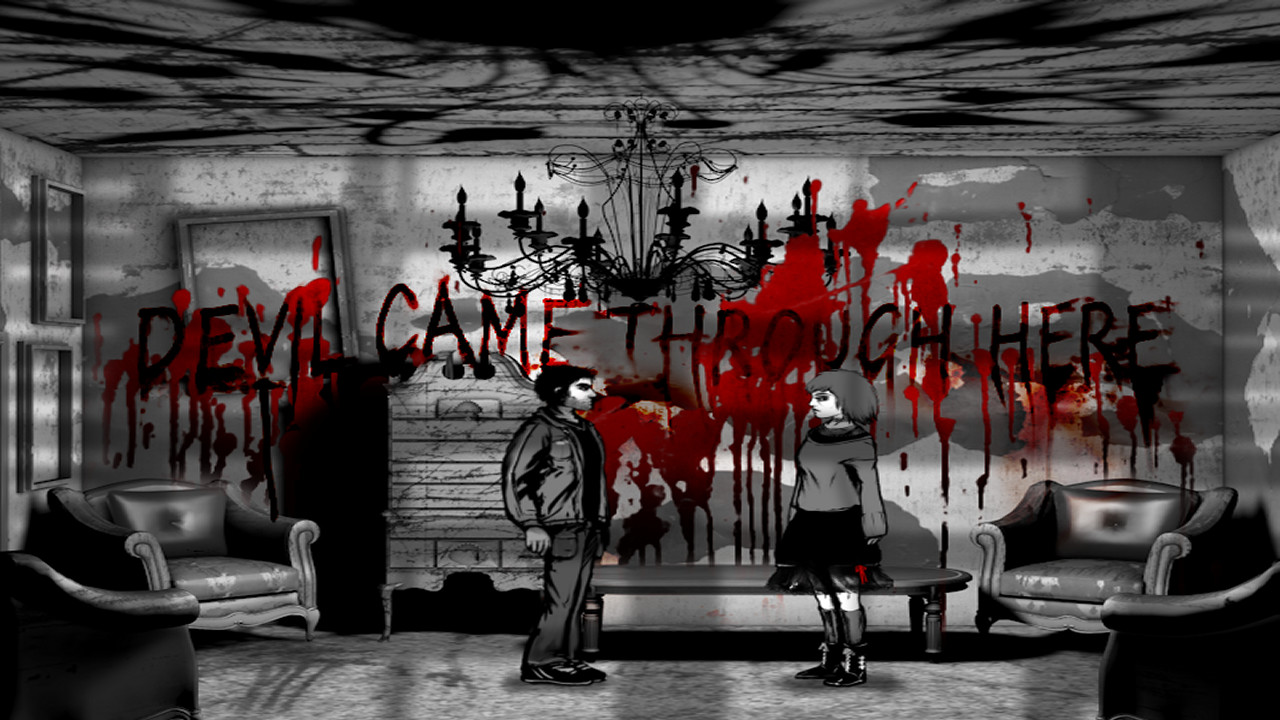
Choices have a more specific role than deciding whether Joe opens one door or another. The store description invites the player to shape him as a loving husband, cold realist or bitter skeptic; the manual includes a tendency-hints option that can reveal different paths, with settings of off, on or strong. Those features signal that an exchange or decision may be worth considering as part of Joe's character, not simply as the answer to a puzzle. They do not require every scene to branch into an independent story. The same journey can hold authored events and meaningful variation in how Joe responds or which route he finds. The manual recommends trying the game with tendency hints off first, leaving the relationship between decisions and paths for the player to discover. Someone who wants more guidance can turn the option on rather than consulting a separate plot chart before starting. This structure also explains why describing a single definitive account of the hotel would misrepresent the work. Michalski has said he deliberately leaves room for different interpretations of what happened. The player's choices and attention contribute to that uncertainty rather than just unlocking a numerical score at the end.
The 2016 edition was rebuilt from the 2009 Downfall rather than merely sharpened. Michalski says he retained the broad story outline while rewriting dialogue, revising characters and puzzles, changing the interface and removing a boss battle that did not belong in the new design. The result puts Ivy in a more substantial place within the marriage at the story's centre. It also brings full English voice acting to scenes that previously relied on text, with Jesse Gunn voicing Joe and performers including Isa And and David Firth in the cast. The soundtrack combines work by micAmic with featured artists. A conversation about an intimate failure can therefore give way to a musical or visual disturbance without feeling like a different game has begun. The hand-made horror art does not soften its subject: the developer flags graphic violence and strong language, and the game is intended for adults. The new script and performance also make it possible for a returning player to recognize the premise while being surprised by how a scene unfolds. Treating Redux as the original with modern graphics would miss those changes to what characters say and how the player moves among them.
The connection to The Cat Lady is part of Downfall's identity but not an entrance requirement. Both stories inhabit the same universe, and the creator says some characters cross between them. A player familiar with Susan Ashworth's game may notice a return or a reference that carries extra meaning, but Joe and Ivy's visit to Quiet Haven has its own immediate conflict and can be followed from the beginning. On Steam, Downfall is grouped with The Cat Lady and Lorelai under Devil Came Through Here, a collection of separate horror adventures rather than a single three-part download. The original Downfall from 2009 is also included as an extra with the 2016 Steam product, and GOG lists the earlier version among its goodies. That older build can be a way to see what was changed, but it should not be mistaken for the remake when comparing controls, voice work or puzzles. The current game's name also varies by storefront: Steam labels it Downfall, while GOG calls it Downfall: Redux. Both names refer to the 2016 version of Joe and Ivy's story, not to different new chapters or a sequel to be played after it.
Downfall gives players several practical ways to manage its authored journey. The manual describes manual saves, four quicksave slots, quickloads and autosaves, useful in a game where a conversation or choice may have consequences the player wants to revisit. Its extras menu includes developer profiles and material about the soundtrack, but those are companion features rather than routes through the hotel. Keyboard control keeps Joe's movement and inventory close to hand, and the hint setting lets a player choose how visibly the game points toward alternate tendencies. These are modest systems, yet together they define the way the horror is approached: explore until a detail changes the meaning of a room, talk until a person's account becomes clearer or more troubling, use an object when it belongs, and decide how Joe answers the situation in front of him. The format leaves room for sudden scares and puzzles without requiring a weapon or a character build. By concentrating its mechanics on what Joe can notice and how he behaves, the remake makes the attempt to save Ivy inseparable from the question of whether he truly understands her—and whether the version of events he relies on can be trusted.
- Developer
- Harvester Games / Remigiusz Michalski
- Genre
- Psychological horror adventure